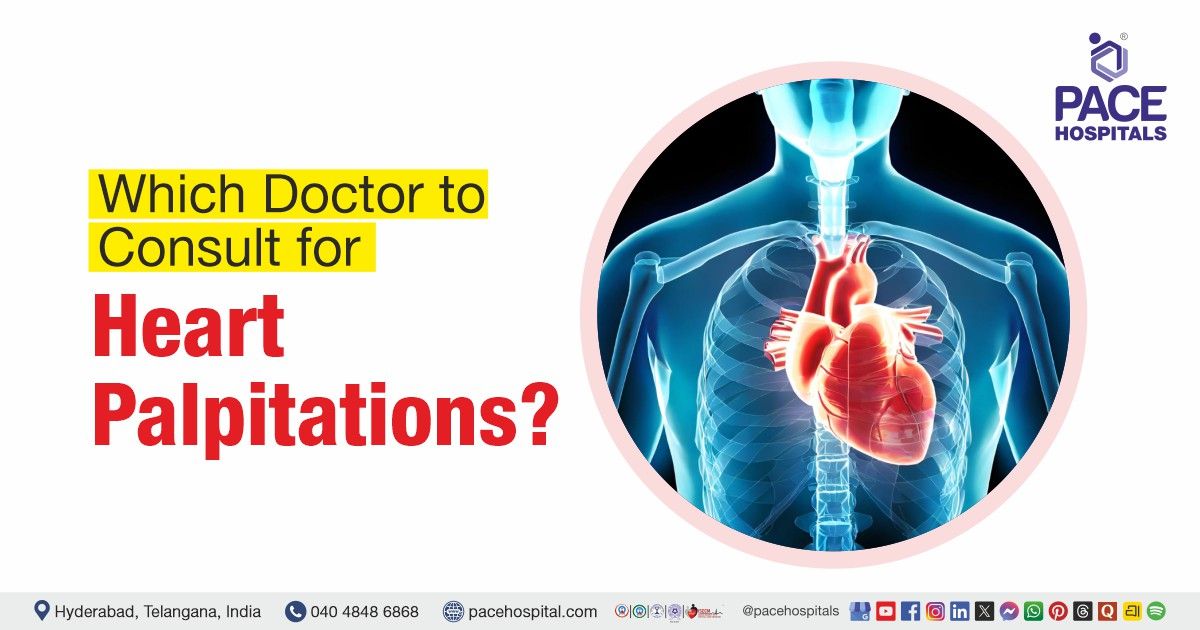
Which Doctor to Consult for Heart Palpitations?
PACE Hospitals
Written by: Editorial Team
Medically reviewed by: Dr. Seshi Vardhan Janjirala - Consultant Interventional Cardiologist
Introduction
Heart palpitations can feel like racing, pounding, fluttering, skipped beats, or an irregular heartbeat. Some episodes are related to stress, caffeine, fever, dehydration, or poor sleep. Others may be linked with arrhythmias, thyroid disease, anemia, medicines, high blood pressure, or heart disease.
The safest approach is to choose the right doctor based on the pattern of symptoms and warning signs. This guide explains when to consult a
Cardiologist,
General Physician, Electrophysiologist,
Endocrinologist, or Emergency Physician for palpitations.
Quick Answer: Which Doctor to Consult for Heart Palpitations?
For heart palpitations, consult a Cardiologist, especially if you feel a racing heartbeat, irregular rhythm, skipped beats, chest discomfort, breathlessness, dizziness, fainting, or have known heart disease. A General Physician/Internal Medicine specialist may assess mild or occasional palpitations first. If palpitations are linked with thyroid symptoms, sweating, tremors, or weight loss, an Endocrinologist may be needed. Palpitations with chest pain, fainting, severe breathlessness, or stroke-like symptoms need emergency care.
What Are Heart Palpitations?
Palpitations are an unusual awareness of the heartbeat. Patients may describe a racing heart, pounding in the chest, skipped beats, fluttering, or an irregular rhythm. Palpitations may last seconds, minutes, or longer and may occur at rest, after exercise, after caffeine, during anxiety, during fever, or without an obvious trigger.
Heart Palpitations Should Not Be Ignored
Many palpitations are not harmful, but if they are frequent, sudden, persistent, or accompanied by dizziness, shortness of breath, chest discomfort, fainting, or a known cardiac condition, they should be assessed. Sometimes a treatable rhythm issue might be found with ECG or rhythm monitor.
Common Heart Palpitations Symptoms
Palpitations with Chest Pain
Palpitations with chest pain, pressure, sweating, breathlessness, or pain radiating to the arm or jaw should be treated as urgent until a cardiac cause is ruled out. The patient should not drive themselves or wait for symptoms to pass if they are severe or persistent.
Palpitations with Dizziness or Fainting
Palpitations along with dizziness or fainting could indicate that the heart's rhythm is interfering with blood supply to the brain. Particularly in patients who are elderly, have heart disease, or have a family history of sudden cardiac death, this requires immediate evaluation.
Palpitations with Breathlessness
Palpitations and breathlessness can be caused by arrhythmia, heart failure, anaemia, anxiety, thyroid disease, or lung disorders. Emergency care is a safer option than waiting for a routine consultation. if breathlessness is severe or sudden.
Palpitations and Anxiety or Panic Attacks
Fear, trembling, sweating, tightness in the chest, or rapid breathing are common symptoms of anxiety-related palpitations. However, as comparable symptoms might be caused by thyroid disease, anaemia, arrhythmias, and stimulant use, recurrent episodes should be addressed medically.
Common Causes or Conditions of Heart Palpitations
Palpitations Due to Thyroid Problems
Overactive thyroid can cause fast heartbeat, palpitations, sweating, tremors, weight loss, and heat intolerance. Patients with these symptoms may need thyroid profile testing and Endocrinology care along with cardiac evaluation when required.
Palpitations Due to Caffeine, Alcohol, or Medicines
Palpitations can be triggered by coffee, alcohol, energy drinks, decongestants, specific asthma medications, thyroid medications, and stimulant supplements. Patients should discuss prescription medications with their doctor rather than stopping them suddenly.
Palpitations in Young Adults
Anxiety, coffee, sleep deprivation, anaemia, thyroid disease, SVT, lifestyle variables, or stimulant usage can all lead to palpitations in young adults. Palpitations that are persistent, extremely rapid, or linked to fainting require careful assessment.
Palpitations in Elderly Patients
Palpitations in elderly people may be associated with atrial fibrillation, cardiac illness, medications, thyroid disease, anemia, electrolyte imbalance, or dehydration. Because rhythm problems can raise the risk of heart attacks and strokes, prompt assessment is crucial.
When Heart Palpitations Need Urgent Medical Attention?
When palpitations are accompanied by chest discomfort, extreme shortness of breath, fainting, extreme lightheadedness, disorientation, symptoms of stroke, or an extremely quick, continuous heartbeat, they may be considered an emergency. Decreased blood flow to the heart, a significant rhythm problem, or any urgent illness could be indicated by these symptoms.
Red-Flag Symptoms Checklist
Seek urgent medical care if any of the following are present:
- Chest pain or pressure
- Severe breathlessness
- Fainting or near-fainting
- Severe dizziness
- Sweating with chest pressure
- Pain spreading to the arm, jaw, or back
- Confusion or stroke-like symptoms
- Very fast heartbeat that does not settle
- Known heart disease with new palpitations
- Pregnancy with severe palpitations
Doctor Selection Guide: Which Specialist Should You Choose for Heart Palpitations?
Use this table to choose the right doctor based on symptoms and urgency. If red-flag symptoms are present, emergency care should come first.
| Situation | First Doctor to Consult | Specialist Needed If |
|---|---|---|
| Racing or skipped heartbeat | Cardiologist | Symptoms are recurrent, irregular, or associated with chest discomfort or breathlessness |
| Mild occasional palpitations | General Physician/Internal Medicine | Initial evaluation suggests anemia, dehydration, fever, medicines, or lifestyle triggers |
| Palpitations with abnormal ECG | Cardiologist/Electrophysiologist | Arrhythmia, SVT, atrial fibrillation, or rhythm disorder is suspected |
| Palpitations with thyroid symptoms | Endocrinologist/Internal Medicine | Weight loss, tremors, sweating, heat intolerance, or abnormal thyroid test is present |
| Palpitations with anxiety/panic | Psychiatrist/Psychologist + Physician | Cardiac and medical causes have been assessed, and anxiety support is needed |
| Palpitations with chest pain/fainting | Emergency Physician/Cardiologist | A possible cardiac emergency or serious rhythm problem needs urgent care |
Common Causes or Conditions and Which Specialist Treats Each?
| Condition / Cause | Common Features | Doctor/Specialist to Consult | Why? |
|---|---|---|---|
| Arrhythmia | Irregular, fast, or skipped beats; abnormal ECG may be present | Cardiologist/Electrophysiologist | Rhythm assessment and monitoring may be required |
| Anxiety or panic | Palpitations with fear, sweating, trembling, or hyperventilation | Physician/Psychiatrist | Medical causes should be ruled out before labelling it anxiety |
| Thyroid disease | Palpitations with weight loss, tremors, heat intolerance, sweating | Endocrinologist | Hormonal control can reduce symptoms when thyroid-related |
| Caffeine, alcohol, stimulants | Episodes after coffee, energy drinks, alcohol, and pre-workout supplements | Physician/Cardiologist, if persistent | Triggers and heart rhythm need review |
| Anemia, fever, dehydration | Fast heartbeat with weakness, fever, fluid loss, or low hemoglobin | Internal Medicine | Treatable systemic causes need correction |
| Heart disease | Palpitations with chest pain, breathlessness, swelling, previous cardiac history | Cardiologist | Heart structure and rhythm evaluation is important |
When to See a Cardiologist?
A Cardiologist should evaluate palpitations that are recurrent, prolonged, associated with breathlessness, chest discomfort, dizziness, fainting, high BP, previous heart condition, abnormal ECG, or family history of rhythm problems. The Cardiologist may advise ECG, Holter monitoring,stress testing, echocardiography, or other heart rhythm evaluation.
When to See a General Physician or Internal Medicine Doctor?
A general physician or internal medicine specialist can evaluate fever, anaemia, dehydration, thyroid symptoms, blood sugar issues, medication side effects, caffeine use, stress, and sleep patterns for mild, infrequent, or first palpitations. If symptoms are related to a heart condition or irregular rhythm, they can consult a cardiologist.
When to See an Electrophysiologist?
An Electrophysiologist is a Cardiologist with additional expertise in heart rhythm disorders. Referral may be needed for recurrent supraventricular tachycardia, atrial fibrillation, unexplained fainting with palpitations, abnormal rhythm monitoring, or consideration of rhythm procedures such as ablation in selected patients.
When to See an Endocrinologist?
An Endocrinologist may be needed when palpitations occur with weight loss, tremors, excessive sweating, diabetes symptoms, heat intolerance, irregular periods, recurrent low blood sugar, or abnormal thyroid tests. Thyroid and sugar-related causes can mimic heart rhythm symptoms and should be corrected safely.
When to See a Psychiatrist or Psychologist?
Anxiety and panic attacks can cause palpitations, chest tightness, sweating, trembling, and fear. However, anxiety should not be assumed until heart and medical causes are reasonably assessed. Psychiatric or psychological support can help when anxiety, panic, stress, or sleep problems are contributing to repeated symptoms.
Tests Doctors May Recommend for Heart Palpitations
Tests depend on the symptom pattern, examination findings, age, medical history, medicines, and doctor assessment. Commonly considered tests include:
Treatment Options for Heart Palpitations
Treatment should be cause-based and supervised by a qualified doctor. Options may include:
- Trigger reduction such as limiting excess caffeine, alcohol, nicotine, and stimulant supplements
- Treatment of anemia, fever, dehydration, thyroid disease, or sugar imbalance when identified
- Heart rhythm medicines only when prescribed by a Cardiologist
- Electrophysiology evaluation or ablation in selected rhythm disorders
- Stress, sleep, and anxiety management when appropriate
- Emergency stabilization for dangerous rhythm, chest pain, or fainting
Heart Palpitations Specialists at PACE Hospitals, Hyderabad
PACE Hospitals, Hyderabad offers a multi-speciality approach so patients can be evaluated by the right specialist based on symptoms and urgency. Relevant services may include:
- Cardiology and rhythm evaluation
- General Medicine/Internal Medicine for first-line assessment
- Endocrinology/Diabetology for thyroid and sugar-related causes
- Emergency and Critical Care for high-risk symptoms
- Diagnostics, including ECG, imaging, lab tests, and cardiac workup as advised
Why Choose PACE Hospitals for Blood Pressure Evaluation and Management?
PACE Hospitals helps patients move from symptom assessment to specialist consultation, diagnostics, emergency care, and follow-up without needless delay by supporting coordinated evaluation under a single system. The emphasis is clinically necessary, patient-centered, and medically responsible.
Key Takeaway
A cardiologist is usually the right specialist when heart palpitations are frequent, irregular, or accompanied by chest pain, dyspnoea, lightheadedness, or fainting. Internal medicine may begin with mild episodes, but endocrinology may be necessary for thyroid-related symptoms. Recognising emergency signs is important.
Frequently Asked Questions (FAQs)
Which doctor should I consult for heart palpitations?
If heart palpitations are frequent, irregular, rapid, or accompanied by chest pain, dyspnoea, lightheadedness, or fainting, consult a Cardiologist. A General Physician/Internal Medicine specialist can initially assess moderate or infrequent palpitations and look for signs of anaemia, thyroid problems, fever, dehydration, medications, and lifestyle causes. Palpitations accompanied by severe dyspnoea, fainting, chest pain, or stroke-like symptoms require immediate emergency care.
When are heart palpitations an emergency?
Heart palpitations are an emergency if they are associated with chest pain, severe breathlessness, fainting, severe dizziness, confusion, sweating with chest pressure, stroke symptoms or a very fast heartbeat that doesn't settle. These signs could be a sign of a serious rhythm disorder or heart problem. In such cases, do not wait for an OPD appointment; seek emergency care immediately.
What is an ECG for palpitations?
An electrocardiogram (ECG) is a simple test that records the electrical activity of the heart. It helps detect irregular rhythms, fast rhythms, slow rhythms, and signs of heart strain or previous heart problems. Because palpitations may not happen during a short ECG, a doctor may also advise Holter monitoring or an event recorder for longer rhythm tracking.
What causes heart palpitations?
Heart palpitations may be caused by anxiety, caffeine, alcohol, fever, dehydration, anemia, thyroid disease, medicines, low sugar, stimulants, high blood pressure, heart disease, or arrhythmias. The cause cannot be confirmed from symptoms alone. A doctor may advise ECG, blood tests, Holter monitoring, or heart imaging, depending on the pattern and severity.
Can palpitations be treated?
Yes, palpitations can be managed once the cause is found. Treatment may be correcting anaemia, thyroid disease, dehydration, low sugar, medicine triggers, or lifestyle. If there is an arrhythmia, a Cardiologist may advise medicines to control the rhythm, monitoring or procedures in selected cases. Treatment should be under the guidance of a doctor and not on self-medication.
What tests are done for heart palpitations?
Tests for palpitations usually include ECG, Holter monitoring, event recorder, CBC, blood pressure check, thyroid profile, electrolytes, kidney function, blood sugar, 2D Echo, and stress testing if needed. In emergencies, cardiac enzymes may be done. The correct tests depend on symptoms, age, medical history, ECG findings, and doctor assessment.
Which is the best hospital for heart palpitations treatment in Hyderabad?
PACE Hospitals, Hyderabad provides multi-speciality evaluation for heart palpitations through Cardiology, Internal Medicine, Endocrinology/Diabetology, Emergency and Critical Care, and diagnostic support. Patients with racing heartbeat, chest discomfort, irregular rhythm, thyroid symptoms, or emergency warning signs can receive coordinated assessment and referral to the right specialist.
Should I see a cardiologist for palpitations?
Yes, you should see a Cardiologist if palpitations are frequent, prolonged, sudden, associated with skipped beats, chest pain, breathlessness, fainting, or known heart disease. A Cardiologist can perform ECG, Holter monitoring, echocardiography, and other tests to identify rhythm or structural heart problems. Mild occasional palpitations may first be reviewed by a physician, but persistent symptoms deserve cardiac evaluation.
Can a general physician evaluate palpitations?
Yes, a General Physician or Internal Medicine specialist can evaluate mild or first-time palpitations. They can check pulse, blood pressure, ECG, blood counts, thyroid profile, sugar levels, dehydration, fever, medicine side effects, caffeine intake, alcohol use and stress. If the ECG is abnormal or there are high-risk symptoms, you may be referred to a Cardiologist or the Emergency Department.
Can anxiety cause heart palpitations?
Yes, palpitations, chest tightness, sweating, trembling, and a feeling of fear can be symptoms of anxiety and panic attacks. Palpitations shouldn't be categorised as anxiousness, though. Thyroid issues, low blood sugar, anaemia, coffee, medications, and heart rhythm issues can all seem identical. A medical evaluation is crucial, particularly if the symptoms are persistent or are accompanied by dyspnoea, fainting, or chest pain.
Can thyroid problems cause palpitations?
Yes, thyroid problems, specially an overactive thyroid, can cause palpitations, fast heartbeat, sweating, tremors, weight loss, heat intolerance, and anxiety-like symptoms. A thyroid profile may be recommended if the symptoms suggest a hormonal cause. An Endocrinologist can manage thyroid-related palpitations, while a Cardiologist may be involved if rhythm abnormalities are present.
Can caffeine cause palpitations?
Yes, excess caffeine from tea, coffee, energy drinks, or pre-workout supplements may trigger palpitations in some people. Alcohol, nicotine, poor sleep, and stress can also contribute. If reducing triggers does not help, or if palpitations are associated with chest pain, dizziness, or breathlessness, consult a doctor instead of assuming it is only caffeine-related.
Which doctor treats irregular heartbeat?
A Cardiologist treats irregular heartbeat, and an Electrophysiologist may be needed for complex or recurrent rhythm disorders. Irregular heartbeat may require ECG, Holter monitoring, echocardiography, and rhythm-specific treatment. Emergency care is needed if an irregular heartbeat occurs with fainting, severe breathlessness, chest pain, or a very fast, sustained heart rate.
Which doctor treats racing heartbeat?
A Cardiologist is the correct specialist for racing heartbeat, mainly if it starts suddenly, is recurrent, lasts more than a few minutes, or occurs with breathlessness, dizziness, or chest discomfort. A physician may evaluate common causes such as fever, dehydration, thyroid disease, anemia, and stimulant use. Very fast heartbeat with fainting or chest pain needs emergency care.
Are palpitations always serious?
No, palpitations are not always a serious thing. Many are related to stress, caffeine, poor sleep, dehydration or temporary illness. If the palpitations happen frequently or are accompanied by chest pain, fainting, severe dizziness, breathlessness or a known heart disease, they should not be ignored. A proper evaluation helps to distinguish harmless triggers from rhythm disorders that need treatment.
Conclusion
Treatment of heart palpitations should be based on the severity, other symptoms associated with them and red flags. The right specialist will be able to find out the cause, suggest the right tests and safely direct treatment. Don't ignore warning signs or delay getting emergency care or self-medicating.
Share on
Request an appointment
Fill in the appointment form or call us instantly to book a confirmed appointment with our super specialist at 04048486868
Appointment request - health articles
Recent Articles