Latent Autoimmune Diabetes in Adults (LADA) - Type 1.5 Diabetes: Symptoms, Causes, Diagnosis and Treatment
Written by: Editorial Team
Medically reviewed by: Dr. Tripti Sharma - Endocrinologist, Physician & Diabetologist
Definition| Characteristics and Prevalence | Symptoms | Causes and Risk Factors | Complications | Diagnosis | Treatment | Prevention | FAQs
Latent Autoimmune Diabetes in Adults (LADA) - Type 1.5 Diabetes Definition
Latent Autoimmune Diabetes in Adults (LADA), also known as Type 1.5 diabetes, is a slowly progressive autoimmune form of diabetes that usually develops in adults aged 30 years or older. LADA is a hybrid form of diabetes which combines features of both type 1 and type 2 diabetes.
Like type 1 diabetes, it is caused by an autoimmune attack on the insulin-producing beta cells in the pancreas and shows the presence of islet autoantibodies such as Glutamic Acid Decarboxylase Autoantibodies (GADA). However, unlike classic type 1 diabetes, it develops gradually and usually appears in adulthood, often leading to an initial misdiagnosis as type 2 diabetes.
Early recognition of LADA is important because its treatment differs from that of type 2 diabetes and may not require insulin for glycemic control at least in the first 6 months after diagnosis. Timely diagnosis and appropriate management by an endocrinologist or diabetologist can help preserve remaining insulin-producing cells for longer and reduce the risk of diabetes-related complications.
Characteristics and Prevalence of Autoimmune Diabetes in Adults
Latent autoimmune diabetes in adults (LADA) is characterised by adult-onset autoimmune destruction of pancreatic beta cells, resulting in a gradual decline in insulin production.
Research indicates that LADA is immunologically closer to Type 1 diabetes but resembles Type 2 diabetes phenotypically (observable expression of an individual's) during its early stages. Because the condition often presents with features resembling Type 2 diabetes, such as adult onset and an initial response to non-insulin glucose-lowering therapy, many individuals are initially misdiagnosed until diabetes-associated autoantibodies are detected.
The prevalence of latent autoimmune diabetes in adults varies across different geographical regions and study populations. A recent analysis discovered islet autoantibodies in 2.6% to 14% of persons with type 2 diabetes, with reported rates ranging from 4% to 12% in European studies and 3.8% to 9% in Asian research. These range estimates should not be taken as a single global prevalence estimate because the studies used various diagnostic criteria and autoantibody testing methodologies.
In the multicentre European Action LADA study, 598 of 6,156 adults with recently diagnosed diabetes, approximately 9.7%, tested positive for at least one islet autoantibody. In comparison, the nationwide LADA China study reported LADA in approximately 5.9% of adults aged over 30 years with newly diagnosed, non-insulin-requiring diabetes. These findings show that LADA accounts for a clinically important proportion of adult-onset diabetes but may remain undetected when patients are diagnosed as having type 2 diabetes without antibody testing.
Why is LADA called Type 1.5 Diabetes?
LADA is often called Type 1.5 diabetes because it resembles characteristics of both major types of diabetes. Its underlying cause is autoimmune, as seen in type 1 diabetes, while its adult onset and gradual progression may initially resemble type 2 diabetes. Latent autoimmune diabetes in adults (LADA) is characterized by:
Characteristics Similar to Type 1 Diabetes
- Autoimmune destruction of pancreatic beta cells
- Presence of diabetes-related autoantibodies
- Progressive loss of insulin production
- Eventually requires insulin treatment
Characteristics Similar to Type 2 Diabetes
- Usually diagnosed in adulthood
- Symptoms develop gradually
- Patients may initially respond to oral diabetes medications
Note: The term “Type 1.5 diabetes” is commonly used for better understanding, but it is not an official diagnostic classification for types of diabetes. In the 2019 WHO classification, LADA was described as slowly evolving immune-mediated diabetes of adults (SEIMD). However, the term LADA continues to be widely used in clinical practice and medical literature.
Type 1.5 Diabetes Symptoms
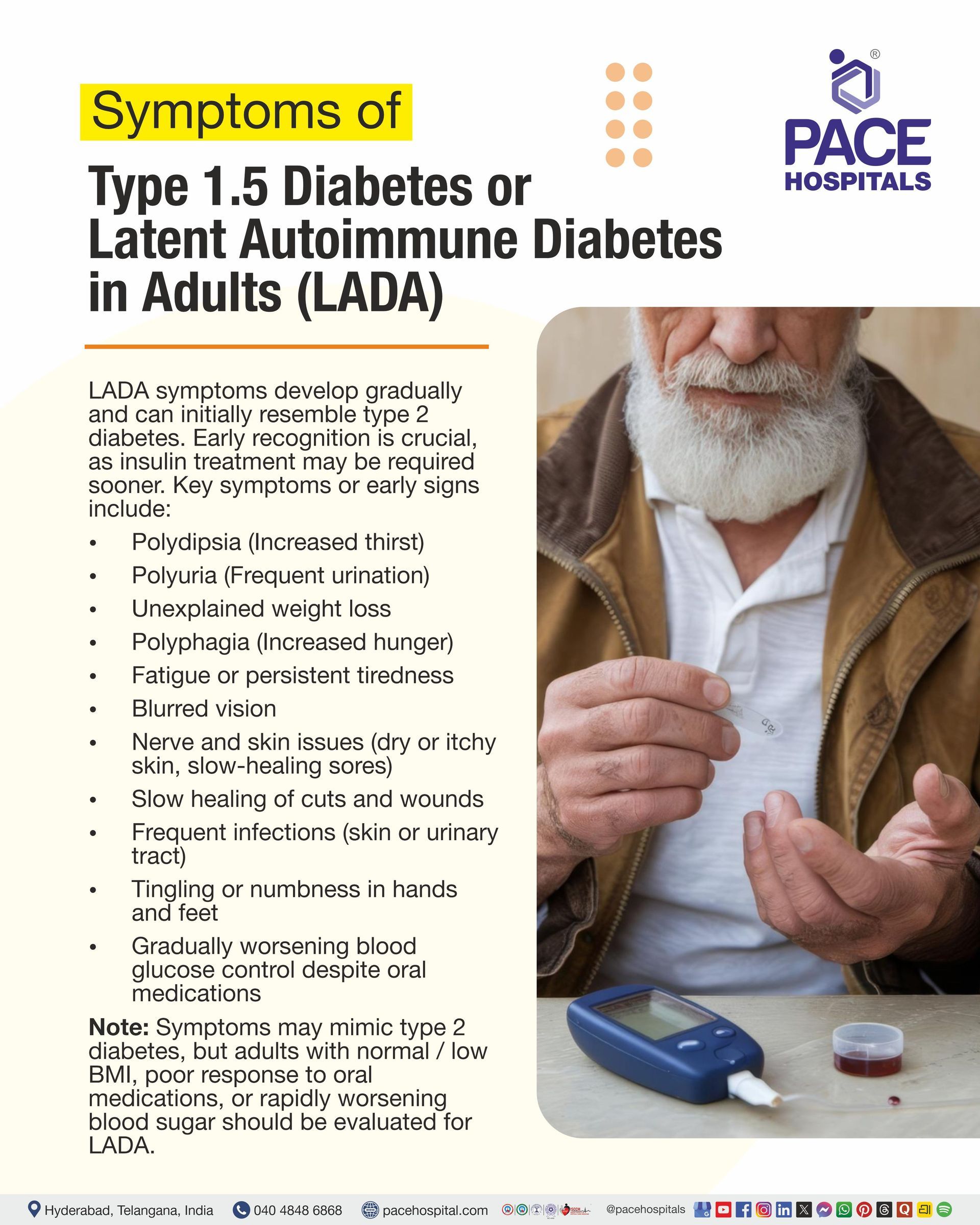
The symptoms of latent autoimmune diabetes in adults (LADA) usually develop gradually and may initially resemble those of type 2 diabetes with classic hyperglycemia signs. Early recognition of type 1.5 diabetes symptoms is important, as people with LADA often require insulin treatment sooner than those with type 2 diabetes.
Some of the common symptoms of latent autoimmune diabetes in adults (LADA) or Type 1.5 Diabetes include:
- Increased thirst (polydipsia)
- Frequent urination (polyuria)
- Unexplained weight loss
- Increased hunger (polyphagia)
- Fatigue or persistent tiredness
- Blurred vision
- Nerve and skin issues (dry or itchy skin, and slow-healing sores)
- Slow healing of cuts and wounds
- Frequent infections, such as skin or urinary tract infections
- Tingling or numbness in the hands and feet (may occur with prolonged high blood sugar)
- Gradually worsening blood glucose control despite oral diabetes medications
Note: The symptoms of LADA are similar to those of type 2 diabetes, but the condition progresses differently. Adults with a normal or relatively low
body mass index (BMI), poor response to oral diabetes medications, or rapidly worsening blood sugar control should be assessed for LADA.
Causes and Risk Factors for Latent Autoimmune Diabetes in Adults (LADA)
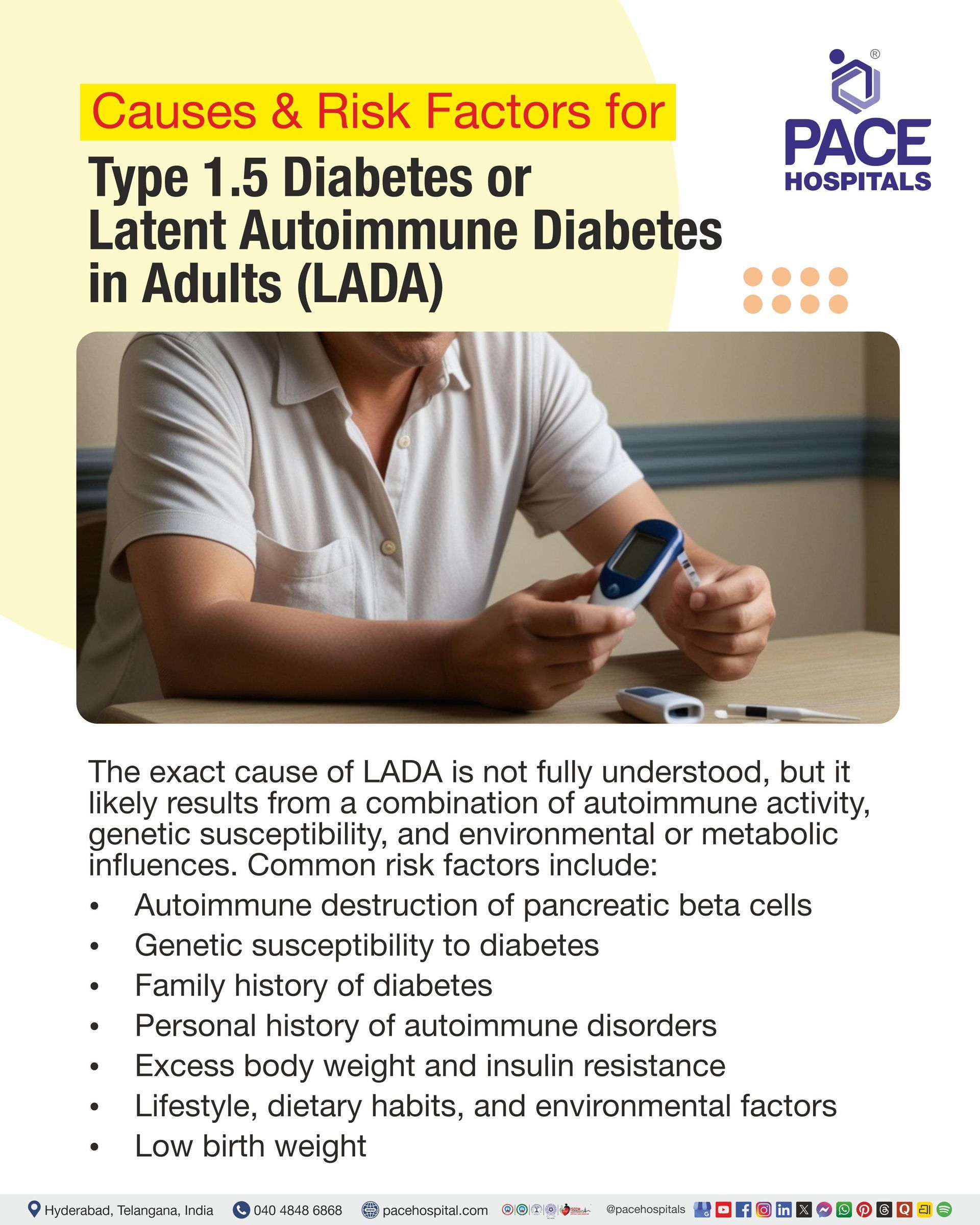
The exact reason why LADA develops is not fully understood. Current evidence suggests that it results from an interaction between autoimmune activity, inherited susceptibility and metabolic or environmental influences. Some of the common causes and risk factors associated with latent autoimmune diabetes in adults (LADA) include:
- Autoimmune destruction of pancreatic beta cells
- Genetic susceptibility
- Family history of diabetes
- Personal history of autoimmune disease
- Excess body weight and insulin resistance
- Lifestyle, dietary habits and environmental factors
- Low birth weight
Autoimmune destruction of pancreatic beta cells: LADA develops when the immune system mistakenly recognises components of the pancreatic beta cells as harmful. Immune cells, particularly autoreactive T cells, gradually attack these insulin-producing cells in the pancreas. This process is usually slower than in classical type 1 diabetes, allowing some insulin production to continue during the early stages of the condition.
Genetic susceptibility: Certain inherited genetic variants can increase the likelihood of developing LADA. The strongest associations involve genes within the human leukocyte antigen (HLA) region, particularly HLA-DR and HLA-DQ variants that influence how the immune system recognises the body’s own cells. Other immune-related genes, including PTPN22, INS and SH2B3, have also been linked to LADA. However, carrying these variants does not mean that a person will definitely develop the condition.
Family history of diabetes: LADA is more common in people who have a first-degree relative with diabetes, particularly type 1 diabetes. This elevated risk may be due to genetic predisposition as well as common environmental or lifestyle effects among families. A personal history of another autoimmune disorder may also indicate a greater tendency towards autoimmune disease, although it is not a direct cause of LADA.
Personal history of autoimmune disease: LADA is more frequently observed in individuals with autoimmune conditions, particularly:
- Autoimmune thyroid disease (Hashimoto's thyroiditis or Graves' disease)
- Celiac disease
- Vitiligo
- Pernicious anaemia
The coexistence of these disorders reflects a common underlying tendency for autoimmune disease.
Excess body weight and insulin resistance: Although LADA can occur in people with a normal body weight, overweight and obesity may increase the risk, especially in genetically susceptible individuals. Excess body fat can contribute to insulin resistance, which may accelerate the clinical onset of diabetes.
Lifestyle, dietary habits and environmental factors: Lifestyle and environmental influences may play a role in the development of LADA, particularly among people with an underlying genetic susceptibility. Research has linked physical inactivity, excess body weight, smoking and certain dietary patterns (including consumption of red meat, coffee and sweetened beverages may increase the risk) with altered insulin sensitivity and a higher likelihood of LADA. These factors may increase the workload on pancreatic beta cells already affected by autoimmunity. However, much of the available evidence comes from observational studies, and the effects of individual dietary and environmental factors require further investigation.
Low birth weight: Low birth weight has been associated with a greater likelihood of developing LADA or type 1.5 diabetes later in life. The exact mechanism is uncertain, but restricted growth before birth may contribute to long-term metabolic changes that reduce insulin sensitivity or the ability of beta cells to meet increased insulin demand.
Complications of Latent Autoimmune Diabetes in Adults (LADA)
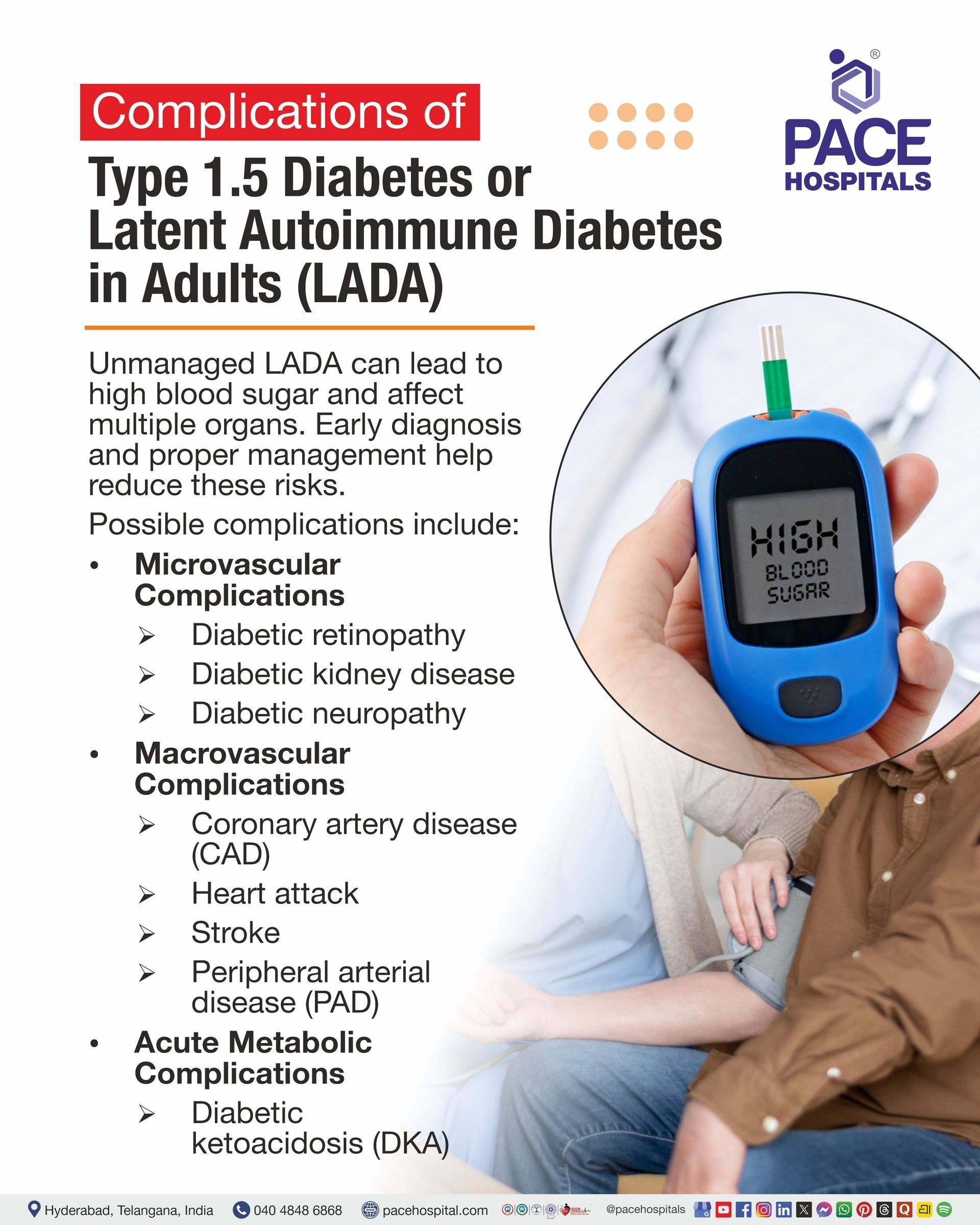
If LADA is not recognised and managed appropriately, progressive loss of insulin-producing beta cells can result in persistently high blood glucose levels. Over time, uncontrolled diabetes may increase the risk of both acute and long-term complications affecting multiple organs (pancreas, eyes, kidneys, nerves, heart/blood vessels, thyroid/gut). Early diagnosis, regular monitoring and appropriate treatment can help reduce these risks.
Some of the possible complications of latent autoimmune diabetes in adults (LADA) include:
- Microvascular Complications
- Diabetic retinopathy
- Diabetic kidney disease
- Diabetic neuropathy
- Macrovascular Complications
- Acute Metabolic Complications
- Associated Autoimmune Conditions
Microvascular Complications: Persistently elevated blood glucose can damage the body’s small blood vessels. Over time, this may affect the eyes, kidneys and nerves.
- Diabetic retinopathy: Damage to the small blood vessels in the retina may cause vision changes and, in advanced cases, vision loss.
- Diabetic kidney disease: Diabetes can gradually impair the kidneys’ filtering function and may eventually contribute to chronic kidney disease.
- Diabetic neuropathy: Nerve damage may cause pain, burning, tingling or reduced sensation, particularly in the feet and lower legs. Reduced sensation can allow cuts, pressure injuries or infections to go unnoticed.
Evidence suggests that people with LADA may develop microvascular complications, particularly retinopathy and kidney disease, when blood glucose remains inadequately controlled.
Macrovascular Complications: LADA may also increase the risk of conditions affecting the heart and larger blood vessels. Long-term hyperglycaemia, together with high blood pressure, abnormal cholesterol levels, excess body weight or smoking, can promote atherosclerosis. This may raise the likelihood of coronary artery disease (CAD), heart attack, stroke and peripheral arterial disease (PAD). Although some people with LADA have fewer metabolic risk factors than those with type 2 diabetes, their cardiovascular risk is not necessarily lower.
Acute Metabolic Complications: Diabetic ketoacidosis (DKA) may occur when insulin levels become severely reduced. Without enough insulin, the body cannot use glucose effectively and begins breaking down fat for energy, producing ketones. Excessive ketone accumulation can make the blood acidic and lead to dehydration, nausea, vomiting, abdominal pain, deep or rapid breathing, confusion and loss of consciousness.
DKA is uncommon during the early stages of LADA because beta-cell function usually declines gradually. However, the risk increases as insulin deficiency progresses, particularly during infection, severe illness or prolonged undiagnosed hyperglycemia. Diabetic ketoacidosis (DKA) is a medical emergency requiring immediate hospital care.
Associated Autoimmune Conditions: Associated autoimmune diseases are not complications caused by LADA. However, because LADA is an autoimmune form of diabetes, affected individuals may have a greater likelihood of developing another autoimmune condition. Autoimmune thyroid disease is among the most frequently reported associations. Other conditions may include coeliac disease, Addison’s disease, autoimmune gastritis and pernicious anemia.
Rheumatoid arthritis may coexist, but it is less consistently recognised as a characteristic LADA-associated condition and should not be presented as one of the most common associations.
Latent Autoimmune Diabetes in Adults Diagnosis
The diagnosis of LADA is based on the patient’s clinical presentation, diabetes-related autoantibody testing and an assessment of the pancreas’s remaining insulin-producing capacity.
Diagnostic Criteria for LADA
The Immunology of Diabetes Society has proposed three commonly used criteria for identifying LADA or type 1.5 diabetes:
- Diabetes beginning in adulthood, usually after 30 years of age
- Presence of at least one pancreatic islet autoantibody
- No requirement for insulin during the first six months following diagnosis
These criteria are useful for recognising LADA, but they are not absolute. The age at onset and the period before insulin is required can vary, so the diagnosis should be based on the complete clinical and laboratory findings.
Autoimmune Diabetes Test
The following tests are commonly used to diagnose autoimmune diabetes (LADA) and evaluate pancreatic function:
- Diabetes Autoantibody Testing
- C-Peptide Test
- Blood Glucose Tests
- HbA1c Test
Diabetes Autoantibody Testing: Diabetes autoantibody testing is the most important investigation for confirming the autoimmune nature of LADA. The presence of one or more diabetes-associated autoantibodies indicates that the body's immune system is attacking the insulin-producing beta cells of the pancreas. Among these antibodies, glutamic acid decarboxylase antibodies (GADA) are the most commonly detected in adults with LADA and are usually the first test performed. If GADA is negative but clinical suspicion remains high, additional autoantibody tests may be recommended. These can include islet antigen-2 antibodies, zinc transporter 8 antibodies and islet-cell antibodies. To know more about it, a table is given below:
| Autoantibody | Full Name | Significance in LADA |
|---|---|---|
| GADA | Glutamic Acid Decarboxylase Antibody | Most common and most sensitive autoantibody in LADA; usually the first test performed. |
| IAA | Insulin Autoantibody | More common in children with type 1 diabetes. In adults, it has limited value, especially after insulin therapy has started. |
| IA-2A | Islet Antigen-2 Antibody | Less common than GADA but supports the diagnosis of autoimmune diabetes when present. |
| ICA | Islet Cell Cytoplasmic Antibody | Indicates autoimmune destruction of pancreatic islet cells and may be detected in some people with LADA. |
| ZnT8A | Zinc Transporter 8 Antibody | A newer marker that may improve diagnostic accuracy, particularly when GADA is negative but autoimmune diabetes is still suspected. |
Note: The type and number of diabetes-associated autoantibodies vary among individuals with LADA. Therefore, laboratory findings should be interpreted alongside the patient's clinical features and other diagnostic investigations recommended by the doctor.
C-Peptide Test: C-peptide is released into the bloodstream when the pancreas produces its own insulin. Measuring the C-peptide level therefore helps estimate how much insulin-producing function remains in the pancreatic beta cells.
During the early stages of LADA, C-peptide may remain within the normal range or may be only mildly reduced. It generally decreases as autoimmune beta-cell destruction progresses. People with LADA often experience a faster fall in C-peptide levels than those with type 2 diabetes, while the rate of development varies by individual.
C-peptide results should be interpreted together with the blood glucose level measured at the same time. Very low or very high glucose levels can affect the result, and factors such as kidney function, recent food intake and the type of C-peptide test performed should also be considered.
Blood Glucose Tests: Fasting Blood Sugar (FBS), Postprandial Blood Sugar (PPBS), Random Blood Sugar and Oral Glucose Tolerance Test (OGTT) may be used to confirm the presence of diabetes. These Blood Sugar tests show whether blood glucose is elevated, but they cannot independently distinguish LADA from type 1 or type 2 diabetes.
HbA1c Test: HbA1c reflects the average blood glucose level over approximately the previous two to three months. It helps determine the severity and duration of hyperglycaemia, but it does not identify whether the underlying diabetes is autoimmune.
Note:
Although clinical findings alone cannot confirm LADA, doctors may recommend diabetes autoantibody and C-peptide testing when an adult with diabetes has a normal or relatively low BMI, worsening blood glucose control despite appropriate treatment and lifestyle measures, unexplained weight loss, or a strong personal or family history of autoimmune diseases (such as Hashimoto's thyroiditis / autoimmune thyroid disease, Coeliac disease, Addison's disease, Vitiligo, Pernicious anaemia). Additional screening for associated autoimmune conditions may also be considered when clinically indicated.
Latent Autoimmune Diabetes in Adults (LADA) Treatment
Since LADA progresses at different rates in different people, treatment is tailored according to blood glucose levels, C-peptide levels, remaining beta-cell function and the individual's overall health. Depending on the stage of the disease and the person's insulin-producing capacity, treatment may include one or more of the following:
- Lifestyle Modifications
- Insulin Therapy
- Non-Insulin Diabetes Medications
- Blood Glucose Monitoring
Lifestyle Modifications: A balanced eating pattern, regular physical activity, healthy weight management, adequate sleep and avoidance of smoking support blood glucose control and cardiovascular health. The dietary plan should be adapted to the person’s glucose levels, insulin treatment, body weight and nutritional needs rather than following an unnecessarily restrictive diet.
Insulin Therapy: Many people with LADA or type 1.5 diabetes eventually require insulin because natural insulin production gradually decreases over time. Insulin therapy may be started earlier when there are symptoms of insulin deficiency, significantly elevated blood glucose, low C-peptide levels or inadequate control with other measures are not sufficient. The type and timing of insulin are selected individually by the treating doctor, mainly by an endocrinologist or diabetologist. LADA treatment prioritizes early insulin therapy to reduce glucotoxicity and preserve residual beta-cell function. Because LADA or type 1.5 diabetes features adult-onset autoimmune beta-cell destruction, international guidelines actively discourage using insulin-stimulating oral drugs as they can increase pancreatic damage.
Non-Insulin Diabetes Medications: Selected non-insulin diabetes medications (GLP-1 Receptor Agonists and DPP-4 Inhibitors) may be considered while pancreatic insulin production remains adequate. Medicines that improve insulin sensitivity may be useful when insulin resistance or excess body weight is present in some individuals. Other classes may help lower blood glucose without directly forcing the pancreas to release large amounts of insulin, but evidence regarding their ability to preserve beta-cell function in LADA remains limited.
Blood Glucose Monitoring: Regular glucose monitoring is important in LADA or type 1.5 diabetes in individuals who are suspected of having insulin production decline over time. Continuous glucose monitoring (CGM) can be useful for people using insulin or experiencing frequent glucose fluctuations, while glycated haemoglobin (HbA1c) is usually checked every three months until blood glucose control becomes stable and HbA1c is <7%.
Emerging Immunological Research on LADA Treatment
Researchers are continuing investigation into immunotherapies that may help preserve pancreatic beta-cell function in people with early stage of LADA. One approach, GAD-alum (recombinant human GAD65), has shown encouraging early results in selected clinical studies. However, larger clinical trials are still needed, and this treatment is not currently recommended as part of routine LADA management.
Note: Medicines from the sulfonylurea class are generally not recommended for LADA or type 1.5 diabetes because most research-based studies have associated them with a faster decline in beta-cell function and poorer metabolic control compared with insulin-based treatment. These medicines can increase the risk of diabetic ketoacidosis, sometimes even when blood glucose is not markedly elevated.
Prevention of Latent Autoimmune Diabetes in Adults (LADA)
There is currently no proven way to prevent LADA, as it is an autoimmune disease influenced by genetic and environmental factors. But it can be managed with the following:
- Early diagnosis through diabetes autoantibody testing and C-peptide assessment can help guide timely treatment.
- Good blood glucose control may reduce metabolic stress and support the remaining pancreatic beta-cell function.
- A balanced diet, regular physical activity and healthy weight management can improve insulin sensitivity and overall diabetes control.
- Immune-based treatments and other methods to delay disease progression are still under investigation.
Difference Between Latent Autoimmune Diabetes in Adults (LADA), Type 1 Diabetes and Type 2 Diabetes
Although LADA shares characteristics with both type 1 and type 2 diabetes, it is a distinct form of autoimmune diabetes. The following table highlights the key differences between these three conditions:
| Feature | LADA (Type 1.5 Diabetes) | Type 1 Diabetes | Type 2 Diabetes |
|---|---|---|---|
| Primary Cause | Autoimmune destruction of pancreatic beta cells | Autoimmune destruction of pancreatic beta cells | Insulin resistance with progressive beta-cell dysfunction |
| Typical Age at Onset | Usually diagnosed in adults (≥30 years) | Usually develops in children, adolescents or young adults, but can occur at any age | Usually develops in adults, but increasingly occurs in younger people |
| Disease Onset | Gradual | Rapid | Gradual |
| Diabetes-Associated Autoantibodies | Present | Present | Usually absent |
| C-peptide Levels | Initially preserved or mildly reduced, then gradually decline | Very low or absent | Usually normal or high in the early stages |
| Insulin Requirement at Diagnosis | Usually not required during the first 6 months after diagnosis | Required at diagnosis | Usually not required initially |
| Response to Non-insulin Diabetes Medications | May respond during the early stage | Limited role | Often effective, especially in the early stages |
| Body Weight | Often normal or mildly overweight | Often normal or lean | Frequently overweight or obese |
| Associated Autoimmune Diseases | More common | More common | Less common |
Medical Services at PACE Hospitals
Specialist Doctors Across Medical Disciplines
Diagnostic & Treatment Services
Clear Information on Care & Costs
24/7 Emergency & ICU Services
Frequently Asked Questions (FAQs) on LADA- Type 1.5 diabetes
What is type 1.5 diabetes?
Type 1.5 diabetes, also known as Latent Autoimmune Diabetes in Adults (LADA), is a form of autoimmune diabetes that develops gradually in adulthood. It shares characteristics of both type 1 and type 2 diabetes. Many people are initially diagnosed with type 2 diabetes before further testing confirms LADA through diabetes-associated autoantibodies and C-peptide levels.
Is type 1.5 diabetes hereditary?
Genetics can increase the likelihood of developing LADA, but it is not inherited in a simple pattern. Certain genes linked to autoimmune diseases (such as Hashimoto's thyroiditis or Graves' disease, Crohn's disease or ulcerative colitis, Vitiligo, Celiac disease, Rheumatoid arthritis, Addison's disease) may raise the risk, while environmental factors (such as viral infections, diet, smoking, and stress) are also believed to contribute. Having a family history of diabetes or autoimmune disease does not necessarily mean a person will develop LADA.
What are the best diets for Type 1.5 diabetes?
There is no single diet that is best for everyone with LADA. A balanced eating plan that includes whole grains, vegetables, fruits, lean proteins, healthy fats and high-fibre foods can help maintain stable blood glucose levels. The diet should be individualised according to blood glucose control, insulin therapy, body weight and nutritional requirements.
How is Type 1.5 diabetes different from Type 2 diabetes?
Latent Autoimmune Diabetes in Adults (LADA) is caused by an autoimmune attack on the insulin-producing beta cells of the pancreas, whereas type 2 diabetes mainly involves insulin resistance and progressive beta-cell dysfunction. People with LADA may initially appear to have type 2 diabetes because they do not always need insulin at diagnosis. Diabetes autoantibody and C-peptide tests help distinguish between the two conditions.
What causes latent autoimmune diabetes in adults (LADA)?
LADA develops when the immune system mistakenly targets and gradually damages the pancreatic beta cells that produce insulin. Genetic susceptibility plays an important role, while environmental factors may also contribute to the autoimmune process. However, the exact trigger responsible for LADA has not yet been clearly identified.
What are the early symptoms of Type 1.5 diabetes?
Early symptoms may include increased thirst, frequent urination, tiredness, blurred vision, unexplained weight loss and recurrent infections. Symptoms may develop gradually, and some people have only mild signs during the early stage. Adults whose blood glucose remains uncontrolled despite suitable treatment for type 2 diabetes may require further testing for LADA.
How is latent autoimmune diabetes diagnosed in adults?
LADA is diagnosed by considering the person’s age, symptoms, blood glucose results and response to previous diabetes treatment. Testing for diabetes-associated autoantibodies helps confirm an autoimmune cause, while a C-peptide test estimates how much insulin the pancreas is still producing. No single clinical feature should be used alone to establish the diagnosis.
Which blood tests confirm Type 1.5 diabetes?
The glutamic acid decarboxylase antibody (GADA) test is the most commonly used antibody test for LADA. Other tests may look for islet cell antibodies (ICA), insulinoma-associated antigen-2 antibodies (IA-2A) or zinc transporter 8 antibodies (ZnT8A). A C-peptide test is also used to assess the remaining insulin-producing capacity of the pancreas.
Can children develop Type 1.5 diabetes?
The term LADA is traditionally used for slowly progressive autoimmune diabetes diagnosed in adults, commonly after the age of 30 years. Children and adolescents can develop slowly progressive autoimmune diabetes, but it is generally classified within the spectrum of type 1 diabetes rather than adult LADA. Diagnosis should be based on autoantibody testing, insulin production and specialist evaluation rather than age alone.
Can exercise help manage Type 1.5 diabetes?
Regular physical activity can improve insulin sensitivity, support weight management and contribute to better cardiovascular health. Exercise should be planned carefully for people using insulin because physical activity may lower blood glucose and cause hypoglycaemia. Glucose levels, food intake and insulin timing may need to be adjusted with medical guidance.
What complications can occur if LADA is left untreated?
Persistent high blood glucose can damage the eyes, kidneys, nerves, heart and blood vessels. Poorly controlled LADA may also lead to severe dehydration, infections and diabetic ketoacidosis as insulin deficiency progresses. Early diagnosis, suitable treatment and regular monitoring can help reduce these risks.
Is continuous glucose monitoring useful for LADA?
Continuous glucose monitoring (CGM) can help identify daily glucose fluctuations, high glucose levels and episodes of hypoglycaemia. It may be particularly helpful for people using insulin, those experiencing frequent glucose variation or individuals who have difficulty recognising low blood glucose. Whether CGM is required should be decided according to the person’s treatment and monitoring needs.
Is vitamin D good for LADA?
Vitamin D plays an important role in maintaining bone health and supporting normal immune function. Some studies suggest that correcting vitamin D deficiency may help support blood glucose control and preserve remaining pancreatic beta-cell function in people with LADA. However, the current evidence is not strong enough to recommend vitamin D as a treatment for LADA. It should only be taken when advised by a healthcare professional, especially an endocrinologist or diabetologist, and should not replace standard diabetes management.
Which doctor can a person consult for Type 1.5 Diabetes?
An endocrinologist or diabetologist is the most appropriate specialist for diagnosing and managing LADA. The doctor may recommend diabetes autoantibody testing, C-peptide measurement and regular glucose assessment before developing an individualised treatment plan. A dietitian, diabetes educator or other specialist may also be involved when required.
Share on
Request an appointment
Fill in the appointment form or call us instantly to book a confirmed appointment with our super specialist at 04048486868
Appointment request - health articles
Recent Articles