Incisional Hernia - Symptoms, Causes, Diagnosis, Treatment and Prevention
Written by: Editorial Team
Medically reviewed by: Dr. Padma Priya - Consultant Gastroenterologist and Hepatologist
Definition| Types | Symptoms | Causes & Risk Factors | Complications | Diagnosis | Treatment | Prevention | Diet and lifestyle Changes | FAQs
Incisional Hernia Definition
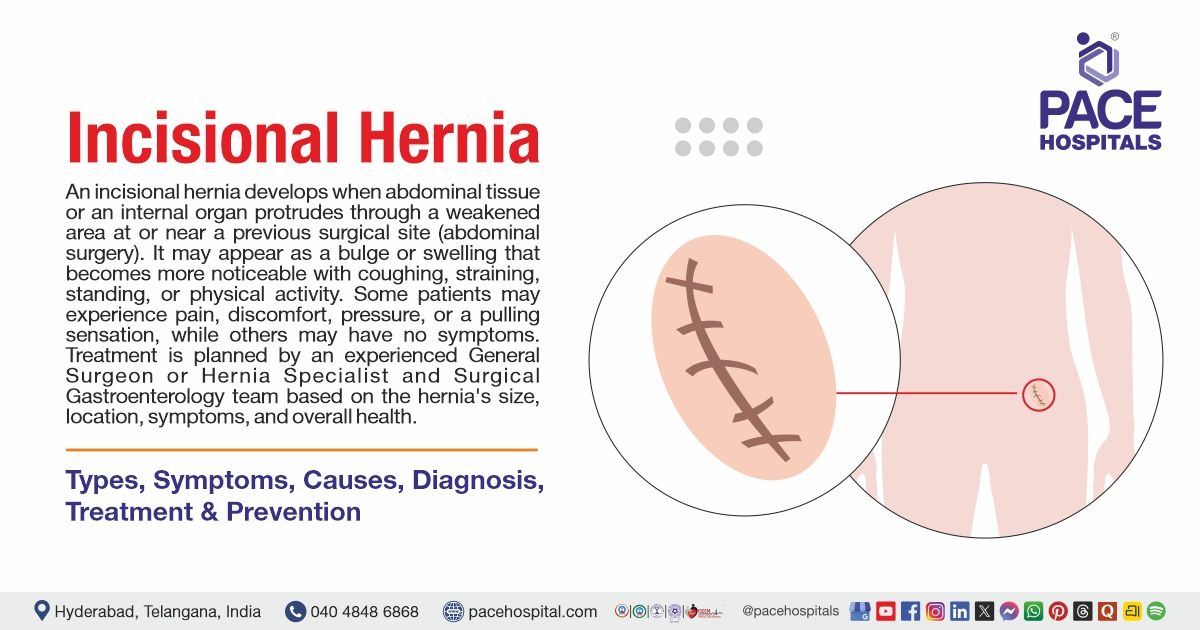
An incisional hernia is a type of ventral hernia that can develop in the area of a previous abdominal surgery. It may be noticed as a swelling or bulge on the abdomen, particularly around an old surgical scar. The bulge can become more prominent when an individual coughs, strains, stands, or engages in more strenuous physical activity. Depending on its size and location, an incisional hernia may cause abdominal discomfort, pain, pressure, or a pulling sensation, although some people may have little or no discomfort.
In certain cases, the tissue within the hernia can become trapped and may lose its blood supply, which can result in serious complications such as intestinal obstruction or strangulation. The treatment plan is determined by an experienced General Surgeon or Hernia Specialist and a surgical gastroenterologist team after assessing the individual patient's condition.
Incisional hernia meaning
The term incisional hernia originates from Latin words:
- “Incisional” comes from the Latin word incidere, meaning “to cut into.”
- “Hernia” comes from the Latin word hernia, meaning “rupture” or protrusion of tissue through a weak area.
Thus, an incisional hernia refers to a protrusion of abdominal tissue or an organ through a weakened area in the abdominal wall at or near a previous surgical incision or scar.
Incisional Hernia Types
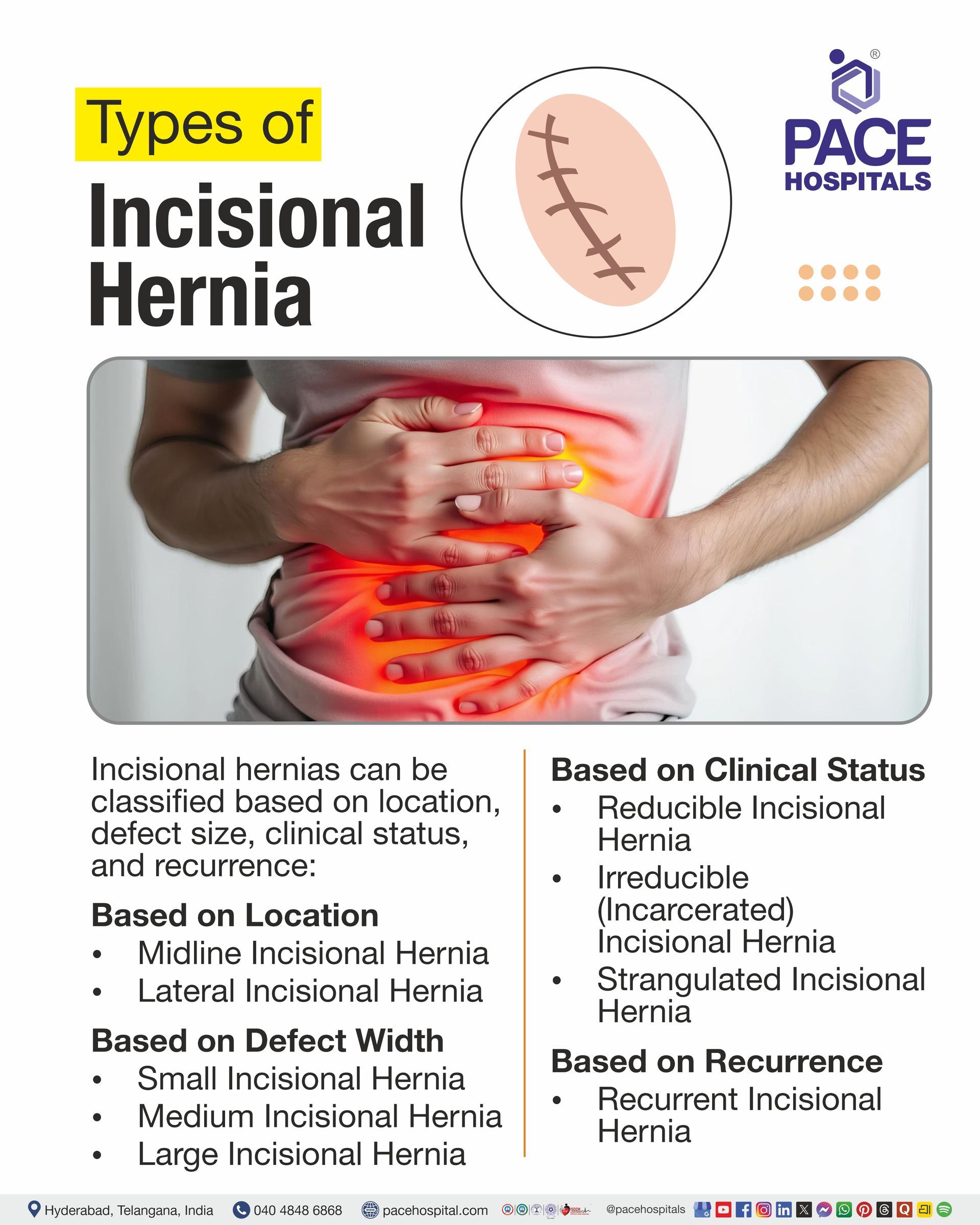
Incisional hernias can differ in their location, size, and previous repair history. The European Hernia Society (EHS) classification primarily describes incisional hernias according to the location and width of the abdominal wall defect. The types of incisional hernia are as follows:
Based on location
- Midline Incisional Hernia
- Lateral Incisional Hernia
Based on defect width
- Small, Medium and Large Incisional Hernia
Based on clinical status
- Reducible incisional hernia
- Irreducible or incarcerated incisional hernia
- Strangulated incisional hernia
Based on recurrence
- Recurrent Incisional Hernia
Based on location
- Midline Incisional Hernia: A midline incisional hernia develops along the central part of the abdominal wall, usually at the site of a previous vertical surgical incision. Depending on its location, it may occur in the upper, middle, or lower portion of the abdominal midline. The EHS further divides midline incisional hernias into specific anatomical zones to help describe their location accurately.
- Lateral Incisional Hernia: A lateral incisional hernia develops away from the abdominal midline, usually as a result of a surgical incision in the abdominal wall's side or outer areas. These can happen in places including the subcostal, flank, lumbar, or iliac regions. The EHS classification further divides these hernias based on anatomical location.
Based on Defect Width
- Small, Medium and Large Incisional Hernia: Incisional hernias can also be described according to the width of the abdominal wall defect. Under the EHS classification, the maximum transverse width of the defect is categorized as W1 (less than 4 cm), W2 (4–10 cm), or W3 (greater than 10 cm). The size of the defect is an important consideration when assessing the complexity of the hernia and planning treatment.
Based on Clinical Status
- Reducible incisional hernia: The bulge or hernia contents can move back into the abdomen spontaneously or with gentle pressure.
- Irreducible or incarcerated incisional hernia: The hernia contents become trapped outside the abdominal cavity and cannot be pushed back. This may lead to pain, swelling, and bowel obstruction.
- Strangulated incisional hernia: The blood supply to trapped bowel or tissue is reduced or cut off. This is a surgical emergency and may cause severe pain, vomiting, abdominal distension, fever, or a tender, discoloured bulge.
Based on recurrence
- Recurrent Incisional Hernia: A recurrent incisional hernia occurs when a hernia develops again at or around a previously repaired abdominal wall defect. Previous repair can alter the normal anatomy of the abdominal wall and may make subsequent treatment more complex. A history of previous repair is therefore an important consideration during evaluation and surgical planning.
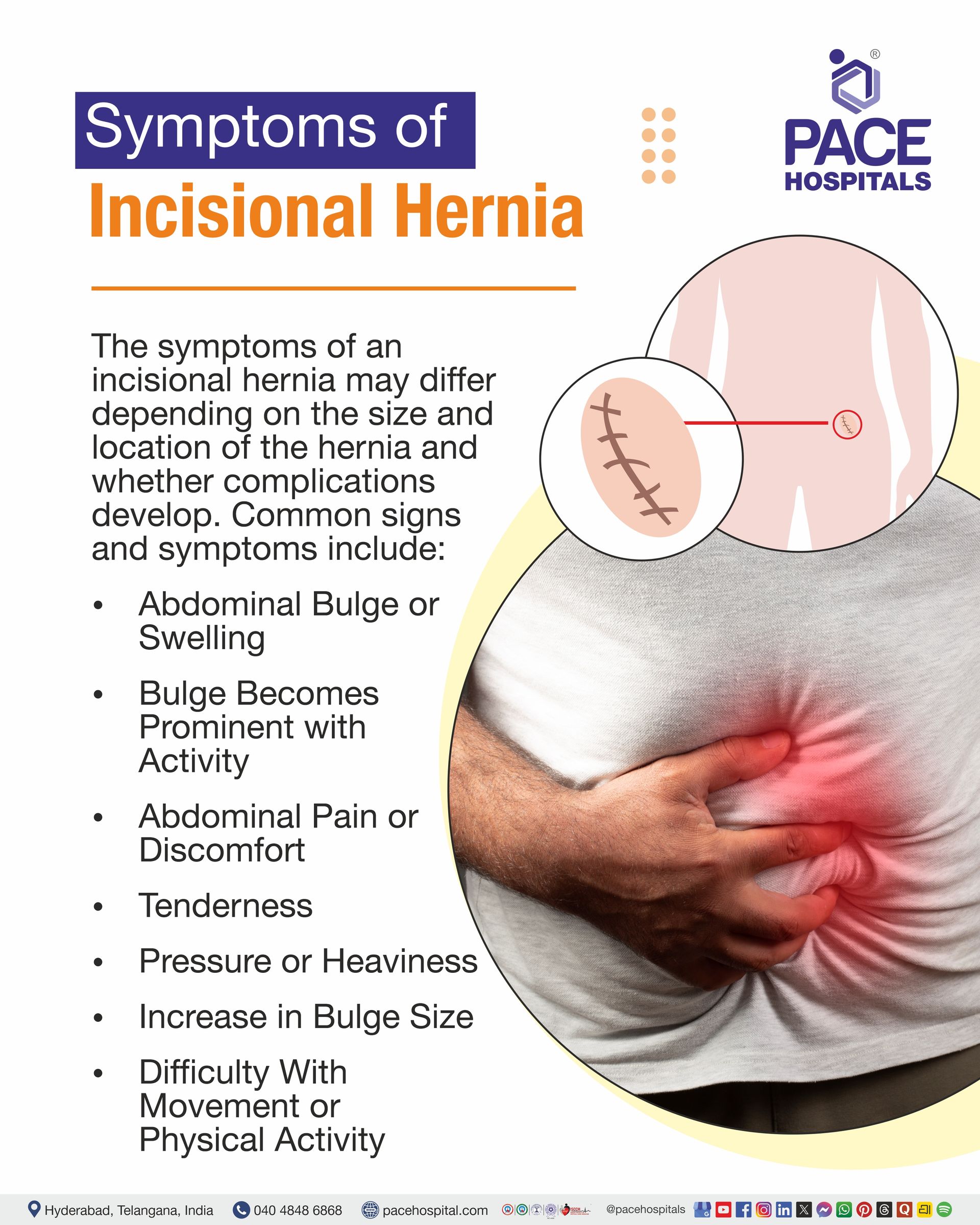
Incisional Hernia Symptoms
The symptoms of an incisional hernia can vary depending on the size and location of the abdominal wall defect and whether any complications develop. Common incisional hernia signs and symptoms include:
- Abdominal bulge or swelling
- Bulge that changes with activity
- Abdominal pain or discomfort
- Tenderness
- Pressure or heaviness
- Increase in the size of the bulge
- Difficulty with movement or physical activity
- Abdominal bulge or swelling: A noticeable lump may develop at or near the previous surgical incision.
- Bulge that changes with activity: The swelling may become more prominent when coughing, standing, straining, or lifting.
- Abdominal pain or discomfort: Pain may occur around the hernia and can become more noticeable with physical activity.
- Tenderness: The area around the hernia may feel sore or sensitive when touched.
- Pressure or heaviness: Some people describe a sensation of fullness, pressure, or pulling in the abdominal wall.
- Increase in the size of the bulge: An incisional hernia may gradually become larger over time.
- Difficulty with movement or physical activity: A larger hernia may cause discomfort while bending, exercising, lifting, or carrying out everyday activities.
Symptoms of a Complicated Incisional Hernia
In some cases, tissue or part of the intestine can become trapped within the hernia, known as incarceration. If the blood supply to the trapped tissue becomes compromised, the hernia can become strangulated. These complications require prompt medical assessment. Warning symptoms of an incisional hernia may include:
- Sudden or severe abdominal pain
- A painful, firm, or non-reducible bulge
- Increasing tenderness or swelling
- Redness or darkening of the skin over the hernia
- Nausea or vomiting
- Abdominal bloating or distension
- Difficulty passing stool or gas
- Fever or other signs of acute illness
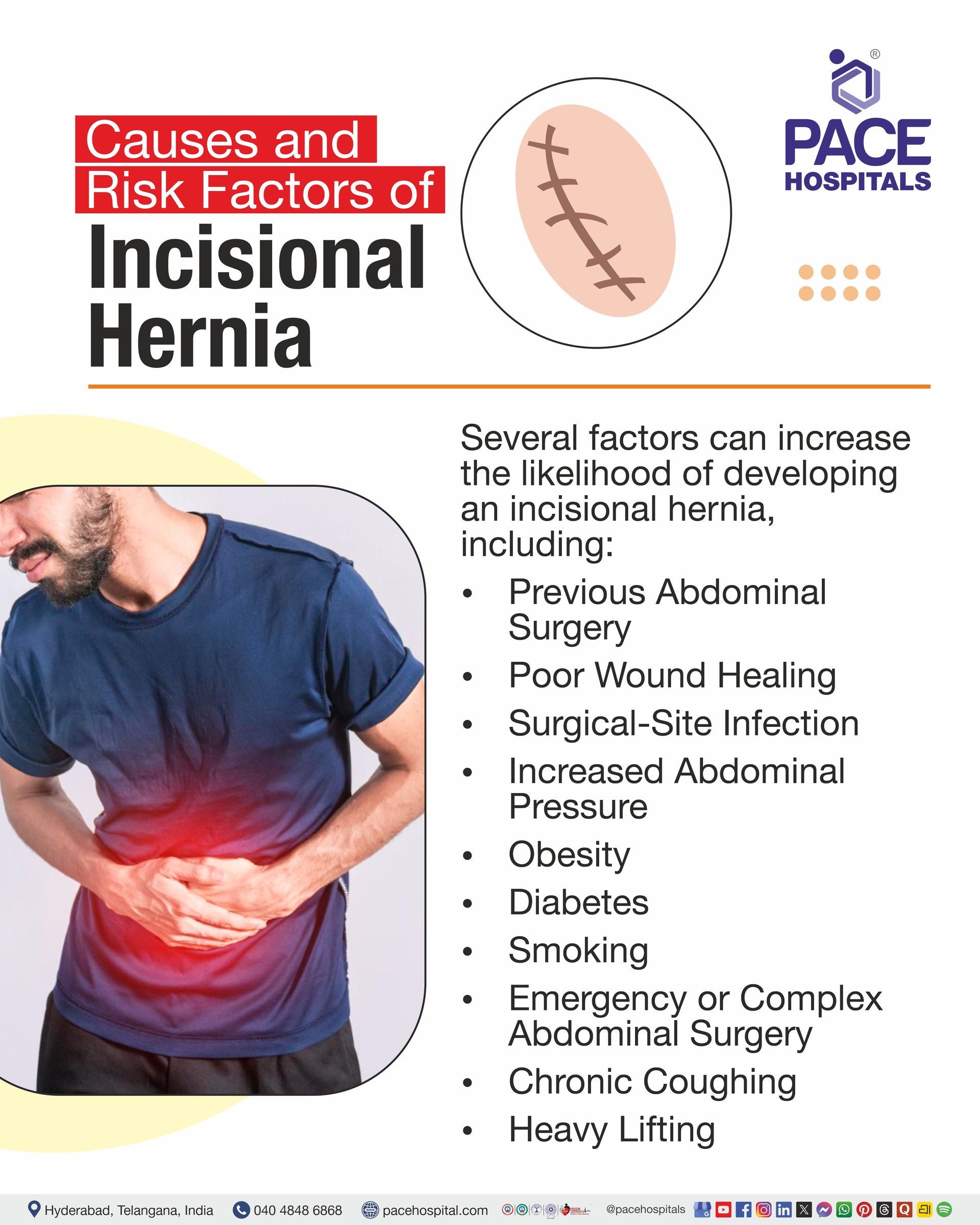
Incisional Hernia Causes and Risk Factors
An incisional hernia develops when the abdominal wall becomes weak enough for tissue from inside the abdomen to push through the weakened area. In an incisional hernia, the weakness occurs at or near a previous surgical incision. It can develop when the abdominal wall does not regain adequate strength during healing after surgery. Common causes and contributing factors include:
- Previous Abdominal Surgery
- Poor Wound Healing
- Surgical-Site Infection
- Increased Abdominal Pressure
- Obesity
- Diabetes
- Smoking
- Emergency or Complex Abdominal Surgery
- Chronic Coughing
- Heavy Lifting
- Previous Abdominal Surgery: An incisional hernia develops at or close to a previous abdominal surgical site. The abdominal wall may remain vulnerable as the tissues heal after the incision, allowing a defect to develop over time.
- Poor Wound Healing: Anything that interferes with normal healing of the abdominal wall can increase the likelihood of an incisional hernia. Surgical-site infection and wound separation are important factors because they can weaken the healing tissues.
- Surgical-Site Infection: An infection involving the surgical wound can interfere with tissue healing and substantially increase the risk of an incisional hernia. A 2026 meta-analysis of patients undergoing midline laparotomy found surgical-site infection to be one of the strongest perioperative risk factors for subsequent incisional hernia.
- Increased Abdominal Pressure: Repeated increases in pressure inside the abdomen can place stress on a healing surgical incision. Chronic coughing, repeated straining, and other conditions that increase intra-abdominal pressure may contribute to the development or enlargement of a hernia.
- Obesity: Excess body weight can place additional stress on the abdominal wall and is associated with a higher risk of incisional hernia in several studies. The risk may increase with increasing body mass index (BMI).
- Diabetes: Diabetes can affect tissue repair and wound healing and has been associated with an increased risk of incisional hernia after abdominal surgery. The European Hernia Society identifies diabetes as an important patient-related risk factor.
- Smoking: Smoking can impair tissue healing and has been associated with an increased risk of incisional hernia formation. Smoking is also linked with postoperative wound complications that can further affect abdominal-wall healing.
- Emergency or Complex Abdominal Surgery: Emergency operations and certain complex abdominal procedures may carry a higher risk of incisional hernia. Recent evidence also identifies factors such as reoperation during the same hospitalization, colon surgery, and stoma creation as associated with increased risk.
- Chronic Coughing: Repeated increases in pressure inside the abdomen, such as those associated with chronic coughing or repeated straining, can place additional stress on a healing abdominal wall. Chronic lung disease has also been associated with an increased risk in some studies.
- Heavy Lifting: Repeated heavy lifting and strenuous physical activity can temporarily increase pressure within the abdomen and place additional stress on the abdominal wall. This may contribute to the development or enlargement of a ventral and incisional hernia when a weakness or defect is already present. However, heavy lifting should not be described as the sole or definitive cause of an incisional hernia, which develops in relation to a previous surgical incision.
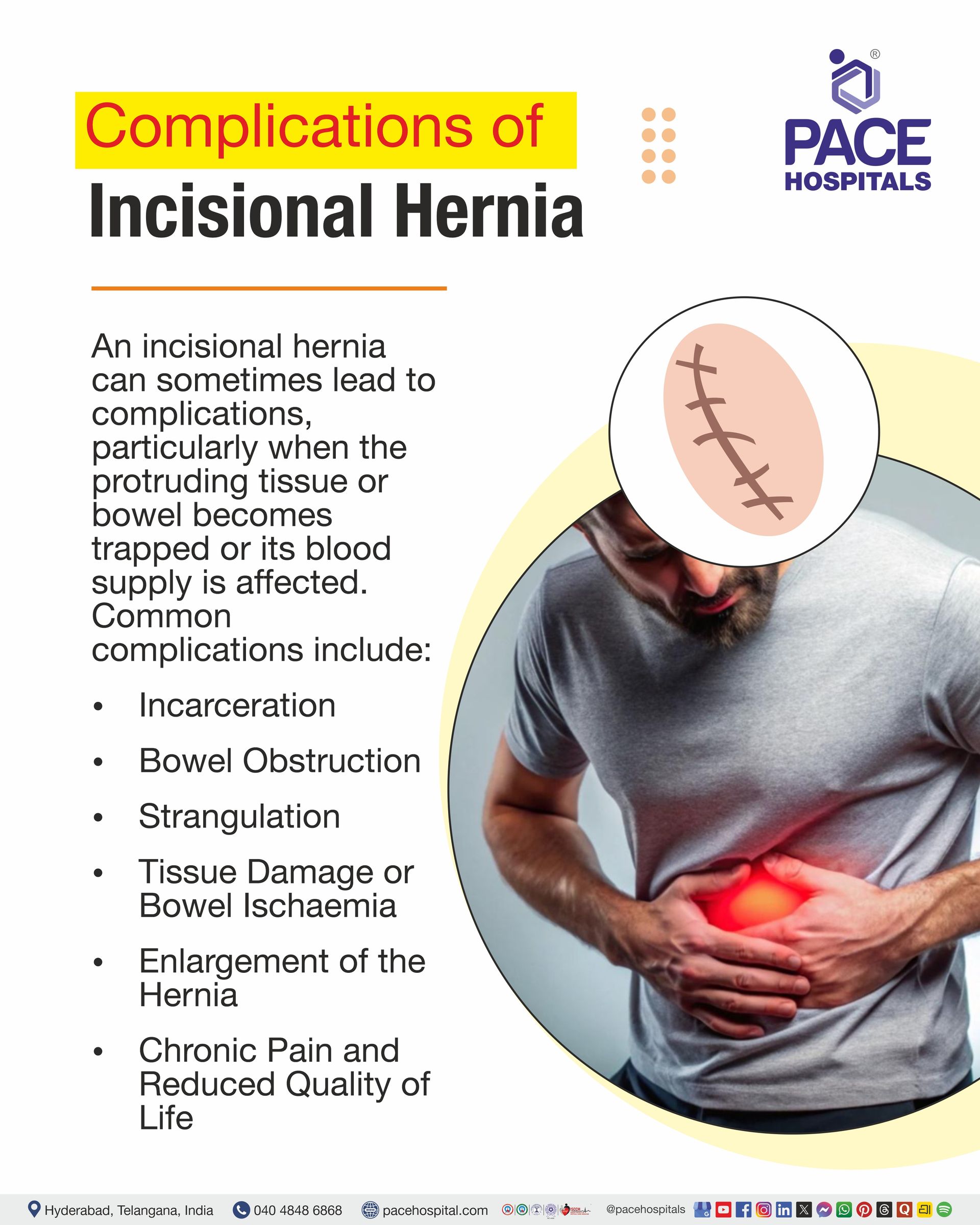
Incisional Hernia Complications
An incisional hernia may remain stable for some time, but complications can develop when the tissue or bowel within the hernia becomes trapped, or its blood supply is affected. Common complications of incisional hernia include:
- Incarceration
- Bowel Obstruction
- Strangulation
- Tissue Damage or Bowel Ischaemia
- Enlargement of the Hernia
- Chronic Pain and Reduced Quality of Life
Incarceration
Incarceration occurs when the tissue or bowel protruding through the abdominal-wall defect becomes trapped and cannot be easily pushed back into the abdomen. A previously soft or reducible bulge may become firm, painful, or difficult to reduce. Incarceration can increase the risk of further complications and requires prompt medical assessment.
Bowel Obstruction
When a portion of the intestine becomes trapped within the hernia, it can interfere with the normal passage of intestinal contents. This may result in abdominal pain, bloating or distension, nausea, vomiting, and difficulty passing stool or gas. Bowel obstruction associated with an incisional hernia may require urgent treatment.
Strangulation
It is a serious complication in which the blood supply to the trapped tissue or bowel becomes compromised. Without timely treatment, the affected tissue can become damaged or die. Severe or rapidly increasing pain, marked tenderness, a firm or irreducible bulge, vomiting, abdominal distension, and skin discoloration over the hernia can be warning signs. Strangulation is a surgical emergency.
Tissue Damage or Bowel Ischaemia
When a trapped portion of bowel remains without adequate blood flow, ischaemia (reduced blood supply) can develop and may progress to tissue necrosis. If non-viable bowel is found during emergency surgery, removal of the affected segment may be necessary.
Enlargement of the Hernia
Incisional hernias can gradually increase in size. A larger abdominal-wall defect may cause increasing discomfort, affect mobility or daily activities, and make subsequent surgical repair more complex.
Chronic Pain and Reduced Quality of Life
Some patients have continuous stomach discomfort, pressure, pulling, or pain as a result of an incisional hernia. These symptoms can interfere with physical activity and daily duties, affecting overall quality of life. Elective hernia repair may be considered if the symptoms are severe or the hernia is steadily growing.
Femoral Hernia Diagnosis
Diagnosing an incisional hernia generally begins with a detailed medical history and physical examination by a hernia specialist or experienced General Surgeon. The hernia doctor and Surgical Gastroenterologists team may ask questions about previous abdominal surgeries, the onset and progression of the abdominal bulge, pain or discomfort, and whether the swelling becomes more prominent while standing, coughing, straining, or performing physical activities. The diagnosis of an incisional hernia includes the following:
- Medical History
- Physical Examination
- Imaging Tests for Incisional Hernia
Medical History
The hernia doctor may ask about:
- Previous abdominal surgeries and the type and location of the incision
- Previous hernia repair or recurrence
- When the abdominal bulge or swelling was first noticed
- Pain, tenderness, pressure, or discomfort
- Changes in the size or appearance of the bulge
- Symptoms such as nausea, vomiting, abdominal distension, or difficulty passing stool or gas
- Medical conditions and factors that may affect wound healing
Physical Examination
A physical examination is an important part of diagnosing an incisional hernia. The doctor examines the abdomen for a visible or palpable bulge, particularly around a previous surgical scar. The examination may be performed while the patient is standing, lying down, coughing, or straining, as these actions can make a hernia more apparent. The hernia doctor may also assess whether the hernia is reducible and evaluate its location, size, tenderness, and other features.
Imaging Studies
A computed tomography (CT) scan is considered the most sensitive imaging investigation for diagnosing an incisional hernia. It can show the location and size of the abdominal-wall defect, the contents of the hernia, and surrounding abdominal structures. CT is also particularly useful for assessing larger or complex hernias and for preoperative planning when surgical repair is being considered.
Abdominal-wall ultrasonography is a non-invasive imaging method that can help identify an incisional hernia, particularly when the diagnosis is not clear on physical examination. Dynamic ultrasound may be performed while the patient coughs or strains to assess movement of tissue through the abdominal-wall defect. It can be useful when avoiding radiation exposure is desirable.
Magnetic resonance imaging (MRI) may be considered in selected patients, particularly when computed tomography (CT) scan is undesirable because of radiation exposure or when additional soft-tissue assessment is required. Magnetic resonance imaging (MRI) with manoeuvres that increase abdominal pressure, such as Valsalva, can help identify some abdominal-wall defects.
Incisional Hernia Treatment
Treatment for an incisional hernia depends on the size and location of the abdominal-wall defect, the symptoms, the patient's overall health, and whether complications are present. A small hernia with minimal or no symptoms may sometimes be monitored, particularly when surgery carries a higher risk. However, symptomatic, enlarging, or complicated hernias may require surgical repair. The treatment plan is determined by an experienced General Surgeon or Hernia Specialist and surgical gastroenterologist team after assessing the individual patient's condition as follows:
- Non-Surgical Management
- Surgical Treatment
Non-Surgical Management of Incisional Hernia
Some patients with a small or minimally symptomatic incisional hernia may be managed with observation and regular medical follow-up. Measures such as weight management, smoking cessation, improving overall fitness and nutrition, and addressing conditions that increase abdominal pressure or impair wound healing may be recommended before elective surgery. An abdominal binder may sometimes provide temporary comfort, but it does not repair the underlying abdominal-wall defect.
Surgical Treatment of Incisional Hernia
Surgery is the main definitive treatment for symptomatic incisional hernias. The surgical procedure involves returning the protruding tissue to its normal position and repairing the abdominal-wall defect, with mesh reinforcement when appropriate to strengthen the repair and reduce the risk of recurrence. The choice of technique depends on the hernia's size, location, complexity, previous surgeries, and the patient's overall health. The main surgical approaches for incisional hernia repair include:
- Open Incisional Hernia Repair
- Laparoscopic Incisional Hernia Repair
- Robotic-Assisted Incisional Hernia Repair
Open Incisional Hernia Repair
In open repair, the surgeon (surgical gastroenterologist) accesses the hernia through an incision, returns the protruding tissue to the abdomen, and repairs the abdominal-wall defect. Mesh reinforcement may be used when appropriate to strengthen the repair and reduce the risk of recurrence.
Laparoscopic Incisional Hernia Repair
Laparoscopic hernia repair is a minimally invasive surgical approach in which the surgeon makes a few small openings in the abdomen to insert a laparoscope, a thin camera-equipped tube, along with other surgical instruments. The hernia defect is repaired and, when appropriate, reinforced with mesh. For selected patients, this approach may result in smaller surgical wounds and a shorter recovery period than conventional open repair.
Robotic-Assisted Incisional Hernia Repair
Robotic-assisted repair is another minimally invasive approach in which the surgeon controls specialized robotic instruments to repair the abdominal-wall defect. It may allow precise dissection and closure of the defect in selected patients, with mesh reinforcement when appropriate.
Additional Treatment Considerations
Complex Abdominal Wall Reconstruction
Large, recurring, or difficult incisional hernias may necessitate advanced abdominal wall reconstruction. When direct closure of the abdominal-wall defect is not possible, some advanced techniques such as component separation or transversus abdominis release (TAR) may be applied.
Mesh Repair for Incisional Hernia
Mesh reinforcement is commonly used in incisional hernia repair because it can strengthen the abdominal wall and reduce the risk of recurrence compared with suture repair alone in appropriately selected patients. The type and placement of mesh are determined according to the hernia's size, location, complexity, surrounding tissues, and the patient's individual circumstances.
Diet and lifestyle Changes for Incisional Hernia
Diet and lifestyle changes cannot heal the compromised abdominal wall or remove an incisional hernia. Maintaining a healthy weight, avoiding constipation, quitting smoking, and limiting activities that put too much strain on the abdominal wall can all help control symptoms and improve overall health.
Incisional Hernia Diet
A balanced diet can help maintain a healthy weight and support normal bowel function. Patients may be advised to:
- Include fibre-rich foods, such as vegetables, fruits, whole grains, and legumes, to help prevent constipation and straining.
- Drink adequate fluids unless fluid restriction has been advised by a hernia doctor.
- Choose nutritious foods that provide sufficient protein, vitamins, and minerals, particularly before and after hernia surgery.
- Follow a calorie-appropriate diet to help achieve or maintain a healthy weight.
Lifestyle Modifications
Certain lifestyle measures may help reduce factors that can place additional stress on the abdominal wall:
- Maintain a healthy weight: Excess body weight puts an additional strain on the abdominal wall, which can alter hernia symptoms and surgical outcomes.
- Avoid smoking: Smoking can impair wound healing and increase the risk of complications following hernia repair.
- Prevent constipation: Avoid straining during bowel movements and seek immediate medical attention from a hernia doctor or surgical gastroenterologist, especially if constipation is prolonged and persistent.
- Manage chronic cough: Persistent coughing can repeatedly increase pressure within the abdomen and may aggravate an existing hernia.
- Avoid heavy lifting when it worsens symptoms: Follow the treating surgeon's advice regarding lifting and strenuous physical activity, particularly after surgery.
- Follow postoperative instructions: Gradually resume physical activities and follow the surgeon's recommendations regarding wound care, exercise, lifting, and follow-up.
Note: These measures can help manage contributing factors but cannot close the abdominal-wall defect. An incisional hernia that is painful, enlarging, or causing functional problems should be evaluated by an experienced General Surgeon or Hernia Specialist or Surgical gastroenterologist.
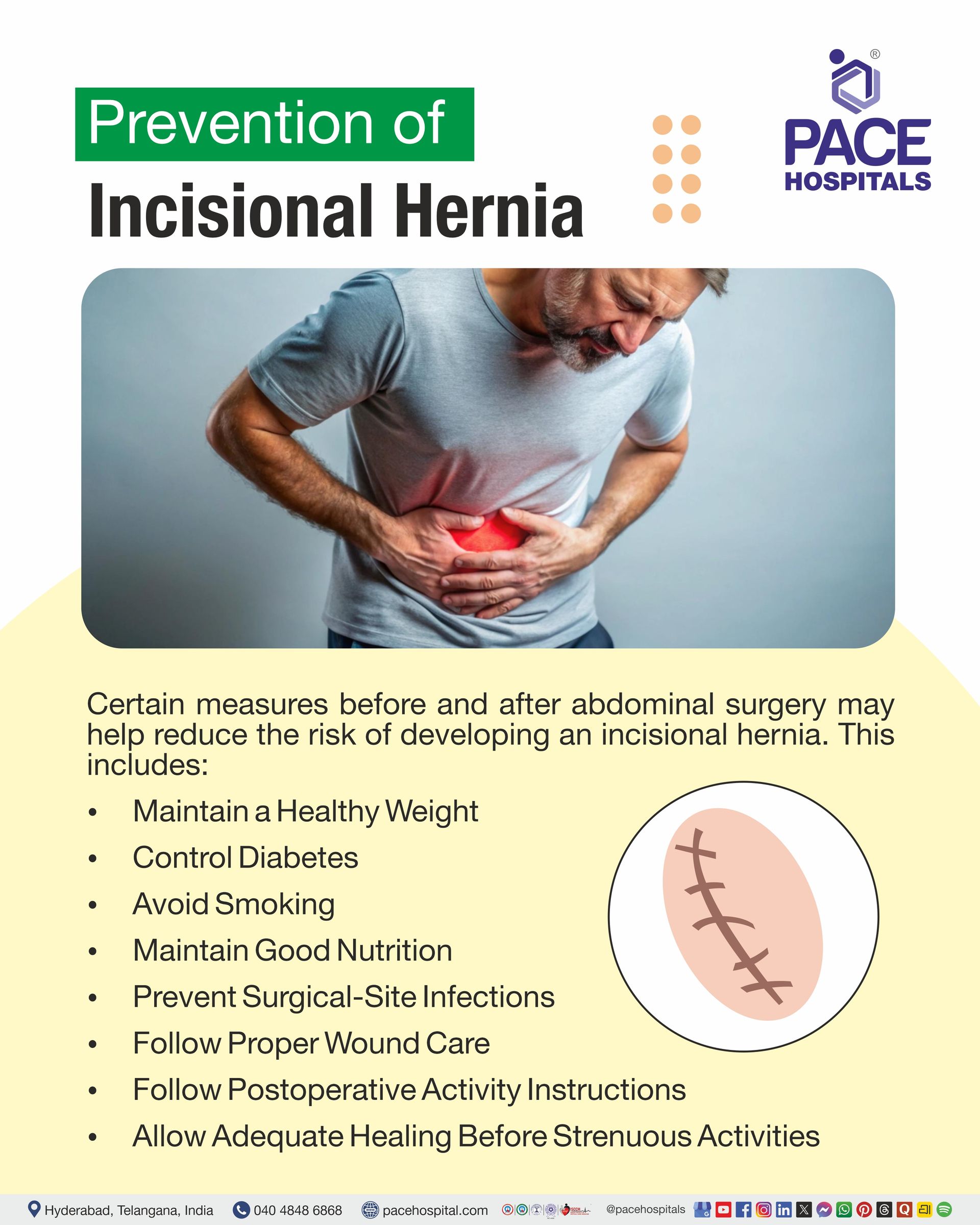
Incisional Hernia Prevention
Not all incisional hernias can be prevented, as their development depends on several patient-related and surgical factors. However, certain measures before and after abdominal surgery may help reduce the risk. Maintaining a healthy weight, controlling diabetes, stopping smoking, supporting good nutrition, and preventing surgical-site infections are important measures for reducing modifiable risk factors. Appropriate surgical incision closure techniques and careful postoperative wound management also play an important role in prevention.
Why Choose PACE Hospitals?
Expert Super Specialist Doctors
Advanced Diagnostics & Treatment
Affordable & Transparent Care
24x7 Emergency & ICU Support
Frequently Asked Questions (FAQs) on Incisional Hernia
Can an incisional hernia go away on its own?
No. An incisional hernia generally does not close or disappear on its own because it results from a weakness or defect in the abdominal wall. Lifestyle measures may help control factors that can worsen the hernia, but they cannot repair the defect. Surgical repair may be recommended when the hernia causes symptoms, becomes larger, or develops complications.
Does incisional hernia require surgery?
Not every incisional hernia requires immediate hernia surgery. A small hernia with few or no symptoms may sometimes be monitored after discussion with an experienced general surgeon or surgical gastroenterologist. Surgery is generally considered when the hernia causes persistent pain or discomfort, increases in size, affects daily activities, or becomes incarcerated or strangulated. The decision depends on the patient's symptoms, general health, and characteristics of the hernia.
How can an incisional hernia be prevented?
Not every incisional hernia can be prevented, particularly when several factors affect wound healing. Maintaining a healthy weight, avoiding smoking, managing conditions such as diabetes, supporting good nutrition, and following appropriate postoperative wound-care and activity instructions may help reduce the risk. Preventing surgical-site infection and using appropriate abdominal-wall closure techniques are also important factors in reducing risk.
How to repair incisional hernia?
Incisional hernia repair involves returning the protruding abdominal tissue to its appropriate position and closing the abdominal-wall defect. Depending on the size and location of the hernia and the patient's condition, repair may be performed through open, laparoscopic, or robotic-assisted surgery. Mesh reinforcement is commonly used in appropriate patients to strengthen the repair and lower the risk of recurrence.
Can an incisional hernia affect the intestine?
Yes. An incisional hernia may contain a portion of the intestine. If the bowel becomes trapped, it can cause intestinal obstruction and, if its blood supply is compromised, may result in strangulation.
Can an incisional hernia heal itself?
An incisional hernia usually does not heal by itself because the underlying abdominal-wall defect remains present. Supportive measures may help with symptoms or reduce factors that place stress on the abdominal wall, but they do not close the hernia. When repair is required, surgery is used to restore the integrity of the abdominal wall.
Can incisional hernia cause back pain?
An incisional hernia may sometimes be associated with back discomfort, particularly when a large abdominal-wall defect alters abdominal-wall mechanics or causes discomfort during movement. However, back pain has many possible causes and should not automatically be attributed to a hernia. A medical evaluation can help determine whether the hernia is contributing to the symptoms or whether another condition is responsible.
How does an ultrasound diagnose incisional hernia?
An abdominal-wall ultrasound can help identify a defect in the abdominal wall and show tissue moving through it. Dynamic ultrasound may be performed while the patient coughs or strains, which can make a small or intermittent hernia easier to detect. Ultrasound can be particularly useful when the diagnosis is uncertain after physical examination. In larger, complex, or recurrent hernias, a CT scan may provide more detailed information for diagnosis and surgical planning.
How safe is incisional hernia mesh repair?
Mesh repair is widely used for ventral and incisional hernias and can reduce the likelihood of recurrence compared with repair using sutures alone in appropriately selected patients. As with any surgical treatment, mesh repair can have potential complications, including infection, seroma, chronic pain, or recurrence. The type and position of the mesh are selected according to the hernia characteristics and the patient's individual circumstances.
What does it mean by small incisional hernia?
A small incisional hernia refers to a hernia with a relatively narrow abdominal-wall defect. Under the European Hernia Society classification, an incisional hernia with a defect width of less than 4 cm is classified as W1. A small defect does not necessarily mean that the hernia will cause no symptoms or remain unchanged, so its symptoms, location, and progression should also be considered when deciding on management.
How big can an incisional hernia get?
There is no fixed maximum size for an incisional hernia. Some remain small, while others can gradually enlarge and involve a substantial portion of the abdominal wall. The size of the defect is clinically important when planning treatment. The European Hernia Society classifies incisional hernia defects according to width, with W1 less than 4 cm, W2 between 4 and 10 cm, and W3 greater than 10 cm.
Can an incisional hernia cause constipation?
An incisional hernia does not usually cause constipation by itself. However, if a portion of the intestine becomes trapped within the hernia and interferes with the passage of intestinal contents, symptoms such as abdominal pain, bloating, vomiting, constipation, or inability to pass gas may occur. Such symptoms require prompt medical assessment.
What does an incisional hernia look like?
An incisional hernia commonly appears as a visible or palpable bulge near a previous surgical scar. The swelling may become more noticeable while standing, coughing, straining, or performing physical activity and may become less prominent when lying down.
Does an incisional hernia always cause pain?
No. Some incisional hernias may cause little or no discomfort, while others can produce pain, tenderness, pressure, heaviness, or a pulling sensation. Symptoms may become more noticeable with physical activity or increased abdominal pressure, which may require evaluation by a hernia specialist.
Share on
Request an appointment
Fill in the appointment form or call us instantly to book a confirmed appointment with our super specialist at 04048486868
Appointment request - health articles
Recent Articles