Gastrointestinal (GI) Endoscopy & Advanced Scopy Procedures in Hyderabad
Explore diagnostic and therapeutic gastrointestinal endoscopy (GI endoscopy) procedures at PACE Hospitals, Hyderabad, including Upper GI Endoscopy, Colonoscopy, Sigmoidoscopy, ERCP, EUS, SpyGlass Cholangioscopy, Capsule Endoscopy, Balloon Enteroscopy, POEM, EMR, ESD and Endoscopic Sleeve Gastroplasty (ESG), to understand their uses, indications and treatment applications.
Book a GI Endoscopy Consultation
GI Endoscopy - Appointment Enquiry
Thank you for contacting us. We will get back to you as soon as possible. Kindly save these contact details in your contacts to receive calls and messages:-
Call or WhatsApp: +914048486868
Regards,
PACE Hospitals
HITEC City and Madeenaguda
Hyderabad, Telangana, India.
Please try again. Kindly save these contact details in your contacts to receive calls and messages:-
Call or WhatsApp: +914048486868
Regards,
PACE Hospitals
HITEC City and Madeenaguda
Hyderabad, Telangana, India.
What is Gastrointestinal Endoscopy and Scopy Procedures?
Gastrointestinal endoscopy is a medical procedure that uses a thin, flexible tube with a camera and light to examine the digestive tract. Depending on the clinical requirement, endoscopy can help diagnose abnormalities, collect tissue samples, remove polyps, control bleeding and perform certain minimally invasive treatments.
Different endoscopic procedures are used to examine specific parts of the digestive system, including the oesophagus, stomach, small intestine, colon, bile ducts and pancreas.
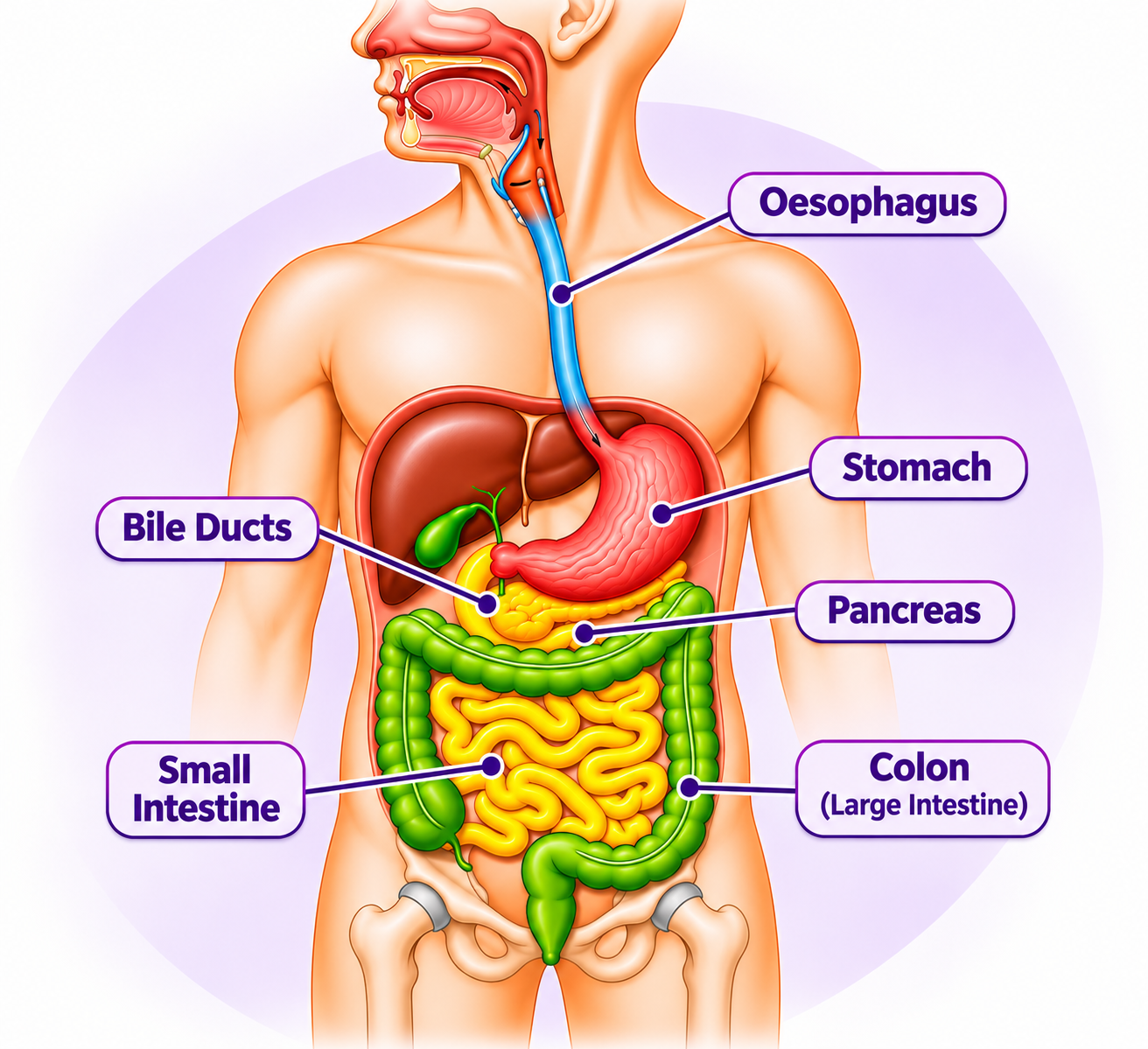
Types of Gastrointestinal Endoscopy Procedures
Gastrointestinal (GI) endoscopy procedures include different techniques used to examine the digestive tract, investigate symptoms, diagnose abnormalities and perform selected treatments. These procedures can be broadly classified into Upper GI Endoscopy, including Upper GI Endoscopy (EGD); Lower GI Endoscopy, including Colonoscopy and Sigmoidoscopy; Pancreaticobiliary Endoscopy, including ERCP, EUS and SpyGlass Cholangioscopy; and Advanced Therapeutic and Third-Space Endoscopy, including POEM, EMR, ESD and Endoscopic Sleeve Gastroplasty (ESG).
Other diagnostic and therapeutic procedures include Capsule Endoscopy, Balloon Enteroscopy, Endoscopic Polypectomy, Endoscopic Variceal Ligation (EVL), Endoscopic Stenting and EUS-guided tissue sampling (EUS-FNA and EUS-FNB). The choice of procedure depends on the symptoms, suspected condition and clinical assessment by a gastroenterologist.
01
Upper GI Endoscopy (UGI Endoscopy / EGD)
What is it?
A procedure that uses a flexible endoscope to examine the oesophagus, stomach and duodenum.
When is it recommended?
Persistent acidity, difficulty swallowing, unexplained vomiting, suspected ulcers or upper gastrointestinal bleeding.
What does it help with?
Identifying inflammation, ulcers, abnormal growths and other upper digestive tract conditions; biopsies can also be collected when needed.
02
Colonoscopy
What is it?
An endoscopic procedure used to examine the rectum and entire colon.
When is it recommended?
Blood in stools, persistent changes in bowel habits, unexplained anaemia, suspected polyps or evaluation of the colon.
What does it help with?
Detecting inflammation, polyps, bleeding and other abnormalities; biopsies and polyp removal may be performed during the procedure.
03
Sigmoidoscopy
What is it?
A procedure that examines the rectum and lower portion of the colon using a flexible sigmoidoscope.
When is it recommended?
Rectal bleeding, persistent changes in bowel habits or suspected abnormalities in the lower colon.
What does it help with?
Identifying inflammation, polyps and other abnormalities in the examined portion of the colon.
04
ERCP (Endoscopic Retrograde Cholangiopancreatography)
What is it?
A specialised endoscopic procedure used to access and treat conditions affecting the bile ducts and pancreatic ducts.
When is it recommended?
Suspected bile duct stones, duct narrowing, blockages or selected pancreatic duct conditions.
What does it help with?
Removing duct stones, placing stents and treating selected bile duct and pancreatic duct obstructions.
05
EUS (Endoscopic Ultrasound)
What is it?
A procedure combining endoscopy and ultrasound imaging to examine the digestive tract and nearby organs.
When is it recommended?
Evaluation of pancreatic lesions, cysts, bile duct abnormalities and selected digestive tract conditions.
What does it help with?
Detailed imaging of internal structures, guided tissue sampling and selected therapeutic interventions.
06
SpyGlass Cholangioscopy
What is it?
A specialised procedure that allows direct visual examination of the inside of the bile ducts using a cholangioscope.
When is it recommended?
Selected bile duct abnormalities, indeterminate strictures and complex bile duct stones.
What does it help with?
Direct visual assessment, targeted tissue sampling and guidance for selected bile duct treatments.
07
POEM (Peroral Endoscopic Myotomy)
What is it?
A minimally invasive endoscopic procedure that involves making a controlled incision in the oesophageal muscle.
When is it recommended?
Selected oesophageal motility disorders, particularly achalasia cardia.
What does it help with?
Reducing abnormal muscle tightness at the lower oesophageal sphincter to improve the passage of food into the stomach.
08
EMR (Endoscopic Mucosal Resection)
What is it?
An advanced endoscopic technique used to remove selected abnormal or superficial lesions from the gastrointestinal lining.
When is it recommended?
Selected gastrointestinal polyps and superficial precancerous or early-stage lesions.
What does it help with?
Removing abnormal tissue through an endoscope and obtaining specimens for pathological examination.
09
ESD (Endoscopic Submucosal Dissection)
What is it?
An advanced endoscopic technique used to remove selected superficial gastrointestinal lesions, often in a single piece.
When is it recommended?
Selected larger, complex or superficial gastrointestinal lesions.
What does it help with?
Removing abnormal tissue while allowing detailed pathological assessment of the resected specimen.
10
Endoscopic Sleeve Gastroplasty (ESG)
What is it?
An endoscopic procedure that uses sutures to reduce stomach size without external surgical incisions.
When is it recommended?
For selected individuals with obesity who are suitable for endoscopic weight-loss treatment.
What does it help with?
Reduces stomach capacity and supports weight management alongside lifestyle changes and medical follow-up.
11
Third-Space Endoscopy
What is it?
A group of advanced endoscopic techniques that access the submucosal space within the gastrointestinal tract.
When is it recommended?
Selected gastrointestinal motility disorders and lesions involving deeper layers of the digestive tract
What does it help with?
Performing specialised procedures such as POEM and other selected submucosal interventions without conventional external surgery.
12
Capsule Endoscopy
What is it?
A diagnostic procedure that uses a small, swallowable camera capsule to capture images of the digestive tract, particularly the small intestine.
When is it recommended?
Unexplained gastrointestinal bleeding, suspected small intestinal abnormalities and selected cases of unexplained iron-deficiency anaemia.
What does it help with?
Detecting small intestinal abnormalities that may not be easily accessible through conventional endoscopy.
13
Balloon Enteroscopy
What is it?
A specialised endoscopic procedure that uses a balloon-assisted technique to examine the small intestine.
When is it recommended?
Suspected small intestinal bleeding, unexplained abnormalities or findings identified on capsule endoscopy.
What does it help with?
Examining the small intestine, collecting biopsies and performing selected treatments.
14
Endoscopic Polypectomy
15
Endoscopic Variceal Ligation (EVL)
What is it?
An endoscopic procedure that uses small rubber bands to close enlarged veins (varices), usually in the oesophagus.
When is it recommended?
Oesophageal varices associated with portal hypertension, particularly when bleeding has occurred or prevention of a first bleed is indicated.
What does it help with?
Controlling active variceal bleeding in appropriate settings and reducing the risk of future bleeding.
16
Endoscopic Stricture Dilatation
What is it?
A procedure that widens narrowed sections (strictures) of the digestive tract using specialised balloons or dilators.
When is it recommended?
Difficulty swallowing or other symptoms caused by narrowing of the oesophagus or selected gastrointestinal passages.
What does it help with?
Improving the passage of food or digestive contents through the narrowed area.
17
Endoscopic Stenting
What is it?
A procedure in which a specialised tube called a stent is placed through an endoscope to keep a narrowed or blocked passage open.
When is it recommended?
Selected bile duct, oesophageal, intestinal or other gastrointestinal obstructions.
What does it help with?
Restoring or maintaining the passage of bile, food or intestinal contents, depending on the location of the blockage.
18
Endoscopic Hemostasis
What is it?
An endoscopic procedure used to control bleeding from the digestive tract.
When is it recommended?
Upper or lower gastrointestinal bleeding caused by ulcers, abnormal blood vessels, varices or other lesions.
What does it help with?
Controlling bleeding using techniques such as clips, injection therapy or thermal treatment.
19
EUS-Guided Fine Needle Aspiration (EUS-FNA)
What is it?
A diagnostic technique that uses endoscopic ultrasound guidance to collect cells or fluid from a suspicious lesion using a fine needle.
When is it recommended?
Evaluation of selected pancreatic lesions, cysts, lymph nodes and other abnormalities near the digestive tract.
What does it help with?
Obtaining cellular samples for laboratory and cytological examination.
20
EUS-Guided Fine Needle Biopsy (EUS-FNB)
What is it?
A technique that uses endoscopic ultrasound guidance to collect tissue samples from a suspicious lesion.
When is it recommended?
Evaluation of selected pancreatic masses, lymph nodes and other lesions requiring tissue examination.
What does it help with?
Obtaining tissue samples for histopathological assessment and diagnosis.
21
Percutaneous Endoscopic Gastrostomy (PEG) Tube Placement
What is it?
A procedure in which a feeding tube is placed into the stomach through the abdominal wall with endoscopic guidance.
When is it recommended?
For patients who require long-term nutritional support and cannot take sufficient food orally.
What does it help with?
Provides a route for delivering nutrition, fluids and medications directly into the stomach.
22
Foreign Body Removal Through Endoscopy
What is it?
A procedure that uses an endoscope and specialised instruments to remove swallowed foreign objects from the digestive tract.
When is it recommended?
When an ingested object becomes lodged in the oesophagus, stomach or another accessible part of the digestive tract.
What does it help with?
Removes the foreign object and helps prevent associated injury or obstruction.
23
Endoscopic Cystogastrostomy / Pancreatic Pseudocyst Drainage
What is it?
An endoscopic procedure that creates a drainage connection between a pancreatic fluid collection and the stomach or intestine.
When is it recommended?
For selected symptomatic pancreatic pseudocysts or walled-off pancreatic fluid collections.
What does it help with?
Facilitates drainage of accumulated pancreatic fluid without conventional open surgery.
24
Endoscopic Nasobiliary Drainage (ENBD)
What is it?
A procedure that places a temporary drainage tube into the bile duct through an endoscopic approach.
When is it recommended?
Selected cases of bile duct obstruction, infection or the need for temporary biliary drainage.
What does it help with?
Allows bile to drain externally and helps relieve biliary obstruction.
25
Endoscopic Removal of Gastric Bezoars
What is it?
A procedure that uses an endoscope and specialised instruments to break up and remove accumulated masses of undigested material from the stomach.
When is it recommended?
When a gastric bezoar causes symptoms such as abdominal discomfort, nausea, vomiting or gastric outlet obstruction.
What does it help with?
Removes or fragments the obstructing material to help restore normal stomach emptying.
26
Endoscopic Band Ligation of Haemorrhoids
What is it?
A procedure that uses an endoscopic or specialised ligation device to place small rubber bands around selected internal haemorrhoids.
When is it recommended?
For selected internal haemorrhoids causing symptoms such as rectal bleeding or prolapse.
What does it help with?
Cuts off the blood supply to the treated haemorrhoidal tissue, allowing it to shrink and detach.
27
Endoscopic Decompression of the Colon
What is it?
A procedure that uses a colonoscope to release trapped gas and decompress a distended colon.
When is it recommended?
In selected cases of acute colonic pseudo-obstruction or significant colonic dilatation.
What does it help with?
Relieves colonic distension and helps reduce pressure within the colon.
28
Endoscopic Pancreatic Duct Stenting
What is it?
A procedure that places a small tube (stent) into the pancreatic duct using an endoscopic approach, usually through ERCP.
When is it recommended?
Selected pancreatic duct strictures, leaks, obstructions or other duct-related conditions.
What does it help with?
Maintains pancreatic duct drainage and helps relieve selected obstructions or leaks.
When Might You Need a Gastrointestinal Endoscopy?
Persistent digestive symptoms or suspected abnormalities may require further evaluation through an endoscopic procedure. Depending on your symptoms, medical history and initial test findings, a gastroenterologist may recommend one of the following procedures.
| Symptoms or clinical concerns | Procedure that may be considered |
|---|---|
| Persistent heartburn, acid reflux or difficulty swallowing | Upper GI Endoscopy |
| Persistent abdominal discomfort, nausea or suspected stomach ulcers | Upper GI Endoscopy |
| Blood in stools, altered bowel habits or unexplained anaemia | Colonoscopy |
| Suspected colon polyps or colorectal abnormalities | Colonoscopy |
| Suspected bile duct stones or biliary obstruction | ERCP or EUS, depending on the clinical findings |
| Pancreatic cysts, lesions or suspected pancreatic abnormalities | EUS |
| Difficulty swallowing with suspected achalasia cardia | Upper GI Endoscopy as part of evaluation; manometry and other investigations may also be needed |
| Suspected gastrointestinal bleeding | Suspected gastrointestinal bleeding |
GI Endoscopy Procedures: Classification and Purpose
| GI Endoscopy Procedure | Classification | Purpose / Clinical Application |
|---|---|---|
| Upper GI Endoscopy (UGI / EGD) | Diagnostic and Therapeutic | Examines the oesophagus, stomach and duodenum to identify abnormalities, collect biopsies and perform selected treatments. |
| Colonoscopy | Diagnostic and Therapeutic | Examines the large intestine to detect polyps, inflammation, bleeding and other abnormalities; also allows biopsies and polyp removal. |
| Sigmoidoscopy | Diagnostic and Therapeutic | Examines the rectum and lower part of the colon to investigate bleeding, bowel changes and other abnormalities. |
| Endoscopic Ultrasound (EUS) | Diagnostic and Therapeutic | Combines endoscopy with ultrasound to examine the digestive tract wall and nearby organs, including the pancreas and bile ducts; also guides tissue sampling and selected treatments. |
| Endoscopic Retrograde Cholangiopancreatography (ERCP) | Diagnostic and Therapeutic | Examines and treats conditions affecting the bile ducts and pancreatic ducts, including stones, strictures and blockages. |
| SpyGlass Cholangioscopy | Diagnostic and Therapeutic | Allows direct visual examination of the bile ducts and targeted tissue sampling; can also assist with selected stone treatments. |
| Peroral Endoscopic Myotomy (POEM) | Therapeutic | Treats selected swallowing disorders, particularly achalasia, by making an internal muscle incision through an endoscopic approach. |
| Endoscopic Mucosal Resection (EMR) | Therapeutic | Removes selected abnormal or precancerous lesions from the digestive tract lining. |
| Endoscopic Submucosal Dissection (ESD) | Therapeutic | Removes selected superficial lesions from the digestive tract, often in a single piece for detailed pathological examination. |
| Endoscopic Polypectomy | Therapeutic | Removes polyps from the digestive tract using specialised endoscopic instruments. |
| Endoscopic Variceal Ligation (EVL) | Therapeutic | Uses rubber bands to control or prevent bleeding from enlarged veins (varices), usually in the oesophagus. |
| Endoscopic Stricture Dilatation | Therapeutic | Widens narrowed areas of the digestive tract to help improve the passage of food or other contents. |
| Endoscopic Stenting | Therapeutic | Places a temporary or permanent stent to help keep a narrowed or blocked passage open. |
| Endoscopic Hemostasis | Therapeutic | Controls gastrointestinal bleeding using techniques such as clips, injection therapy or thermal treatment. |
| Capsule Endoscopy | Diagnostic | Uses a swallowed camera capsule to capture images of the digestive tract, particularly the small intestine. |
| Balloon Enteroscopy | Diagnostic and Therapeutic | Examines the small intestine and allows procedures such as biopsy, bleeding control and selected treatments. |
| EUS-Guided Fine Needle Aspiration (EUS-FNA) | Diagnostic | Uses ultrasound guidance during EUS to collect cells or fluid from a suspicious lesion for examination. |
| EUS-Guided Fine Needle Biopsy (EUS-FNB) | Diagnostic | Uses ultrasound guidance during EUS to collect tissue samples for histopathological examination. |
Diagnostic and Therapeutic GI Endoscopy – What's the Difference?
Gastrointestinal endoscopic procedures can be broadly classified into diagnostic and therapeutic procedures, depending on their purpose.
| Diagnostic Endoscopy | Therapeutic Endoscopy |
|---|---|
| Used to examine the digestive tract and identify abnormalities. | Used to perform selected treatments through an endoscope. |
| Helps investigate symptoms and collect tissue samples for analysis. | Helps remove polyps, control bleeding, dilate strictures and remove bile duct stones. |
| Examples: Upper GI Endoscopy, Colonoscopy, EUS and Sigmoidoscopy. | Examples: ERCP, EMR, ESD, POEM and Endoscopic Polypectomy. |
Advanced Therapeutic and Third-Space Endoscopy Procedures
Advanced endoscopic techniques allow gastroenterologists to perform selected complex diagnostic and therapeutic interventions through natural body openings, without conventional external surgical incisions.
- Peroral Endoscopic Myotomy (POEM)
- Endoscopic Mucosal Resection (EMR)
- Endoscopic Submucosal Dissection (ESD)
- EUS-guided interventions
- SpyGlass Cholangioscopy
- Third-Space Endoscopy
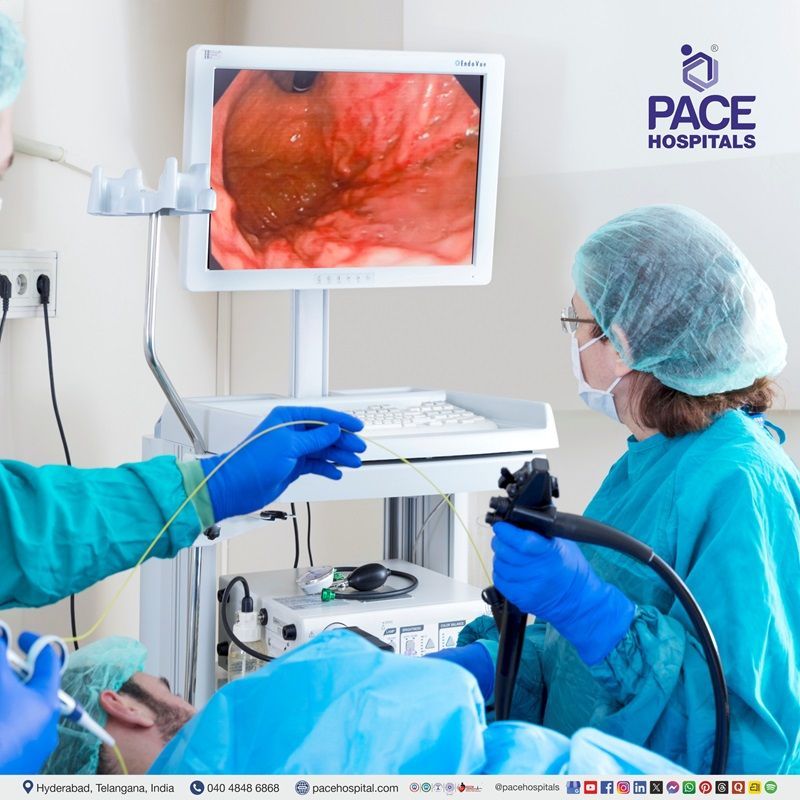
Looking for information about advanced endoscopic treatment options?
Which Specialist Should You Consult for GI Endoscopy?
Gastroenterologists are specialists in diagnosing and managing conditions affecting the digestive system and performing many diagnostic and therapeutic endoscopic procedures.
Depending on the underlying condition, patients may also require evaluation by a hepatologist or surgical gastroenterologist.
At PACE Hospitals, patients can consult the relevant specialists for evaluation of digestive disorders and advice on appropriate endoscopic investigations or treatments.

GI Endoscopy Videos, Case Studies and Patient Resources
Explore educational resources to understand different gastrointestinal procedures, their clinical applications and patient experiences.
Expert Endoscopy Videos
This is paragraph text. Click it or hit the Manage Text button to change the font, color, size, for
Watch Videos
Gi Endoscopy Case Studies
This is paragraph text. Click it or hit the Manage Text button to change the font, color, size, for
Read Case Studies
Gi Endoscopy Blogs
This is paragraph text. Click it or hit the Manage Text button to change the font, color, size, for
Explore Blogs
Frequently Asked Questions (FAQs)
What is gastrointestinal endoscopy?
Gastrointestinal (GI) endoscopy is a procedure that is used to examine the digestive tract with a specialised viewing instrument called an endoscope. Most procedures use a flexible tube with a light and camera that is passed through the mouth or anus. It helps identify digestive diseases and allows tissue samples or certain treatments during the examination.
What are the different types of GI endoscopy procedures?
The main types of gastrointestinal endoscopy include upper GI endoscopy, which examines the food pipe, stomach and duodenum; colonoscopy, which examines the rectum and entire colon; and flexible sigmoidoscopy, which examines the rectum and lower colon. Enteroscopy and capsule endoscopy are used to examine the small intestine. Specialised procedures include endoscopic ultrasound (EUS), which provides images of the digestive wall and nearby organs, and ERCP, which combines endoscopy with X-rays mainly to treat and manage problems in the bile and pancreatic ducts.
What is the difference between upper GI endoscopy and colonoscopy?
Upper GI endoscopy examines the food pipe, stomach and first part of the small intestine through the mouth.
Colonoscopy examines the rectum and colon through the anus and may also show the end of the small intestine.
Both procedures can help diagnose disease, collect tissue samples and provide treatment when appropriate.
Which endoscopy is recommended for stomach pain?
Upper GI endoscopy may be recommended when upper abdominal pain suggests a problem in the food pipe, stomach or upper small intestine. The decision depends on age, persistent symptoms, previous treatment and concerning features such as bleeding or unexplained weight loss. Not every episode of stomach pain requires endoscopy; initial assessment may include testing for Helicobacter pylori infection or a trial of medication.
Is endoscopy used for both diagnosis and treatment?
Yes. Endoscopy helps diagnose digestive conditions by examining the digestive tract and collecting tissue samples for testing. It can also treat problems by stopping bleeding, removing polyps, widening narrowed areas or placing stents. The treatment available depends on the condition, the type of procedure and the endoscopist’s expertise.
What is the difference between ERCP and EUS?
ERCP uses an endoscope and X-rays mainly to treat problems in the bile and pancreatic ducts, such as removing stones or placing stents to relieve blockages. EUS uses an endoscope fitted with ultrasound to create detailed images of the digestive wall and nearby organs, including the pancreas. The main difference is that ERCP primarily treats duct problems, while EUS helps assess abnormalities, collect tissue samples and guide certain treatments.
What is third-space endoscopy?
Third-space endoscopy allows treatment beneath the digestive tract’s inner lining by creating a small tunnel between the lining and muscle layer. It is used to release tight muscles in achalasia, a condition that causes swallowing difficulties, and to remove certain growths beneath the lining. These procedures require specialist training, and suitability depends on the condition and the benefits and risks of treatment.
Is fasting required before a GI endoscopy?
Fasting is usually required before upper GI endoscopy and procedures involving sedation, according to the endoscopy team’s instructions. The timing for stopping solid food and clear liquids depends on the procedure, sedation plan and individual health risks. Colonoscopy also requires bowel-cleansing preparation; fasting alone does not adequately prepare the colon.
Is GI endoscopy performed under sedation?
Many GI endoscopy procedures use sedation to reduce anxiety and discomfort, but sedation is not always necessary. Some upper GI examinations can be performed with a throat-numbing spray, while selected procedures can be completed without sedation. Deep sedation or general anaesthesia may be needed for complex procedures, depending on patient health and the planned treatment.
How long does it take to recover from an endoscopy?
Most patients having a routine outpatient endoscopy return home on the same day after appropriate observation. Recovery usually depends on the procedure and sedation used; advanced treatments may require longer monitoring or a hospital stay. After sedation, an accompanying adult is generally required, and driving, alcohol and important decisions should be avoided for 24 hours.
Are there any risks associated with gastrointestinal endoscopy?
Possible complications of GI endoscopy may include bleeding, a tear in the digestive tract and sedation-related breathing or heart issues; risks vary by procedure. ERCP also carries a risk of pancreatitis, which is inflammation of the pancreas, while treatment procedures may carry additional risks. Urgent medical assessment is needed for severe or worsening abdominal or chest pain, fever, breathing difficulty or significant bleeding after endoscopy.
Which doctor should I consult for gastrointestinal endoscopy in Hyderabad?
A gastroenterologist trained in GI endoscopy is an appropriate specialist to consult in Hyderabad for assessment of digestive symptoms. Advanced procedures such as ERCP, interventional EUS and third-space endoscopy require an endoscopist with specific training and experience. The specialist assesses whether endoscopy is needed and selects the procedure according to the suspected condition and individual health risks.
Need a Gastroenterologist's Advice?
Digestive symptoms may require different types of investigation depending on their cause. Consult a gastroenterologist at PACE Hospitals to understand your symptoms and determine whether an endoscopic procedure is appropriate.