
Andrology Emergency Care in Hyderabad
24/7 Emergency Assessment and Treatment for Andrological Emergencies
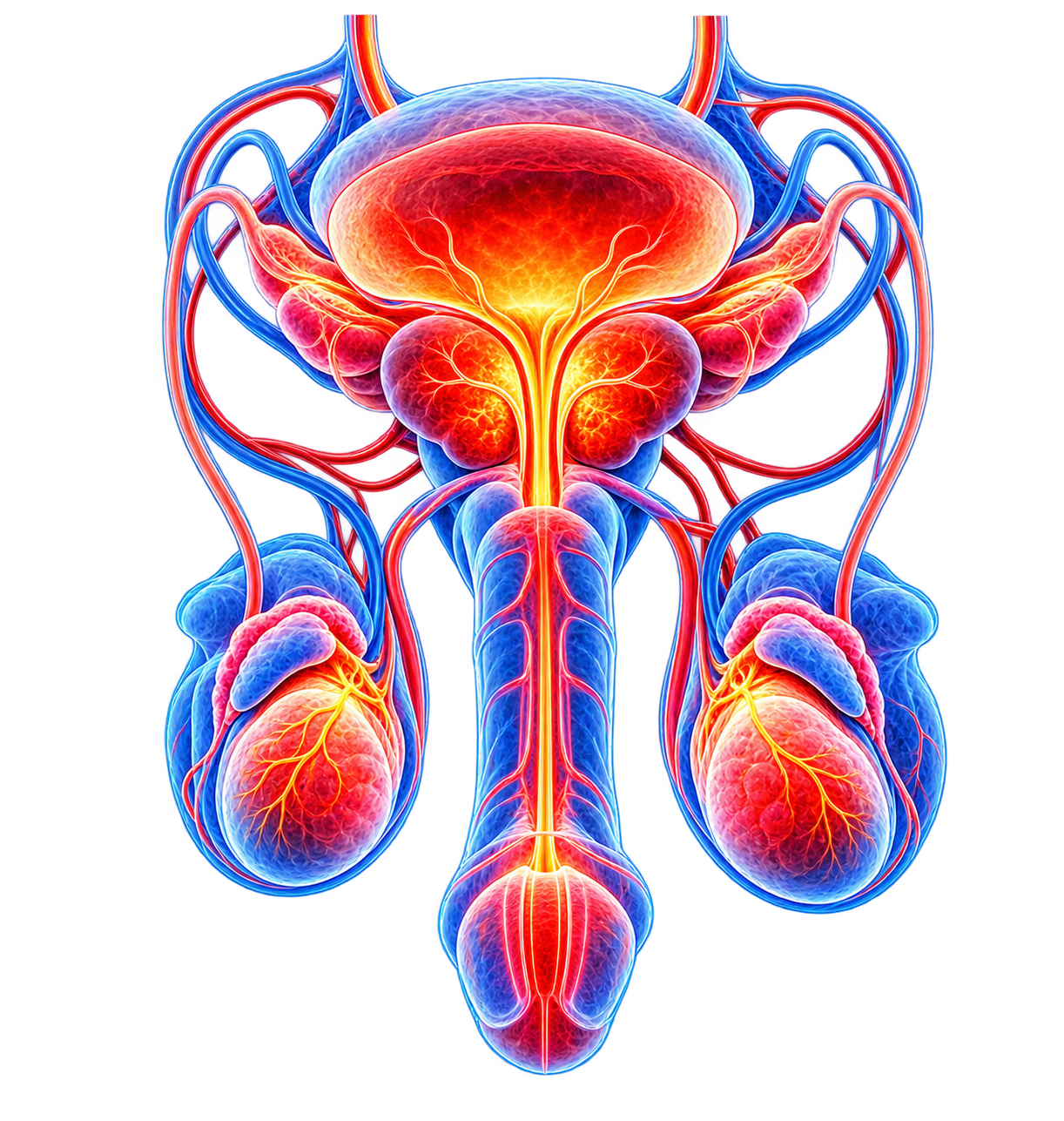
24 / 7 - Male Urological Emergency Response
Urgent assessment of acute male reproductive and urological conditions
Rapid Assessment - Acute Testicular & Genital Pain
Prompt evaluation of sudden testicular pain, swelling and genital injuries
Urology · Imaging - Emergency Diagnosis & Evaluation
Clinical assessment and appropriate imaging for urgent male urological conditions
Emergency · Surgical Care - Urgent Urological Intervention
Timely medical or surgical management when clinically indicated
Emergency Signs
Sudden or severe testicular pain, sudden swelling of the scrotum, a testicle positioned higher than normal, severe pain or swelling of the penis, an erection that continues for several hours without going away, a penile injury with a popping sound followed by sudden loss of erection, inability to pull back or move the foreskin back into place, heavy genital bleeding, or rapidly increasing redness, swelling, fever, or weakness may require urgent medical attention. Seek immediate medical care. Call PACE Hospitals: 04048486868.
What Is a Trauma and Accident Emergency?
What Is an Andrology Emergency?
An andrology emergency is a sudden problem affecting the male reproductive or sexual organs that needs immediate medical care. It can happen due to testicular torsion, priapism (prolonged erection), penile fracture, paraphimosis (trapped foreskin), genital trauma, acute scrotal problems, or severe infections. In some cases, blood flow can be blocked, and the tissue can become damaged quickly. Getting treatment early can help prevent permanent damage and loss of normal function.
PACE Hospitals provides 24/7 emergency andrology care in Hyderabad for patients with urgent male reproductive and sexual health problems. The emergency team assesses the patient and starts the necessary treatment and stabilization. Urologists, andrologists, critical care specialists, diagnostic teams and other specialists are involved when the patient's condition requires their expertise.
An andrology emergency needs to be treated without delay. Treatment depends on the cause and may include pain relief, stopping bleeding, restoring blood flow, or treating an infection. In conditions such as testicular torsion, early treatment can help save the affected testicle. If treatment is delayed, it can cause permanent damage or other complications.
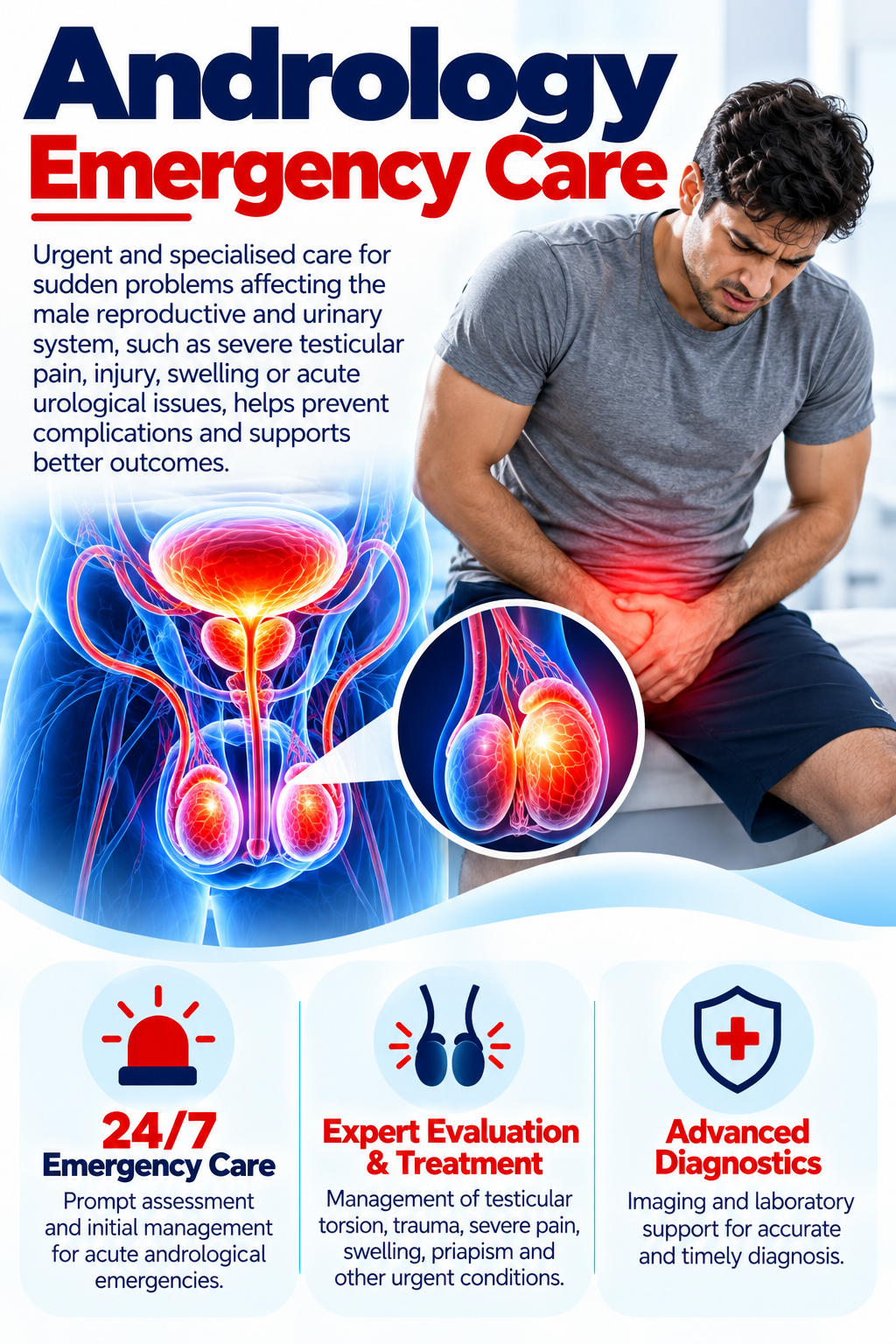
When to Seek Emergency Care for Andrological Symptoms?
Seek immediate medical attention if you have any of the following:
- Sudden or severe pain in one or both testicles.
- Sudden swelling or redness of the scrotum.
- One testicle sitting higher than usual or looking different from the other.
- Severe testicular pain with nausea or vomiting.
- Severe pain in the penis or scrotum following an injury.
- A popping or cracking sound from the penis during sexual activity, followed by pain, swelling, bruising or sudden loss of erection.
- An erection lasting for several hours that does not go away.
- Severe penile swelling or pain, or a change in the colour of the penis.
- A foreskin stuck behind the head of the penis that cannot be pulled back into its normal position.
- Heavy or persistent bleeding from the penis, scrotum or genital area.
- Redness, swelling, pain or skin changes around the genitals that are getting worse quickly.
- Fever, chills, severe weakness or confusion along with genital pain or swelling.
- A genital injury caused by a road accident, fall, sports injury or other trauma.
- Sudden severe scrotal pain after physical activity or without an obvious cause.
These symptoms can occur with conditions such as testicular torsion, priapism, penile fracture, paraphimosis, severe genital trauma and serious genital infections. Some of these problems can worsen within a short time, so medical care should not be delayed.
Do Not Ignore Severe Andrological Symptoms
Not all genital or sexual health problems need emergency treatment. Some symptoms may come from minor infections, swelling, or other conditions that can be managed with routine medical care. Still, if symptoms appear suddenly or become severe, it is important to see a doctor instead of assuming that the problem will go away on its own.
Treat andrological symptoms as an emergency when they are:
- New, sudden, or unexplained.
- Severe or getting worse quickly.
- Associated with severe testicular or penile pain.
- Accompanied by rapid swelling, bruising, redness, or changes in genital colour.
- Associated with suspected loss or reduction of blood flow to a testicle or the penis.
- Accompanied by an erection that does not go away.
- Associated with a trapped or stuck foreskin.
- Accompanied by significant bleeding from the genital area.
- Occurring after an injury to the penis, scrotum, testicles, or groin.
- Accompanied by high fever, chills, unusual weakness, or confusion.
- Occurring in someone with a previous history of testicular problems, genital injuries, or other serious andrological conditions.
For severe symptoms, calling an ambulance may be safer than travelling to the hospital on your own. Emergency medical services can provide appropriate care during transport when required.
Not all chest pain is caused by heart disease. It may be related to the lungs, food pipe, stomach, muscles, ribs, or nerves. However, it is not safe to assume that chest pain is minor without medical evaluation.
Treat chest pain as an emergency when it is:
- New or unexplained.
- Severe or persistent.
- Associated with sweating, nausea, or breathlessness.
- Accompanied by fainting or severe dizziness.
- Spreading to the arm, jaw, neck, shoulder, back, or upper abdomen.
- Present in a person with diabetes, high blood pressure, high cholesterol, kidney disease, or known heart disease.
- For severe symptoms, ambulance transport is generally safer than driving to the hospital because emergency assessment and support can begin during transfer when needed.
Sudden weakness or paralysis affecting one side of the face, arm, or leg is an important stroke warning sign. The weakness may appear suddenly and may occur with facial drooping, speech difficulty, vision changes, or loss of balance.
- Do not wait to see whether the weakness improves. Immediate emergency assessment is important because some stroke treatments are time-sensitive.
Sudden Paralysis or One-Sided Weakness
Sudden Vision Problems
A stroke can cause sudden changes in vision, including blurred or double vision or loss of vision in one or both eyes.
- Sudden unexplained vision problems, particularly when accompanied by other neurological symptoms, require urgent assessment.
Sudden Loss of Balance
A sudden loss of balance, coordination, or ability to walk normally can be a sign of stroke, particularly when it develops without an obvious explanation.
- Sudden dizziness with difficulty walking, weakness, vision changes, or speech problems should not be dismissed as a minor problem.
Sudden Severe Headache
A sudden, severe headache with no known cause can be a warning sign of a serious neurological emergency, including hemorrhagic stroke.
- When severe headache occurs with vomiting, weakness, speech difficulty, seizures, confusion, loss of consciousness, or other sudden neurological changes, emergency medical evaluation is required.
Common Andrological Emergencies Treated at PACE Hospitals
Testicular Torsion
Testicular torsion happens when the spermatic cord twists and reduces or stops the blood supply to the testicle. It is an emergency that needs prompt treatment, as a prolonged lack of blood flow can permanently damage the testicle.
Testicular torsion needs immediate medical assessment. A doctor may examine the scrotum and perform a Doppler ultrasound to assess blood flow when this can be done without causing unnecessary delay. If torsion is suspected or confirmed, emergency surgery may be required to restore blood flow and protect the affected testicle.
Symptoms may include:
- Sudden and severe pain in one testicle.
- Swelling of the scrotum.
- One testicle sitting higher than usual.
- Nausea or vomiting.
- Pain extending to the lower abdomen or groin.
- Sudden pain without any known injury.
Priapism
Priapism is an erection that lasts for more than four hours and does not go away, even when there is no sexual stimulation. Ischemic priapism can reduce blood flow to the penis and may cause permanent erectile problems if treatment is delayed.
A prolonged and painful erection needs urgent medical assessment. Treatment depends on the type and etiology of priapism and may include medicines, drainage of blood from the penis, or other emergency procedures. Immediate treatment can help reduce the risk of permanent erectile dysfunction.
Symptoms may include:
- A prolonged erection that does not go away.
- Penile pain or increasing discomfort.
- A rigid penis that remains erect for several hours.
- Increasing pain as the condition continues.
- An erection occurring without sexual stimulation.
Penile Fracture
A penile fracture is a tear in the tunica albuginea surrounding the erectile tissue of the penis. It usually occurs when an erect penis bends forcefully. It is a medical emergency and may require urgent surgical treatment.
A suspected penile fracture should be assessed urgently. The doctor will examine the penis and may perform imaging or other tests when required. Surgery may be needed to repair the damaged tissue and assess or treat an associated urethral injury.
Symptoms may include:
- A sudden popping or cracking sound during sexual activity.
- Sudden loss of erection.
- Severe penile pain.
- Rapid swelling of the penis.
- Bruising or dark discoloration of the penis.
- Difficulty passing urine or blood from the urethral opening in some cases.
Paraphimosis
Paraphimosis occurs when the foreskin is pulled back behind the head of the penis and becomes stuck. The trapped foreskin can cause swelling and may reduce blood flow to the penis if it is not treated promptly.
Paraphimosis needs urgent medical attention. Treatment may involve reducing the swelling and gently returning the foreskin to its normal position. If this cannot be done, an emergency procedure may be required to relieve the tight foreskin and restore normal blood flow.
Symptoms may include:
- Foreskin trapped behind the head of the penis.
- Swelling of the penis.
- Pain or increasing discomfort.
- Foreskin trapped behind the head of the penis that cannot be returned to its normal position.
- Changes in the colour of the penis when blood flow is affected.
Acute Scrotal Pain and Swelling
Sudden scrotal pain and swelling can have several causes, such as testicular torsion, infection, trauma, or other acute conditions. Some causes require immediate treatment to prevent damage to the testicle.
The cause of acute scrotal pain needs to be identified quickly. Examination and Doppler ultrasound may be used to assess the testicles and blood flow. Treatment depends on the underlying condition and may include medicines, antibiotics, drainage, or emergency surgery.
Emergency symptoms may include:
- Sudden testicular or scrotal pain.
- Swelling or redness of the scrotum.
- Pain extending to the groin or lower abdomen.
- Nausea or vomiting.
- Fever or chills when an infection is present.
- Bruising or swelling following an injury.
Severe Genital Infection and Fournier’s Gangrene
Severe infections affecting the genital or perineal area can become serious quickly. In some cases, the infection can spread through the tissues and cause a life-threatening condition known as Fournier’s gangrene.
Severe genital infections require immediate medical attention. Treatment may include intravenous fluids, antibiotics, blood and urine tests, imaging, close monitoring, and urgent surgical removal of infected or damaged tissue when required. Severe infections may require critical care support.
These injuries may include:
- Severe pain or tenderness in the genital or perineal area.
- Rapid swelling or redness.
- Fever or chills.
- Increasing weakness or feeling very unwell.
- Skin colour changes or darkening.
- Blisters or fluid coming from the affected area.
- Confusion or other signs of severe infection.
Genital and Scrotal Trauma
The penis, scrotum, testicles, and surrounding tissues can be injured during road traffic accidents, falls, sports activities, workplace accidents, sexual activity, or other forms of trauma.
Genital trauma needs to be checked quickly to see if the testicles, penis, urethra, or nearby tissues are injured. Treatment depends on the injury and its severity. Some patients may be kept under observation and given medicines, while others may need drainage, minimally invasive treatment, or surgery.
Warning signs may include:
- Severe pain in the penis, scrotum, or groin.
- Rapid swelling or bruising.
- Blood from the urethral opening.
- Difficulty passing urine.
- Significant bleeding.
- Changes in the position or appearance of the testicle.
- Severe tenderness following an injury.
Andrology Emergency Assessment and Diagnosis
Patients with suspected andrology emergencies are assessed according to the urgency and severity of their condition. The first priority is to identify conditions that could threaten testicular, penile, or overall health and begin treatment without unnecessary delay.
01
Rapid Triage and Initial Stabilisation
The emergency team may immediately assess:
- Airway, breathing, circulation, level of consciousness, and overall clinical condition.
- Pulse, blood pressure, oxygen level, temperature, pain severity, and other vital signs.
- Nature, location, duration, and severity of genital or testicular pain.
- Changes in the size, position, colour, or appearance of the penis, scrotum, or testicles.
- History of injury, sexual activity, prolonged erection, genital infection, or sudden onset of symptoms.
- Urinary symptoms such as difficulty passing urine, blood in urine, or blood from the urethra.
- Previous genital or testicular conditions, surgeries, or similar episodes.
- Current medicines and known medicine allergies.
- Need for intravenous access, pain relief, urgent imaging, specialist review, or emergency surgery.
02
Physical Examination
A careful examination of the genital area is an important part of emergency assessment.
Doctors may assess:
- Position and tenderness of the testicles.
- Scrotal swelling, redness, bruising, or skin changes.
- Penile swelling, deformity, or injury.
- Foreskin position and signs of paraphimosis.
- Presence of an erection and its duration.
- Signs of infection or tissue damage.
- Urinary opening and surrounding tissues.
03
Ultrasound and Doppler Study
Scrotal ultrasound with Doppler may be used when testicular torsion, infection, injury, or another scrotal problem is suspected.
It can help assess:
- Blood flow to the testicles.
- Testicular structure.
- Swelling or inflammation.
- Fluid collections.
- Signs of injury or other abnormalities.
When testicular torsion is strongly suspected, treatment should not be unnecessarily delayed for imaging.
03
Blood and Urine Tests
Depending on the symptoms, doctors may request:
- Complete blood count.
- Blood glucose.
- Kidney function tests.
- Electrolytes.
- Infection-related blood tests.
- Urine examination.
- Urine culture when infection is suspected.
- Other tests based on the patient's condition.
These tests can help identify infection, blood loss, kidney problems, or other conditions that may affect emergency treatment.
Additional Tests
Further investigations may be required depending on the suspected emergency. These may include imaging of the urinary or genital tract, specialised scans, or other tests when associated injuries or complications are suspected.
Andrology Emergency Treatment at PACE Hospitals
Andrology emergency treatment depends on the problem, the symptoms, how long they have been present, the patient’s medical history, test results, and general health. The emergency team first checks the patient and makes sure the condition is stable. Specialist treatment is arranged quickly when needed.
Emergency Andrology Care May Include:
- Pain relief and supportive care.
- Monitoring of vital signs and overall condition.
- Intravenous access and fluids when needed.
- Medicines to control pain, infection, swelling, or other symptoms.
- Antibiotics when a bacterial infection is suspected or confirmed.
- Urinary catheterisation when urinary retention or obstruction requires drainage.
- Emergency treatment to restore blood flow to the testicle or penis.
- Drainage of trapped blood in selected cases of priapism.
- Manual reduction of paraphimosis when appropriate.
- Emergency surgery for testicular torsion.
- Surgical repair for penile fracture when indicated.
- Drainage or removal of severely infected or damaged tissue when required.
- ICU or critical care support for severe infection or other serious complications.
Testicular Torsion Emergency Treatment
Testicular torsion requires urgent treatment because twisting of the spermatic cord can reduce blood supply to the testicle.
Treatment may involve:
- Immediate urology assessment.
- Emergency surgical exploration.
- Untwisting of the spermatic cord.
- Fixation of the affected testicle to prevent further twisting.
- Fixation of the opposite testicle when required.
- Removal of a severely damaged testicle if it cannot be saved.
The treating urologist will explain the findings and recommended treatment based on the condition of the testicle.
Priapism Emergency Treatment
Treatment for priapism depends on its type, duration, severity, and underlying cause.
Treatment may include:
- Pain relief.
- Medicines to help restore normal blood flow.
- Drainage of blood from the penis.
- Injection-based treatment when appropriate.
- Surgical procedures in cases that do not respond to initial treatment.
Early treatment is important because prolonged priapism can damage erectile tissue and affect future erectile function.
Penile Fracture Emergency Treatment
Penile fracture requires prompt assessment to determine the extent of the injury.
Treatment may include:
- Pain management.
- Examination and appropriate imaging when required.
- Surgical repair of the damaged tissue.
- Treatment of associated urethral injury when present.
- Follow-up to monitor healing and urinary or sexual function.
Severe Genital Infection Emergency Treatment
Treatment focuses on controlling the infection and preventing further tissue damage.
It may include:
- Intravenous fluids.
- Antibiotics.
- Pain management.
- Drainage of infected collections.
- Wound care.
- Surgical removal of damaged or infected tissue when necessary.
- ICU or critical care support for severe infection.
What to Do During a Suspected Andrology Emergency?
- Seek emergency medical care immediately for sudden or severe symptoms.
- Keep the affected person resting and avoid unnecessary movement.
- Do not try to forcefully manipulate or straighten an injured penis or testicle.
- Do not attempt to drain blood or treat a prolonged erection at home.
- Avoid delaying medical care because symptoms temporarily improve.
- Follow the instructions given by emergency medical professionals.
- Take regular medicines only as advised by a healthcare professional.
The safest approach is to obtain medical help quickly when symptoms are sudden, severe, or rapidly worsening.
Why Timely Andrology Emergency Care Matters?
Some andrology emergencies can become serious within a short time. If treatment is delayed, there may be a higher risk of tissue damage, problems with testicular function, erectile problems, infection, and other complications.
Prompt emergency care can help:
- Identify testicular torsion and other acute scrotal conditions early.
- Restore blood flow when it is reduced or blocked.
- Treat prolonged and painful erections.
- Repair penile injuries when required.
- Reduce severe genital swelling and pain.
- Control serious genital infections.
- Protect testicular and penile function.
- Manage urinary problems associated with genital injuries.
- Arrange emergency surgery when needed.
- Coordinate care between emergency medicine, urology, andrology, imaging, surgery, and critical care teams.
Who Is at Higher Risk of Andrology Emergencies?
Andrology emergencies can occur in people of different ages and may sometimes happen without any previous genital or reproductive problem. Risk may be higher in people with:
- Previous testicular torsion or similar episodes.
- Conditions affecting testicular position or development.
- Previous genital or testicular injury.
- Recent genital surgery or procedures.
- Conditions associated with prolonged erections.
- Certain blood disorders or medicines associated with priapism.
- Tight foreskin or previous problems with foreskin retraction.
- Genital infections.
- Recent sexual activity associated with a genital injury.
- Conditions affecting blood flow or genital tissue.
Even without these risk factors, sudden severe testicular pain, prolonged painful erection, penile injury, or severe genital swelling should be assessed urgently.
Andrology Emergency Care at PACE Hospitals
PACE Hospitals provides 24/7 emergency care in Hyderabad for patients with sudden testicular pain, testicular torsion, priapism, penile injuries, paraphimosis, severe genital infections, acute scrotal conditions, and other urgent male reproductive or genital problems. The emergency department coordinates with urology, andrology, critical care, diagnostic, imaging, and surgical teams according to the patient's needs.
Emergency Andrology Care Pathway
- Immediate triage: Rapid assessment of symptoms, vital signs, pain severity, and emergency needs.
- Clinical examination: Assessment of the penis, scrotum, testicles, urinary opening, and surrounding tissues.
- Rapid diagnosis: Ultrasound with Doppler, blood tests, urine tests, and other investigations when required.
- Stabilisation and treatment: Pain relief, medicines, urinary drainage, infection treatment, emergency procedures, or surgery based on the diagnosis.
- Specialist care: Urgent urology or andrology consultation for conditions requiring specialist treatment.
- Ongoing care: Admission, observation, ICU care, or follow-up with the appropriate specialty service when required.
Need urgent help? For sudden severe testicular pain, prolonged painful erection, penile injury, severe genital swelling, or other suspected andrology emergencies, seek emergency care immediately. Call PACE Hospitals: 04048486868.
When Should You Call an Ambulance for an Andrology Emergency?
Call emergency medical services immediately if someone has:
- Sudden severe testicular or genital pain.
- Rapidly increasing scrotal or genital swelling.
- Sudden collapse or loss of consciousness.
- Severe bleeding following a genital injury.
- Severe weakness, confusion, or signs of serious infection.
- Severe pain with repeated vomiting or inability to pass urine.
- A serious genital injury with significant deformity or bleeding.
Do not delay emergency care to arrange personal transport if the person is seriously unwell.

Frequently Asked Questions on Andrology Emergencies
What is an andrology emergency?
An andrology emergency is a sudden problem affecting the male reproductive or sexual organs that needs immediate medical attention. It may include testicular torsion, priapism (prolonged erection), penile fracture or paraphimosis. Serious genital injuries and infections such as Fournier’s gangrene (necrotizing fasciitis) can also require urgent care. If treatment is delayed, some of these conditions may cause permanent damage or loss of function.
What are the common symptoms of an andrology emergency?
Symptoms vary according to the condition but may include sudden testicular or genital pain, scrotal swelling, prolonged painful erection, penile injury or bleeding. A change in the position or appearance of a testicle may also be significant. Fever, skin changes and rapidly increasing swelling can occur with serious infections. Sudden or severe genital symptoms should be assessed promptly.
Is sudden testicular pain an emergency?
Sudden testicular pain should not be ignored because testicular torsion is one of the important causes. Torsion can cause sudden severe pain and swelling and may be accompanied by nausea or vomiting. The spermatic cord twists and reduces the blood supply to the testicle. Early treatment is important because prolonged ischaemia can threaten testicular viability.
What is testicular torsion?
Testicular torsion occurs when the spermatic cord twists and blocks blood flow to the testicle. This usually causes sudden and severe pain in one testicle, and the scrotum may become swollen. Nausea or vomiting can also happen with the pain. If blood flow is not restored quickly, the testicle may be permanently damaged, making immediate medical and surgical treatment important.
What is the emergency treatment for testicular torsion?
Testicular torsion is usually treated with emergency surgery. The surgeon untwists the spermatic cord to bring back blood flow and stitches the affected testicle in place to prevent it from twisting again. The other testicle is also usually fixed during the same operation because it can also twist. If the affected testicle has already suffered severe damage and cannot be saved, it may have to be removed.
Is a prolonged erection a medical emergency?
A prolonged erection can be an emergency when it represents ischaemic priapism, particularly when it is painful and does not resolve. Ischaemic priapism can cause progressive damage to the erectile tissue. The longer the condition continues, the greater the concern about subsequent erectile dysfunction. Medical evaluation is therefore needed rather than waiting for the erection to settle on its own.
What is priapism and how is it treated?
Priapism means an erection that continues without sexual stimulation. Ischaemic priapism needs emergency treatment, whereas non-ischaemic priapism usually takes a different course. In ischaemic priapism, treatment may include draining blood from the corpora and giving an intracavernosal medicine such as phenylephrine. If these treatments do not bring the erection down, surgery may be required.
What is a penile fracture?
A penile fracture is a tear of the tunica albuginea surrounding the erectile tissue, usually occurring when an erect penis is forcibly bent. Patients commonly report a popping or cracking sound followed by pain, swelling, bruising and sudden loss of erection. The diagnosis is often made from the history and physical examination. Early surgical repair is generally preferred to reduce complications such as penile curvature and erectile problems.
What should be done after a suspected penile injury?
If the penis is badly injured, see a doctor as soon as possible. Avoid bending, straightening or pressing the penis because it can cause more damage. The doctor will check the injury and also look for urethral damage or other problems. An ultrasound or other tests may be advised if needed, but these should not hold up the treatment.
What is paraphimosis?
Paraphimosis occurs when a retracted foreskin becomes trapped behind the glans and cannot be returned to its normal position. Swelling can increase as the condition continues and may interfere with blood flow to the penis. Treatment usually begins with measures to reduce swelling and manually return the foreskin to its normal position. If reduction is unsuccessful, other procedures may be required.
Can a genital infection become an emergency?
Yes. Severe genital infections, particularly necrotizing soft-tissue infections such as Fournier’s gangrene, can progress rapidly and become life-threatening. Pain, swelling, fever, redness, skin changes, crepitus or severe weakness may occur, although early signs can sometimes be less obvious. Treatment requires urgent antibiotics, fluids and other supportive care, along with surgical removal of affected or dead tissue when necessary.
How are andrology emergencies diagnosed?
The doctor will ask about the symptoms, when they started and any relevant medical history, followed by a physical examination. Depending on the problem, blood tests, urine tests or a scrotal ultrasound with Doppler may be done. Doppler ultrasound helps the doctor check blood flow to the testicles. If testicular torsion is suspected, treatment may be started straight away rather than waiting for every test result.
Can ultrasound detect testicular torsion
Yes. A colour Doppler ultrasound can help detect testicular torsion by checking the blood flow to the testicle. It is commonly used when torsion is suspected, but the scan may not always give a definite answer. If the symptoms and examination strongly suggest torsion, treatment should not be delayed while waiting for an ultrasound. A urologist will decide whether an ultrasound is needed based on the situation.
Can andrology emergencies cause permanent problems?
Some andrological emergencies can have lasting consequences if treatment is delayed. Testicular torsion may result in loss of testicular viability, while prolonged ischaemic priapism can damage erectile tissue and lead to erectile dysfunction. Penile fracture may result in curvature or erectile difficulties, particularly when inadequately treated. Severe genital infections can cause extensive tissue damage and, in serious cases, organ failure.
When should an ambulance be called for an andrology emergency?
Call an ambulance if severe genital pain occurs with heavy bleeding, fainting, confusion, severe weakness or a sudden worsening of the condition. An ambulance may also be needed after a major genital injury if the person cannot safely travel to a hospital. Serious genital infections can worsen quickly and need hospital treatment. If the person is in severe pain or their condition is unstable, seek emergency medical help without waiting.
Conclusion
Andrology emergencies require prompt assessment and appropriate treatment. Sudden severe testicular pain, prolonged painful erection, penile injury, severe genital swelling, paraphimosis, or signs of serious genital infection should not be ignored.
PACE Hospitals provides 24/7 emergency andrology care in Hyderabad for patients with suspected testicular torsion, priapism, penile fracture, acute scrotal conditions, severe genital infections, and other urgent male reproductive problems. Early treatment can help identify the cause, protect organ function, and decrease the risk of serious complications.


