
Open Hernia Surgery - Types, Benefits, Procedure & Recovery
PACE Hospitals offers open hernia surgery in Hyderabad, India, with treatment tailored to the type, size, location, and severity of the hernia. Our experienced surgeons perform open hernia repair surgery, including inguinal hernia open surgery and umbilical hernia open surgery, to repair the weakened abdominal wall, relieve symptoms, and prevent complications. Patients receive personalized guidance on open hernia surgery recovery, including wound care, activity restrictions, and returning to exercise, with a focus on safe recovery and lasting results.
Book an Appointment for Open Hernia Surgery
Open Hernia Surgery Appointment
Why Choose PACE Hospitals for Open Hernia Repair?
Expert Surgical Gastroenterologists Specializing in Inguinal, Umbilical, Incisional, Recurrent & Complex Hernia Repair
Reliable Open Hernia Surgery with Mesh Reinforcement, Reduced Recurrence Risk & Faster Recovery
Comprehensive Hernia Care with Insurance & Cashless Options
Recognized for excellence in healthcare delivery with
NABH, NABL, NBE/DNB, NABH Nursing Excellence, and ISCCM accreditations.
What is open hernia surgery?
Open hernia repair is a surgical procedure used to treat a hernia through an incision made near or over the hernia.
Through this incision, the surgeon gently pushes the protruding organ or tissue back into its normal position and repairs the weakened or damaged abdominal wall. Depending on the type, size, and location of the hernia, the repair may be performed with sutures alone or with a surgical mesh to provide additional support and reduce the risk of recurrence. Open hernia surgery is a well-established and effective treatment for both primary and recurrent hernias.
Individuals with inguinal, femoral, umbilical, epigastric, incisional, or other abdominal wall hernias that cause pain, discomfort, enlargement, or interfere with normal activities should consider open hernia repair.
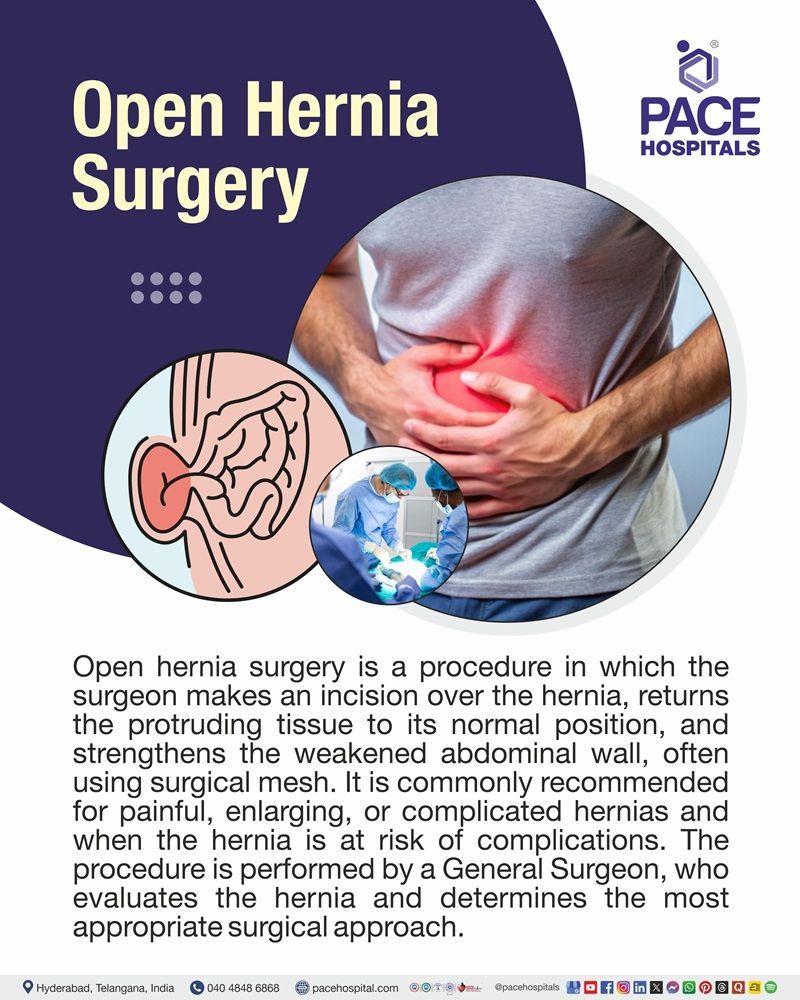
It is also preferred for large or complex hernias, hernias requiring abdominal-wall reconstruction, patients with extensive abdominal adhesions or previous abdominal surgeries, those who are not candidates for laparoscopic surgery, or when laparoscopic repair is unavailable or contraindicated.
Open hernia surgery is performed by a general surgeon with expertise in abdominal wall and hernia repair. Large, recurrent, or complex hernias may be managed by surgeons with specialised training in advanced hernia surgery or abdominal-wall reconstruction.
Types of open hernia surgery
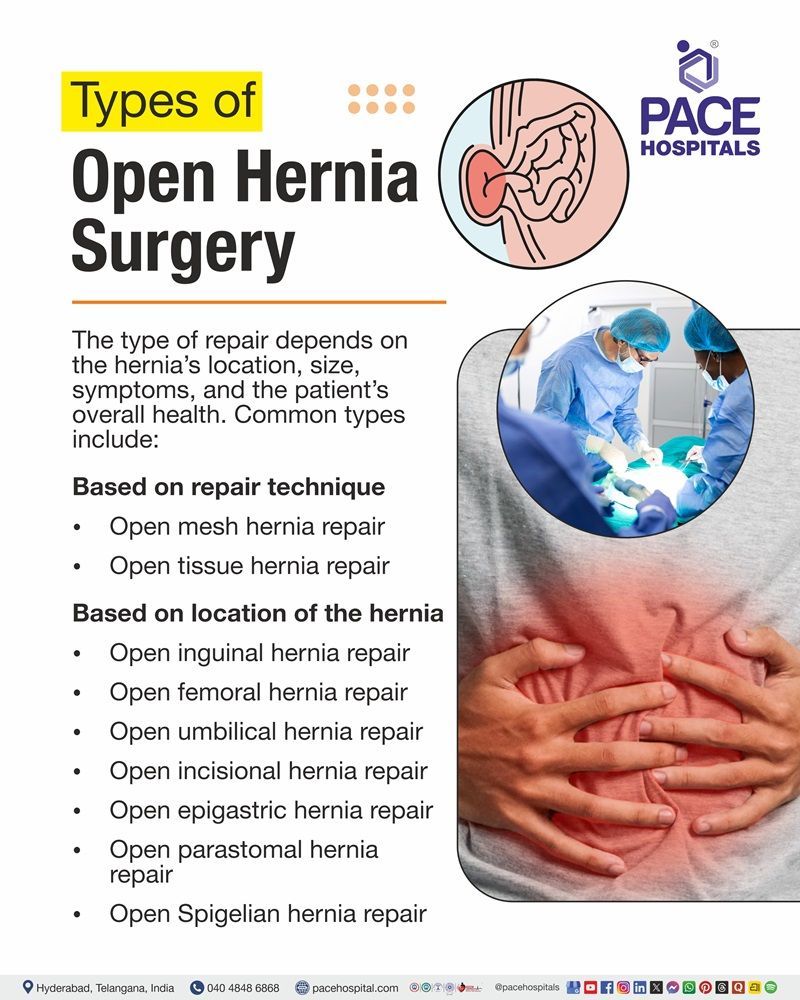
Open hernia surgery involves making an incision over or near the hernia to access the affected area and repair the weakened abdominal wall. The type of open hernia repair performed depends on the hernia's location, size, and type, symptoms, and the patient’s overall health. Below are some common types of open hernia surgery:
Based on repair technique
- Open mesh hernia repair
- Open tissue hernia repair
Based on location of the hernia
- Open inguinal hernia repair
- Open femoral hernia repair
- Open umbilical hernia repair
- Open incisional hernia repair
- Open epigastric hernia repair
- Open parastomal hernia repair
- Open Spigelian Hernia Repair
Based on repair technique
Open mesh hernia repair
This open hernia surgery involves the surgeon placing a surgical mesh over or around the weakened area of the abdominal wall after returning the herniated tissue to its normal position. The mesh provides additional strength to the abdominal wall and helps reduce the risk of the hernia coming back. It is commonly used for many adult hernias, particularly larger or recurrent hernias.
Open tissue hernia repair
This involves closing the hernia defect using the patient's own surrounding tissues and strong sutures, without placing surgical mesh. This technique is performed for treating small hernias or in selected patients where mesh is not appropriate.
Based on location of the hernia
Open inguinal hernia repair
The surgery repairs a hernia that develops in the groin area. The surgeon makes an incision in the groin, moves the protruding tissue or intestine back into the abdomen, and strengthens the weakened area, often using surgical mesh to reduce the risk of recurrence.
Open femoral hernia repair
This procedure treats a femoral hernia that occurs when abdominal tissue pushes through a weak area near the upper thigh or groin. The surgeon restores protruding tissue to its initial location and closes the hole, generally with mesh when necessary.
Open umbilical hernia repair
This surgery is used for a hernia that develops around the belly button. The surgeon makes a small incision near the navel, places the protruding tissue back inside the abdomen, and closes or reinforces the weakened abdominal wall with sutures or mesh depending on the size of the hernia.
Open incisional hernia repair
A hernia occurs through a weak spot in the abdominal wall, particularly at the location of an earlier abdominal operation; the surgeon puts the protruding tissue back into the abdomen and strengthens the abdominal wall, the strengthening usually being done with mesh when the defect is large or complicated.
Open epigastric hernia repair
Open epigastric hernia surgery treats a hernia that occurs in the upper middle part of the abdomen, between the breastbone and belly button. The surgeon pushes the protruding tissue back into place and closes or reinforces the weakened area with sutures or mesh, depending on the size and characteristics of the hernia.
Open parastomal hernia repair
This surgery is done when a hernia develops around a stoma, an opening created on the abdominal wall to allow stool or urine to pass into an external pouch. The surgeon repairs the damaged tissue around the stoma and may use mesh to reinforce the abdominal wall and limit the risk of the hernia recurring
Open Spigelian hernia repair
This surgery helps to treat a Spigelian hernia that develops through a weak area on the side of the abdominal wall, usually near the outer edge of the rectus abdominis muscle. The surgeon returns the protruding tissue to the abdomen and closes or reinforces the abdominal wall, using mesh.
Open Hernia Surgery Indications
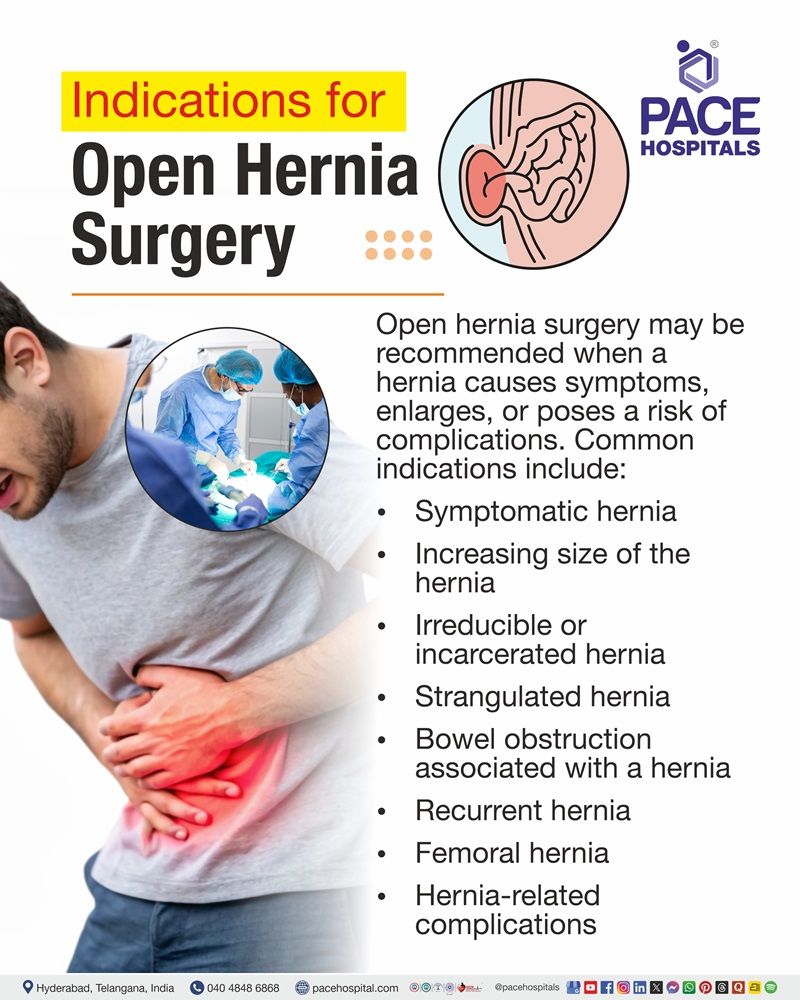
Open hernia surgery may be recommended when the hernia causes symptoms, becomes complicated, or has a higher risk of complications. Depending on the type, size, location, and individual patient factors, the surgeon may choose an open approach for repair. The following are common indications for open hernia surgery:
- Symptomatic hernia
- Increasing size of the hernia
- Irreducible or incarcerated hernia
- Strangulated hernia
- Bowel obstruction associated with a hernia
- Recurrent hernia
- Femoral hernia
- Hernia-related complications
Symptomatic hernia
A surgeon recommends surgery when a hernia causes continuous pain, discomfort, a sensation of heaviness, or difficulty in performing routine activities. Hernia repair helps return the protruding tissue to its normal position and strengthen the weakened abdominal wall.
Increasing size of the hernia
A hernia that gradually becomes larger may indicate progression of the abdominal wall defect. Surgery may be considered to prevent further enlargement and reduce the risk of complications.
Irreducible or incarcerated hernia
An irreducible hernia cannot be pushed back into the abdomen. If abdominal tissue or bowel becomes trapped within the hernia, open surgery may be needed to release the trapped contents and repair the defect.
Strangulated hernia
This type of hernia occurs when the blood supply to the trapped tissue or bowel is compromised. This is a surgical emergency requiring urgent surgery to relieve the strangulation, assess the affected tissue, and repair the hernia.
Bowel obstruction associated with a hernia
If a hernia traps or compresses part of the intestine and causes bowel obstruction, surgery may be required to relieve the obstruction, assess the bowel, and repair the hernia.
Recurrent hernia
When a hernia returns after previous repair, surgery may be recommended to address the recurrent defect. An open approach can be selected depending on the previous repair, location of the recurrence, size of the defect, and the patient's concern.
Femoral hernia
Femoral hernias have a relatively higher risk of incarceration and strangulation compared with many other groin hernias. Surgical repair is recommended once diagnosed, with an open approach being one option depending on the clinical situation.
Hernia-related complications
These complications include incarceration, strangulation, tissue damage, bowel obstruction, or significant symptoms that may require surgical treatment. In urgent or complex cases, an open surgical approach allows the surgeon to directly access the affected area. This approach manages the complication and repairs the abdominal wall.
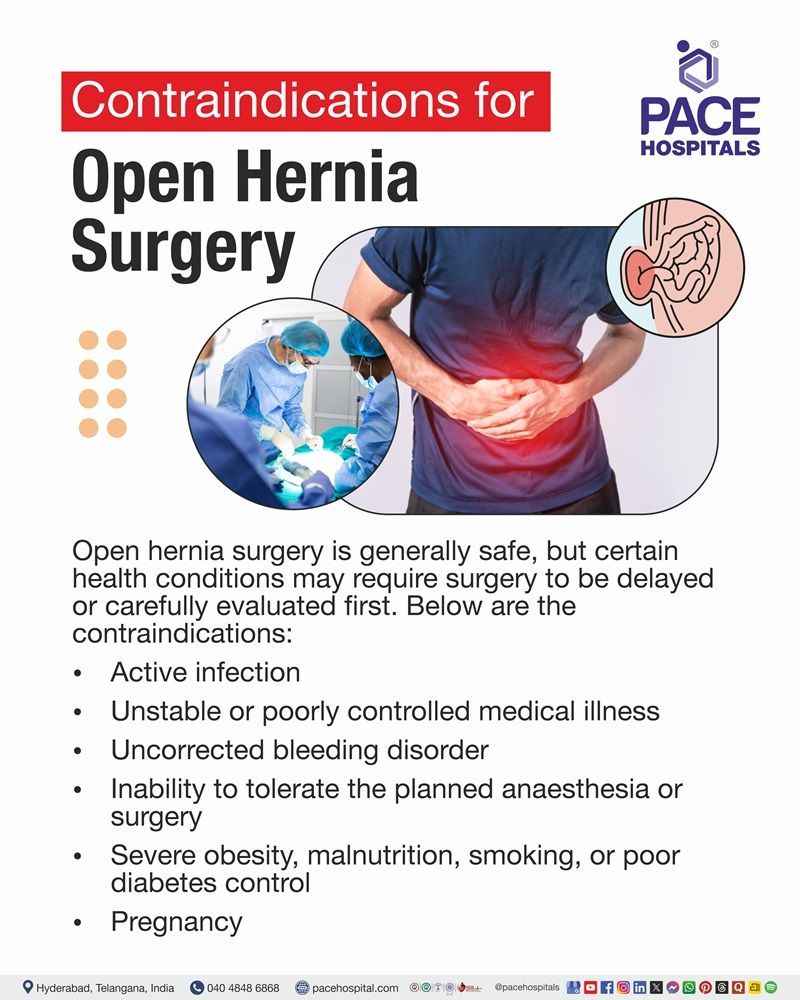
Open Hernia Surgery Contraindications
Open hernia surgery is generally safe, but certain conditions may make surgery unsafe or require the procedure to be postponed until the patient’s condition is optimised. These include:
- Active infection
- Unstable or poorly controlled medical illness
- Uncorrected bleeding disorder
- Inability to tolerate the planned anaesthesia or surgery
- Severe obesity, malnutrition, smoking, or poor diabetes control
- Pregnancy
Active infection
An infection at or near the planned surgical site can increase the risk of wound infection and complications, particularly when mesh is planned. Elective surgery is delayed until the infection is treated.
Unstable or poorly controlled medical illness
Serious conditions such as uncontrolled heart or lung disease may increase the risks associated with anaesthesia and surgery. The underlying condition may need to be stabilised before elective hernia repair.
Uncorrected bleeding disorder
A significant bleeding or clotting problem can increase the risk of excessive bleeding during or after surgery. The bleeding disorder may need to be evaluated and corrected before proceeding with the surgery.
Inability to tolerate the planned anaesthesia or surgery
Patients who are medically unable to safely undergo the required anaesthesia or surgical procedure may not be suitable candidates for elective open hernia repair until their condition is appropriately assessed or optimised.
Severe obesity, malnutrition, smoking, or poor diabetes control
These factors can increase the risk of wound complications, infection, delayed healing, and hernia recurrence. Where possible, improving nutritional status, blood glucose control, smoking status, and weight before elective surgery can improve surgical outcomes.
Pregnancy
Elective hernia repair is usually not preferred during pregnancy except in cases where there is a clear reason, for example incarceration or strangulation. When surgery does have to be carried out due to a complication, it can be done taking into account the relevant obstetric and anaesthetic factors.
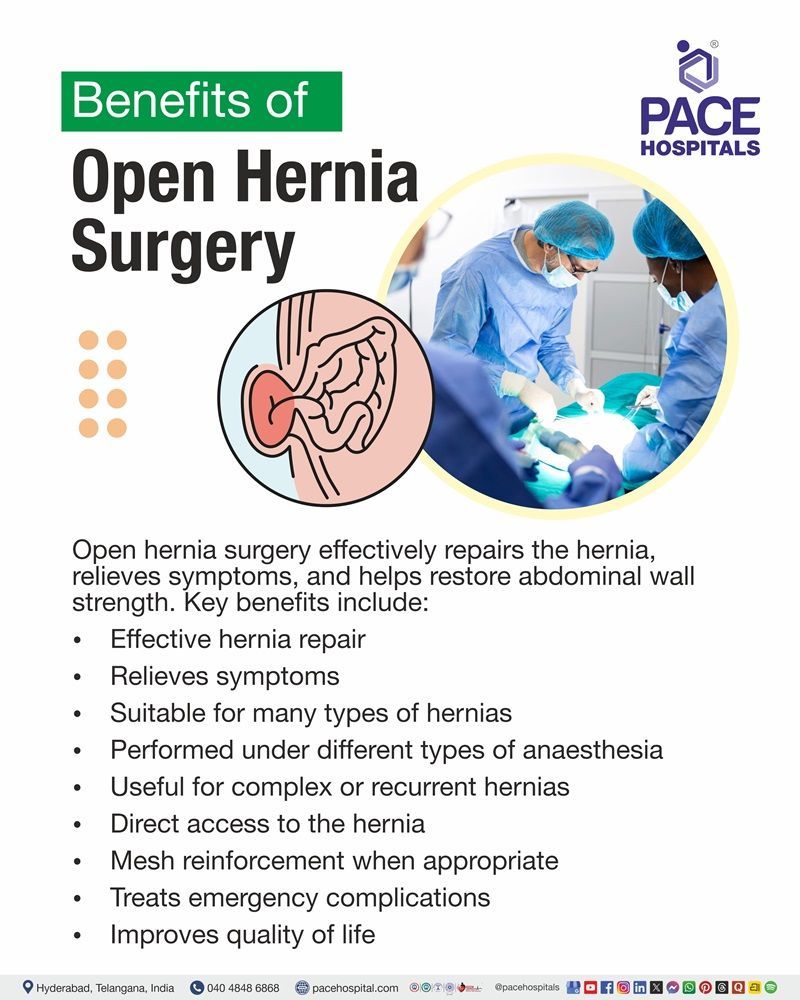
Benefits of Open Hernia Surgery
Open hernia surgery offers effective benefits by repairing the weakened area of the abdominal wall and preventing potential complications. The surgery restores the strength and integrity of the abdominal wall; it can relieve symptoms, improve daily comfort, and reduce the risk of hernia-related complications. These are some advantages of open hernia repair:
- Effective hernia repair
- Relieves symptoms
- Suitable for many types of hernias
- Performed under different types of anaesthesia
- Useful for complex or recurrent hernias
- Direct access to the hernia
- Mesh reinforcement when appropriate
- Treats emergency complications
- Improves quality of life
Effective hernia repair
Open surgery allows the surgeon to directly access the hernia and repair the weakened area of the abdominal wall, helping restore its strength and reduce the risk of recurrence.
Relieves symptoms
Repairing the hernia can help reduce pain, discomfort, pressure, heaviness, or a visible bulge caused by the hernia, which may make daily activities more comfortable.
Suitable for many types of hernias
The open approach can be used to treat several types of hernias, including inguinal, femoral, umbilical, ventral, incisional, epigastric, and other abdominal wall hernias.
Performed under different types of anaesthesia
Depending on the type of hernia, the planned procedure, and the patient's health, open hernia repair may be performed using local, regional, or general anaesthesia.
Useful for complex or recurrent hernias
Open surgery can provide good access to large, complex, or recurrent hernias and may allow the surgeon to reconstruct and reinforce the abdominal wall when required.
Direct access to the hernia
Because the surgeon works directly through an incision over or near the hernia, the hernia contents and abdominal wall defect can be clearly identified and treated.
Mesh reinforcement when appropriate
Surgical mesh can be placed to strengthen the repaired area when indicated, particularly for certain larger or higher-risk hernias. Mesh reinforcement helps to reduce the likelihood of recurrence.
Treats emergency complications
Open repair surgery is used in emergencies such as an incarcerated or strangulated hernia, allowing the surgeon to release trapped tissue, assess its condition, treat damaged bowel when necessary, and repair the hernia.
Improves quality of life
By reducing hernia-related pain, discomfort, limitations in physical activity, and concerns about the bulge, successful repair may improve a person's ability to perform everyday activities and overall quality of life.
Get a Free Second Opinion for Open Hernia Surgery
At PACE Hospitals, we are committed to providing our patients with the best possible care, and that includes offering second medical opinions with super specialists for treatment or surgery. We recommend everyone to get an expert advance medical second opinion, before taking decision for your treatment or surgery.
Open Hernia Surgery steps
Procedure steps for open hernia repair include:
Before open hernia surgery
- Preoperative medical evaluation: To ensure the patient is an appropriate candidate for open hernia surgery, the surgeon performs a comprehensive medical evaluation. This includes reviewing the patient's symptoms, medical history, previous abdominal surgeries, medications, allergies, and performing a physical examination of the hernia. Most groin hernias can be diagnosed clinically, while ultrasound, CT, or MRI may be recommended when the diagnosis is uncertain or the hernia is complex.
- Review of allergies and medications: Patients should inform their doctor about all allergies, including medicines, latex, antiseptics, and anaesthetic agents, and provide a complete list of prescription medicines, over-the-counter drugs, vitamins, and herbal supplements. Certain blood thinners and other medications may need to be adjusted before surgery, only as advised by the medical team.
- Optimization of medical conditions: Any diabetes, high blood pressure, heart or lung disease needs to be appropriately assessed and controlled before elective surgery. Smoking cessation and improvement of nutritional status may also be recommended when appropriate to support wound healing and reduce complications.
- Pregnancy assessment: Patients should inform their doctor if they are pregnant or may be pregnant, as this can affect decisions regarding elective hernia repair, anaesthesia, and imaging. In particular, management of groin hernias during pregnancy may differ from that of non-pregnant patients.
- Informed consent and surgical counseling: Before undergoing the procedure, informed consent is obtained after the surgeon explains the planned open hernia repair, the expected benefits, possible risks, alternatives, anaesthesia, and recovery. Patients should clarify any questions related to surgery before consenting.
- Preoperative investigations: Depending on the patient's age, medical history, and the type of surgery and anaesthesia planned, preoperative investigations such as blood tests, an ECG, or other assessments may be advised. Not every patient requires all of these tests.
- Preoperative fasting instructions: Patients are given special fasting instructions before surgery based on the scheduled anaesthesia and hospital procedure. Perioperative guidance generally allows clear liquids until about 2 hours before anaesthesia and requires at least 6 hours of fasting from solid food; these recommendations may vary from individual to individual.
During open hernia surgery
- Anaesthesia is administered: Depending on the type and location of the hernia, as well as the patient's health and the planned procedure, open hernia repair may be performed under local, regional, or general anaesthesia.
- Surgical site is prepared: The skin over and around the hernia is cleaned with an antiseptic solution, and sterile drapes are placed around the surgical area to reduce the risk of infection.
- Incision is made: The surgeon makes an incision over or near the hernia to gain direct access to the weakened area of the abdominal wall.
- Hernia contents are identified and managed: The surgeon carefully removes the hernia sac from the surrounding tissues before inspecting its contents. When it is appropriate, any protruding intestine, fat, or other tissue is gently brought back to its normal position within the abdomen.
- Hernia sac is treated: Depending on the type and size of the hernia, the hernia sac may be reduced, closed, or removed as necessary.
- The abdominal wall defect is repaired: The weakened opening is closed and reinforced using strong sutures (tissue-based repair) or surgical mesh (mesh-based repair), depending on the hernia and the patient's individual circumstances.
- Complications are addressed when necessary: If the hernia is incarcerated or strangulated, the surgeon assesses the trapped tissue and restores its blood supply when possible. If a portion of bowel is severely damaged, removal of the affected segment may sometimes be necessary.
- Incision closure: After completing the repair and ensuring adequate haemostasis, the surgical wound is closed with sutures, staples, or other appropriate closure methods, and a sterile dressing is applied.
After open hernia surgery
- Recovery-room monitoring: After surgery, the patient is moved to a recovery area where vital signs, breathing, pain, and recovery from anaesthesia are monitored. Depending on the type of repair and the patient's condition, the patient may go home the same day or stay in the hospital for observation.
- Pain management: During the initial recovery period, patients may have mild to severe pain, soreness, or discomfort. Pain relievers are prescribed to keep the patient comfortable and promote early activity.
- Early movement: Patients are encouraged to get out of bed and walk as soon as it is safe following surgery. Early mobilisation promotes recovery and reduces problems associated with prolonged immobility.
- Wound care: The surgical wound should be kept clean and dry according to the surgeon's instructions. Patients should watch for increasing redness, swelling, warmth, discharge, wound opening, or worsening pain, which may indicate a wound complication.
- Diet and bowel function: Once the effects of anaesthesia have worn off and the patient is able to tolerate food and fluids, the diet can usually be gradually resumed as advised. Adequate fluids and appropriate dietary fibre may help prevent constipation, particularly when pain medicines are being used.
- Monitoring for complications: The healthcare team monitors for complications such as bleeding or hematoma, wound infection, seroma (fluid buildup), urinary difficulties, persistent or severe pain, and recurrence. Patients should seek medical attention in case of development of severe or worsening abdominal pain, persistent vomiting, fever, any wound changes, or difficulty passing urine.
- Follow-up appointment: A follow-up visit can be arranged to evaluate wound healing, recovery, pain, activity level, and any other postoperative issues; the timing will vary according to the type of repair and the individual's rate of recovery.
Open hernia surgery complications
Open hernia repair is a safe procedure, but like any surgical procedure, it can have potential complications. The risk mainly depends on the type and size of the hernia, whether the surgery is planned or performed as an emergency, the patient's overall health, and the repair technique used. The following are some open hernia repair complications:
- Pain and discomfort
- Wound infection
- Bleeding or hematoma
- Seroma
- Swelling and bruising
- Nerve injury or chronic nerve-related pain
- Injury to surrounding structures
- Bowel complications
- Mesh-related complications
- Difficulty passing urine
- Hernia recurrence
- Blood clots and anaesthesia-related complications
Pain and discomfort
After surgery, some pain, tenderness, or discomfort around the surgical site is common during the initial recovery period. In some patients, after groin hernia repair, pain may persist for several months and can also become chronic.
Wound infection
Bacteria can infect the surgical wound and can cause redness, swelling, pain, warmth, or discharge. In mesh repairs, a deeper infection involving the mesh can occasionally occur and may require additional treatment.
Bleeding or hematoma
A hematoma is a collection of blood that may pool in the area of surgery after surgery. Small collections tend to resolve on their own. Larger collections may require medical evaluation or treatment.
Seroma
A seroma is a collection of clear fluid beneath the skin or around the repaired area. It is generally seen after abdominal wall and incisional hernia repairs and usually resolves with observation, although some larger or persistent seromas may require further treatment.
Swelling and bruising
Temporary swelling or bruising around the incision or repaired area can occur after surgery and generally improves as healing progresses.
Nerve injury or chronic nerve-related pain
During open groin hernia repair, adjacent nerves may be inflamed, compressed, or damaged, causing numbness, long-term discomfort or altered sensation. Clinically significant chronic postoperative inguinal pain occurs in a proportion of patients.
Injury to surrounding structures
Depending on the location and complexity of the hernia, nearby structures such as blood vessels, nerves, the urinary bladder, or intestine can rarely be injured during surgery.
Bowel complications
In complicated or emergency hernias, particularly when the intestine is trapped or strangulated, the bowel may be injured or have compromised blood supply. In severe cases, removal of the damaged portion of bowel may be necessary.
Mesh-related complications
When mesh is utilised, there can be a risk of infection, chronic discomfort, mesh migration or contraction, adhesions, and, rarely, an abnormal connection between the intestine and skin (enterocutaneous fistula).
Difficulty passing urine
Temporary urinary retention can occur after some hernia repairs, particularly in groin hernia surgery, and may require temporary catheterization in some patients.
Hernia recurrence
A hernia can return after surgical repair. The risk depends on parameters such as the size and type of the hernia, repair technique, patient-related factors, and whether complications occur during healing.
Blood clots and anaesthesia-related complications
As with other operations, there can be a risk of blood clots, breathing problems, cardiovascular complications, or other reactions related to anaesthesia, particularly in patients with underlying medical conditions.
Open hernia surgery recovery
Recovery after open hernia surgery is determined by the type and size of the hernia, the repair technique utilised, whether the surgery was elective or emergency, and the patient's overall health.
- First few days: Patients can usually begin walking and performing light activities as soon as they feel comfortable. Pain, tenderness, bruising, or swelling around the surgical site may occur during the early recovery period.
- First 1–2 weeks: Many patients slowly return to routine daily activities as their comfort and mobility improve. After uncomplicated groin hernia treatment, international guidelines recommend returning to normal activities without the need for unnecessary restrictions as soon as the patient feels comfortable.
- Return to work: Patients with sedentary jobs may return relatively quickly, whereas those whose work involves heavy lifting or strenuous physical activity may need additional time.
- Around 4–6 weeks: Many patients with uncomplicated open repairs can progressively resume more strenuous activities during this period, depending on their recovery and surgeon's advice. However, there is no strong evidence supporting a universal requirement for prolonged activity restriction after uncomplicated groin hernia repair.
- Complete recovery: Although patients may return to normal activities early, complete healing from postoperative discomfort can take several weeks or longer after larger ventral or incisional hernia repairs.
What questions can patients ask the healthcare team about open hernia surgery?
- What type of hernia do I have, and how large is it?
- Why is surgery recommended for my hernia?
- Can my hernia be treated without surgery?
- Why is open hernia surgery recommended in my case?
- What are the possible complications of open hernia surgery?
- What is my risk of infection, bleeding, or seroma?
- Could I experience long-term or chronic pain after surgery?
- What is the likelihood of the hernia coming back?
- How much pain should I expect after surgery?
- Do I need to stop any of my regular medicines before surgery?
- Should I make any changes to smoking, alcohol, diet, weight, or diabetes control before surgery?
Difference between laparoscopic and open hernia surgery
Laparoscopic vs open hernia surgery
Both surgeries are established approaches for repairing a hernia and strengthening the weakened abdominal wall. The choice between them depends on factors like the type and location of the hernia, size of the defect, previous surgeries, whether the hernia is recurrent, the patient's overall health, and the surgeon's expertise. The table below discusses the differences between laparoscopic and open hernia repair
| Parameters | Laparoscopic hernia surgery | Open hernia surgery |
|---|---|---|
| Surgical approach | Several small incisions are made to insert a camera and surgical instruments. | A single incision is made over or near the hernia to access and repair the defect. |
| Access to hernia | The surgeon views and repairs the hernia using a camera inside the abdomen or preperitoneal space. | Provides direct access to the hernia and abdominal wall. |
| Incision size | Uses several smaller incisions. | Usually involves a larger incision compared with laparoscopic surgery. |
| Recovery | Patients may return to normal activities relatively quickly after uncomplicated repairs. | Recovery varies according to the type and complexity of the repair. |
| Risk of wound complications | Smaller incisions may reduce some wound-related complications. | The larger incision may be associated with a greater risk of wound-related complications. |
| Best suited for | Particularly useful for selected groin hernias, bilateral hernias, and some recurrent hernias. | Many types of hernias, including selected large, complex, recurrent, or emergency hernias. |
Frequently Asked Questions (FAQs) on Open Hernia surgery
How long does open hernia surgery take?
The duration of open hernia surgery varies depending on the type, size, and complexity of the hernia, and the repair technique used. An open inguinal or small abdominal-wall hernia repair may take around 30–90 minutes, while larger, recurrent, or complex hernias may take longer. Emergency surgery can also require additional time if trapped or damaged bowel needs to be treated.
Is open hernia surgery safe?
Yes, open hernia repair is a safe surgery when performed in carefully selected candidates. As with any surgery, complications can occur, including wound infection, bleeding, seroma, persistent pain, mesh-related problems, or recurrence. The individual risk generally depends on the patient's health, type of hernia, surgical technique utilised, and whether the operation is planned or performed as an emergency.
What to expect after open inguinal hernia surgery?
After open inguinal hernia surgery, some pain, tenderness, swelling, or bruising around the surgical site is expected during the early recovery period. Patients are generally encouraged to walk and gradually resume normal activities as they feel comfortable. Guidelines recommend that patients return to normal activities without unnecessary restrictions once they feel comfortable. The timing of return to work and strenuous exercise depends on the patient's recovery and the physical demands of their work.
Which is better, laparoscopy or open surgery for hernia repair?
Neither approach is universally better for every patient. Laparoscopic repair offers fast recovery and a lower risk of chronic groin pain in carefully selected patients. Whereas open repair is also an effective surgical option and particularly useful for certain hernia types, large or complex hernias, and situations where laparoscopic surgery is not suitable. The choice depends on the type and location of the hernia, any previous surgeries, the patient's health, the surgeon's expertise, and available facilities.
What types of hernias can be treated with open surgery?
Open surgery can be used to repair many types of hernias, including inguinal, femoral, umbilical, epigastric, ventral, incisional, parastomal, and Spigelian hernias. The choice of open surgery depends on factors such as the location and size of the hernia, previous surgeries, recurrent hernia, and the patient's overall health. Open repair may also be considered for some large, complex, recurrent, or emergency hernias.
Can a hernia come back after open hernia surgery?
Yes, a hernia can sometimes come back after open hernia surgery, although most repairs are successful. The risk of recurrence depends on factors such as the type and size of the hernia, the repair technique used, wound healing, obesity, smoking, and other health conditions.
How successful is open hernia surgery?
Open hernia repair surgery is a well-established and effective treatment for many types of hernia. Most patients have successful symptom relief and a durable repair, but no single success rate applies to all open hernia operations. Outcomes vary according to the type, size, and location of the hernia; whether it is primary or recurrent; the repair technique and mesh use; whether surgery is elective or emergency; and patient-related factors such as obesity, smoking, diabetes, and wound healing.
Is open hernia repair major surgery?
Open hernia repair is a common surgical procedure and is performed as a day-care or short-stay procedure. However, it is still a surgical operation and carries potential risks such as infection, bleeding, pain, urinary problems, and hernia recurrence. The extent of surgery depends on the type and complexity of the hernia. Large, recurrent, or complicated hernias may require more extensive abdominal-wall reconstruction and a longer recovery.
How long does hernia pain last after open surgery?
Some pain, tenderness, or discomfort around the surgical site is common after open hernia surgery. It is usually more noticeable during the first few days and gradually improves as the wound heals. Many patients can reduce their pain medicines after the first few days, although mild discomfort may continue for several weeks. Persistent or worsening pain, or pain that significantly interferes with daily activities, should be discussed with the surgeon.
Is mesh always used during open hernia surgery?
No, mesh is not always required. Many adult hernia repairs use mesh because it can reinforce the weakened abdominal wall and reduce the risk of recurrence, but tissue-based repair using sutures may be appropriate in selected situations, for some small hernias or when mesh is not suitable.
What foods can I eat after open hernia surgery?
In most cases, patients can gradually return to their usual diet as tolerated after surgery. Drinking enough fluids and eating fibre-rich foods such as fruits, vegetables, whole grains, oats, and other high-fibre foods can help prevent constipation. This is helpful because straining during bowel movements can increase discomfort around the surgical site.
Is swelling or bruising normal after open hernia surgery?
Yes, mild swelling and bruising around the incision or hernia repair site are common after open hernia surgery and usually improve gradually during recovery. In groin hernia surgery, bruising or swelling can sometimes extend into the groin or genital area and may take a few weeks to settle. But if there is rapidly increasing swelling, severe pain, persistent bleeding, redness, warmth, pus or discharge from the wound, or fever should be evaluated by the healthcare team, because these may indicate a complication.
Can open hernia surgery be performed as an emergency procedure?
Yes, open hernia surgery can be performed as an emergency when a hernia becomes incarcerated (the hernia gets trapped and cannot be pushed back) or strangulated (the blood supply to the trapped tissue is cut off) or causes bowel obstruction. During emergency surgery, the surgeon releases the trapped tissue, checks whether the intestine and other tissues are healthy, and repairs the hernia. If part of the bowel has lost its blood supply and is severely damaged, the affected section may need to be removed.
How can I reduce the risk of hernia recurrence after open hernia surgery?
The risk of hernia recurrence can be reduced by following the surgeon's instructions during the recovery time and gradually returning to physical activity as advised. Precautions after open hernia surgery may include maintaining a healthy body mass index (BMI), avoiding smoking, controlling conditions such as diabetes, eating a balanced diet, and preventing constipation, which can support healing.
Why choose PACE Hospitals?
- A Multi-Super Speciality Hospital.
- NABH, NABL, NBE & NABH - Nursing Excellence accreditation.
- State-of-the-art Liver and Kidney transplant centre.
- Empanelled with all TPAs for smooth cashless benefits.
- Centralized HIMS (Hospital Information System).
- Computerized health records available via website.
- Minimum waiting time for Inpatient and Outpatient.
- Round-the-clock guidance from highly qualified super specialist doctors, surgeons and physicians.
- Standardization of ethical medical care.
- 24X7 Outpatient & Inpatient Pharmacy Services.
- State-of-the-art operation theaters.
- Intensive Care Units (Surgical and Medical) with ISO-9001 accreditation.


