
Femoral Hernia Surgery - Types, Benefits & Procedure
PACE Hospitals offers advanced femoral hernia surgery in Hyderabad, India, providing personalized treatment based on the hernia’s size, location, symptoms, and severity. A femoral hernia occurs when tissue pushes through a weakened area near the upper thigh or groin and may require surgical repair to prevent complications.
Our experienced surgeons perform femoral hernia repair surgery using appropriate surgical techniques to relieve symptoms and restore the weakened abdominal wall. Treatment is carefully planned for men and women, including patients with symptomatic, recurrent, or complicated femoral hernias. Patients receive personalized guidance on femoral hernia surgery recovery, including wound care, activity restrictions, and returning to normal activities, with a focus on safe recovery and lasting results.
Book an Appointment for Femoral Hernia Surgery
Femoral Hernia Surgery Appointment
Why Choose PACE Hospitals for Femoral Hernia Surgery?
Expert Surgical Gastroenterologists specializing in Femoral Hernia Diagnosis, Repair & Complication Management
Open & Laparoscopic Femoral Hernia Repair with Secure Mesh Placement, Precise Defect Closure & Faster Recovery
Transparent Femoral Hernia Surgery with Insurance & Cashless Options
Recognized for excellence in healthcare delivery with
NABH, NABL, NBE/DNB, NABH Nursing Excellence, and ISCCM accreditations.
What is Femoral hernia surgery?
Femoral hernia surgery is a procedure performed to repair a femoral hernia, which occurs when abdominal tissue or part of the intestine pushes through a weak area in the lower abdominal wall near the groin and upper thigh. Surgery is generally recommended because femoral hernias have a higher risk of becoming incarcerated or strangulated compared with some other types of groin hernias.
The operation can be performed using either an open or laparoscopic technique. The choice of repair depends on whether the hernia is an emergency, the hernia's features, previous surgery, the patient's overall health, and the surgeon's expertise.
During the procedure, the protruding tissue is carefully returned to the abdominal cavity, and the weakened area is repaired. The defect may be closed with sutures and, when appropriate, reinforced with a surgical mesh to provide additional strength and reduce the risk of recurrence.
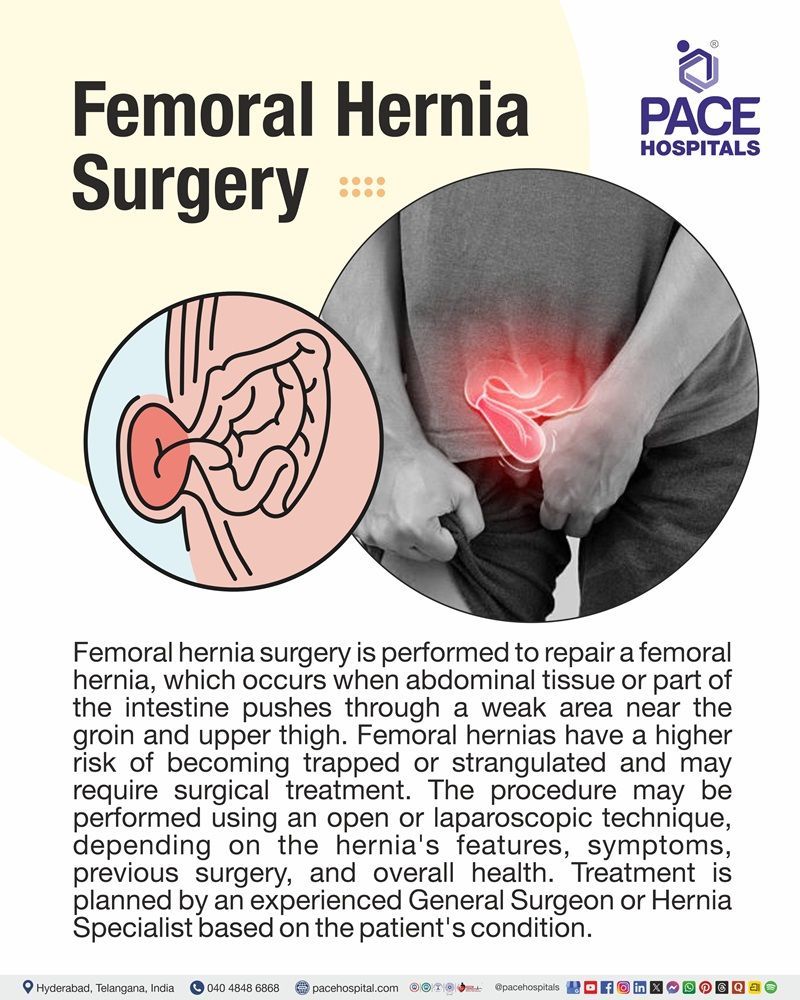
Femoral hernia surgery is usually done by a general surgeon with experience in hernia repair. After surgery, most people recover without any major problems and slowly get back to their usual routine. Keeping the wound clean, staying away from heavy lifting for some time, and going for follow-up visits can help with recovery.
Femoral hernia surgery types
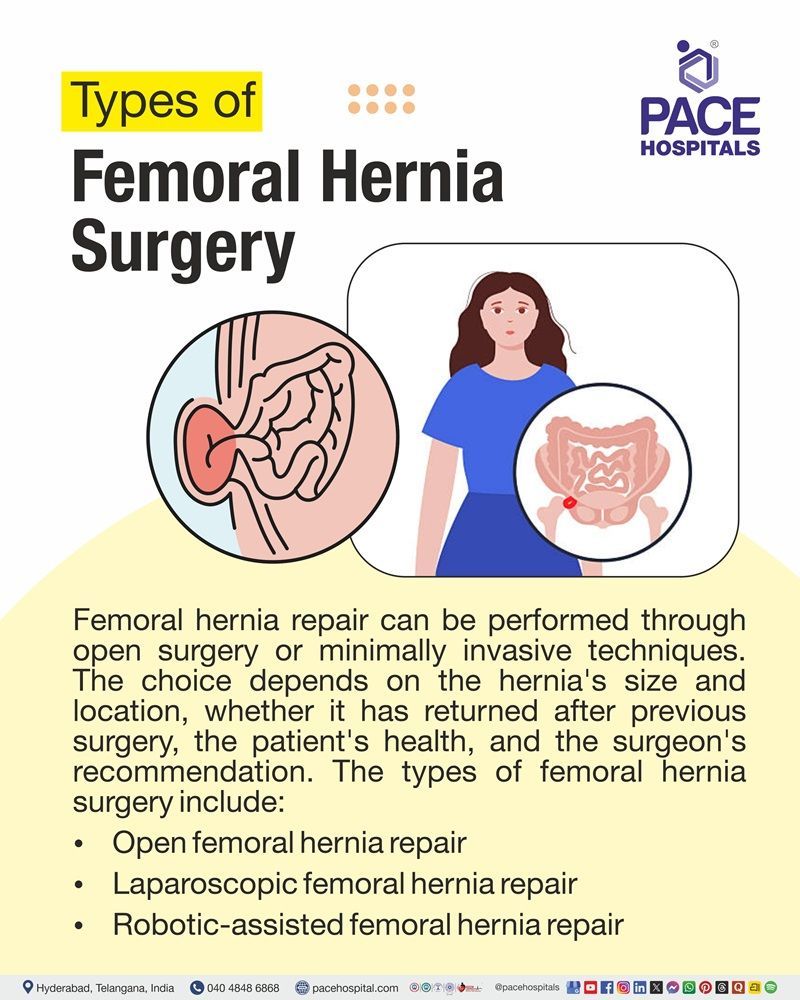
Femoral hernia repair can be done through open surgery or minimally invasive techniques. The choice of procedure depends on the size and location of the hernia, whether it has come back after previous surgery, the patient's health, and the surgeon's recommendation. The types of femoral hernia surgery include :
- Open femoral hernia repair
- Laparoscopic femoral hernia repair
- Robotic-assisted femoral hernia repair
Open Femoral Hernia Repair
In open surgery, an incision is made in the groin area to reach the hernia. The tissue that has moved through the weakened area is placed back, and the opening is repaired with stitches or, when suitable, surgical mesh.
Laparoscopic Femoral Hernia Repair
Laparoscopic surgery involves making a few small incisions through which a camera and surgical instruments are inserted. The surgeon places mesh in the preperitoneal space to cover and reinforce the femoral defect.
The two common minimally invasive techniques are:
- Totally extraperitoneal repair (TEP): The repair is carried out in the space outside the abdominal cavity, without entering the abdomen.
- Transabdominal preperitoneal repair (TAPP): The surgeon enters the abdominal cavity and places the mesh in the preperitoneal space over the hernia defect.
Robotic-Assisted Femoral Hernia Repair
Robotic-assisted surgery is another minimally invasive option. The surgeon controls the instruments through a robotic system, while the repair is carried out through small incisions. Mesh may be placed to provide additional support to the repaired area.
The surgeon will recommend the most appropriate technique after evaluating the hernia, the urgency of treatment, previous surgeries, medical conditions, and individual risks. Femoral hernias can sometimes become trapped or strangulated; therefore, urgent medical evaluation is needed for severe pain, a tender or non-reducible groin lump, vomiting, abdominal bloating, fever, or inability to pass stool or gas.
Femoral hernia surgery indications
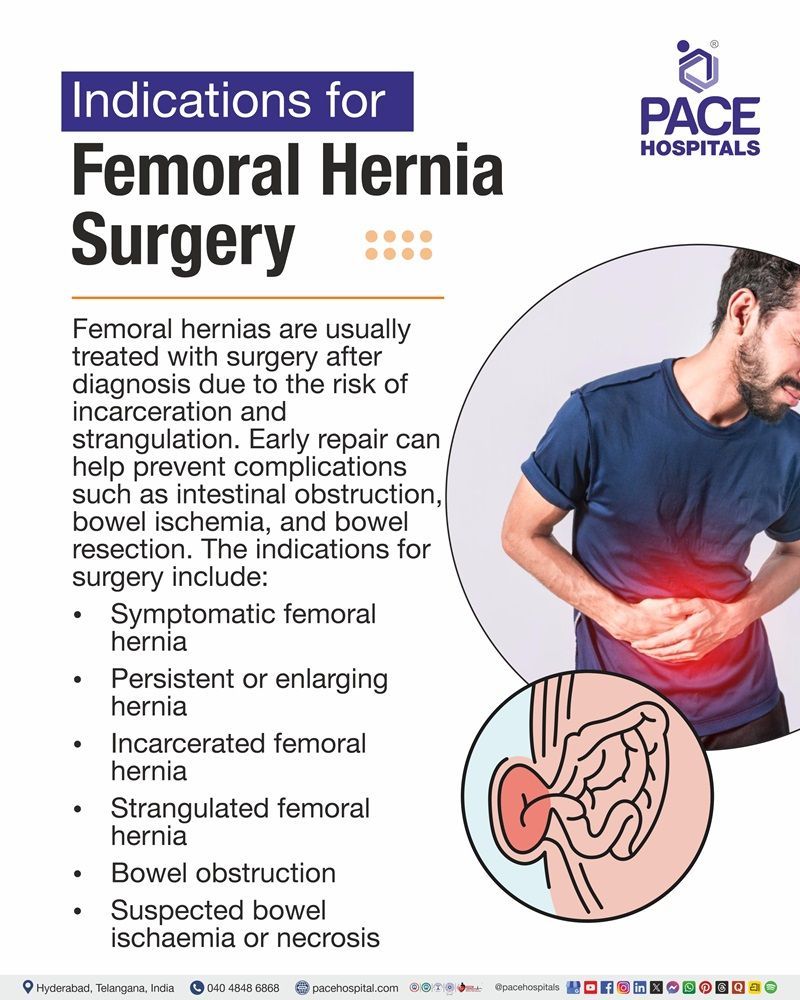
Femoral hernias are generally managed with surgical repair after diagnosis because they have a relatively high risk of incarceration and strangulation. Elective repair can help prevent emergency complications, including intestinal obstruction, bowel ischemia, and the possible need for bowel resection. The following are the indications for femoral hernia surgery :
- Symptomatic femoral hernia
- Persistent or enlarging hernia
- Incarcerated femoral hernia
- Strangulated femoral hernia
- Bowel obstruction
- Suspected bowel ischaemia or necrosis
Symptomatic Femoral Hernia
Surgery is usually considered when a femoral hernia causes pain, tenderness, discomfort, or a groin or upper-thigh lump that affects daily activities. Repairing the hernia early may help prevent it from becoming trapped or strangulated.
Persistent or Enlarging Hernia
An enlarging femoral hernia may indicate progression of the defect and can increase the likelihood of complications. Surgical repair may therefore be recommended rather than prolonged observation, particularly because femoral hernias have a recognized risk of incarceration.
Incarcerated Femoral Hernia
An incarcerated hernia occurs when the herniated tissue becomes stuck and cannot be pushed back into the abdomen. Urgent surgical assessment is required, especially if there is pain, tenderness, vomiting, abdominal swelling, or inability to pass stool or gas. Delaying surgery in a painful incarcerated femoral hernia can increase the risk of strangulation and bowel damage.
Strangulated Femoral Hernia
Strangulation occurs when the blood supply to the trapped hernia contents becomes compromised. This is a surgical emergency because prolonged ischemia can lead to tissue necrosis, sepsis and the need for bowel resection.
Bowel Obstruction
A femoral hernia may trap a portion of the intestine and cause intestinal obstruction, resulting in symptoms such as abdominal pain, vomiting, abdominal distension and inability to pass stool or gas. When obstruction is associated with incarceration or suspected strangulation, urgent surgical treatment is required.
Suspected Bowel Ischaemia or Necrosis
If the bowel does not recover or is non-viable, the affected segment may need to be removed. The decision to use surgical mesh depends on the condition of the bowel and the degree of contamination. Mesh may be suitable in selected emergency repairs when there is no gross bowel spillage, but it is usually avoided or an alternative repair is considered if there is bowel perforation, peritonitis or severe contamination because of infection risk.
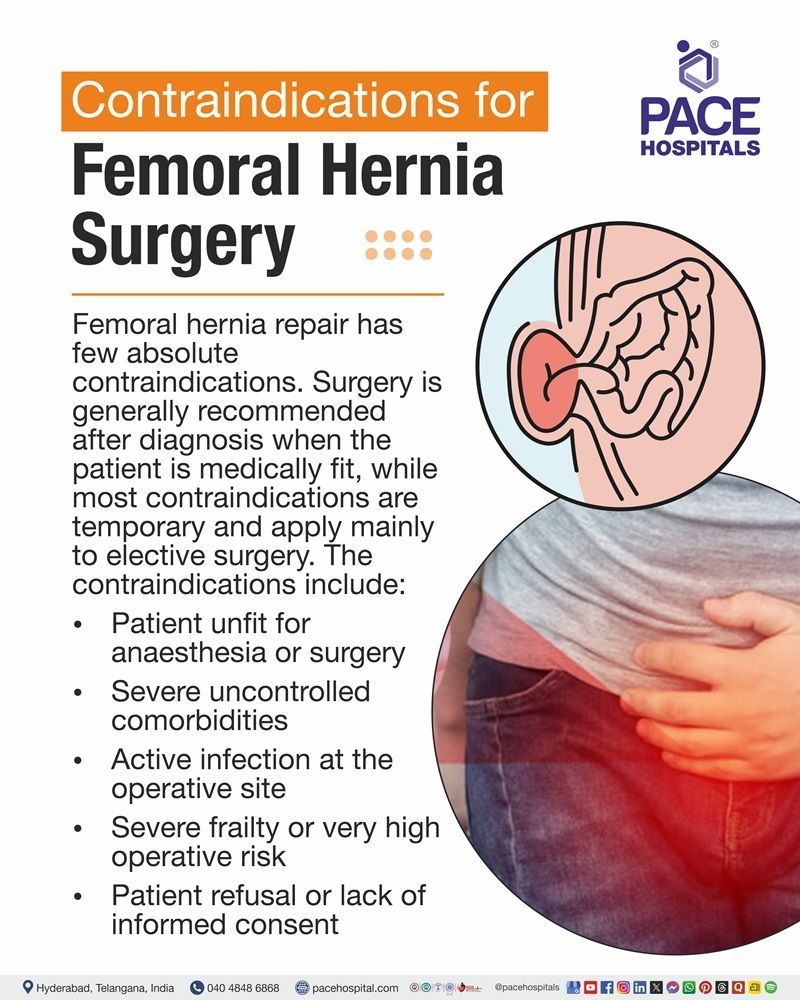
Femoral hernia surgery contraindications
Femoral hernia repair has few absolute contraindications. Since femoral hernias have a relatively high risk of incarceration and strangulation, surgical repair is generally recommended after diagnosis when the patient is medically fit. Most contraindications are temporary and apply mainly to elective surgery. The following are the contraindications of femoral hernia surgery :
- Patient unfit for anaesthesia or surgery
- Severe uncontrolled comorbidities
- Active infection at the operative site
- Severe frailty or very high operative risk
- Patient refusal or lack of informed consent
Patient Unfit for Anaesthesia or Surgery
Elective surgery may be postponed when a patient's overall condition makes anaesthesia or surgery too risky. This may occur with severe physiological instability or advanced illness. The decision should be based on an individual assessment by the surgical and anaesthesia teams. In selected high-risk patients, an open groin hernia repair may be possible under local anaesthesia rather than general anaesthesia.
Severe Uncontrolled Comorbidities
Patients with poorly controlled heart, lung, metabolic, kidney, or blood disorders may have a higher risk of complications during surgery. Conditions such as unstable heart disease, worsening heart failure, active respiratory illness, uncontrolled diabetes, or serious clotting problems may need treatment before elective repair. These conditions should be assessed and stabilised whenever possible.
Active Infection at the Operative Site
An infection in the skin or soft tissues around the groin may require elective surgery to be delayed until the infection has settled. This is particularly important when mesh is planned because infection can increase the risk of wound and mesh-related complications. In emergency surgery, the use of mesh is individualized according to bowel viability and the degree of contamination. Mesh may be considered in clean or clean-contaminated fields but is generally avoided in contaminated fields because it can increase infection risk.
Severe Frailty or Very High Operative Risk
Severe frailty, poor physical reserve, advanced organ disease, or a high risk of postoperative complications requires careful shared decision-making. The potential advantages of elective repair need to be evaluated against the patient's surgical and anaesthetic risks, quality of life, life expectancy, and personal preferences. Age alone is not a contraindication to femoral hernia repair. Selected older or frail patients may still benefit from repair.
Patient Refusal or Lack of Informed Consent
A patient with decision-making capacity may choose not to undergo elective femoral hernia repair after discussing its benefits, risks, and alternatives. The patient should also be informed about the possibility of incarceration, strangulation, bowel obstruction, and emergency surgery if the hernia is left untreated.
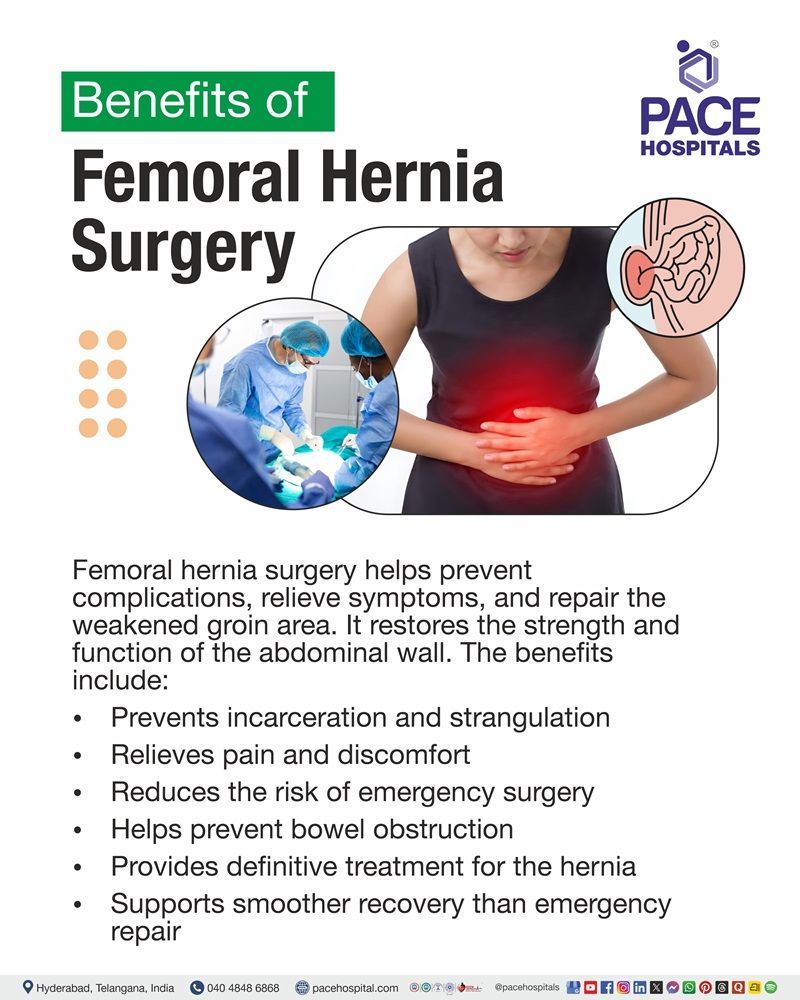
Femoral hernia surgery benefits
Femoral hernia surgery offers several important benefits, particularly in preventing complications and relieving symptoms associated with the hernia. The procedure repairs the weakened area in the groin and helps restore the normal strength and function of the abdominal wall. The benefits listed below highlight why surgical repair is commonly recommended for suitable patients: -
- Prevents incarceration and strangulation
- Relieves pain and discomfort
- Reduces the risk of emergency surgery
- Helps prevent bowel obstruction
- Provides definitive treatment for the hernia
- Supports smoother recovery than emergency repair
Prevents Incarceration and Strangulation
Surgery closes the opening in the femoral canal and prevents abdominal tissue from pushing through it again. This helps reduce the chance of the hernia becoming trapped, which is known as incarceration. If the trapped tissue loses its blood supply, strangulation can occur and may damage the bowel. Treating the hernia early can help avoid these serious complications and emergency surgery.
Relieves Pain and Discomfort
A femoral hernia can cause groin pain or discomfort, which may become more noticeable while standing, walking, coughing, or doing strenuous work. Surgery repairs the opening in the groin where the hernia has developed. As healing takes place, pain and discomfort usually improve, making it easier to return to normal daily activities.
Reduces the Risk of Emergency Surgery
Elective repair allows the hernia to be treated before complications develop. Emergency femoral hernia surgery is associated with higher morbidity and mortality than elective repair and may involve bowel resection when the intestine has become compromised. Timely treatment can therefore help reduce the likelihood of needing emergency surgery.
Helps Prevent Bowel Obstruction
A femoral hernia may contain a portion of the intestine, and trapping of the bowel can interfere with the normal passage of intestinal contents. This can lead to abdominal pain, vomiting, abdominal distension, and difficulty passing stool or gas. Repair removes the hernia and reduces the possibility of bowel obstruction caused by the femoral defect.
Provides Definitive Treatment for the hernia
Surgery treats the actual defect that has caused the femoral hernia instead of only relieving the symptoms. The tissue that has moved into the femoral canal is placed back into the abdomen, and the opening is closed using an appropriate repair method. This treats the existing hernia, although there is still a small chance that it can come back after surgery.
Supports Smoother Recovery than emergency repair
Planned elective repair is performed before complications such as bowel obstruction or strangulation develop. In contrast, emergency surgery may involve more extensive procedures, including bowel resection, and can require a longer hospital stay and recovery period. Treating a femoral hernia electively, when appropriate, may therefore allow a less complicated recovery.
Get a Free Second Opinion for Femoral hernia repair
At PACE Hospitals, we are committed to providing our patients with the best possible care, and that includes offering second medical opinions with super specialists for treatment or surgery. We recommend everyone to get an expert advance medical second opinion, before taking decision for your treatment or surgery.
Femoral hernia repair steps
Femoral hernia repair can be done through open surgery or a minimally invasive approach. The choice depends on the size and location of the hernia, the patient's overall health, any previous surgeries, and the surgeon's experience. The most suitable method is decided after evaluating the individual case.
Procedure steps for femoral hernia surgery include the following:
Before Femoral Hernia Surgery
- Medical evaluation and physical examination: The surgeon reviews the patient's medical history and examines the groin to assess the hernia. Blood tests, ECG, imaging, or other investigations may be advised depending on the patient's age, symptoms, and overall health.
- Discuss medications and allergies: Before surgery, the patient should share the details of any medicines, supplements, or over-the-counter drugs being taken and mention any known allergies. This helps the medical team decide if any medicines need to be changed before surgery and avoid problems during anaesthesia.
- Adjust blood-thinning medicines if advised: Patients taking anticoagulants or antiplatelet medicines may need their treatment adjusted before surgery. Any change in these medicines should be made only on the advice of the treating doctor.
- Follow fasting instructions: Patients are usually asked to stop eating and drinking for a specified period before surgery, according to the anaesthesia team's instructions. Following these instructions helps reduce the risk of complications during anaesthesia.
- Complete informed consent: The surgeon explains how the hernia will be repaired, along with the possible risks, benefits, and other treatment options. Any questions or concerns can be discussed before giving consent for the surgery.
- Optimise existing health conditions: Conditions such as diabetes, hypertension, heart disease, and respiratory problems should be assessed and controlled as far as possible before elective surgery. Patients who smoke may also be advised to stop smoking to support recovery.
- Arrange transportation and postoperative support: Depending on the type of anaesthesia and whether the procedure is performed as day surgery, patients may need someone to accompany them home. Arranging help with routine activities during the initial recovery period can also be useful.
During Femoral Hernia Surgery
- Administration of anaesthesia: The type of anaesthesia depends on the surgical approach, the patient's health, and the surgeon's and anaesthetist's assessment. Open repair may be performed under local, regional, or general anaesthesia in appropriate patients, while laparoscopic repair generally requires general anaesthesia.
- Preparation of the surgical site: The skin around the groin is cleaned with an antiseptic solution before surgery and covered with sterile drapes. This keeps the area clean and helps lower the chance of infection during the procedure.
- Making the incision or laparoscopic access: In open surgery, an incision is made in the groin to reach the femoral hernia. In a minimally invasive repair, small abdominal incisions are used to introduce a camera and surgical instruments.
- Identifying the femoral hernia: The surgeon identifies the femoral canal and hernia sacs. The surrounding structures are carefully examined to evaluate the contents of the hernia and the health of the tissues.
- Reducing the hernia contents: The trapped fatty tissue or bowel is carefully returned to the abdominal cavity when possible. If the hernia is incarcerated or strangulated, the surgeon assesses the bowel for viability and may need to remove non-viable bowel.
- Repairing the femoral defect: The opening through which the hernia has developed is closed using sutures, mesh, or another suitable repair method. The selection of femoral hernia repair depends on the size and type of hernia, the patient's condition, and the findings during surgery.
- Checking the repair: After repairing the hernia, the surgeon checks the area for any bleeding and confirms that the mesh or stitches are in the correct position. During minimally invasive surgery, the nearby groin area may also be checked before completing the procedure.
- Closing the incision: Once the repair is complete, the surgical instruments are removed and the incisions are closed with appropriate sutures or other closure materials.
- Applying dressings: A sterile dressing may be placed over the incision to protect the wound during the early healing period.
After Femoral Hernia Surgery
- Follow discharge and self-care instructions: Follow the surgeon's advice regarding wound care, medicines, physical activity, bathing, and follow-up. Activity can generally be increased gradually according to comfort and recovery.
- Manage postoperative pain: Mild pain, tenderness, or discomfort around the surgical site is common after repair. Pain-relieving medicines may be prescribed or recommended by the treating team.
- Care for the surgical wound: Keep the incision clean and follow the instructions given for dressing changes. Contact the medical team if there is increasing redness, swelling, discharge, wound separation, or fever.
- Resume physical activity gradually: Gentle walking is usually encouraged during recovery. Heavy lifting and strenuous activities should be resumed according to the surgeon's advice and the patient's recovery rather than following a fixed time period.
- Maintain a healthy diet and avoid constipation: Drink enough water and include fibre-rich foods such as fruits, vegetables, and whole grains in your diet to help prevent constipation. If needed, your doctor may recommend a stool softener to make bowel movements easier and avoid straining.
- Attend follow-up appointments: Follow-up allows the surgeon to assess wound healing, recovery, and the condition of the hernia repair. Any postoperative problems can also be identified and managed at an early stage.
- Allow adequate time for recovery: Recovery varies according to the surgical approach, patient's health, and whether the operation was elective or emergency. Patients can generally return to normal activities as comfort permits, while strenuous activities should be resumed gradually following medical advice.
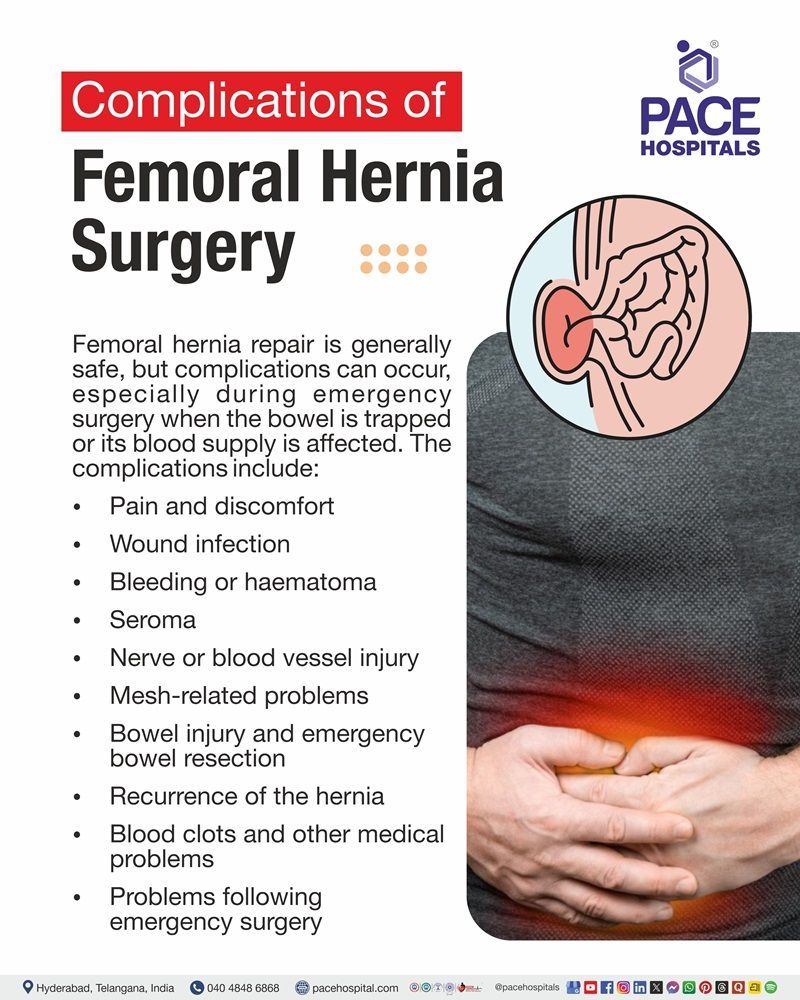
Femoral hernia surgery complications
Femoral hernia repair is usually a safe procedure, but complications can occur in some patients. The risk is generally higher when the hernia is treated as an emergency, especially if the bowel is trapped or its blood supply has been affected. The following are the complications of femoral hernia surgery:
- Pain and discomfort
- Wound infection
- Bleeding or haematoma
- Seroma
- Nerve or blood vessel injury
- Mesh-related problems
- Bowel injury and emergency bowel resection
- Recurrence of the hernia
- Blood clots and other medical problems
- Problems following emergency surgery
Pain and Discomfort
Pain around the groin is common after femoral hernia surgery and usually improves with recovery. Some patients may continue to have groin pain for a longer period after the operation. Persistent pain can sometimes affect normal activities and may need further assessment.
Wound Infection
The surgical wound can occasionally become infected after the procedure. This may cause redness, swelling, increasing soreness, warmth, or discharge from the wound. Most wound infections can be treated with medicines and proper wound care.
Bleeding or Hematoma
Bleeding can occur during or after surgery and may sometimes lead to a hematoma, which is a collection of blood under the skin. Small hematomas generally settle on their own without treatment. However, if the collection is large or causes significant pain or swelling, additional treatment may be required.
Seroma
A seroma is a build-up of fluid that develop around the area where the hernia was repaired. It may appear as a soft swelling or lump near the surgical wound. In most cases, the body gradually absorbs the fluid and no treatment is needed. However, if the seroma is large, uncomfortable, or does not resolve on its own, then the doctor may recommend draining the fluid.
Nerve or Blood Vessel Injury
The femoral canal lies close to important blood vessels and nerves. Although uncommon, these structures can be injured during surgery. Depending on the structure affected, this may result in bleeding, numbness, altered sensation, or ongoing pain.
Mesh-Related Problems
Mesh is often used to strengthen the repair of a femoral hernia. In some cases, problems such as mesh infection, persistent discomfort, fluid collection, or mesh movement may occur. Rarely, a mesh-related problem may require another procedure.
Bowel Injury and Emergency Bowel Resection
When a femoral hernia is incarcerated or strangulated, the bowel may be trapped inside the hernia. If the blood supply has been lost and the bowel is no longer healthy, the affected portion may have to be removed. Bowel resection is more commonly required in emergency femoral hernia operations.
Recurrence of the Hernia
There is a possibility that the femoral hernia may return after surgery. Recurrence rates can vary with the type of repair and whether the operation was elective or performed in an emergency. Recent evidence suggests that recurrence is less common after mesh repair than after some non-mesh repairs.
Blood Clots and Other Medical Problems
As with other operations, some patients may develop complications such as blood clots, breathing problems, chest infections, or heart-related problems. These risks are influenced by factors such as patient's age, existing medical conditions, mobility, and the urgency of the operation.
Problems Following Emergency Surgery
A femoral hernia that requires emergency surgery carries a greater risk of complications than one repaired electively. Emergency cases are more likely to involve bowel resection and can be followed by a longer hospital stay, more postoperative complications, and a more difficult recovery.
Femoral Hernia Surgery Recovery Time
Recovery after femoral hernia surgery varies depending on the method of repair, whether the surgery was planned or performed in an emergency, and the patient's overall condition. Most patients are able to walk and progressively resume light daily activities shortly after surgery. Pain, tenderness, bruising, or discomfort around the groin, which is normal in the first few days and generally improves as the healing process advances.
Most people can return to light activities within 1–2 weeks and may be able to return to work within 2–3 weeks, although those with physically demanding jobs may need additional time. Heavy lifting and strenuous activities are generally avoided for around 6 weeks, with activity increased gradually according to comfort and the surgeon's advice. Most patients recover completely within around 6 weeks. Recovery from emergency surgery may take longer, especially if the hernia has resulted in bowel obstruction or strangulation and bowel surgery is necessary.
What Questions Can Patients Ask the Healthcare Team About Femoral Hernia Surgery
- Why is femoral hernia surgery recommended?
- Is surgery necessary, or are there suitable non-surgical options?
- What type of femoral hernia repair is most appropriate?
- Would open or minimally invasive surgery be better?
- Will surgical mesh be required for the repair?
- Is there any risk of the hernia becoming trapped or strangulated?
- What are the possible risks and complications of surgery?
- What type of anaesthesia will be used in the femoral hernia repair technique?
- How long will the surgery take, and will hospital admission be needed?
- How should the patient prepare for the surgery?
- What can be expected during the recovery period?
- When can normal activities, work, exercise, and lifting be resumed?
- What symptoms after surgery should be reported immediately?
- What can be done to reduce the risk of the hernia coming back?
Frequently Asked Questions (FAQs) on Femoral Hernia Surgery
Can someone live a normal life after femoral hernia surgery?
Yes. Most people can return to their normal daily activities after femoral hernia surgery once they have recovered from the procedure. Walking and light activities can usually be resumed early, with activity gradually increased as comfort improves. Heavy lifting and strenuous exercise may need to be avoided for a few weeks, depending on the type of repair and the surgeon’s advice. Recovery can vary based on the size of the femoral hernia, the surgical approach and the person’s overall health.
How serious is femoral hernia surgery?
Femoral hernia repair is a commonly performed operation, but the hernia itself can become serious if bowel becomes trapped or strangulated. Planned elective repair is generally safer than emergency surgery. The procedure may be performed through an open or minimally invasive approach, depending on the patient's condition and surgical expertise. Timely repair is generally recommended for femoral hernias because of the risk of complications from incarceration and strangulation.
Which is better for femoral hernia repair: open or laparoscopic surgery?
There is no single approach that is best for every patient. Both open and laparoscopic techniques can effectively repair a femoral hernia. Current international guidelines generally favour a laparo-endoscopic approach for elective groin hernia repair when appropriate expertise and resources are available, but open surgery remains an important option, particularly when patient factors, previous surgery, surgeon expertise, or an emergency situation make it more appropriate.
What are the risks of femoral hernia surgery?
Possible complications after femoral hernia repair generally includes infection, bleeding, fluid or blood collection, difficulty passing urine, nerve-related pain or numbness, injury to the bowel or blood vessels, blood clots, and recurrence of the hernia. Most complications are uncommon, but it may vary based on individual risks.
Can a femoral hernia grow back after surgery?
Yes, a femoral hernia can recur after surgery, although recurrence is uncommon with appropriate surgical repair. The risk can depend on factors such as the type of repair, tissue strength, smoking, obesity, wound complications and increased pressure within the abdomen. Following postoperative instructions and maintaining a healthy weight may help reduce the risk of recurrence.
How long does a femoral hernia repair surgery take?
An uncomplicated femoral hernia repair generally takes about 30–45 minutes. The procedure may take longer if the hernia is large, recurrent, difficult, or involves bowel repair. Hospital stay and recovery may vary depending on the patient's overall health and whether the surgery was planned or performed as an emergency.
Is femoral hernia surgery painful?
Some pain, tenderness, or tightness around the surgical area is normal after femoral hernia surgery. The soreness is typically most obvious in the first few days and gradually diminishes as the healing process develops. Pain-relieving medicines can be used as advised by the healthcare team. If pain becomes severe, continues to worsen, or is associated with fever, swelling, or wound discharge, the patient should contact the doctor.
Can coughing affect recovery after femoral hernia surgery?
Coughing can cause some kind of discomfort or pulling on the groin wound during the early stages of recovery. It does not damage a properly healed hernia repair. Supporting the wound gently with a hand or small pillow while coughing may improve comfort. Contact your doctor if you have a persistent, severe or worsening cough, fever, shortness of breath, chest pain, or increasing wound pain.
Will physiotherapy be needed after femoral hernia surgery?
Routine physiotherapy is usually not required after an uncomplicated femoral hernia repair. Most patients can slowly increase walking and normal daily activities as they feel comfortable. Specific physiotherapy or rehabilitation may be recommended if the patient has reduced mobility, significant weakness, persistent pain, or has undergone a more complex repair.
Can femoral hernia surgery affect the bowel?
Femoral hernia surgery can involve the bowel when a section of intestine becomes trapped inside the hernia. In an uncomplicated repair, the bowel is usually returned to its normal position without being damaged. However, an incarcerated or strangulated femoral hernia can compromise the bowel's blood supply. If part of the bowel is severely damaged, the surgeon may need to remove that section and reconnect the healthy ends.
Can I eat normally after femoral hernia surgery?
In most uncomplicated cases, patients can gradually return to their normal diet once they are fully awake from anaesthesia and are able to tolerate fluids and food. Starting with lighter foods may be more comfortable if there is nausea after surgery. Drinking enough fluids and eating fibre-rich foods can also help prevent constipation, particularly when pain medicines are being taken. Your surgeon may provide different dietary instructions if the surgery involved the bowel or was performed as an emergency.
Can someone walk after femoral hernia surgery?
Yes. Walking is generally encouraged soon after femoral hernia repair, provided the patient is medically stable. Gentle walking can help maintain mobility and reduce complications associated with prolonged inactivity. Normal daily activities can generally be resumed as comfort permits, while strenuous exercise and heavy lifting may require a temporary restriction.
Can someone recover well after femoral hernia surgery?
Yes. Most patients can recover well after femoral hernia repair, particularly when the operation and recovery are uncomplicated. Pain, bruising, swelling and movement-related discomfort usually improve gradually. The time needed to return to normal activities depends on the type of repair, overall health and physical demands of daily life.
Is there a treatment for a femoral hernia without surgery?
There is no definitive non-surgical treatment that closes a femoral hernia. Supportive measures may temporarily reduce discomfort, but they do not repair the underlying defect in the abdominal wall. Because femoral hernias have a significant risk of incarceration and strangulation, surgical repair is generally recommended rather than long-term observation.
Should I stop taking my regular medicines before surgery?
Not necessarily. Patients should give the surgeon and anaesthetist a complete list of their regular medicines, including prescription medicines, over-the-counter drugs, vitamins, and supplements. Some medicines, particularly blood thinners and medicines that can affect bleeding or blood sugar, may need to be adjusted before surgery, but this should only be done according to the healthcare team's instructions. Do not stop any prescribed medicine on your own.
Why choose PACE Hospitals?
- A Multi-Super Speciality Hospital.
- NABH, NABL, NBE & NABH - Nursing Excellence accreditation.
- State-of-the-art Liver and Kidney transplant centre.
- Empanelled with all TPAs for smooth cashless benefits.
- Centralized HIMS (Hospital Information System).
- Computerized health records available via website.
- Minimum waiting time for Inpatient and Outpatient.
- Round-the-clock guidance from highly qualified super specialist doctors, surgeons and physicians.
- Standardization of ethical medical care.
- 24X7 Outpatient & Inpatient Pharmacy Services.
- State-of-the-art operation theaters.
- Intensive Care Units (Surgical and Medical) with ISO-9001 accreditation.


