
Breast Reduction Surgery - Cost, Procedure & Benefits
PACE Hospitals is recognized as the best hospital for breast reduction surgery in Hyderabad, India, offering world-class, personalized care through a team of highly experienced plastic surgeons. Our patient-centered approach ensures individualized treatment plans, utilizing state-of-the-art techniques. With a focus on delivering exceptional outcomes, PACE Hospitals is the leading choice for breast reduction and implant surgery in Hyderabad.
Request an Appointment for Breast Reduction Surgery
Breast Reduction Surgery appointment
Why Choose PACE Hospitals for Breast Reduction Surgery?
Advanced State-of-the-Art Surgical Techniques
Team of the Best Plastic Surgeons in Hyderabad
Precision Treatment with 99.9% success rate
All insurance accepted for cashless treatment
Recognized for excellence in healthcare delivery with
NABH, NABL, NBE/DNB, NABH Nursing Excellence, and ISCCM accreditations.
Breast reduction meaning
Breast reduction surgery, also called as reduction mammoplasty, is a treatment that reduces breast volume while preserving nipple-areola viability and creating an aesthetically acceptable shape. It is frequently requested by patients with significant breast ptosis who are undergoing mastopexy or breast lift. A patient must have a full medical history, a family history of breast cancer, and complaints linked to breast weight before being considered for this procedure. Preoperative assessments comprise vertical correction, nipple-areola complex alignment, and a physical examination.
Indications for Breast Reduction
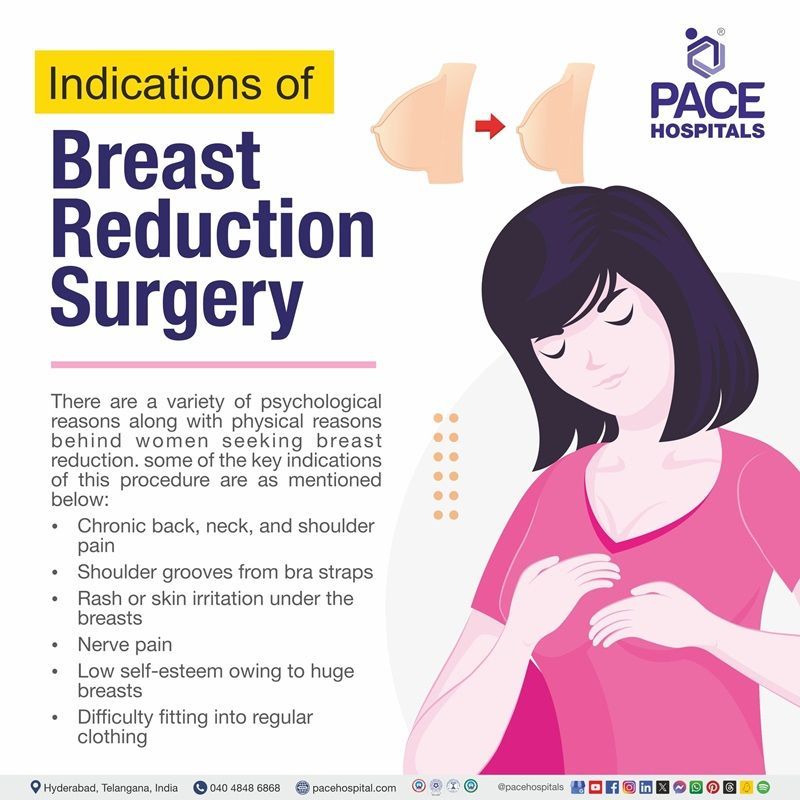
There are a variety of psychological reasons along with physical reasons behind women seeking breast reduction. Some of the key indications of this procedure are as mentioned below:
- Chronic back, neck, and shoulder pain
- Shoulder grooves from bra straps
- Rash or skin irritation under the breasts
- Nerve pain
- Low self-esteem owing to large breasts
- Difficulty fitting into regular clothing
Breast Reduction Contraindications
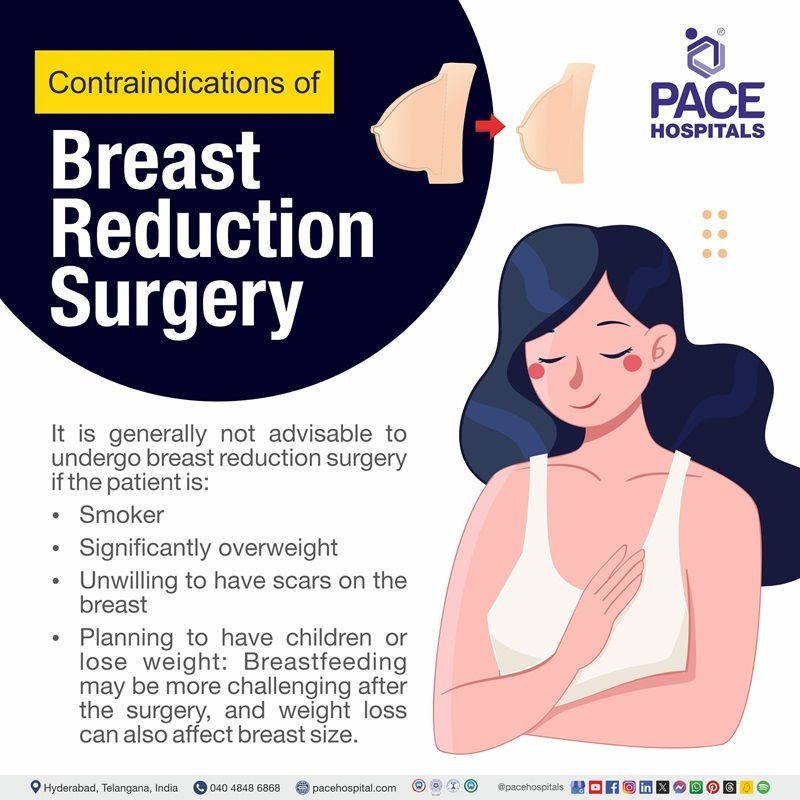
It is generally not advisable to undergo breast reduction surgery if the patient is:
- A smoker
- Significantly overweight
- Unwilling to have scars on the breast
- Planning to have children or lose weight: Breastfeeding may be more challenging after the surgery, and weight loss can also affect breast size.
Things to consider before breast reduction surgery
It's important to keep in mind the following points before proceeding for breast reduction surgery
- Breast reduction surgery is most effective when the breasts are fully developed.
- Piercing the breasts or nipples can lead to infections.
- Breast reduction surgery may interfere with certain diagnostic procedures.
- It's important to discuss with the surgeon if the patient is planning to breastfeed in the future, as breast reduction surgery may affect the ability to do so.
- Changes in the breasts during pregnancy or major weight fluctuations can influence the results of previous breast reduction surgery.
Requirements of an ideal breast reduction surgery
- Ensure that the breasts are lifted to a natural and youthful form in proportion to the body, with symmetrical positioning.
- The nipple and areola should be relocated appropriately without compromising blood supply.
- Maintaining the function of the breast and ensuring that scars are not visible through everyday clothing or above the areola.
- The procedure should address all types of deformities and be completed in one stage.
Step wise procedure of breast reduction surgery
Breast reduction surgery is a plastic surgery treatment that reduces the size of the breasts while also changing their form and position. During the surgery, extra breast tissue and fat are removed along with the skin, and the nipple and areolar elevation would be done. The procedure is usually conducted under general anesthesia and can last up to 3 to 4 hours.
Here's an overview on the breast reduction surgery procedure:
Incisions: The surgeon often makes three incisions, one around the areola, one extending from the areola to the chest crease, and one along the breast crease.
Areola and nipple repositioning: The nipple and areola are frequently elevated, and the areola is occasionally reduced in size.
Liposuction: Sometimes liposuction is combined with breast reduction to improve the form of the breasts and armpits.
Recovery: Patients may have drainage tubes in place for a few days after surgery to prevent fluid from gathering in the operated region. They may also need to take prescription pain relievers for a few days and over-the-counter medications for two weeks.
Breast shape: The breasts may feel lighter in the first two to three months, but it may take up to a year for them to soften fully. One needs to discuss over the positive and negative aspects of the procedure with their surgeon prior to surgery. Additionally, the patient needs to select an accredited doctor with extensively good experience in performing breast reductions.
Techniques of breast reduction surgery
Cosmetic surgeons can perform breast reduction using one of several distinct surgical techniques available. The type and volume of tissue to be removed, the patient's intended outcome, and the patient's current breast anatomy will influence the technique that is applied to the patients.
Liposuction for Breast Reduction
- Sometimes liposuction is the only way to achieve breast reduction. Long-term results, almost undetectable scars on the breast, and a shorter, less invasive procedure are the advantages of liposuction for breast reduction. But only certain individuals will benefit from this strategy in terms of ideal outcomes.
- The most suitable candidates are those who have good skin elasticity, little to no sagging that needs to be corrected, would like or require a minor to moderate decrease in breast size, and whose extra breast size is primarily related to excess fat tissue.
One of the following breast reduction procedures is probably going to benefit the patient the most if they have stretched skin, asymmetrical breasts, drooping breasts, or a significant amount of tissue to remove.
Vertical or “Lollipop” Breast Reduction
- Typically, the best candidates for a vertical breast reduction are those who need a moderate reduction in breast size and have noticeable sagging breasts.
- Two incisions are needed for this procedure, one around the areola's perimeter and the other vertically from the areola's base to the inframammary fold, or the crease under the breast.
- With this particular incision design, a cosmetic surgeon can lift the breast to a more youthful posture, rebuild the smaller breast internally, and remove excess fat, skin, and breast tissue.
- Although there is some scarring following a vertical breast reduction, it is limited to the region below the nipple and is therefore easily covered under undergarments.
Inverted-T or “Anchor” Breast Reduction
- Three incisions are necessary for an inverted-T breast reduction: one along the crease beneath the breast, one along the areola's edge, and one vertically from the areola to the breast crease.
- Cosmetic surgeons frequently use this surgery to treat considerable sagging or asymmetry in patients, as well as bigger breast size reductions, because it offers the greatest amount of tissue removal and contouring.
- Scars from an inverted-T or anchor breast reduction are the same as those from a vertical reduction, with the exception of one extra, thin scar that runs down the crease under the breast.
- With diligent care, scars often disappear significantly over the first year or sooner after surgery.
Before and after -
breast reduction surgery procedure
Before breast reduction surgery
- The patient should discuss with their surgeon about their present health status if they are thinking about undergoing breast reduction surgery. This includes talking about their present physical state, which includes the patient's food and exercise routine, as well as their past medical history including diseases, illnesses, surgeries, and vaccinations.
- The surgeon will monitor the patient's blood pressure, temperature, heart rate, heart rhythm, oxygen saturation, and respiratory rate during this routine checkup before surgery.
- The surgeon is expected to also check patient's mental health, including any mental illnesses or issues that the patient might be experiencing and the treatments they are receiving; any current medications they are taking, including vitamins and supplements; any past medication reactions; and any allergies that the patient might have.
- Upon this discussion, the surgeon will be able to estimate the risks and potential complications of the procedure for the patient. They will also be able to inform the patient about the steps they should take in order to assure a smooth recovery from surgery.
During breast reduction surgery
- Breast reduction surgery is typically conducted under general anaesthesia. In rare circumstances, when the reduction is smaller, the doctor may use local anaesthesia with sedation.
- Breast reduction surgery involves making an incision around the nipple. The incision is continued in a straight vertical line to the breast crease.
- Additional incisions may be made in the crease beneath the breast. In most situations, the nipple remains connected to the blood and nerve supply at all times. However, an excessively heavy breast may require a 'free nipple graft'.
- The nipple is removed and then reattached at a higher point on the breast.
- Excess skin, fat, and glandular tissue are excised. The surgeon can perform liposuction to assist eliminate extra fat. (In some cases, a doctor can reduce the size of the breasts with liposuction alone).
- The surgeon then stitches deep into the breast tissue to provide support, and the skin incisions are closed.
After breast reduction surgery
Following breast reduction surgery, the patient may notice:
- A drainage tube in the site to minimize fluid buildup.
- Bruising
- Swelling
- Numbness
- Soreness and discomfort
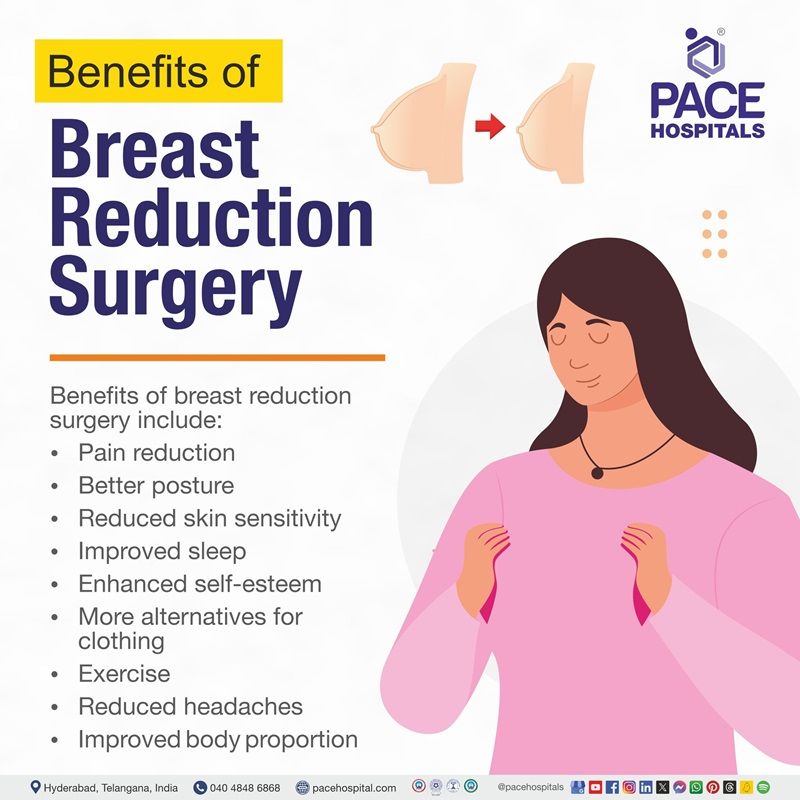
Benefits of breast reduction surgery
Benefits of breast reduction surgery include:
- Pain reduction: Shoulders, upper back, and neck pain can be relieved with breast reduction surgery.
- Better posture: Posture can be improved after breast reduction surgery.
- Reduced skin sensitivity: Rashes and skin irritation might be reduced with breast reduction surgery.
- Improved sleep: Having breast reduction surgery may make a person more comfortable to fall asleep.
- Enhanced self-esteem: Body image and self-esteem can both be enhanced with breast reduction surgery.
- More alternatives for clothing: Getting an undergarment that fits and looks decent can be made easier with breast reduction surgery.
- Exercise: Following breast reduction surgery, exercising and engaging in physical activities may be easier.
- Reduced headaches: Surgery for breast reduction could decrease headaches.
- Improved body proportion: Surgery to reduce breast size can improve body proportion.
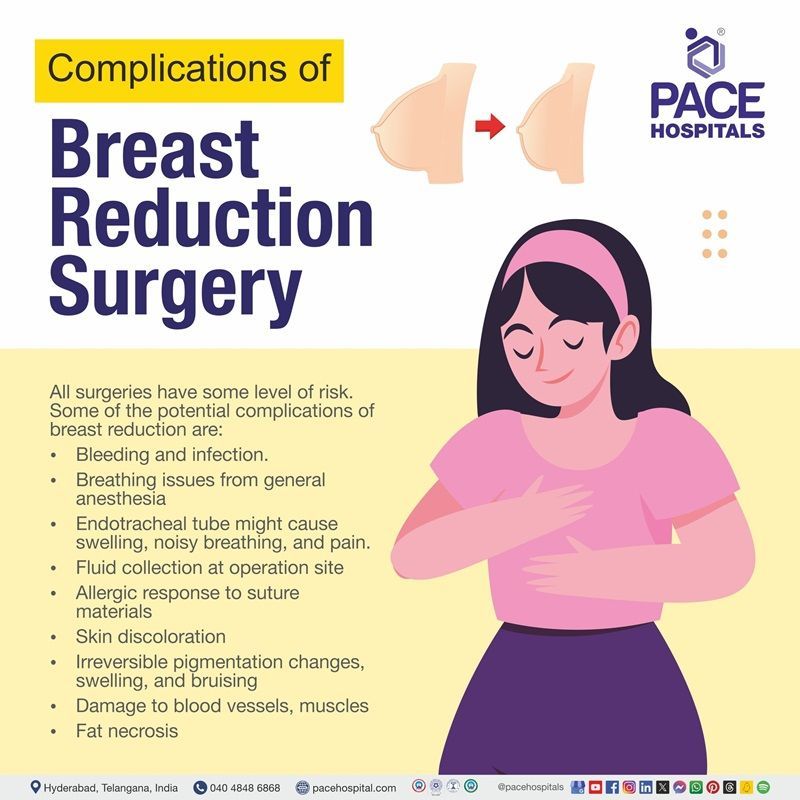
Breast reduction risks and complications
All surgeries have some level of risk. Some of the potential complications of breast reduction are:
- Surgical risks including bleeding and infection.
- Breathing issues from general anesthesia or endotracheal tube might cause swelling, noisy breathing, and pain.
- Fluid collection at operation site(s)
- Allergic response to suture materials, tape adhesive, or other medical products and lotions
- Skin discoloration, irreversible pigmentation changes, swelling, and bruising
- Deeper structures, including nerves, blood vessels, muscles, and lungs, may sustain temporary or permanent damage.
- Fat necrosis may occur, causing alterations in breast and nipple feeling, temporary or permanent numbness, and skin wrinkles around the implant.
Long term outcome of breast reduction surgery
- The edema (swelling) caused by the procedure will decrease over time. Scarring may take up to 18 months to fade into indistinct lines.
- Satisfaction with the new look should increase as the patient recovers. The new breast size should alleviate the discomfort and physical constraints the patient felt before to breast reduction, and they may discover that having a better proportioned body boosts their self-esteem.
- This approach should produce permanent outcomes. However, the size of the breasts can vary with age, weight variations, hormonal influences, and gravity.
Life after breast reduction surgery
- Breast reduction is one of the most satisfying cosmetic surgery operations since it relieves both physical and emotional pain while also improving a patient's look.
- Patients report a gain in self-confidence as well as an increased sense of freedom to wear clothes that they like and engage in physical activities they had previously turned down.
- While many patients find instant relief from back and shoulder pain following breast reduction, it is crucial to note that their ultimate benefits will take some time to become apparent.
- Swelling, discomfort, and tingling are common following breast reduction, so the patient’s new smaller breasts may appear slightly larger than planned during the early swelling.
- Furthermore, the breasts frequently heal at different rates, so patient may see some asymmetry during the first few months of recovery.
- Roughly after 2-3 months, the final results will be more or less in place. However, patient may observe modest changes throughout the first 6 to 12 months.
Male breast reduction surgery
Male breast reduction surgery, sometimes known as reduction mammaplasty or gynecomastia surgery, is a surgical procedure used to treat excessive male breasts. Although local anaesthetic along with sedation may be utilized in certain situations, general anesthesia is typically used for the procedure.
Procedure: The surgeon may use liposuction or a scalpel to remove extra tissue after making an incision around the nipple. The surgeon might realign the nipples in specific circumstances.
Recovery: The day following surgery, the patient can resume their normal activities. However, one should avoid vigorous exercise and hard lifting for about two weeks. It's also advised to wear a compression garment for at least four weeks.
Results: Many patients report feeling more comfortable and confident as a result of the long-lasting effects of gynecomastia.
Breast reduction without surgery
It is possible to reduce the size of the breasts without surgery. However, it depends on the expected outcome and cause of breast reduction. Weight loss, physiotherapy, breast binding are some of the non-surgical techniques, but it is important to remember that most of these non-surgical methods serves only the purpose temporarily.
Frequently Asked Questions (FAQs) on Breast Reduction Surgery
Is breast reduction a surgery safe?
Generally, any surgery would carry the risk of complications. However, this breast reduction surgical procedure is relatively much safe. In case of complex surgical outcomes, there could be few complications like infections, loss of sensation in nipples, or scars of breast reduction incisions.
What are the common reasons for undergoing breast reduction surgery?
Common causes include deep shoulder grooves from bra straps, rashes or skin irritation under the breasts, poor posture, trouble exercising, and self-consciousness related to breast size. Many seek better body proportions and more physical comfort.
Which is the best hospital for Breast Reduction Surgery in Hyderabad, India?
PACE Hospitals, Hyderabad, is among the most trusted centres for breast reduction and comprehensive breast contouring procedures. Our expert plastic and cosmetic surgeons specialise in reducing excessively large breasts, alleviating physical discomfort (back/neck pain, skin rashes) and reshaping the breast to a more comfortable and aesthetic size and contour including special treatment for male breast reduction surgery or Gynecomastia treatment in Hyderabad.
With modern surgical techniques, thoughtful pre-operative planning, and dedicated post-operative care, PACE Hospitals ensures safe, natural-looking and long-lasting results for breast reduction procedures — supported by cashless facilities, TPA corporate tie-ups, and assistance with medical insurance processing for eligible patients.
Who is a good candidate for breast reduction surgery?
Individuals with large breasts that cause physical symptoms, including skin irritation, shoulder, neck, or back pain, or trouble engaging in physical activities, are ideal candidates for breast reduction surgery. Women who do not smoke and are in generally good health condition, with reasonable expectations, are thought to be good candidates for this procedure.
Does breast reduction surgery affect breastfeeding?
Depending on the amount of tissue removed and the surgical technique employed, breast reduction surgery may have an effect on the ability to breastfeed. While some women may have trouble or have less milk produced, others may be able to breastfeed to their potential.
How much does it cost for breast reduction surgery in Hyderabad, India?
At PACE Hospitals, Hyderabad, the cost of breast reduction surgery typically ranges from ₹80,000 to ₹1,90,000 and above (approximately US $960 – US $2,280), depending on:
- The amount of tissue and skin to be removed
- Whether a lift, fat-transfer or contouring is included
- Surgical technique (lipo only vs anchor vs full reduction)
- Hospital stay, anaesthesia, surgeon fee and post-op care
For patients requiring smaller reductions and minimal contouring, the cost tends to be at the lower end of the range, while more extensive reductions with lift or complex reshaping fall toward the higher end.
What is breast reduction surgery?
Breast reduction surgery, also known as reduction mammoplasty, is a technique that eliminates excess breast tissue, fat, and skin to make the breast size more proportionate to the body. It also alleviates symptoms such as back pain, shoulder strain, and skin irritation caused by larger breasts.
Are there any risks or complications associated with breast reduction surgery?
There are risks associated with breast reduction procedure like any other surgical procedures. Some of the risks are infection, scars, asymmetry, changes in nipple sensitivity, and challenges with lactation. While these are usually uncommon, some people may encounter issues like delayed wound healing or anesthesia-related reactions.
How soon can I return to work or exercise after breast reduction surgery?
In one to two weeks, most people are able to resume their non-strenuous work. But it can take four to six weeks to start exercising or doing any heavy lifting again. Always getting the surgeon's approval before beginning a rigorous physical exercise regimen is recommended after surgery.
How long does the breast reduction surgery procedure take?
The duration of the procedure varies based on the complexity of the case and the volume of tissue removed, usually lasting two to five hours. At times, few of the surgeries might take longer time If further surgical procedures like liposuction or contouring are included.
What one can expect during the recovery period?
Patients are recommended to rest, avoid heavy lifting, and wear a support bra during the first two weeks of rehabilitation. Soreness, bruising, and swelling are typical symptoms. Although most people may return to their regular activities in 4–6 weeks, complete healing could take several months.
Is breast reduction possible without surgery?
Yes, it is possible to reduce the size of the breasts without surgery. However, it depends on the expected outcome and causes of breast reduction. Weight loss, physiotherapy, breast binding are some of the non-surgical techniques, but it is important to remember that most of these non-surgical methods serves only the purpose temporarily.
How much breast tissue will be removed during the surgery?
The surgeon's recommendations and the patient's unique needs determine the amount of tissue to be removed. Each breast might have between 200 to 1500 grams (7 ounces to 3 pounds) of tissue removed on average. The main objective is to have a natural, proportionate appearance while reducing symptoms.
Will breast reduction surgery leave noticeable scars?
Although scarring is an unavoidable consequence of breast reduction surgery, surgeons work to minimize its visibility. Typical incision sites include the area surrounding the areola, the breast crease, and even the breast crease itself. Scars usually go away with time, and if necessary, silicone sheeting or laser therapy can be used to heal them.
How long does the results of breast reduction surgery last?
Long-lasting effects are obtained with breast reduction surgery. Nonetheless, with time, variables including aging, pregnancy, weight fluctuations, and hormonal changes may have an impact on breast size and shape. Sustaining a steady weight contributes to the surgical result's duration.
Can I combine breast reduction with other procedures, like a breast lift or tummy tuck?
Yes, for a more thorough body reshaping plan, a breast reduction can sometimes be paired with other surgeries like a tummy tuck or a breast lift to improve breast shape and position. This method is frequently called a "mommy makeover."
Will I need to wear a special bra after surgery?
Yes, for a few weeks following the treatment, patients are usually encouraged to wear a specific surgical bra or compression garment. This promotes healing, lessens edema, and maintains the position of the breasts for best effects.
How can I choose the right surgeon for my breast reduction?
Selecting a board-certified plastic surgeon with substantial expertise performing breast reduction surgery is crucial. During the consultation, one should review the surgeon's credentials, before-and-after records of patients who underwent surgery previously and discuss their expectations. Online reviews and personal recommendations may also be beneficial.
Is breast reduction surgery covered by insurance?
If breast reduction surgery is considered medically necessary in India, for example, to alleviate chronic pain or discomfort, insurance may pay for it. Insurance companies, however, typically do not pay for cosmetic operations, such as breast reduction surgery.
What is the success rate of breast reduction surgery?
Breast reduction surgery, also known as reduction mammaplasty, has a high patient satisfaction rate, with up to 95% reporting satisfaction with the results. Patients report improved appearance, physical symptoms, and self-esteem. However, It's crucial to consult a board-certified plastic surgeon for a successful procedure without any potential risks.


