
Wart Removal Procedures in Hyderabad - Types, Indications & Procedure
PACE Hospitals offers wart removal procedures in Hyderabad, India, for removing warts from different parts of the body. Depending on the type, size and location of the wart, dermatologists may recommend procedures such as cryotherapy, electrocautery, laser wart removal or surgical excision. These procedures aim to remove the affected tissue while minimising damage to the surrounding skin. Experienced dermatologists assess each patient's condition and determine the appropriate removal technique. Treatment is planned with appropriate clinical evaluation, modern procedural facilities and individualised care.
Request an Appointment for Wart Removal Procedures
Wart Removal Procedures appointment
Why Choose PACE Hospitals for Wart Removal Procedure?

Advanced Dermatology Facilities with Dermoscopy & Modern Treatment Techniques for Accurate Wart Evaluation
Expert Dermatologists Specializing in the Diagnosis and Treatment of Common, Plantar & Recurrent Warts
Personalized Wart Removal with Electrosurgery, Laser Therapy & Other Clinically Appropriate Treatments
Comprehensive Dermatology Care with Transparent Treatment Plans, Insurance & Cashless Options
Recognized for excellence in healthcare delivery with
NABH, NABL, NBE/DNB, NABH Nursing Excellence, and ISCCM accreditations.
What is Wart Removal?
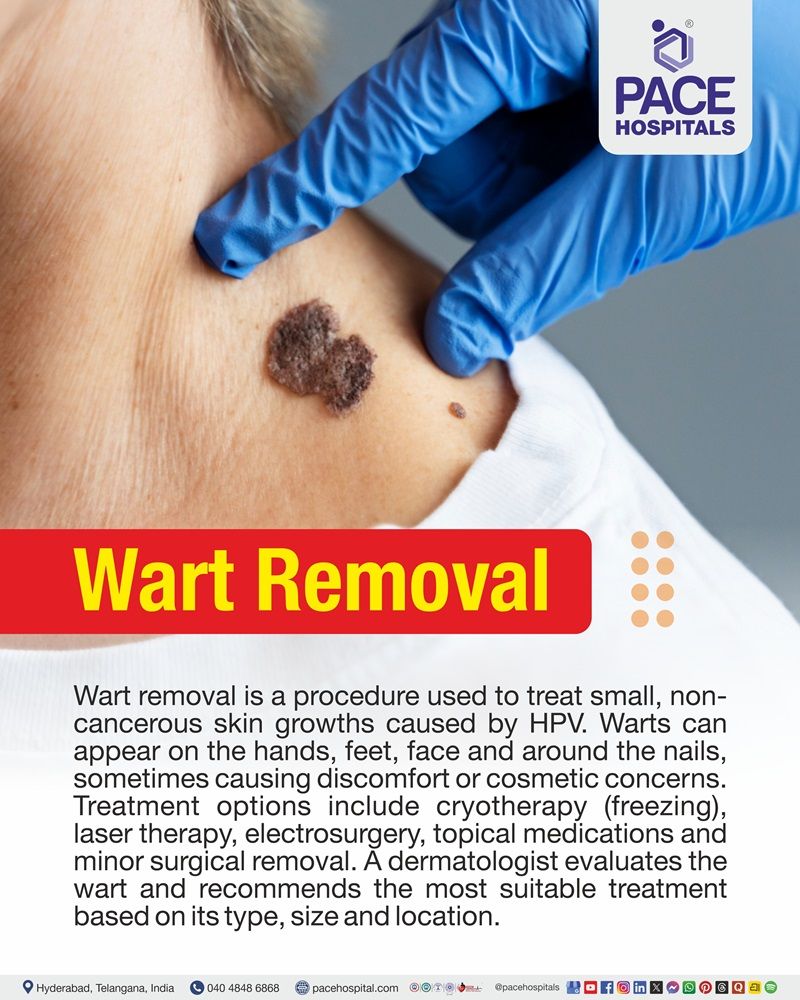
Wart removal is a procedure used to remove warts, which are small, non-cancerous skin growths caused by certain types of human papillomavirus (HPV). Warts can develop on different parts of the body, including the hands, feet, face and around the nails. They may appear as rough, raised or flat bumps and can sometimes cause pain, discomfort or cosmetic concerns.
Some warts disappear on their own, while others may persist, spread or cause discomfort and require treatment. Depending on the type, size, number and location of the warts, treatment may involve cryotherapy (freezing), electrosurgery, laser treatment, topical medicines or minor surgical removal.
A dermatologist (skin specialist) usually diagnoses and treats warts. The dermatologist examines the affected skin and recommends a suitable treatment based on the wart's type, size, location and severity. Warts in the genital or anal region may require evaluation by an appropriate specialist, such as a dermatologist, gynaecologist or colorectal specialist.
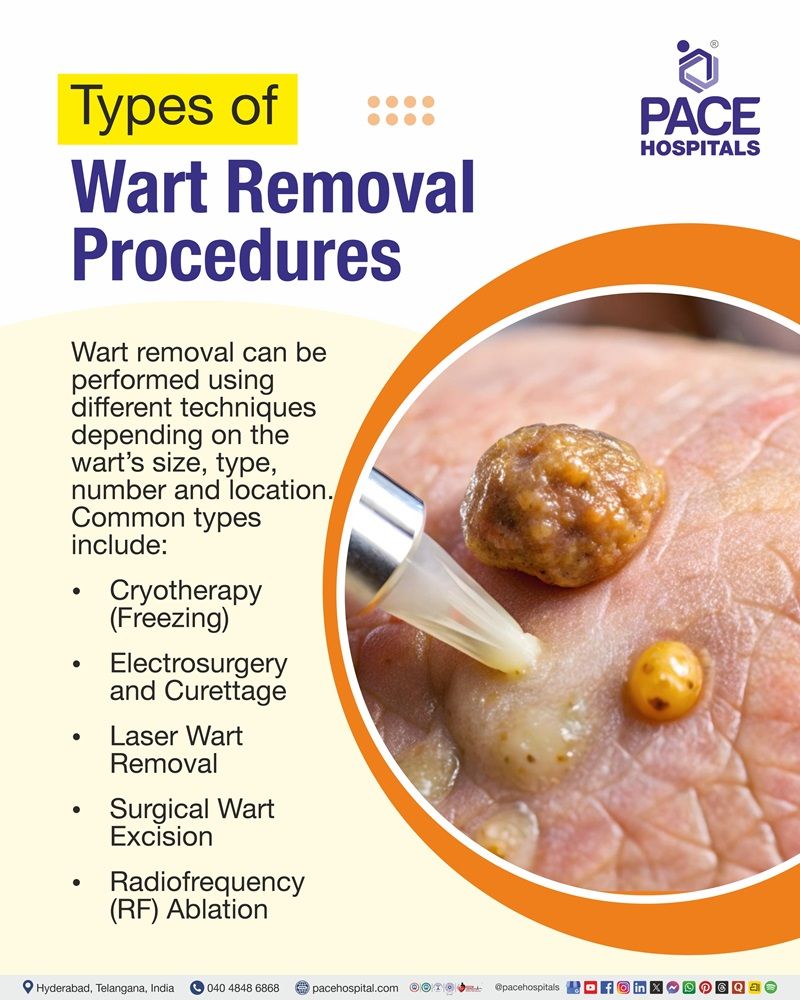
Warts can be treated using different methods based on their size, number, location, type and response to previous treatment. The dermatologist selects the most appropriate method based on the individual condition. Common types of wart procedures include:
- Cryotherapy (Freezing)
- Electrosurgery and Curettage
- Laser Wart Removal
- Surgical Wart Excision
- Radiofrequency (RF) Ablation
Cryotherapy (Freezing)
Cryotherapy uses liquid nitrogen to freeze and destroy wart tissue. The dermatologist applies it using a spray or cotton-tipped applicator. Treatment may cause temporary discomfort, blistering or scabbing, and several sessions may be needed to clear the wart.
Electrosurgery and Curettage
Electrosurgery and curettage combine electrical treatment with scraping to remove wart tissue. After numbing the area with local anaesthesia, the dermatologist uses a curette, a small spoon-shaped instrument, and controlled electrical energy to remove or destroy the wart and control bleeding. The order of these steps may vary.
Laser Wart Removal
Laser wart removal uses focused light energy to destroy or remove wart tissue. It may be recommended for selected warts that are persistent, difficult to treat or have not responded to other methods. Depending on the type and location of the wart, the dermatologist may use a CO₂ laser or a Pulsed-Dye Laser (PDL).
- CO₂ Laser: CO₂ laser wart removal produces concentrated light energy that is absorbed by the water present in skin cells. This energy heats and vaporises the wart tissue, allowing the dermatologist to remove it layer by layer while controlling the depth of treatment.
- Pulsed-dye laser wart removal: A pulsed-dye laser targets the small blood vessels that supply blood to the wart. The laser energy heats these vessels, helping damage the blood supply and destroy the wart tissue over time.
Surgical Wart Excision
Wart removal surgery involves cutting out the wart using a small surgical instrument. The area is first numbed with local anaesthesia, and the wart is carefully removed. Depending on the wound's size and location, it may be closed with stitches or left to heal naturally.
Radiofrequency (RF) Ablation
Radiofrequency ablation is a type of electrosurgery that uses high-frequency electrical energy to cut, remove or destroy wart tissue. The dermatologist applies a specialised instrument to the wart to remove the affected tissue. Local anaesthesia is usually given to minimise discomfort during the procedure.
Indications for Wart Removal
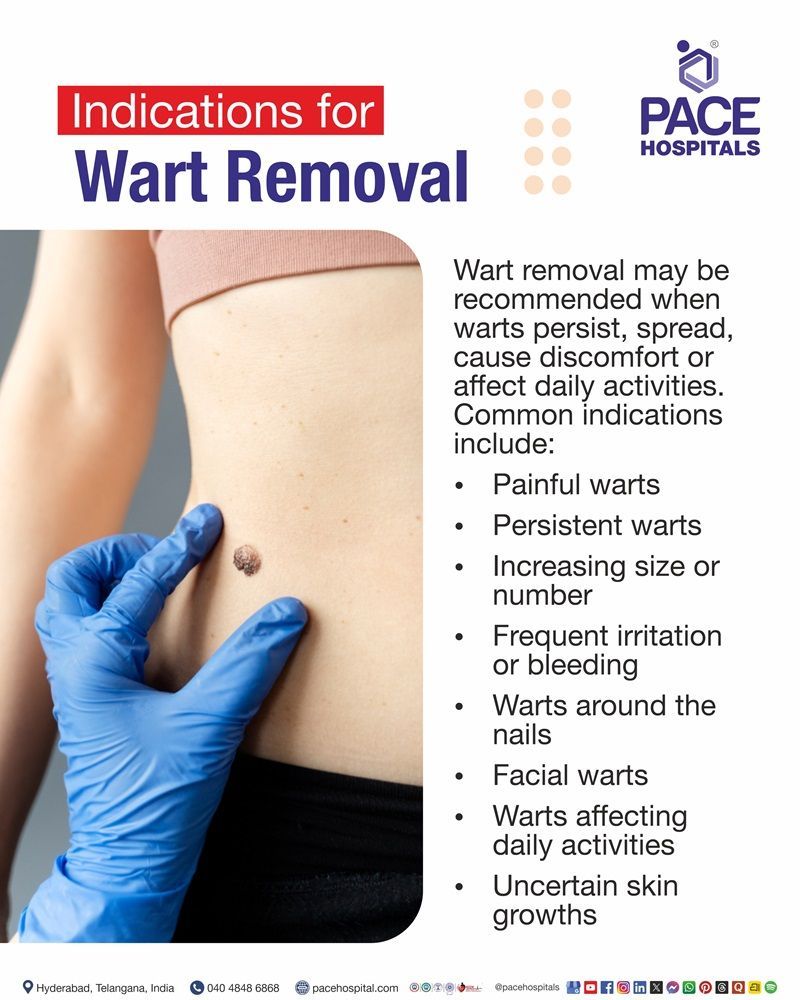
Wart removal is recommended when warts persist, cause discomfort or interfere with daily activities. Although some warts disappear on their own, treatment may be considered in the following situations:
- Painful warts
- Persistent warts
- Increasing size or number
- Frequent irritation or bleeding
- Warts around the nails
- Facial warts
- Warts affecting daily activities
- Uncertain skin growths
Painful warts
Warts on the soles of the feet (plantar warts), fingers or other pressure-prone areas may cause pain or discomfort, especially while walking, wearing shoes or using the hands. Removal may be considered when the pain affects daily activities.
Persistent warts
Some warts remain for a long time and do not disappear on their own. If they continue despite other treatments, a dermatologist may recommend a procedure to remove the affected tissue.
Increasing size or number
Warts may gradually grow larger or spread to nearby areas of the skin. When they continue to increase in size or number, treatment may be considered to remove the affected growths.
Frequent irritation or bleeding
Warts in areas exposed to repeated friction, such as the hands, feet or areas rubbed by clothing, may become irritated, injured or bleed. Removal may be considered if this happens repeatedly or causes discomfort.
Warts around the nails
Warts that develop around or under the nails may cause pain, affect nail growth or damage the surrounding skin. Removal may be considered if they persist, cause discomfort or interfere with normal nail growth.
Facial warts
Warts on the face may cause cosmetic concerns, irritation or discomfort. Facial wart removal may be considered depending on their location, size and type, using a method that minimises damage to the surrounding skin.
Warts affecting daily activities
Warts on the hands, feet or other body parts may interfere with walking, holding any objects or performing routine activities. Removal may be recommended when they cause persistent discomfort or limit daily activities.
Uncertain skin growths
Some skin growths may look like warts but could be other skin conditions. If a growth has an unusual appearance, changes in size or colour, or does not respond to treatment, a dermatologist may recommend a biopsy or removal to confirm the diagnosis.
Warts Removal Contraindications
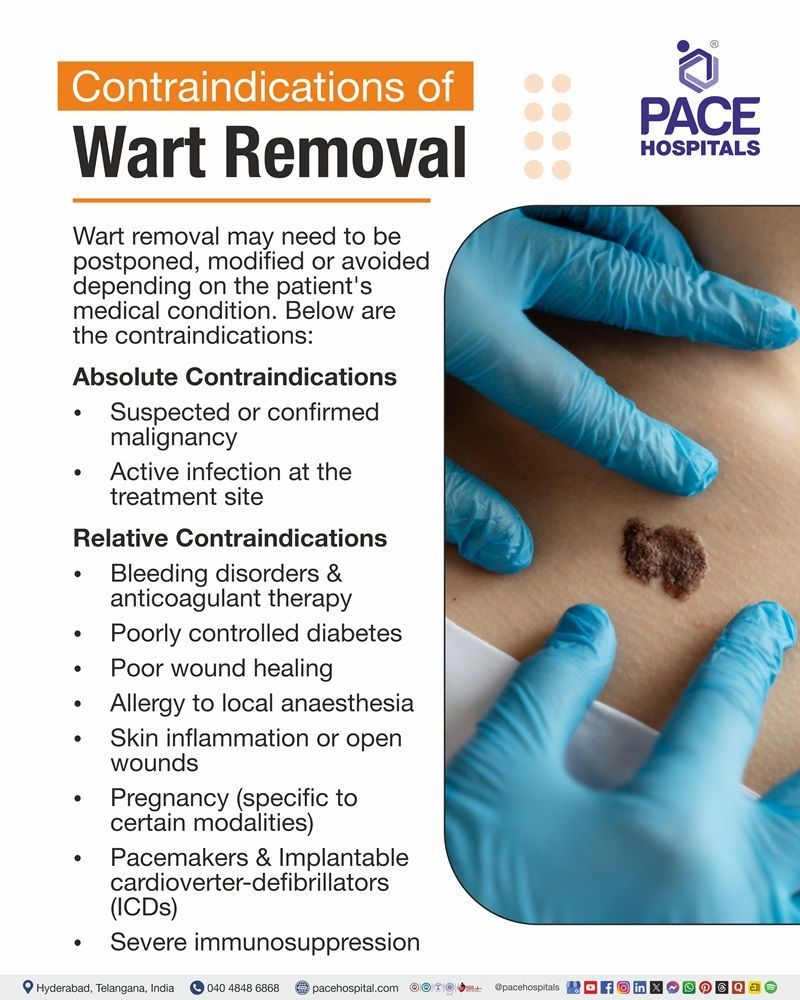
Wart removal procedures may not be suitable for everyone. Certain medical conditions or skin-related problems may require the procedure to be postponed, modified or avoided. The following are the conditions in which wart removal is not used; this includes:
- Absolute Contraindications
- Suspected or confirmed malignancy
- Active infection at the treatment site
- Relative Contraindications
- Bleeding disorders & anticoagulant therapy
- Poorly controlled diabetes
- Poor wound healing
- Allergy to local anaesthesia
- Skin inflammation or open wounds
- Pregnancy (specific to certain modalities)
- Pacemakers & Implantable cardioverter-defibrillators (ICDs)
- Severe immunosuppression
Absolute Contraindications
Suspected or confirmed malignancy
When a skin growth is thought to be malignant, it should not be treated like a common wart. It requires proper examination and, when indicated, a biopsy should be performed to confirm the diagnosis before selecting treatment.
Active infection at the treatment site
An active bacterial or viral skin infection around the area may increase the risk of spreading infection or delaying wound healing. Treatment may need to be postponed until the infection is controlled.
Relative Contraindications
Bleeding disorders and anticoagulant therapy
Conditions that can affect blood clotting or the use of blood-thinning medicines may increase the risk of bleeding during surgical excision, curettage or electrosurgery. The doctor assesses the bleeding risk and plans appropriate precautions.
Poorly controlled diabetes
High blood sugar levels can delay wound healing and increase the risk of infection after wart removal. Blood sugar control may need to be improved before an elective procedure.
Poor wound healing
Patients with a history of delayed wound healing, excessive scarring or keloid formation may have a higher risk of healing problems after removal. The dermatologist may choose a less invasive technique or provide additional wound-care instructions.
Allergy to local anaesthesia
Patients with a known allergy to the local anaesthetic planned for the procedure may need an alternative medication or anaesthetic approach to avoid allergic reactions.
Skin inflammation or open wounds
Irritated, inflamed or damaged skin around the wart may increase discomfort and interfere with healing. The procedure may be postponed until the surrounding skin improves.
Pregnancy (specific to certain modalities)
Some wart removal methods, particularly elective procedures involving certain medicines or anaesthetic considerations, may need to be postponed during pregnancy. The dermatologist selects an appropriate method after assessing the benefits and potential risks.
Pacemakers and Implantable cardioverter-defibrillators (ICDs)
Electrosurgery and radiofrequency procedures may interfere with certain implanted cardiac devices due to electrical energy. The patient's device should be assessed, and appropriate precautions or alternative removal methods may be considered.
Severe immunosuppression
Patients with significantly weakened immune systems may have difficulty clearing HPV infections and may experience delayed healing, persistent warts or recurrence after removal. Treatment requires individual assessment and follow-up.
Warts Removal Benefits
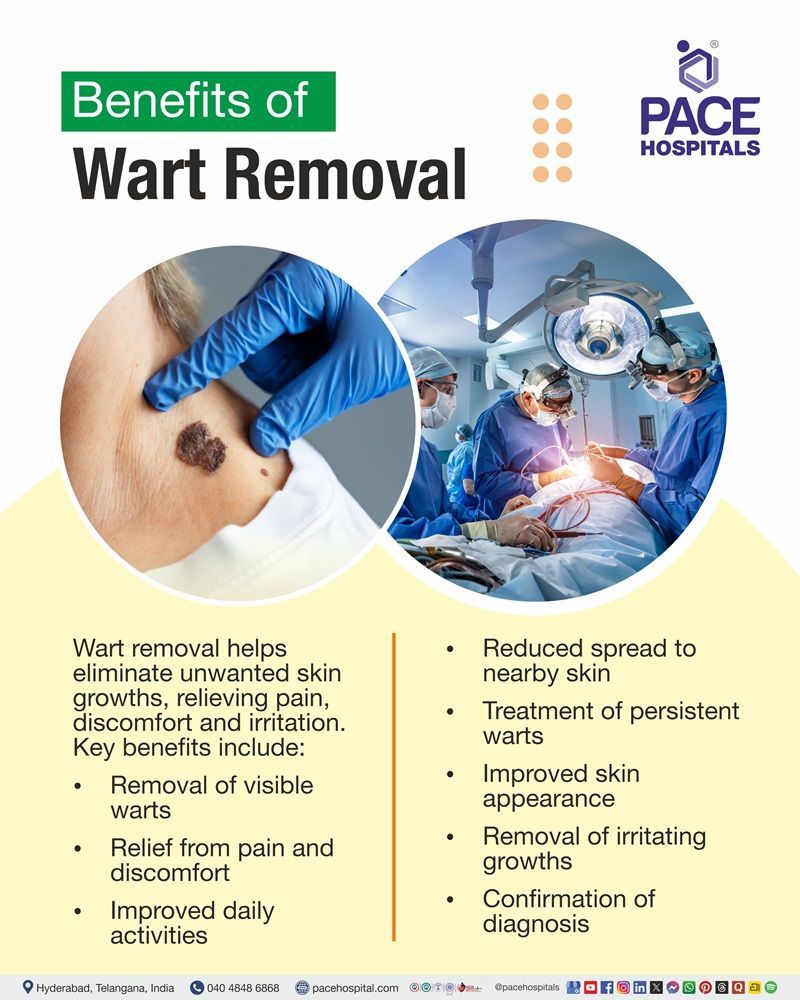
Wart removal procedures help eliminate unwanted skin growths that may cause pain, discomfort or interfere with daily activities. The potential benefits include:
- Removal of visible warts
- Relief from pain and discomfort
- Improved daily activities
- Reduced spread to nearby skin
- Treatment of persistent warts
- Improved skin appearance
- Removal of irritating growths
- Confirmation of diagnosis
Removal of visible warts
Wart removal procedures directly remove or destroy the affected skin tissue, helping to remove visible growths from the treated area.
Relief from pain and discomfort
Removing warts from pressure-prone areas, such as the soles of the feet or fingers, can reduce pain, tenderness and discomfort.
Improved daily activities
Warts on the hands or feet can interfere with walking, gripping objects or performing everyday tasks. Removing them can make these activities more comfortable.
Reduced spread to nearby skin
Removing the wart tissue may reduce the amount of infected tissue available to spread HPV to nearby skin. However, the virus may remain in the surrounding skin, so new warts can still develop.
Treatment of persistent warts
Wart surgery provides an option for warts that remain for a long time or do not respond to other treatment methods.
Improved skin appearance
Removing visible warts can make the affected skin look clearer and reduce cosmetic concerns, particularly when warts develop on the face, hands or other exposed areas.
Removal of irritating growths
Warts that repeatedly rub against clothing, footwear or jewellery can become irritated or injured. Removing them helps reduce this repeated friction and discomfort.
Confirmation of diagnosis
When a wart-like growth is surgically removed and sent for laboratory examination, the tissue can be examined under a microscope to confirm whether it is a wart or another skin condition.
Note: The benefits of wart removal may vary depending on the type, size and location of the wart and the removal method used. Although the procedure can remove visible wart tissue and relieve associated discomfort, it may not completely eliminate HPV from the skin. Therefore, warts can sometimes recur, and follow-up treatment may be required.
Wart Removal Steps
The following are the steps involved in wart removal, and they vary depending on the treatment method, the wart’s location and the patient’s health:
Before Procedure
- Skin examination and diagnosis: The dermatologist examines the wart to assess its size, number, thickness, type and location. If the growth looks unusual or the diagnosis is uncertain, a skin biopsy may be recommended to rule out other skin conditions.
- Medical history review: The patient should inform the dermatologist about existing medical conditions, previous surgeries, allergies, bleeding disorders, diabetes and any history of delayed wound healing or excessive scarring. Previous treatments for warts should also be discussed.
- Medication review: The patient should provide details of all medicines and supplements details that are being taken, particularly blood thinners and medicines for diabetes. These may require specific precautions depending on the removal technique. Medicines should not be stopped without the doctor's advice.
- Pre-procedure assessment: The dermatologist evaluates the patient's overall health and the condition of the skin around the wart. Additional investigations are not required for common wart removal, but they may be indicated if there are underlying medical issues or other specific concerns.
- Explanation and informed consent: The doctor describes the suggested technique of removal, how the treatment is carried out, any potential discomfort, the expected healing period, any potential complications, and the necessary aftercare. At this time, the patient's questions are addressed before obtaining consent.
- Preparation of the treatment area: The skin around the wart is cleaned to reduce the risk of infection. The treatment area may be marked to identify the tissue to be removed. Depending on the procedure, local anaesthesia may be planned to minimise discomfort.
- Pre-procedure instructions: Patients should follow the dermatologist's instructions regarding skin care, medicines and preparation. They may be advised to keep the treatment area clean and avoid applying creams or other products unless recommended. Most minor wart removal procedures performed under local anaesthesia do not require fasting.
During Procedure
- Administration of local anaesthesia: The treatment area is cleaned, and local anaesthesia may be injected or applied to numb the skin and minimise discomfort during the procedure.
- Preparation of the treatment area: The dermatologist cleans and prepares the affected skin. The surrounding area is protected to minimise damage to healthy skin.
- Removal of wart tissue: The dermatologist performs the selected procedure:
- Cryotherapy: Liquid nitrogen is applied to freeze and destroy wart tissue. Several treatment sessions may be needed.
- Electrosurgery and Curettage (ED&C): The wart tissue is scraped away using a curette, followed by controlled electrical energy to destroy remaining tissue and control bleeding.
- Laser wart removal: A CO₂ or pulsed-dye laser is directed at the wart to remove/ destroy the affected tissue.
- Surgical wart excision: The wart is carefully cut out using a scalpel or surgical scissors.
- Radiofrequency (RF) Ablation: High-frequency electrical energy is used to generate heat and destroy the wart tissue.
- Bleeding control: If bleeding occurs, the dermatologist controls it using appropriate methods such as pressure, electrosurgery or other techniques.
- Wound care and dressing: After removal, the treated area is cleaned and an appropriate dressing is applied to protect the wound and support healing. Stitches may be required after surgical excision, depending on the wound size and location.
- Completion of the procedure: The dermatologist checks the treated area and provides instructions for wound care and recovery. If the removed tissue requires further examination, it may be sent to a laboratory for biopsy.
After Procedure
- Observation after the procedure: The dermatologist checks the treated area for bleeding, swelling or any immediate reaction before the patient leaves.
- Wound care and dressing: The treated area is cleaned and covered with a dressing when required. Patients are advised to keep the area clean and change the dressing as instructed by the dermatologist.
- Pain and discomfort management: Mild pain, tenderness, redness or swelling may occur after the procedure. Prescribed medicines or recommended pain relief measures can help manage discomfort.
- Avoiding irritation: Patients should avoid scratching, picking or rubbing the treated area. Excessive friction and pressure should also be avoided, particularly when warts are removed from the hands or feet.
- Monitoring for infection: The treated area should be observed for increasing redness, swelling, warmth, pus discharge or worsening pain. Medical attention should be sought if these symptoms develop.
- Follow-up consultation: A follow-up visit may be recommended to assess wound healing and check whether the wart has been completely removed. If tissue was sent for biopsy, the doctor will discuss the results.
Wart Removal Side Effects
After wart removal, some patients may experience temporary side effects as the treated skin heals, depending on the removal method. These side effects improve as the treated area heals. Below are some of the most common side effects of wart removal:
- Mild pain or discomfort
- Redness and swelling
- Blister formation
- Minor bleeding
- Skin discolouration
- Scab formation
- Temporary skin sensitivity
Mild pain or discomfort
The treated area may feel sore, tender or slightly painful after the procedure. This can occur due to irritation or minor injury to the skin during wart removal.
Redness and swelling
The skin around the treated area may become red or slightly swollen as part of the body's natural healing response. This usually settles as the skin recovers.
Blister formation
Small fluid-filled blisters may develop at the treated site, particularly after cryotherapy (freezing treatment). These blisters form as the skin responds to the freezing process.
Minor bleeding
A small amount of bleeding or spotting may occur, especially after procedures involving cutting, burning or removing wart tissue. This generally stops with appropriate wound care.
Skin discolouration
The treated area may become temporarily lighter or darker than the surrounding skin. This can happen because of changes in skin pigmentation after treatment and may gradually improve.
Scab formation
A dry crust or scab develops over the treated area as it heals. It helps protect the underlying skin and usually falls off naturally as it heals. Picking or scratching should be avoided because it may delay healing.
Temporary skin sensitivity
The treated skin may feel more sensitive than usual or cause mild irritation when touched or exposed to friction. This generally improves as the skin heals.
Wart Removal Complications
Although wart removal is generally a safe procedure, certain complications may occur depending on the treatment method, the location and size of the wart, and the individual's healing response. The following are possible complications of the wart removal procedure:
- Infection
- Scarring
- Changes in skin pigmentation
- Nerve damage
- Delayed wound healing
- Persistent or recurrent warts
- Excessive bleeding
- Changes in nail growth
Infection
Bacteria may enter the treated area after the procedure and cause an infection. This may result in increasing redness, swelling, warmth, pain or pus discharge around the wound.
Scarring
Wart removal may sometimes damage deeper layers of the skin, which results in scar formation. The scar may appear as a raised, thickened or indented area after the wound heals.
Changes in skin pigmentation
The treated area may develop a darker or lighter colour than the surrounding skin. This happens when the treatment affects the cells responsible for producing skin pigment. These changes may sometimes last for several months or become permanent.
Nerve damage
Rarely, deeper treatment may affect nearby nerves, causing prolonged numbness, tingling or changes in sensation around the treated area.
Delayed wound healing
The treated area may take longer than expected to heal, especially in patients with diabetes, poor blood circulation or larger treatment wounds. Delayed healing may also increase the risk of infection.
Persistent or recurrent warts
Some wart tissue may remain after removal, or new warts may develop in the same area or nearby skin. This can happen because the HPV infection may remain in the surrounding skin even after the visible wart is removed.
Excessive bleeding
Although minimal bleeding may occur during or after removal, some patients may experience prolonged or severe bleeding, especially after surgical excision, or if they have a bleeding problem or are taking blood thinners.
Changes in nail growth
When warts are removed from around or beneath the nails, the nearby nail-producing tissue may sometimes be damaged. This can lead to abnormal nail growth, ridges or changes in nail shape.
Wart Removal Surgery Recovery Time
Wart surgery recovery time depends on the removal method, size and location of the wart, and the depth of treatment. Most patients can resume their routine activities within a short time after minor procedures. Mild pain, redness, swelling or scab formation may occur during the initial healing period.
The treated area may take 1–3 weeks to heal after minor wart removal procedures, while deeper wounds or surgical excision may require several weeks. Warts removed from the soles of the feet may take longer to heal because of pressure during walking. Patients should keep the area clean, follow wound-care instructions and avoid picking at scabs. Regular follow-up may be recommended to monitor healing and check for recurrence.
What Questions Can Patients Ask the Healthcare Team About Wart Removal Procedure?
- Which wart removal procedure is suitable for different types of warts?
- How long does a wart removal procedure take?
- Is anaesthesia required during wart removal?
- What are the possible side effects and complications of wart removal?
- Can warts recur after removal?
- Does wart removal leave scars?
- How long does the treated area take to heal?
- What precautions are required before the procedure?
- Is a biopsy required after surgical wart removal?
- Can multiple warts be removed in a single session?
Difference Between Wart Removal and Skin Tag Removal
Wart removal vs skin tag removal
Wart removal and skin tag removal are procedures used to remove different types of skin growths. Although both may appear as small bumps on the skin, they differ in their causes, appearance, and removal methods. The table below outlines the differences between wart removal and skin tag removal procedures:
| Parameters | Wart removal | Skin tag removal |
|---|---|---|
| Definition | A procedure used to remove skin growths caused by certain types of human papillomavirus (HPV). | A procedure used to remove small, soft, non-cancerous skin growths that commonly develop due to friction. |
| Appearance | Usually appear as rough, raised or flat bumps with an uneven surface. | Usually appear as soft, smooth, flesh-coloured or slightly darker growths, often attached by a narrow stalk. |
| Common Locations | Hands, feet, fingers, face and around the nails. | Neck, armpits, eyelids, groin and under the breasts. |
| Reason for Removal | Removed when painful, persistent, spreading, irritating or causing cosmetic concerns. | Removed when irritated by clothing or jewellery, repeatedly injured or causing cosmetic concerns. |
| Removal Procedures | Cryotherapy, electrosurgery and curettage, laser removal, surgical excision and radiofrequency ablation. | Snip excision, surgical excision, electrosurgery and cryotherapy. |
| Recurrence | May recur because HPV can remain in the surrounding skin. | New skin tags may develop, particularly in areas prone to friction. |
Frequently asked questions (FAQs) on Wart Removal Procedure
What is the difference between wart removal and corn removal?
Wart removal is a procedure used to remove skin growths caused by certain types of human papillomavirus (HPV). Corn removal is a procedure used to remove thickened areas of skin that develop due to repeated pressure or friction, commonly on the toes or feet. Warts may spread to nearby skin, whereas corns are not contagious. Treatment depends on the cause, size, and location of the affected area.
How to remove warts permanently?
Warts can be removed using procedures such as electrosurgery, laser treatment, surgical excision or radiofrequency ablation. However, no procedure can guarantee permanent removal because the HPV infection may remain in the surrounding skin, allowing warts to recur. A dermatologist can recommend a suitable treatment based on the type, size and location of the wart.
What are the treatment options for wart removal?
Treatment options for warts include topical medicines, cryotherapy (freezing the wart), electrosurgery and curettage, laser treatment, surgical excision and radiofrequency ablation. The choice depends on the wart's size, number, location and response to previous treatments. Some warts may also disappear without treatment.
What is electrosurgery for wart removal?
Electrosurgery uses controlled electrical energy that destroys wart tissue. The doctor usually numbs the affected area with local anaesthesia and removes the wart using a small scraping instrument, which is called a curette. Electrical energy is applied to destroy any remaining wart tissue and control bleeding. The treated area is covered with a dressing and allowed the treated area to heal.
When is laser treatment used for warts?
Laser treatment may be considered for persistent warts that have not responded to other treatments or for certain difficult-to-treat warts. It uses focused light energy to destroy wart tissue or target the small blood vessels supplying it, depending on the type of laser used. The dermatologist selects the laser technique based on the wart's size, location and characteristics.
Is laser wart removal better than cryotherapy?
Whether laser wart removal or cryotherapy is better depends on the wart's size, number, location and response to previous treatments. Laser treatment uses focused light energy to destroy wart tissue, while cryotherapy uses liquid nitrogen to freeze it. A dermatologist will recommend the appropriate method based on the type of wart and individual skin condition.
How many sessions are needed to remove a wart?
The number of sessions depends on the wart's size, thickness, location and response to treatment. Some warts may be removed in a single session, while larger, multiple or persistent warts may require additional sessions.
Can warts on different parts of the body be treated at the same time?
Yes, warts on different parts of the body can often be treated during the same visit. However, this depends on the number, size and location of the warts, the removal method and the patient's overall health. The dermatologist will decide whether treating all the warts in one session is appropriate or whether separate sessions are needed.
How long does it take to recover from wart removal?
Recovery depends on the removal method, size and location of the wart, and depth of treatment. Minor procedures may heal within one to three weeks, while deeper wounds or surgical excision may take several weeks. Warts on the soles of the feet may take longer to heal because of pressure during walking. Mild soreness, redness, swelling and scab formation may occur during healing.
How should the treated area be cared for after wart removal?
Proper wound care helps the treated area heal and reduces the risk of infection. General precautions include:
- Keep the treated area clean and follow the dermatologist's instructions for cleaning it.
- Change the dressing as advised and keep the wound covered if recommended.
- Avoid scratching, picking or removing scabs.
- Avoid rubbing or putting pressure on the treated area, especially on the hands and feet.
- Use prescribed creams or medicines as advised by the doctor.
- Watch for increasing redness, swelling, warmth, pus or worsening pain, and seek medical advice if these occur.
- Attend follow-up appointments to check healing and identify any recurrence.
Why does a wart come back after removal?
Warts may come back if some HPV-infected skin cells remain after treatment. The virus can also remain in the surrounding skin and cause a new wart to develop. Recurrence does not necessarily mean the procedure was unsuccessful. Follow-up treatment may be needed in some cases.
Does wart removal eliminate HPV from the body?
No, the wart removal procedure does not destroy or remove the virus from the body. The virus may remain in the surrounding skin, which is why new warts can sometimes develop even after successful removal.
Is salicylic acid effective for wart removal?
Yes. Salicylic acid is a commonly used treatment for suitable warts on the hands and feet. It gradually removes layers of wart tissue and usually needs regular application over several weeks, as directed.
Do not use salicylic acid wart-removal products on the face or genital area. People with diabetes, poor circulation, reduced sensation or a weakened immune system should seek medical advice before using them.
Can people with a weakened immune system have wart removal?
People with a weakened immune system can undergo wart removal, but the treatment needs to be planned carefully. Their warts may be more persistent, take longer to heal or recur after treatment. A dermatologist will assess their overall health and recommend a suitable removal method.
Can wart removal treatment leave a dark or light mark?
Yes, wart removal treatment can sometimes leave a dark or light mark on the treated skin. This may happen due to changes in skin pigmentation during healing, particularly after laser treatment or electrosurgery. These marks may gradually fade, but some pigmentation changes can be long-lasting.


