
TIPS Procedure - Types, Indications & Steps
PACE Hospitals is a trusted hospital for TIPS procedure in Hyderabad, India, offering advanced treatment for portal hypertension and its complications. Our expert hepatologists and interventional radiologists perform TIPS procedures using advanced imaging guidance and minimally invasive techniques for precise shunt placement, reduced portal pressure, and comprehensive patient care.
Book an appointment for TIPS Procedure
TIPS Procedure Appointment
Why Choose PACE Hospitals for TIPS Procedure?
Expert Hepatologists & Interventional Radiologists for Comprehensive TIPS Management
Minimally Invasive TIPS Procedure Through a Vein with Precise Portosystemic Shunt Creation & Reduced Portal Pressure
Comprehensive TIPS Care with Transparent Treatment Plans, Insurance & Cashless Options
Recognized for excellence in healthcare delivery with
NABH, NABL, NBE/DNB, NABH Nursing Excellence, and ISCCM accreditations.
TIPS Procedure Definition
The Transjugular Intrahepatic Portosystemic Shunt (TIPS) procedure is a minimally invasive treatment used to reduce high blood pressure in the portal vein, a condition known as portal hypertension. Instead of open surgery, the procedure is performed by creating a small channel inside the liver that connects the portal vein to a hepatic vein using a metal stent. This allows blood to flow more easily through the liver, helping to lower pressure in the portal vein and reduce complications caused by advanced liver disease.
The TIPS procedure is done to manage complications of portal hypertension, especially when medicines or endoscopic treatments are not effective. It may be recommended for recurrent bleeding from esophageal or gastric varices, refractory ascites, hepatic hydrothorax, Budd-Chiari syndrome, and selected cases of portal vein thrombosis.
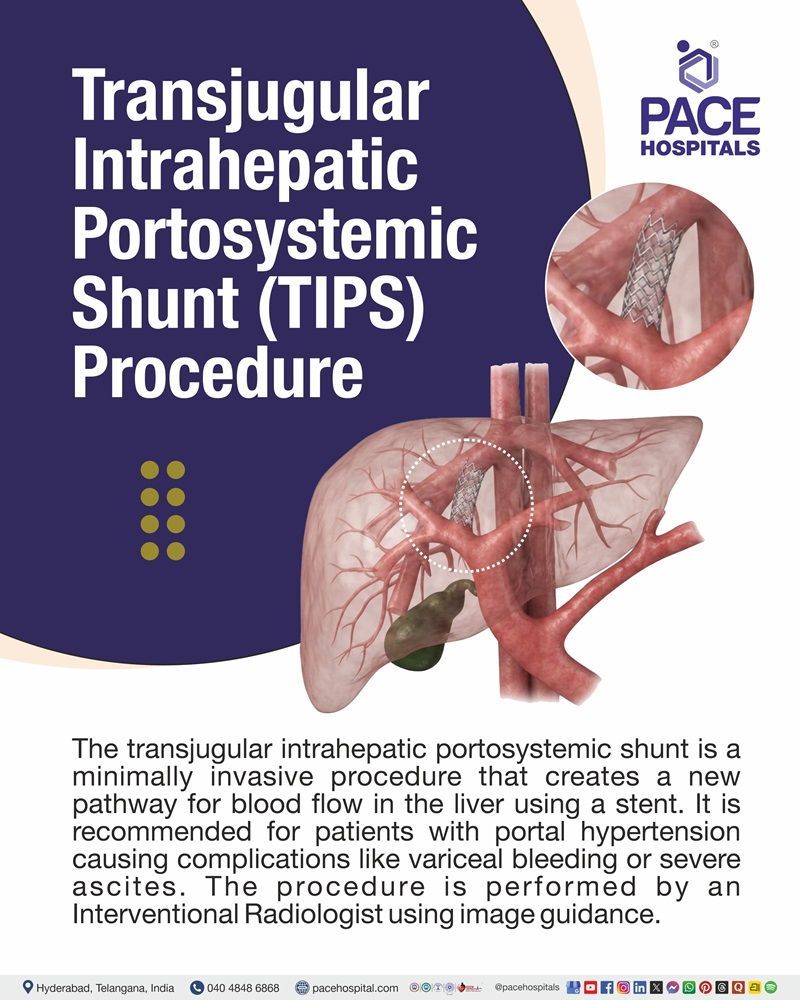
The TIPS shunt procedure is performed by an interventional radiologist who is specially trained in minimally invasive procedures using fluoroscopy and ultrasound guidance. A multidisciplinary team, which may include a hepatologist, gastroenterologist, liver transplant surgeon, anaesthesiologist, and critical care specialists, supports the patient before, during, and after the procedure to ensure safe treatment and proper recovery.
TIPS Procedure Types
The TIPS procedure can be classified based on techniques, the type of stent used, or the clinical setting of the procedure. The commonly recognised types of TIPS procedure include:
Based on the approach
- Conventional TIPS
- Direct intrahepatic portosystemic shunt (DIPS)
- Image-guided TIPS
Based on the stent type
- Bare metal stents
- Expanded polytetrafluoroethylene (ePTFE) covered stent grafts
- Controlled-expansion covered stents
Based on the clinical setting
- Elective TIPS
- Emergency TIPS
- Early or pre-emptive TIPS
Based on the approach
Conventional TIPS
Conventional TIPS is the standard and most commonly performed technique. The interventional radiologist inserts a catheter through the internal jugular vein in the neck, guides it into the hepatic vein, and then creates a channel through the liver tissue to reach the portal vein. A sten t is placed in this channel to lower portal vein pressure.
Direct intrahepatic portosystemic shunt (DIPS)
This is a modified technique used when conventional TIPS cannot be performed because of difficult liver anatomy or blockage of the hepatic veins. Instead of passing through a hepatic vein, the shunt is created directly between the inferior vena cava (IVC) and the portal vein under imaging guidance. It is reserved for complex cases, such as patients with Budd-Chiari syndrome or when conventional TIPS has failed.
Image-guided TIPS
TIPS is performed with the help of advanced imaging technologies such as ultrasound, fluoroscopy, intravascular ultrasound (IVUS), CT guidance, or fusion imaging. These imaging techniques help the doctor accurately locate the portal vein, improve stent placement, reduce procedure time, and minimise complications.
Based on the stent type
Bare metal stents
This is a first-generation stent that was originally used in the TIPS procedure. They provide a passage for blood flow but do not have a protective covering. Over time, liver tissue can grow into the stent, increasing the risk of narrowing (stenosis) or blockage.
Expanded polytetrafluoroethylene (ePTFE)-covered stent grafts
These stents have a special synthetic covering that acts as a barrier between the blood and the surrounding liver tissue. This helps prevent tissue from growing into the stent, allowing it to remain open for a longer period. ePTFE-covered stents provide better long-term outcomes and reduce the need for repeat procedures.
Controlled-expansion covered stents
This is a newer generation of ePTFE-covered stents that allow the interventional radiologist to adjust the final diameter of the stent according to the patient's clinical needs. By carefully controlling the amount of blood flowing through the shunt, these stents may help reduce complications such as hepatic encephalopathy while still effectively lowering portal vein pressure.
Based on the clinical setting
Elective TIPS
This is a planned procedure performed in stable patients with portal hypertension who have complications such as refractory ascites, recurrent variceal bleeding, or hepatic hydrothorax that have not responded to standard treatment.
Emergency TIPS
This TIPS procedure is performed in patients with uncontrolled or life-threatening bleeding from esophageal or gastric varices when endoscopic treatment and medications fail to stop the bleeding. It is a life-saving procedure in selected patients.
Early (Pre-emptive) TIPS
Early TIPS is performed within the first 24–72 hours after an episode of acute variceal bleeding in patients who are at high risk of rebleeding. Performing the procedure early can reduce the risk of further bleeding and improve outcomes in carefully selected patients.
TIPS Procedure Indications
TIPS is a procedure recommended when complications of portal hypertension cannot be controlled with medicines, endoscopy, or any other standard treatments. It is recommended in cases where bleeding is severe or recurring, fluid accumulation persists despite therapy, or specific high-risk complications associated with liver disease are present. The following are some common indications for a TIPS procedure:
- Recurrent or uncontrolled esophageal variceal bleeding
- Gastric variceal bleeding
- Refractory ascites
- Hepatic hydrothorax
- Budd-Chiari syndrome
- Portal vein thrombosis (selected patients)
- Hepatorenal syndrome (selected cases)
- Portal hypertensive gastropathy with recurrent bleeding
- Bridge to liver transplantation
Recurrent or uncontrolled esophageal variceal bleeding
The TIPS procedure is most commonly performed to treat severe or repeated bleeding from enlarged veins (varices) in the esophagus caused by portal hypertension. It is recommended when medications and endoscopic treatments are unable to stop the bleeding or when there is a high risk of another bleeding episode.
Gastric variceal bleeding
This problem can develop in some people when enlarged veins in the stomach develop due to portal hypertension. If these veins bleed repeatedly or cannot be controlled with standard treatment, the TIPS procedure helps to reduce pressure in the portal vein, lowering the risk of future bleeding.
Refractory ascites
This is a persistent fluid accumulation in the abdomen that does not improve after taking medications and salt restriction. The TIPS procedure can decrease fluid buildup by reducing portal venous pressure, reducing the need for repeated drainage procedures, and improving comfort and quality of life.
Hepatic hydrothorax
This is the accumulation of fluid around the lungs. This occurs due to advanced liver disease and portal hypertension. When medications and repeated fluid drainage do not provide adequate relief, the TIPS procedure may help reduce fluid formation and improve breathing.
Budd-Chiari syndrome
A rare liver disorder caused by a blockage or narrowing of the hepatic veins. In carefully selected patients, the TIPS procedure helps to create an alternate route for blood flow, helping relieve pressure within the liver, improve liver function, and reduce symptoms.
Portal vein thrombosis (selected patients)
Some patients with portal vein thrombosis may benefit from the TIPS treatment, particularly if portal hypertension is presenting significant complications. In carefully selected patients, the method can help restore blood flow and reduce pressure.
Hepatorenal syndrome (selected cases)
In selected patients who are dealing with advanced liver disease and worsening kidney function due to portal hypertension, the TIPS procedure may improve blood circulation and support kidney function. However, it is only recommended after careful assessment because it is not suitable for every patient.
Portal hypertensive gastropathy with recurrent bleeding
Portal hypertensive gastropathy is a condition in which increased portal vein pressure causes changes in the stomach lining that can lead to chronic or recurrent bleeding. The TIPS procedure helps reduce portal pressure and lowers the risk of continued bleeding when other treatments are unsuccessful.
Bridge to liver transplantation
For patients who are undergoing liver transplantation, the TIPS procedure can temporarily control complications of portal hypertension. This helps stabilise the patient's condition and improves quality of life while waiting for a fit donor liver.
Contraindications for TIPS Procedure
TIPS is avoided in certain heart, lung, liver, or infection-related conditions where the procedure may pose more risk than benefit.
The following are common absolute and relative TIPS procedure contraindications:
Absolute Contraindications
- Severe heart failure or advanced cardiomyopathy
- Severe pulmonary hypertension
- Uncontrolled systemic infection or sepsis
- Severe liver failure (selected cases)
- Unrelieved biliary obstruction
- Multiple large liver cysts
Relative Contraindications
- Recurrent or severe hepatic encephalopathy
- Portal vein thrombosis with unsuitable anatomy
- Severe blood-clotting disorders
- Severe thrombocytopenia
- Active liver cancer or extensive liver tumours
- Advanced kidney dysfunction
- Polycystic liver disease
- Advanced age or poor general health requiring careful assessment
Absolute Contraindications
Severe heart failure or advanced cardiomyopathy
The TIPS procedure increases the amount of blood returning to the heart. In patients with severe heart failure or weakened heart muscles, this extra workload can worsen heart function and may lead to life-threatening complications.
Severe pulmonary hypertension
Patients with severe pulmonary hypertension already have high blood pressure in the arteries of the lungs. Since TIPS increases blood flow to the heart and lungs, it can further raise pulmonary pressure and increase the risk of heart and lung complications.
Uncontrolled systemic infection or sepsis
The procedure is avoided in patients with an active bloodstream infection or severe sepsis because creating the shunt may spread the infection and worsen the patient's condition. The infection should be treated before considering TIPS.
Severe liver failure
Patients with advanced liver failure may not benefit from the surgery since it further impairs the liver's capacity to function. In such circumstances, liver transplantation or supportive care may be more appropriate.
Unrelieved biliary obstruction
If the bile ducts are blocked and the obstruction has not been treated, performing TIPS may increase the risk of infection and other complications. The bile duct obstruction is usually managed first.
Multiple large liver cysts along the planned shunt pathway
Large liver cysts located where the shunt needs to be created can make the procedure technically difficult and increase the risk of bleeding or injury to surrounding structures.
Relative Contraindications
Recurrent or severe hepatic encephalopathy
As TIPS helps to divert blood away from the liver, toxins may reach the brain more easily. Patients with frequent or severe hepatic encephalopathy may experience worsening confusion after the TIPS procedure and therefore require careful evaluation.
Portal vein thrombosis with unsuitable anatomy
Although TIPS can be performed in selected patients with portal vein thrombosis, extensive clotting or unfavourable anatomy may make the procedure technically difficult or reduce its chances of success.
Severe blood clotting disorders
Patients with significantly abnormal blood clotting have a higher risk of bleeding during or after the procedure. These abnormalities need to be corrected before TIPS is performed.
Severe thrombocytopenia
A very low platelet count increases the risk of bleeding. Depending on the severity, platelet levels may need to be improved before the procedure can be safely carried out.
Active liver cancer or extensive liver tumors
Patients with large or widespread liver tumors may not be suitable candidates because the procedure may be technically challenging or may not provide meaningful clinical benefit.
Advanced kidney dysfunction
Patients with severe kidney disease should be carefully evaluated before TIPS since contrast dye, fluid shifts, and changes in blood circulation can all impair kidney function.
Polycystic liver disease
Multiple cysts present in the liver can interfere with the safe placement of the stent and increase the technical difficulty of the procedure.
Advanced age or poor general health
Older patients or those with multiple serious medical conditions are not automatically excluded from TIPS, but they require a thorough evaluation to ensure that the potential benefits outweigh the risks.
Benefits of TIPS Procedure
The procedure offers several important benefits for patients with portal hypertension and its complications. As a minimally invasive procedure, TIPS also provides faster recovery and shorter hospitalisation compared with open surgical treatments. Some of the key TIPS procedure benefits include:
- Controls variceal bleeding
- Reduces refractory ascites
- Relieves symptoms of portal hypertension
- Minimally invasive with faster recovery
- Improves quality of life
- Bridge to liver transplantation
Controls variceal bleeding
The TIPS procedure is highly effective in controlling or preventing recurrent bleeding from enlarged veins (varices) in the esophagus or stomach caused by portal hypertension. This can be life-saving in patients with severe or repeated bleeding episodes.
Reduces refractory ascites
TIPS is highly successful for a procedure that lowers pressure in the portal vein, helping reduce persistent fluid buildup in the abdomen (refractory ascites). This decreases the need for repeated fluid drainage and improves patient comfort.
Relieves symptoms of portal hypertension
The procedure helps reduce complications of portal hypertension like hepatic hydrothorax and other symptoms related to increased pressure in the portal vein, improving the patient's overall well-being.
Minimally invasive with faster recovery
The TIPS procedure is performed through a small puncture in the neck without open surgery. This usually results in less pain, minimal blood loss, a shorter hospital stay, and faster recovery.
Improves quality of life
TIPS procedure supports in controlling bleeding, reducing fluid accumulation, and relieving symptoms, helps patients feel more comfortable and improves their ability to carry out daily activities.
Bridge to liver transplantation
For patients waiting for a liver transplant, the TIPS procedure can help manage complications of portal hypertension and stabilise their condition until transplantation becomes possible.
Need more clarity on TIPS procedure?
Get a free second opinion today.
At PACE Hospitals, we are committed to providing our patients with the best possible care, and that includes offering second medical opinions with super specialists for treatment or surgery. We recommend everyone to get an expert advance medical second opinion, before taking decision for your treatment or surgery.
TIPS procedure steps
The transjugular intrahepatic portosystemic shunt procedure steps include the following:
Before TIPS procedure
- Pre-operative diagnosis: Before TIPS, the doctor reviews the patient’s medical history, symptoms, current medicines, and overall health. Blood tests, liver imaging, and heart tests may be performed to assess liver, kidney, blood-clotting, and heart function and to plan the procedure safely.
- Medication review: The doctor reviews all medications that the patient is taking, including blood thinners, antiplatelet medicines, diabetes medications, and herbal supplements. Some medications may need to be temporarily discontinued or changed before the surgery.
- Fasting before the procedure: Patients are usually advised not to eat or drink for several hours before the procedure, as per instructions by the healthcare team. Fasting reduces the risk of problems associated with sedation or anaesthesia.
- Informed consent: The doctor explains the purpose of the TIPS procedure, its benefits, possible risks, and expected recovery. At this point, a patient can ask questions before providing written consent for the procedure.
- Hospital admission and preparation: An intravenous (IV) line for fluids and drugs is inserted prior to the procedure, and the patient's vital signs are monitored. The neck area where the catheter will be put is thoroughly cleaned and sterilised.
During TIPS procedure
- Anaesthesia and patient preparation: The procedure is often carried out under local anaesthesia with sedation, or, in some situations, general anaesthesia. The patient is positioned on the procedure table, and the neck area is cleaned and prepared for the procedure.
- Catheter insertion: The interventional radiologist makes a small puncture in the internal jugular vein in the neck and inserts a thin, flexible catheter. Using X-ray (fluoroscopy) guidance, the catheter is carefully advanced into the hepatic vein inside the liver.
- Creating the shunt: A specialised needle is passed through the liver tissue to create a channel between the hepatic vein and the portal vein. This forms the pathway through which blood can bypass the high-pressure portal circulation.
- Stent placement: An interventional radiologist places a metal stent, usually an ePTFE-covered stent, within the newly created channel to keep it open. This allows blood to flow more freely from the portal vein into the hepatic vein, which ultimately reduces the portal vein pressure.
- Checking blood flow: After the stent is placed, contrast dye is injected, and imaging is performed to confirm that the stent is correctly positioned and that blood is flowing properly through the new shunt. After confirming, the catheter is removed, and pressure is applied to the puncture site to stop any bleeding.
After TIPS procedure
- Recovery and monitoring: After the procedure, the patient is moved to a recovery area where vital signs, liver function, and the puncture site are monitored closely. Most patients stay in the hospital for observation for 1–3 days, depending on their condition.
- Pain management and medications: There can be mild discomfort at the catheter insertion site, or temporary abdominal pain may occur. Pain relief and other prescribed medications are given as needed, and the patient is monitored for any early complications.
- Follow-up Imaging: A Doppler ultrasound is performed before discharge or during follow-up visits to confirm that the stent is functioning properly and blood is flowing well through the shunt.
- Diet and Activity: Patients are encouraged to gradually resume low-level activity as directed by their doctor. To assist recovery and liver function, eat a liver-friendly diet, limit fluid and salt intake (if indicated), and minimise alcohol consumption.
- Regular Follow-up: Regular follow-up visits are important and done for monitoring liver function, assessing TIPS stent patency, and detecting complications such as hepatic encephalopathy or stent narrowing as early as possible.
TIPS procedure complications
Although the TIPS procedure is safe and effective, like any medical procedure, it may carry some risks. Most complications are uncommon and can be managed with early diagnosis and appropriate treatment. The chances of complications usually depend on the patient's overall health, liver function, and the severity of the underlying liver disease. Below are the TIPS procedure risks:
- Hepatic encephalopathy
- Stent narrowing or blockage
- Bleeding
- Infection
- Heart failure or fluid overload
- Liver failure
- Shunt dysfunction
- Blood vessel or liver injury
- Contrast dye reactions
- Procedure-related death (rare)
Hepatic encephalopathy
This condition is the most frequent complication after the TIPS procedure because blood bypasses the liver; toxins can reach the brain more easily. This leads to confusion, forgetfulness, personality changes, difficulty concentrating, or drowsiness. These symptoms are well controlled with medications and dietary changes.
Stent narrowing or blockage
After some time, the TIPS stent may become narrowed or can also be blocked, which reduces the blood flow through the shunt. This can cause symptoms of portal hypertension, such as fluid buildup or variceal bleeding, to return.
Bleeding
Blood loss may occur during or after the procedure due to harm to blood vessels or liver tissue. Although it happens rarely. Significant bleeding may require further treatment or a blood transfusion.
Infection
There is a small risk of infection at the catheter insertion site or within the bloodstream. Sterile techniques and, when required, antibiotics help minimise this risk.
Heart failure or fluid overload
After the TIP procedure, blood flow back to the heart increases. In patients with underlying heart disease, this extra workload can worsen heart failure or lead to fluid overload, leading to shortness of breath and swelling.
Liver failure
In patients with severely damaged liver function, the procedure may place additional stress on the liver and, in very uncommon cases, lead to worsening liver failure. Careful patient selection helps reduce this risk.
Shunt Dysfunction
Sometimes the shunt may not work properly because it becomes narrowed or blocked. This can cause symptoms such as fluid buildup in the abdomen or bleeding to come back. Regular follow-up scans help detect and treat these problems early.
Blood vessel or liver injury
During catheter placement, there is a small risk of injury to the liver, bile ducts, or nearby blood vessels. These complications are uncommon and are minimised by using real-time imaging guidance throughout the procedure.
Contrast dye reactions
Some patients may experience an allergic reaction to the contrast dye that is used during the procedure or temporary worsening of kidney function, particularly those with pre-existing kidney disease.
Procedure-related death (rare)
Serious life-threatening complications are rare but can occur. This can be seen in patients with advanced liver disease or multiple severe medical conditions. A thorough pre-procedure assessment helps identify patients who are most likely to benefit from TIPS while minimising these risks.
TIPS Procedure Recovery
Recovery after the TIPS procedure is usually faster than after open surgery because of its minimally invasive nature. Most patients stay in the hospital overnight or for 3 days for observation; the stay duration may vary depending on their overall health and liver condition.
After discharge, patients are encouraged to gradually return to their normal daily activities while avoiding strenuous exercise and heavy lifting for 1-2 weeks, or as advised by the doctor. It is important to take prescribed medications, follow any recommended salt or fluid restrictions, avoid alcohol, and attend regular follow-up appointments. Doppler ultrasound and blood tests are performed from time to time to ensure the stent remains open and is functioning properly. Most patients notice an improvement in symptoms such as abdominal swelling or variceal hemorrhage in the following weeks, but long-term follow-up is required for the best results.
What questions can patients ask the healthcare team about the TIPS procedure?
- Why has the TIPS procedure been recommended for my condition?
- What are the benefits of TIPS in my specific case?
- What are the possible risks and complications of the procedure?
- Will I be awake during the procedure, or will I receive general anaesthesia?
- How long does the TIPS procedure usually take?
- How many days will I need to stay in the hospital after the procedure?
- How long will it take for me to recover and return to my normal activities?
- What symptoms should I watch for after the procedure that require immediate medical attention?
- What dietary and lifestyle changes should I follow after the procedure?
- How long does the TIPS stent usually last, and can it become blocked?
Difference Between TIPS And DIPS Procedures
TIPS vs DIPS
Both transjugular intrahepatic portosystemic shunt and direct intrahepatic portocaval shunt are used to reduce portal hypertension and its complications. While both create an alternative pathway for blood to bypass the diseased liver and lower portal vein pressure, they differ in the route used to create the shunt, the clinical situations in which they are preferred, and their technical complexity. The table below discusses the key differences between TIPS and DIPS procedures:
| Parameters | Transjugular Intrahepatic Portosystemic Shunt (TIPS) | Direct Intrahepatic Portocaval Shunt (DIPS) |
|---|---|---|
| Purpose | To reduce portal hypertension by creating a shunt between the portal vein and hepatic vein | To reduce portal hypertension by creating a direct shunt between the portal vein and inferior vena cava (IVC) |
| Blood Flow Pathway | Portal vein → Hepatic vein | Portal vein → Inferior vena cava (IVC) |
| When It Is Used | Standard treatment for most patients with portal hypertension | It is used when a conventional TIPS is technically difficult or not feasible, such as hepatic vein obstruction or certain cases of Budd-Chiari syndrome |
| Procedure Complexity | Standard and more commonly performed | Technically more complex and performed in selected patients |
| Imaging Guidance | Usually performed using fluoroscopy with venography | Often requires additional imaging guidance, such as intravascular ultrasound (IVUS) or ultrasound, for accurate shunt placement |
| Success Rate | High technical and clinical success is seen among appropriately selected patients | Also has a high success rate in experienced hands but is used less frequently because of its specialised indications |
Frequently Asked Questions (FAQs) on TIPS Procedure
What is a TIPS procedure?
A Transjugular Intrahepatic Portosystemic Shunt procedure is a minimally invasive treatment used to reduce high blood pressure in the portal vein, usually caused by advanced liver disease. During the procedure, a small channel is created inside the liver and kept open with a stent, allowing blood to flow more easily. This helps prevent complications such as variceal bleeding and fluid buildup in the abdomen (ascites).
Is a TIPS procedure a major surgery?
No, the TIPS procedure is not a major surgery. It is performed through a small puncture in the neck using a thin catheter and imaging guidance. Since no large incision is required, patients usually experience less pain, a shorter hospital stay, and a faster recovery than with traditional surgery.
What is the survival rate after a TIPS procedure?
The survival rate after a TIPS procedure depends on the patient's liver function, overall health, and the reason for the procedure. Many patients experience significant improvement in complications such as variceal bleeding or refractory ascites. Your doctor can provide a better estimate based on the individual condition and stage of liver disease.
What is the most common complication of the TIPS procedure?
One of the most common complications that occurs after the TIPS procedure is hepatic encephalopathy, a condition in which toxins bypass the liver and affect the brain. This may cause confusion, forgetfulness, or changes in behaviour. In many cases, these symptoms can be managed with medications, dietary changes, and regular follow-up with the healthcare team.
How painful is a TIPS procedure?
The TIPS procedure is not very painful because it is performed under local anaesthesia with sedation or general anaesthesia. The patient usually doesn't feel pain during the procedure, although the patient may experience mild discomfort at the catheter insertion site afterwards. Any discomfort is usually temporary and can be controlled with prescribed pain medication.
Does a TIPS procedure improve quality of life?
Yes, for many patients, the TIPS procedure can improve quality of life by reducing complications of portal hypertension, such as recurrent variceal bleeding, persistent abdominal fluid buildup (ascites), and breathlessness caused by fluid around the lungs. As these symptoms improve, many patients are able to carry out their daily activities more comfortably.
Can you drink after a TIPS procedure?
Patients should avoid drinking alcohol after a TIPS procedure unless their liver specialist specifically advises it, because alcohol can cause further liver damage, worsen liver disease, and increase the likelihood of complications. Drinking plenty of water and following the diet recommended by the healthcare team can help support recovery and liver health.
What happens to the liver after a TIPS procedure?
After a TIPS procedure, blood is redirected through the stent to reduce pressure in the portal vein. This helps to control complications like variceal bleeding and ascites. Although the procedure improves blood flow and relieves symptoms, it does not cure liver disease or reverse liver damage.
What tests are required before a TIPS procedure?
Before the TIPS procedure, doctors usually recommend blood tests to check liver function, kidney function, blood count, and blood clotting. Imaging tests such as Doppler ultrasound, CT scan, or MRI are performed to assess the liver and blood vessels. Heart tests, including an ECG and echocardiogram, may also be advised to ensure the procedure can be performed safely.
When can patients return to normal activities after TIPS?
Most patients go back to their light daily activities within a few days after going home. This mainly depends on their recovery and overall health. Heavy lifting, strenuous exercise, and physically demanding work should usually be avoided for 1 to 2 weeks or until the doctor says it is safe.
What symptoms of hepatic encephalopathy should patients watch for after TIPS?
After the TIPS procedure, some patients may develop hepatic encephalopathy. Symptoms may include confusion, forgetfulness, difficulty concentrating, unusual sleepiness, mood or personality changes, slurred speech, or shaking of the hands. If a patient or family member notices any of these symptoms, contact the doctor immediately. Early treatment can usually control the condition effectively.
What is the difference between TIPS and variceal banding?
TIPS and variceal banding are both used to manage bleeding caused by portal hypertension, but they work in different ways. Variceal banding is an endoscopic procedure that places small bands around enlarged veins in the oesophagus to stop or prevent bleeding. TIPS, on the other hand, reduces the pressure in the portal vein itself by creating a new pathway for blood flow inside the liver.
Can TIPS affect heart or kidney function?
Yes, the TIPS procedure can affect both heart and kidney function in some patients. Because the procedure increases blood flow back to the heart, people with existing heart disease may need careful evaluation before treatment. Improving blood circulation following TIPS may also improve kidney function in some individuals, particularly if portal hypertension is a significant factor. The healthcare team assess the heart and kidneys before the procedure to ensure it is safe for the patient.
What factors affect the outcome of the TIPS procedure?
The success of the TIPS procedure depends on several factors, including the severity of liver disease, the patient's overall health, heart and kidney function, the reason for the procedure, and how well the stent continues to function over time. Regular follow-up visits, Doppler ultrasound examinations, taking prescribed medicines, and following the doctor's advice can help achieve the best long-term results.


