TIPS Procedure Cost in Hyderabad, India – 2026 Guide
Get a Cost Estimate for TIPS Procedure
Procedure & Surgery Cost Pages
All You Need To Know About the TIPS Procedure
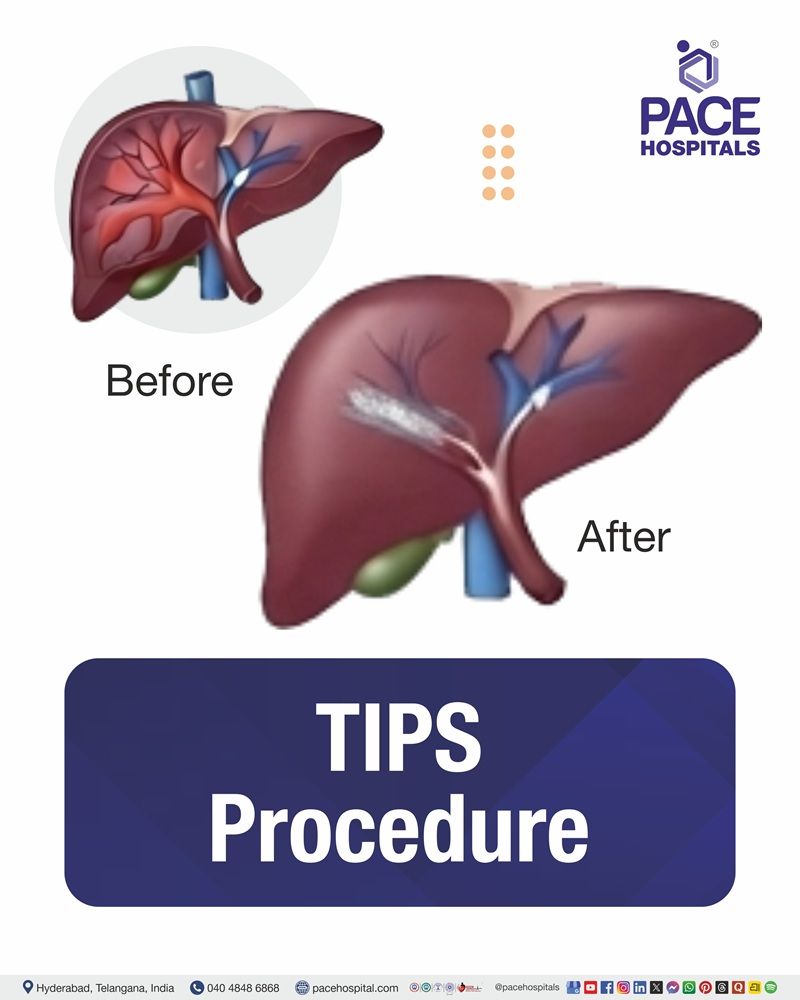
The Transjugular Intrahepatic Portosystemic Shunt (TIPS) Procedure is a minimally invasive interventional radiology procedure used to treat complications of portal hypertension, a condition in which blood pressure within the portal vein becomes abnormally high due to advanced liver disease. During the procedure, a small channel (shunt) is created inside the liver to connect the portal vein to a hepatic vein, allowing blood to flow more easily and reducing pressure within the portal venous system.
The TIPS procedure is suggested for patients with advanced liver cirrhosis who develop serious complications from portal hypertension (high pressure in the portal vein). It may be advised for recurrent bleeding from enlarged veins in the food pipe (esophagus) or stomach (variceal bleeding), persistent fluid buildup in the abdomen that does not improve with medicines, fluid around the lungs caused by liver disease (hepatic hydrothorax), or other complications that cannot be adequately controlled with medications or endoscopic treatments.
TIPS Procedure Cost in India
On average, the cost of a TIPS procedure in India ranges between ₹1,60,000 - ₹8,00,000 (approximately US $1,661 - US $8,308). However, the actual TIPS cost may vary depending on several factors, including:
- The patient's age, overall health, and severity of liver disease.
- The underlying condition, such as portal hypertension, recurrent variceal bleeding, refractory ascites, or Budd–Chiari syndrome.
- The complexity of the procedure and the type of stent used.
- The type of hospital (private, government, or trust hospitals).
- Hospital charges, including room category, ICU stay, and specialised liver care facilities.
- Insurance coverage or corporate approvals for cashless treatment.
- Pre-procedure investigations, imaging studies, and post-procedure monitoring requirements.
- Any complications that may arise during or after the procedure.
- The expertise of the interventional radiologist and the availability of advanced imaging and catheterisation facilities.
TIPS Procedure Cost in Hyderabad, Telangana
On average, the TIPS (Transjugular Intrahepatic Portosystemic Shunt) procedure cost in Hyderabad ranges between ₹2,00,000 - ₹3,90,000+ (approximately US $2,284 - US $4,049 +). These costs may vary depending on the patient's medical condition, the complexity of the procedure, the type of stent used, and the hospital providing the treatment.
However, the cost of the TIPS procedure in Hyderabad is influenced by several factors, such as:
- The patient's underlying liver disease, overall health, and severity of portal hypertension.
- The complexity of the procedure and the type of stent used.
- The hospital's infrastructure, interventional radiology facilities, and ICU support.
- Insurance coverage or corporate approvals for cashless hospitalization.
- The extent of pre-procedure investigations, hospital stay, and post-procedure monitoring.
- Any complications that may require additional treatment or prolonged hospitalization.
Cost Breakdown According to the Type of TIPS Procedure
- Standard Elective TIPS Procedure – Total Procedure Cost: ₹2,00,000 – ₹3,50,000 (US $2,076– US $3,633) (approx.)
- TIPS with Covered Stent Placement – Total Procedure Cost: ₹3,00,000 – ₹4,90,000 (US $3,114– US $5,087) (approx.)
- Emergency TIPS for Variceal Bleeding – Total Procedure Cost: ₹3,20,000 – ₹5,00,000 (US $3,322– US $5,191) (approx.)
- Complex / High-Risk TIPS (Advanced Liver Disease) – Total Procedure Cost: ₹3,90,000 – ₹6,00,000 (US $4,049– US $6,231) (approx.)
- TIPS with Portal Vein Recanalization (Selected Cases) – Total Procedure Cost: ₹5,00,000 – 6,50,000 (US $5,191– US $6,750) (approx.)
- TIPS Revision or Shunt Re-intervention – Total Procedure Cost: ₹2,00,000 – ₹4,00,000 (US $2,076– US $4,153) (approx.)
Note: These are estimated costs. The exact cost for an individual patient is determined after a comprehensive evaluation by the hepatology, gastroenterology, and interventional radiology team.
Additional Information
The cost of the transjugular intrahepatic portosystemic shunt procedure may vary depending on several factors, including the severity of portal hypertension, underlying liver disease , type of procedure and number of stents utilised, whether the procedure is elective or emergency, the requirement for intensive care or extended hospitalisation, pre-procedure diagnostic evaluations, any other interventions performed alongside, and the skill of the interventional radiology and liver care team. This ensures that each patient receives a tailored treatment plan and a clear cost estimate based on their exact clinical situation.
Breakdown of TIPS Procedure Costs
The TIPS procedure cost may vary depending on the patient's liver condition, procedure complexity, stent type, hospital facilities, and overall health status. Below is a detailed breakdown of the cost associated with the TIPS procedure:
Pre-Procedure Costs
- Consultation fees: This includes the cost for consultation with a hepatologist, gastroenterologist, liver transplant specialist, and interventional radiologist, regarding the condition of the patient.
- Diagnostic tests: This includes blood tests, liver function tests, kidney function tests, coagulation profile, viral markers, ECG, chest X-ray, Doppler ultrasound, CT scan, MRI, or other imaging studies to assess liver disease and portal hypertension.
- Pre-procedure evaluation: A complete evaluation of liver function, portal vein anatomy, cardiac function, and overall fitness for the TIPS procedure.
TIPS Procedure Costs
- Hospitalisation charges: These often include fees for hospital admission, private room charges required during monitoring before and after treatment, and advanced hepatic care. ICU-related liver care for a critically ill patient may be included in the total cost.
- Interventional procedure: Costs related to the TIPS procedure, including the interventional radiologist's fees, catheterisation laboratory (angiography suite) charges, imaging guidance, and placement of the stent within the liver.
- Anaesthesia and procedure team fees: Charges for anaesthesia or conscious sedation, anaesthesiologist, nursing staff, and the specialised interventional radiology team involved in the procedure.
Post-Procedure Care Costs
- ICU or high-dependency unit stay: Charges for intensive monitoring after the procedure, if required, based on the patient's condition.
- Hospital stay: General hospitalisation expenses during recovery, including medications, laboratory tests, imaging, and nursing care. Most patients remain in the hospital for a few days, depending on their recovery and underlying liver disease.
- Follow-up visits & imaging: Costs for follow-up consultations, ultrasound examinations to assess shunt function, blood tests, medications, and ongoing monitoring for complications.
This cost structure provides greater transparency and helps patients and their families plan for the TIPS procedure with confidence. At PACE Hospitals, Hyderabad, we provide personalised cost estimates based on each patient's liver condition, procedural complexity, and treatment requirements, ensuring comprehensive, advanced, and patient-centred care.
Who Needs the TIPS Procedure?
The TIPS procedure is recommended when increased pressure in the portal vein causes serious complications that cannot be adequately controlled with medicines, endoscopic procedures, dietary changes, or repeated fluid drainage. Before recommending TIPS, doctors carefully assess the patient’s liver function, heart health, kidney function, overall condition, and risk of complications.
Common Conditions Indicating the Need for a TIPS Procedure
- Recurrent variceal bleeding: Portal hypertension can cause enlarged veins, called varices, to develop in the food pipe or stomach. These veins may rupture and cause severe internal bleeding. TIPS procedure reduces pressure in the portal vein and lowers the risk of further bleeding.
- Refractory ascites: Ascites is the accumulation of fluid in the abdomen due to advanced liver disease. TIPS may be considered when the fluid repeatedly returns or does not improve despite a low-salt diet, medicines, and repeated fluid drainage. TIPS can help decrease fluid accumulation and relieve abdominal swelling, discomfort, and breathing difficulty.
- Hepatic hydrothorax: In some patients with liver cirrhosis, fluid collects around the lungs, usually on the right side of the chest. This condition causes symptoms like breathlessness, cough, and chest discomfort. TIPS is suggested when fluid continues to return even after taking medical treatment and repeated thoracentesis.
- Uncontrolled acute variceal bleeding: In emergency situations, TIPS may be performed when severe bleeding from oesophageal or gastric varices cannot be controlled through medicines and endoscopy. The shunt helps quickly lower portal vein pressure and control potentially life-threatening bleeding.
- Budd–Chiari syndrome: Budd–Chiari syndrome occurs when the veins carrying blood out of the liver become blocked. This can cause liver enlargement, abdominal pain, ascites, and liver damage. In selected patients, TIPS creates an alternative pathway for blood flow and helps reduce congestion within the liver.
- Portal vein thrombosis: In carefully selected patients, TIPS may be used when a blood clot blocks or narrows the portal vein and causes complications of portal hypertension. The procedure may help restore blood flow and reduce pressure, particularly when other treatment options are unsuitable.
Who is Not Eligible for the TIPS Procedure?
There are different TIPS procedures performed, which depend on the patient's liver condition, the underlying cause of portal hypertension, and the clinical indication.
Covered stent TIPS
This is the most commonly preferred form of TIPS. A specially covered stent is placed to keep the newly created channel open, improve blood flow, and reduce the risk of narrowing or blockage over time.
Uncovered stent TIPS
In this approach, a bare-metal stent is used to maintain the shunt. It can effectively reduce portal pressure, but it has a higher chance of narrowing or blockage compared with covered stents and is therefore used less commonly today.
Elective TIPS procedure
TIPS is a planned procedure performed after a detailed evaluation when the patient’s condition is stable. It may be recommended for recurrent ascites, hepatic hydrothorax, or repeated complications of portal hypertension.
Emergency or rescue TIPS
Emergency TIPS procedure is performed when urgent treatment is needed, especially for severe bleeding from oesophageal or gastric varices that cannot be controlled with medicines or endoscopic treatment.
TIPS revision procedure
A TIPS revision procedure is done when an existing shunt becomes narrowed, blocked, or does not function properly as expected. The interventional radiologist may reopen the channel, widen it, or place an additional stent to restore blood flow.
Ultrasound- and fluoroscopy-guided TIPS
TIPS procedure is conducted under ultrasound and fluoroscopy guidance. These imaging techniques help the interventional radiologist locate the blood vessels, create the shunt accurately, and place the stent safely.
Stent Types Used in TIPS
- Different types of stents may be used during the procedure depending on the patient's condition and clinical requirements.
- Bare metal stent: An older option that is now used less frequently because it has a higher chance of narrowing over time.
- Covered (PTFE-covered) stent: The preferred and most commonly used option, offering better long-term patency and reducing the risk of shunt blockage.
Note: The total cost of TIPS procedure may vary depending on the type of stent used, the complexity of the procedure, imaging requirements, and the patient's overall medical condition.
Post-TIPS Procedure Care Tips
After the procedure, careful follow-up and adherence to what the doctor has instructed are important to ensure proper recovery, maintain shunt function, and reduce the risk of complications.
- It is advised to attend all scheduled follow-up appointments for clinical evaluation, blood tests, imaging, and monitoring of shunt function.
- It is recommended to keep the catheter insertion site (usually in the neck) clean and dry, and follow the proper wound care instructions provided by the healthcare team.
- It is suggested to avoid heavy lifting, strenuous activities, or vigorous exercise for a few days or as advised by your doctor.
- It is recommended to take all prescribed medications, including those to help prevent hepatic encephalopathy or manage liver disease, exactly as directed.
- It is advised to follow the recommended diet, including sodium restriction if prescribed, and avoid alcohol to help protect liver function.
- It is suggested to watch for symptoms such as increasing abdominal swelling, vomiting blood, black stools, confusion, severe abdominal pain, fever, or worsening shortness of breath, and to seek immediate medical attention if they occur.
- It is recommended to undergo periodic Doppler ultrasound examinations or other imaging studies to ensure that the TIPS shunt remains open and functions properly.
- It is advised to continue regular follow-up with your hepatologist, gastroenterologist, or interventional radiologist for ongoing management of portal hypertension and the underlying liver disease.
Key Factors Influencing TIPS Procedure Cost
The transjugular intrahepatic portosystemic shunt procedure is a specialised interventional radiology procedure, and several factors influence the overall treatment cost. Understanding these factors can helps patients and their families plan their treatment and finances more effectively.
- Diagnostic Tests Before the Procedure: This is the complete investigation, which include blood tests, liver function tests, coagulation profile, ultrasound, CT scan or MRI, Doppler studies, echocardiography, and consultations with other specialists such as hepatologists, gastroenterologists, and interventional radiologists, all of which contribute to the overall cost.
- Severity of the Liver Condition: The cost of the procedure varies according to the patient's health. If a person has advanced cirrhosis, severe portal hypertension, persistent internal bleeding, and other liver problems, it may necessitate more intensive treatment and monitoring.
- Hospital and Location: In which hospital treatment is being performed also matters. If the procedure is performed at multispecialty hospitals with advanced interventional radiology facilities in metropolitan cities such as Hyderabad, it may cost more than treatment at smaller healthcare centres.
- Post-Procedure Care: The cost includes follow-up consultations, Doppler ultrasound examinations performed to monitor stent function, medications and management of the underlying liver disease.
- Procedure-Related Complications: If complications arise or additional interventions are required, they may increase the total treatment cost due to prolonged hospitalisation or further procedures.
- Specialist Expertise: The experience of the interventional radiologist, hepatologist, gastroenterologist, anaesthesiologist, and multidisciplinary liver care team plays an important role in the procedure and may influence the overall cost.
- Type of Stent Used: The type of stent used during the TIPS procedure can affect the total treatment cost, with covered stents generally being more expensive due to their improved long-term patency.
- Travel and Accommodation: Patients travelling from other cities or countries should also consider expenses related to transportation, accommodation, meals, and caregiver stay during the treatment period.
- Patient's Overall Health: The severity of liver disease, the presence of portal hypertension, age, other medical disorders, and the patient's overall health can influence the complexity of the surgery, the duration of the hospital stay, and recovery, thereby affecting the overall cost.
Why Choose PACE Hospitals for the TIPS Procedure in Hyderabad, India?
PACE Hospitals is one of the leading hospitals for the Transjugular Intrahepatic Portosystemic Shunt (TIPS) procedure in Hyderabad, offering advanced interventional radiology services for the management of portal hypertension and its consequences in patients with advanced liver disease.
Key reasons to choose PACE Hospitals include: -
- The TIPS procedure at PACE Hospitals is performed by experienced interventional radiologists in collaboration with hepatologists, gastroenterologists, liver transplant surgeons, anaesthesiologists, and critical care specialists, ensuring comprehensive multidisciplinary care.
- Each patient undergoes a detailed pre-procedure evaluation to determine whether TIPS is the most appropriate treatment option.
- The hospital is well equipped with an advanced Cath Lab and interventional radiology facilities, high-quality imaging technology, modern anaesthesia services, and dedicated intensive care and liver care units to ensure safe and precise treatment.
- Advanced imaging-guided procedures and high-quality covered stents are utilised as needed to increase procedural accuracy, maintain long-term shunt patency, and lower the risk of complications.
- Patients receive complete care before and after the procedure, covering counselling, monitoring for potential complications, regular Doppler ultrasound follow-up, medication guidance, and long-term management of the underlying liver disease.
- As an NABH-accredited hospital, PACE Hospitals follows recognised standards for complete patient safety, infection prevention, quality care, and clinical excellence, ensuring high-quality treatment for patients.
Financial Assistance and Payment Plans for the TIPS Procedure at PACE Hospitals
At PACE Hospitals, our team assists patients and their families with insurance-related processes and cashless hospitalisation support for eligible TIPS procedures.
- Cashless hospitalisation with empanelled insurance providers and TPAs
- Assistance with pre-authorisation and insurance documentation
- Reimbursement guidance if cashless treatment is not available
- Transparent treatment cost estimates before admission
- Support for eligible corporate and government health insurance schemes
Note: Insurance coverage for the TIPS procedure depends on the patient's medical condition, policy terms, and approval from the insurance provider.
TIPS Procedure Success Rate
The transjugular intrahepatic portosystemic shunt procedure is a highly effective treatment with a success rate of approximately 90%–98%. Patients may experience: -
- Reduced risk of recurrent variceal bleeding
- Relief from refractory ascites and abdominal discomfort
- Improved blood flow through the liver circulation
- Better quality of life and symptom control
Request a Personalized Treatment Cost Estimate
Every patient's medical condition and treatment plans are unique, which means the overall cost can vary. To receive an accurate estimate, our specialists evaluate your diagnosis, medical history, recommended treatment, and any necessary investigations before providing a detailed cost breakdown.
Whether you are planning a diagnostic test, treatment, or surgery, our team is here to help you understand the expected expenses and guide you through every step of the process.
Get in touch with us today to request a personalized treatment cost estimate.