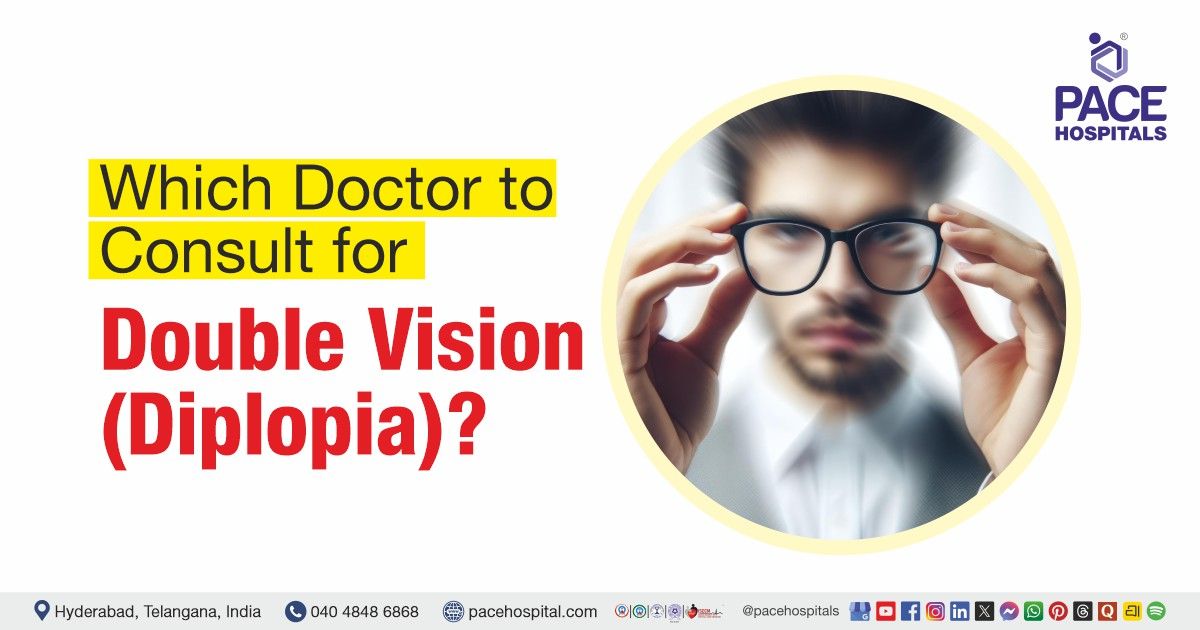
Which Doctor to Consult for Double Vision (Diplopia)?
PACE Hospitals
Written by: Editorial Team
Medically reviewed by: Dr. S Pramod Kumar - Consultant Neurophysician & Neuromuscular Specialist
Introduction
Seeing two images of a single object, a condition called diplopia or double vision, can be unsettling and confusing. Whether it comes on suddenly or develops gradually, double vision is a symptom that should never be dismissed as tiredness or a minor eye problem. It can point to a wide range of causes: from a simple refractive error inside the eye to serious neurological conditions such as cranial nerve palsy, stroke, brain tumour, or multiple sclerosis.
One of the most common questions patients and families ask is: Which doctor should I see for double vision? The answer depends on several important factors — whether vision is doubled in one eye or both, how quickly the symptom appeared, and whether it is accompanied by other warning signs such as headache, drooping eyelid, eye pain, weakness, or slurred speech.
This article from PACE Hospitals, Hyderabad, provides a clear, medically accurate, patient-friendly guide to help you understand which specialist to consult for double vision, when to go to an emergency department, and what tests and treatments may be recommended.
Quick Answer: Which Doctor for Double Vision?
For double vision, consult an Ophthalmologist or Neuro-Ophthalmologist. If double vision that occur suddenly or is associated with severe headache, eye discomfort, drooping eyelid, weakness, numbness, slurred speech, imbalance, facial drooping, or confusion, visit an Emergency Department immediately or consult a Neurologist urgently. If double vision is linked with diabetes or thyroid symptoms, an Endocrinologist may also be needed.
What Is Double Vision or Diplopia?
Double vision, medically known as diplopia, is the perception of two images of a single object at the same time. These images may appear side by side (horizontal), one above the other (vertical), or as a diagonal combination of both. The term "seeing double" is commonly used by patients to describe this condition.
According to some research, diplopia is not a disease in itself but a symptom — a signal that something is affecting the way the eyes work together, the way the brain processes visual information, or both. It can be intermittent (coming and going) or constant, mild or severe, present since birth or newly developed.
- Double vision can arise from problems anywhere along the visual pathway, including:
- Inside the eye — conditions such as cataracts, dry eye, keratoconus, or astigmatism
- Eye muscles — weakness or restriction of one or more of the six extraocular muscles
- Cranial nerves — damage to the 3rd (oculomotor), 4th (trochlear), or 6th (abducens) cranial nerves
- Brain and brainstem — stroke, tumour, demyelinating disease, or raised intracranial pressure
- Neuromuscular junction — conditions such as myasthenia gravis
- Systemic diseases — diabetes, thyroid eye disease, high blood pressure, and multiple sclerosis
Understanding whether double vision is present in one eye or both eyes is the first critical step in identifying the cause and choosing the right specialist.
Double Vision Should Not Be Ignored
Many people thinks that double vision/diplopia is caused only by eye strain, tiredness, or an outdated spectacle prescription. While these can cause little or mild episodes, persistent or sudden double vision requires prompt medical evaluation.
According to a study published in the Journal, the most common causes of binocular double vision were vasculopathy (diabetes, hypertension, and
migraine), accounting for nearly 29% of cases, followed by trauma in 25% of cases. Cranial nerve palsies were identified in over 70% of all diplopia cases evaluated. These figures underscore that double vision is frequently linked to systemic and neurological conditions that require specialist investigation and treatment — not just a change in glasses.
Doctor Selection Guide
Double vision can arise due to various conditions that affects the eyes, eye muscles, cranial nerves, brain, or systemic health. Choosing the appropriate specialist is important for timely diagnosis and treatment. The table below provides general guidance on which specialist to consult based on the symptoms and clinical situation:
| Situation | First Doctor to Consult | Specialist Needed If |
|---|---|---|
| Gradual double vision, both eyes, no other symptoms | Ophthalmologist | Symptoms worsen or neuro cause suspected → Neuro-Ophthalmologist |
| Double vision in one eye only | Ophthalmologist | Monocular diplopia persists after eye problems treated → Neuro-Ophthalmologist |
| Sudden double vision, any cause | Emergency Department / Neurologist urgently | Optic or nerve cause confirmed → Ophthalmologist or Neuro-Ophthalmologist |
| Double vision along with a severe headache | Emergency Department immediately | Brain/vascular cause excluded → Neurologist or Neuro-Ophthalmologist |
| Double vision with drooping eyelid (ptosis) | Emergency Department (rule out aneurysm/3rd nerve palsy) | Stable, non-urgent → Neuro-Ophthalmologist |
| Double vision with slurred speech, facial drooping, weakness, and numbness | Emergency Department (suspected stroke) | Neurology team for ongoing management |
| Double vision with unequal pupils | Emergency Department immediately | Neurosurgery / Neurology if aneurysm or raised ICP |
| Double vision after head injury | Emergency Department / Neurologist | Ophthalmologist for post-trauma eye assessment |
| Double vision in known diabetes | Ophthalmologist or Neurologist | Endocrinologist for diabetes management |
| Double vision with thyroid symptoms (eye bulging, redness, eyelid swelling) | Ophthalmologist | Endocrinologist for thyroid management + Neuro-Ophthalmologist |
| Double vision with fatigue, variability, and facial weakness | Neurologist | Neuro-Ophthalmologist (to assess for myasthenia gravis) |
| Double vision in a child | Ophthalmologist or Paediatric Ophthalmologist | Neurologist if cause not identified |
| Double vision with imbalance, dizziness, and nausea | Emergency Department / Neurologist (posterior circulation stroke) | Neuro-Ophthalmologist for ongoing care |
Causes/Conditions Table
Double vision can occur due to conditions affecting the eyes, eye muscles, cranial nerves, brain, or systemic health. Some causes are relatively minor, while others may require urgent medical attention. The table below summarises common causes of double vision, their typical features, and the specialists involved in diagnosis and treatment.
| Condition / Cause | Common Features | Doctor/Specialist to Consult | Why? |
|---|---|---|---|
| Cataracts | Gradual double vision in one eye; cloudiness; worse in dim light | Ophthalmologist | Lens opacity causing light diffraction within one eye |
| Dry eye disease | Mild and fluctuating double vision, usually in one eye; burning sensation; grainy or sandy-like sensation | Ophthalmologist | Tear film instability affects optical clarity |
| Corneal irregularity (keratoconus, astigmatism) | Monocular double vision; ghost images; worse at night | Ophthalmologist | Light scattering due to an uneven corneal surface |
| Diabetic cranial nerve palsy (3rd, 4th, 6th nerve) | Sudden binocular double vision; may have drooping eyelid (pupil spared in 3rd nerve); history of diabetes | Ophthalmologist + Neurologist + Endocrinologist | Microvascular ischaemia of cranial nerves from uncontrolled blood glucose |
| Thyroid eye disease (Graves' orbitopathy) | Binocular double vision; bulging eyes (proptosis); eyelid retraction; eye redness | Ophthalmologist + Endocrinologist | Autoimmune inflammation of orbital muscles causing restriction |
| Posterior communicating artery aneurysm | Sudden double vision; complete ptosis; large dilated pupil; severe headache | Emergency Department (Neurosurgery urgently) | Compressive aneurysm on 3rd cranial nerve — life-threatening |
| Brainstem stroke | Sudden binocular double vision; dizziness; imbalance; slurred speech; nausea | Emergency Department (Neurology) | Ischaemic or haemorrhagic damage to cranial nerve nuclei in brainstem |
| Myasthenia gravis | Variable binocular double vision; ptosis; worse with fatigue; improves with rest | Neurologist + Ophthalmologist | Autoimmune disorder at neuromuscular junction; fatigable weakness |
| Multiple sclerosis / Internuclear ophthalmoplegia | Horizontal binocular double vision; nystagmus in one eye; often in younger adults | Neurologist + Neuro-Ophthalmologist | Demyelinating lesion in medial longitudinal fasciculus of brainstem |
| Orbital trauma (blow-out fracture) | Double vision after facial injury; worse on looking up; sunken eye | Ophthalmologist + Oculoplastic Surgeon | Orbital floor fracture trapping inferior rectus muscle |
| Raised intracranial pressure (ICP) | Double vision (6th nerve palsy); headache worse in morning; papilloedema | Neurologist + Neurosurgery | 6th nerve palsy as false localising sign of raised ICP |
| Cavernous sinus disease (thrombosis, tumour, inflammation) | Multiple cranial nerve palsies; eye pain; proptosis; fever (if thrombosis) | Emergency Department + Neurologist + Ophthalmologist | Multiple cranial nerves affected simultaneously in confined cavernous sinus |
| Giant cell arteritis | Double vision + scalp tenderness + jaw pain + headache in adults over 50 | Rheumatologist + Ophthalmologist | Vasculitic inflammation of cranial vessels; risk of irreversible vision loss |
| Decompensated squint (also called strabismus) | Gradual-onset binocular double vision; history of childhood squint; fatigue-related | Ophthalmologist | Pre-existing eye misalignment that can no longer be compensated by the brain |
| 4th nerve palsy (trochlear) | Vertical double vision; worse on looking down; head tilt to one side | Ophthalmologist + Neuro-Ophthalmologist | Weakness of superior oblique muscle due to 4th nerve damage |
| 6th nerve palsy (abducens) | Horizontal double vision; cannot move eye outward; esotropia (eye turned in) | Ophthalmologist + Neurologist | Weakness of lateral rectus muscle due to 6th nerve damage |
When Double Vision Is a Medical Emergency?
Some forms of double vision are medical emergencies. Do not wait, do not drive yourself, and do not assume symptoms will resolve on their own. Go to an Emergency Department immediately or call emergency services if double vision is accompanied by any of the following:
Red-Flag Symptoms Checklist
- Sudden onset of double vision (occurring within seconds, minutes, or hours without any known etiology)
- Severe or unexpected headache ("thunderclap" or worse headache) with double vision
- Drooping eyelid (ptosis) alongside double vision — especially with a large, dilated pupil on the same side
- Unequal pupils (one pupil larger than the other) with double vision
- Facial drooping — one side of the face falling or feeling numb
- Slurred speech or difficulty speaking alongside double vision
- Weakness or numbness of an arm, leg, or one side of the body
- Loss of balance, dizziness, or incoordination with double vision
- Confusion, disorientation, or loss of consciousness with double vision
- Double vision after a head injury, fall, or accident
- Eye pain that is severe or sudden, along with double vision
- Sudden vision loss in one or both eyes
- Fever with neck stiffness (possible meningitis) with double vision
- Double vision in a known diabetic or hypertensive patient with any new neurological symptom
- Seizures alongside visual disturbance
These red-flag symptoms may indicate a stroke, brain aneurysm, raised intracranial pressure, cavernous sinus disease, or a compressive aneurysm pressing on the third cranial nerve — all of which are life-threatening conditions requiring emergency care.
Double vision is one of the recognised warning signs of stroke under the B.E.F.A.S.T. acronym (Balance, Eyes, Face, Arms, Speech, Time). Any sudden vision change, including double vision, warrants immediate emergency evaluation.
When to See an Ophthalmologist?
An Ophthalmologist (eye specialist) is often the first point of specialist contact for double vision, especially when:
- Double vision is present in one eye only (monocular diplopia)
- Double vision is related to a known eye condition such as cataracts, dry eye, keratoconus, or corneal irregularity
- There is a history of squint (strabismus), lazy eye (amblyopia), or previous eye surgery
- Double vision is present in a child without other neurological features
- Double vision is associated with eye redness, tearing, discharge, or gradual changes in vision
- Double vision is related to thyroid eye disease (the ophthalmologist assesses eye muscle involvement, proptosis, and visual threat)
The patient needs a full orthoptic and ocular motility assessment
An ophthalmologist will examine the eye's internal structures, test each eye's movement, measure eye alignment, assess pupil responses, and determine whether the problem lies within the eye itself or is due to external nerve or muscle disease.
If an eye-specific cause is not found, the ophthalmologist will refer the patient appropriately to a neuro-ophthalmologist or neurologist for further evaluation.
When to See a Neuro-Ophthalmologist?
A Neuro-Ophthalmologist is a specialist trained in both ophthalmology and neurology, with a focus on visual problems that arise from neurological disorders. They are often the most appropriate specialist for complex or unexplained double vision.
Consult a neuro-ophthalmologist when:
- Double vision is binocular (both eyes) and the cause has not been clearly identified by a general ophthalmologist
- There are signs of cranial nerve palsy (3rd, 4th, or 6th nerve) that require detailed evaluation
- Double vision is variable, comes and goes, or is worse with fatigue (possible myasthenia gravis)
- Double vision is associated with optic nerve disease, papilloedema, or visual field loss
- Double vision has been linked to multiple sclerosis, demyelination, or inflammatory brain disease
- Double vision persists for longer than expected (more than 3 months) without a clear structural cause
MRI findings require specialist eye movement analysis
Studies have recognised neuro-ophthalmology as the specialist field best equipped to assess complex double vision, particularly where the visual pathway intersects with brain function.
When to See a Neurologist?
A Neurologist is essential when double vision is associated with neurological features or when a brain or nerve cause is suspected. Seek a neurologist when:
- Double vision is of sudden onset — especially in a patient with diabetes, hypertension, or known vascular risk factors
- There are accompanying symptoms of possible stroke: facial drooping, arm weakness, speech difficulty, imbalance
- Double vision is associated with brainstem symptoms: vertigo, dizziness, ataxia, dysarthria, nausea, or vomiting
- There is a known history of multiple sclerosis or demyelinating disease
- Double vision is accompanied by generalised weakness, difficulty swallowing (dysphagia), or diplopia that worsens with repetitive movements (possible myasthenia gravis)
- Brain imaging (MRI or CT) shows a lesion in the brainstem, cranial nerve course, cavernous sinus, or cerebral cortex
- There are signs of raised intracranial pressure (headache worse in morning, vomiting, papilloedema)
- Double vision occurs with seizures, confusion, or changes in consciousness
- Posterior circulation TIA (transient ischaemic attack) is suspected
All patients with acute-onset binocular diplopia who have accompanying brainstem symptoms should be immediately referred to an Emergency Department for MRI of the brain with attention to the brainstem.
When to See an Endocrinologist?
An Endocrinologist is a hormone specialist and becomes involved in the management of double vision when it is linked to metabolic or hormonal conditions, particularly:
- Thyroid eye disease (Graves' orbitopathy): Double vision is a major feature of moderate-to-severe Graves' eye disease, caused by inflammation and swelling of the eye muscles behind the eyes. TED is most common in patients with Graves' disease and requires co-management by both an endocrinologist (for thyroid control) and an ophthalmologist (for eye management).
- Diabetes mellitus: Poorly controlled blood sugar can damage the blood supply to the cranial nerves controlling eye movement, causing a microvascular cranial nerve palsy with sudden or subacute double vision. An endocrinologist helps optimise blood glucose, blood pressure, and cholesterol control as part of preventing recurrence.
It is important to note that an endocrinologist does not treat the double vision directly — the ophthalmologist or neuro-ophthalmologist manages the eye and visual aspects, while the endocrinologist manages the underlying systemic disease.
Double Vision in One Eye vs Both Eyes
Understanding this distinction is one of the most important first steps in evaluating double vision, and it can even be assessed at home by covering each eye alternately.
Monocular Diplopia (One Eye)
Monocular diplopia is double vision that persists even when one eye is covered — meaning only the affected eye is seeing two images. This type is almost always caused by a problem within the eye itself, those are:
- Cataracts (clouding of the normally clear natural lens inside the eye)
- Dry eye disease (tear film instability)
- Corneal irregularities (keratoconus, corneal scars)
- Astigmatism or uncorrected refractive error
- Retinal conditions (macular oedema, central serous retinopathy)
- Lens dislocation (ectopia lentis)
Monocular diplopia is rarely caused by neurological disease, though rare cases of cerebral polyopia (multiple images from an occipital cortex lesion) have been described. An ophthalmologist is the primary specialist for monocular diplopia.
Binocular Diplopia (Both Eyes)
Binocular diplopia disappears when either eye is closed. It is caused by a misalignment of the two eyes — the images from each eye fall on non-matching areas of the retina and cannot be fused by the brain into a single image. Binocular diplopia has a far broader range of causes, including:
- Cranial nerve palsy
- Thyroid eye disease
- Myasthenia gravis
- Orbital trauma
- Brainstem stroke
- Brain tumours
- Raised intracranial pressure
This type requires a thorough investigation and typically involves both an ophthalmologist and a neurologist or neuro-ophthalmologist.
Sudden Double Vision
Sudden-onset double vision — appearing within seconds, minutes, or a few hours — is always a reason for urgent medical evaluation. It should never be attributed to tiredness or stress until serious causes are excluded.
Key causes of sudden double vision include:
- Microvascular cranial nerve palsy — most common cause in adults over 40, particularly in those with diabetes or hypertension. This occurs when a tiny blood vessel supplying one of the eye-movement nerves is blocked. It typically improves over 6–12 weeks.
- Posterior circulation stroke or TIA — the brainstem controls all three cranial nerves for eye movement. A brainstem stroke can present with isolated double vision, sometimes without the classic FAST symptoms.
- Ruptured or enlarging brain aneurysm — a posterior communicating artery aneurysm can compress the 3rd cranial nerve, causing sudden double vision with drooping eyelid and a large pupil. This is a neurosurgical emergency.
- Raised intracranial pressure — causing 6th nerve palsy as a false localising sign.
- Cavernous sinus thrombosis or mass — affecting multiple cranial nerves simultaneously.
All patients with acute-onset diplopia and a headache or pupillary involvement must be referred for same-day urgent imaging.
Double Vision with Headache
The combination of double vision and headache must always be taken seriously. Depending on the nature of the headache, this combination can indicate:
- Thunderclap headache + double vision: Possible subarachnoid hemorrhage from a ruptured aneurysm — a neurological emergency. Call emergency services immediately.
- Severe unilateral headache + drooping eyelid + double vision: Possible posterior connecting artery aneurysm squeezing the third cranial nerve. Emergency imaging (CT and CT angiography) is necessary.
- Gradual headache + double vision + worse in the morning: Possible raised intracranial pressure (idiopathic intracranial hypertension, brain tumour).
- Headache with double vision in older adults: Rule out giant cell arteritis, which can cause both headache and cranial nerve involvement.
- Migraine: Can occasionally cause transient double vision (ophthalmoplegic migraine), but this is a diagnosis of exclusion — serious causes must be ruled out first.
Do not wait and see if the headache resolves. Any new severe or unusual headache with double vision requires immediate emergency assessment.
Double Vision with Eye Pain
Eye pain accompanying double vision can indicate:
- Acute angle-closure glaucoma — severe eye pain, headache, nausea, and blurred or double vision. This is an ophthalmic emergency requiring same-day treatment to prevent permanent vision loss.
- Orbital cellulitis — infection of the tissues around the eye, causing pain, redness, swelling, proptosis, and double vision. Requires urgent ophthalmological and possibly neurosurgical evaluation.
- Tolosa-Hunt syndrome — painful ophthalmoplegia caused by inflammation of the cavernous sinus or superior orbital fissure.
- Posterior scleritis — inflammation of the back of the white of the eye.
- Anterior uveitis or iritis — eye pain and photophobia may coexist with eye misalignment.
Consult an Ophthalmologist immediately for eye pain with double vision. If there is fever, any kind of inflammation, reduced consciousness, or signs of intracranial disease, proceed to an Emergency Department without delay.
Double Vision with Drooping Eyelid
A drooping eyelid (ptosis) occurring alongside double vision is a particularly important combination, as it can signal:
- Third (3rd) cranial nerve palsy — the 3rd cranial nerve controls four of the six eye muscles and also controls the eyelid and pupil. A lesion affecting the third nerve causes the affected eye to turn outward and downward, the eyelid to droop, and in some cases, the pupil to become enlarged.
- Posterior communicating artery aneurysm — a compressive aneurysm pressing on the 3rd nerve from outside. This presents with a dilated (large) pupil and complete or near-complete ptosis with double vision. This is a neurosurgical emergency.
- Microvascular 3rd nerve palsy — caused by diabetes or hypertension, usually spares the pupil (pupil remains normal size), and tends to recover over weeks.
- Myasthenia gravis — a neuromuscular junction disorder causing variable ptosis and double vision that typically worsens with fatigue.
- Horner's syndrome — partial ptosis, small pupil, and anhidrosis on the same side. May point to a carotid artery dissection.
The distinction between a pupil-involving (potentially aneurysmal) and pupil-sparing (potentially microvascular) 3rd nerve palsy is critically important. If there is any doubt, emergency imaging is mandatory. A neurologist and neuro-ophthalmologist should be consulted promptly.
Double Vision in Diabetes
Diabetes is one of the most common systemic causes of double vision in adults over 40. Studies show that diabetes accounts for 25–30% of all cases of sudden extraocular muscle palsy in adults over 45.
How Does Diabetes Cause Double Vision?
The mechanism is diabetic microvascular cranial nerve palsy — uncontrolled blood sugar leads to damage of the small blood vessels supplying the 3rd, 4th, or 6th cranial nerves. The 6th nerve (abducens) is most commonly affected, causing the eye to turn inward and the patient to see double when looking sideways. The 3rd nerve is also affected, often sparing the pupil (distinguishing it from an aneurysm).
Key points for diabetic patients with double vision: -
- Consult an Ophthalmologist or Neurologist urgently to confirm the diagnosis and exclude other causes
- Consult an Endocrinologist to review and optimise blood glucose, blood pressure, and cholesterol control
- Most microvascular cranial nerve palsies recover within 6–12 weeks with proper systemic management
- If recovery does not occur within 3 months or other neurological signs appear, further imaging is needed
Do not assume all double vision in a diabetic is microvascular — other causes including stroke and tumour must still be excluded.
Double Vision and Thyroid Eye Disease
Thyroid eye disease (TED), also known as Graves' eye disease, is an autoimmune condition that most commonly occurs in people with Graves' disease (hyperthyroidism). Inflammation and swelling of the fat and muscles behind the eyes cause the eyes to bulge forward (proptosis) and the eye muscles to become thickened, restricted, and scarred.
Double vision is a common clinical symptom of moderate-to-severe thyroid eye disease. It occurs because the thickened, fibrotic eye muscles can no longer move the eyes in a coordinated manner, leading to misalignment.
Patients with TED and double vision need a team approach:
- Endocrinologist — for achieving and maintaining euthyroid (normal thyroid) state; thyroid control is essential to prevent TED from worsening
- Ophthalmologist or Neuro-Ophthalmologist — for assessment of eye muscle restriction, proptosis, corneal exposure, and visual function
- Specialist in orbital disease — for intravenous glucocorticoids, orbital radiation, or orbital decompression surgery if needed
- Strabismus surgeon (Ophthalmologist) — for eye muscle surgery to correct stable, persistent double vision after the disease has been quiet for at least 6 months
Double Vision after Head Injury
Head trauma is a significant cause of double vision, particularly binocular diplopia from cranial nerve injury. The 4th cranial nerve (trochlear) is the most commonly injured nerve in head trauma, often at the point where both fourth nerve fibres cross (decussate) in the dorsal midbrain — making bilateral 4th nerve palsy possible even with a relatively minor head injury.
Double vision after head trauma may also result from:
- Direct injury to the orbit or eye muscles
- Orbital fracture (particularly orbital floor "blow-out" fracture trapping the inferior rectus muscle)
- 6th or 3rd nerve palsy from brainstem contusion
- Raised intracranial pressure from haemorrhage or oedema
- Brainstem stroke triggered by vascular injury
All patients with double vision after a head injury should be assessed in an Emergency Department. Neuroimaging (CT brain initially, MRI brain for detailed nerve assessment) is essential. A neurologist and ophthalmologist should be involved in the evaluation.
Double Vision in Elderly Patients
In older adults, double vision is particularly common and also particularly important to evaluate promptly. Age-related changes in the vascular supply to the cranial nerves, combined with common comorbidities like diabetes, hypertension, and high cholesterol, make microvascular cranial nerve palsy a frequent cause.
However, other serious diagnoses are also more common in older patients:
- Posterior circulation stroke — often presents with isolated double vision in elderly patients, as noted in a case report of a 65-year-old who developed double vision as the only presenting symptom of a brainstem stroke
- Brain tumours — both primary and metastatic tumours may present with double vision in older adults
- Giant cell arteritis (temporal arteritis) — an inflammatory blood vessel disease affecting adults over 50 that can cause double vision and vision loss. Blood tests (ESR, CRP) and temporal artery biopsy may be needed.
- Myasthenia gravis — can present at any age, including in older adults, with fluctuating ptosis and double vision
In elderly patients, new-onset double vision should be evaluated urgently, particularly to exclude vascular and space-occupying causes.
Tests Doctors May Recommend
The investigations ordered for double vision depend on the likely cause identified after history-taking and clinical examination. These may include:
Ophthalmic and Orthoptic Assessments
- Visual acuity testing — to assess sharpness of vision in each eye
- Slit-lamp examination — to examine the front of the eye, cornea, and lens
- Dilated fundus examination — to assess the optic disc, retina, and back of the eye
- Ocular motility and alignment testing — to identify the pattern and direction of double vision and map which nerve or muscle is affected (alternate cover test, Hess chart, Maddox rod test)
- Prism measurement (prism dioptre testing) — to quantify the degree of eye misalignment
- Orthoptic evaluation — specialised binocular vision and eye movement assessment
- Exophthalmometry — measuring the degree of eye protrusion (in suspected thyroid eye disease)
Blood Tests
- Blood glucose and HbA1c — to assess diabetes control
- Blood pressure monitoring
- Thyroid function tests (TFT) — TSH, free T3, free T4
- Thyroid antibodies (TSH receptor antibodies) — for Graves' disease
- ESR and CRP — raised in giant cell arteritis and inflammatory conditions
- ANA, ANCA, and other autoimmune markers — if autoimmune disease is suspected
- Acetylcholine receptor antibodies (Anti-AChR) — for myasthenia gravis
Neuroimaging
- MRI brain and brainstem — the preferred imaging investigation for most cases of binocular diplopia, particularly for cranial nerve course, brainstem lesions, demyelination, tumours, and small infarcts. Diffusion-weighted imaging (DWI) is essential to detect acute stroke.
- MRI orbits with contrast — for thyroid eye disease, orbital tumours, or orbital inflammatory disease
- CT brain — for rapid assessment in acute presentation (to rule out haemorrhage or large infarct)
- CT angiography (CTA) or MR angiography (MRA) — when a brain aneurysm or vascular malformation is suspected (especially in third nerve palsy with pupil involvement)
Other Investigations
- Tensilon (edrophonium) test or ice pack test — for suspected myasthenia gravis
- Repetitive nerve stimulation or single-fibre EMG — electrophysiological testing for myasthenia gravis
- Cerebrospinal fluid (CSF) analysis — if meningitis, inflammatory disease, or raised ICP is suspected
- Orbital CT scan — for orbital fractures after trauma, orbital masses, or thyroid eye disease muscle assessment
Treatment Options for Double Vision
Treatment of double vision is directed at the underlying cause. It is important that treatment is guided by a doctor after full evaluation — no treatment should be self-administered.
Medical Treatments
- Blood glucose and blood pressure optimisation, which is for microvascular cranial nerve palsies due to diabetes and hypertension; most cases recover within 6–12 weeks with good systemic control
- Thyroid treatment — anti-thyroid medications, radioiodine, or thyroid surgery to normalise thyroid hormone levels; this stabilises thyroid eye disease
- Intravenous glucocorticoids (steroids) — for active, moderate-to-severe thyroid eye disease; given in repeated pulses to reduce orbital inflammation
- Monoclonal antibody drug — a newer biological drug for active thyroid eye disease (where available)
- Anticholinesterase drugs — for myasthenia gravis to improve neuromuscular transmission
- Immunosuppressants — for myasthenia gravis or inflammatory causes
- Stroke management — urgent intravenous thrombolysis or mechanical thrombectomy for acute ischaemic stroke; surgical clipping or endovascular coiling for ruptured aneurysm
Non-Surgical Supportive Measures (Under Medical Supervision)
- Prism glasses — specially prescribed lenses that optically realign images and relieve double vision; prescribed by an ophthalmologist after measurement of the angle of deviation
- Occlusion (patching) — temporarily covering one eye to eliminate double vision and improve daily functioning; strictly as advised by a doctor, especially in children, where patching must be carefully monitored
- Fresnel press-on prisms — temporary stick-on prisms applied to existing glasses while the cause of double vision is being investigated or managed
Surgical Treatments
- Eye muscle surgery (strabismus surgery) — repositioning one or more extraocular muscles to realign the eyes; performed when the angle of deviation has been stable for at least 6 months
- Orbital decompression surgery — for severe thyroid eye disease causing optic nerve compression or severe proptosis
- Neurosurgical intervention — for brain aneurysm clipping, tumour removal, or relief of raised intracranial pressure
- Ptosis surgery — repair of a drooping eyelid once the underlying cause is stable and managed
Specialists at PACE Hospitals, Hyderabad
PACE Hospitals, Hyderabad, offers multidisciplinary expertise for the evaluation and management of double vision and diplopia through:
- Ophthalmology Department — comprehensive eye examination, ocular motility assessment, orthoptic evaluation, and strabismus surgery for double vision from eye muscle or ocular causes
- Neuro-Ophthalmology — specialist evaluation of double vision with neurological, systemic, or complex undetermined causes; including cranial nerve palsy, thyroid eye disease, and demyelinating disease
- Neurology Department — urgent and expert evaluation of double vision from neurological causes including stroke, brain tumour, multiple sclerosis, myasthenia gravis, and raised intracranial pressure
- Neurosurgery Department — for cases requiring surgical intervention such as brain aneurysm, intracranial tumour, or raised intracranial pressure
- Endocrinology Department — for management of diabetes and thyroid disease as underlying causes of double vision
- Emergency Department — 24/7 emergency care for sudden double vision, stroke symptoms, head injury, severe headache, eye pain, and all vision-related emergencies
- Advanced Diagnostic Imaging — including MRI brain, MRI brainstem, MRI orbits, CT brain, CT angiography, and MR angiography
The team at PACE Hospitals works in an integrated, patient-centred manner to ensure that each patient receives accurate diagnosis, a clear treatment plan, and appropriate specialist referral — all under one roof.
Why Choose PACE Hospitals?
PACE Hospitals, Hyderabad, is a leading tertiary care hospital trusted by patients across Telangana and Andhra Pradesh for various complex eye and neurological conditions. Here is why patients prefer to choose us: -
- Multidisciplinary Team: Ophthalmologists, neuro-ophthalmologists, neurologists, neurosurgeons, and endocrinologists work with each other to evaluate and manage complex double vision
- Advanced Diagnostics Facilities: High-quality magnetic resonance imaging with diffusion-weighted imaging, computed tomography angiography, MR angiography, and specific ocular imaging tests are conducted to ensure correct and accurate
- 24/7 Emergency Care: A round-the-clock emergency department capable of managing acute stroke, sudden double vision, aneurysm, head trauma, and other neurological emergencies
- Evidence-Based, Patient-Centred Care: Evaluation and treatment strategies are guided by established clinical recommendations from organisations such as the American Academy of Ophthalmology (AAO), the American Academy of Neurology (AAN), and the National Eye Institute (NEI).
- Minimal Waiting Time: Our team prioritises urgent and emergency cases to ensure no delay in time-sensitive conditions
- Experienced Surgical Team: Strabismus surgery, orbital decompression, neurosurgical aneurysm treatment, and cranial nerve palsy rehabilitation are the conditions performed by experienced specialists
- Patient Education and Support: We ensure that the patient and family members fully understand their diagnosis, test results, and treatment options in simple language
- Convenient Location: Centrally located in Hyderabad, easily accessible to patients from across Telangana and neighbouring states.
Key Takeaway
Double vision (diplopia) is a symptom rather than a disease itself and should never be ignored. Because it can result from conditions affecting the eyes, nerves, brain, muscles, or systemic health, a proper medical evaluation is important to determine the underlying cause and initiate appropriate treatment.
- Consult an Ophthalmologist or Neuro-Ophthalmologist as your primary specialist for most forms of double vision.
- Consult a Neurologist if double vision is sudden or accompanied by headache, weakness, slurred speech, imbalance, facial drooping, or confusion.
- Go to the Emergency Department immediately for sudden double vision with stroke symptoms, severe headache, drooping eyelid with a large pupil, unequal pupils, or head injury.
- Consult an Endocrinologist if double vision is linked to diabetes or thyroid disease.
Do not self-diagnose or assume double vision is always due to spectacle power — this delays the diagnosis of potentially serious conditions.
PACE Hospitals, Hyderabad, offers integrated ophthalmology, neuro-ophthalmology, neurology, and emergency care services for all presentations of double vision.
Frequently Asked Questions (FAQs)
Which doctor should I consult for double vision?
For double vision or diplopia, the first specialist to consult is an Ophthalmologist or Neuro-Ophthalmologist. An ophthalmologist evaluates whether the cause lies within the eye itself, which can be due to cataract, dry eye, or corneal irregularity. A neuro-ophthalmologist is best suited for complex cases involving cranial nerve palsy, thyroid eye disease, myasthenia gravis, or neurological causes. If double vision is sudden or associated with severe headache, drooping eyelid, slurred speech, weakness, or confusion, visit the Emergency Department immediately, and a Neurologist will be involved urgently. At PACE Hospitals, Hyderabad, all these specialists work together for a comprehensive evaluation.
What is diplopia?
Diplopia is the medical term for double vision — the perception of two images of a single object at the same time. The images can appear side by side (horizontal diplopia), one above the other (vertical diplopia), or at a diagonal angle. Diplopia can be classified as monocular (present even with one eye closed, due to a problem inside one eye) or binocular (disappears when one eye is covered, due to misalignment between the two eyes). Binocular diplopia has a wider range of serious causes and requires more thorough investigation, including neurological evaluation. Diplopia itself is not a disease but a symptom requiring medical assessment to identify its underlying cause.
What causes double vision?
Double vision can be caused by a wide range of conditions. Monocular (one eye) causes include cataracts, dry eye, corneal irregularity, astigmatism, and retinal problems. Binocular (both eyes) causes include cranial nerve palsy (3rd, 4th, or 6th nerve) from diabetes, high blood pressure, or trauma; thyroid eye disease; stroke or TIA; brain tumour; myasthenia gravis; multiple sclerosis; raised intracranial pressure; orbital fracture; cavernous sinus disease; and decompensated squint. Vasculopathy (diabetes and hypertension) and trauma are the most common causes of binocular double vision in adults. Correct diagnosis is important because treatment usually depends on the cause.
What is the difference between one-eye and two-eye double vision?
The key difference is seen by covering each eye alternately. Monocular diplopia (which is one-eye double vision) remains even when the opposite eye is covered, implying that the affected eye alone produces two pictures. This is almost always caused by a problem inside the eye, such as a cataract, dry eye, or corneal irregularity — and an ophthalmologist is the right specialist. Binocular diplopia (two-eye double vision) disappears when either eye is covered, meaning the two eyes are not working together correctly. Binocular diplopia has a much broader range of causes, including cranial nerve palsy, thyroid eye disease, stroke, and myasthenia gravis, and requires a more extensive evaluation involving both an ophthalmologist and a neurologist or neuro-ophthalmologist.
Can double vision be treated?
Yes, in most cases, double vision can be improved or resolved with appropriate treatment, but this depends completely on the underlying cause. Microvascular cranial nerve palsy (caused by diabetes or hypertension) usually heals within 6-12 weeks with proper systemic management. Thyroid eye illness is treated with thyroid medication, steroids, and occasionally orbital decompression or strabismus surgery. Stroke-related double vision often improves with time and rehabilitation. Myasthenia gravis responds to medication. Eye muscle surgery can correct stable misalignment. Prism glasses can relieve double vision while the cause is being managed. Treatment must always be directed by a qualified specialist — do not attempt to self-treat.
Which is the best hospital for double vision treatment in Hyderabad?
PACE Hospitals, Hyderabad, is one of the leading hospitals for the evaluation and management of double vision (diplopia) in Telangana. It offers a multidisciplinary team of ophthalmologists, neuro-ophthalmologists, neurologists, neurosurgeons, and endocrinologists under one roof. Advanced diagnostic facilities are available for timely and accurate diagnosis. The 24/7 emergency department is equipped to handle acute presentations such as sudden double vision, stroke symptoms, severe headache with vision changes, and head injuries. PACE Hospitals follows evidence-based protocols aligned with international guidelines to ensure the highest standard of patient care for all causes of double vision.
Should I see an ophthalmologist for double vision?
Yes, an ophthalmologist is often the first specialist to consult for double vision. They perform a detailed eye examination, assess eye movement and alignment, and determine whether the cause is inside the eye (monocular diplopia) or related to eye muscle or nerve misalignment (binocular diplopia). If the double vision turns out to be from a neurological, systemic, or complex cause, the ophthalmologist will refer you appropriately to a neuro-ophthalmologist or neurologist. Never delay evaluation — even seemingly mild double vision may have a treatable underlying cause that should not be missed.
When should I see a neurologist for double vision?
Consult a Neurologist urgently if double vision is sudden in onset, or is accompanied by any of the following: severe headache, drooping eyelid with a large pupil, facial drooping, slurred speech, weakness or numbness of arm or leg, imbalance, dizziness, confusion, or seizures. These symptoms may indicate a stroke, brain aneurysm, raised intracranial pressure, or other neurological emergency. A neurologist is also needed if a brain MRI reveals a lesion, if double vision is associated with multiple sclerosis, or if myasthenia gravis is suspected. Go to the Emergency Department immediately for any sudden double vision with neurological symptoms.
Is sudden double vision an emergency?
Yes — sudden double vision should be treated as a medical emergency until a serious cause is excluded. It can be the presenting symptom of a brainstem stroke, a compressive brain aneurysm, or raised intracranial pressure — all of which require immediate imaging and specialist assessment. Do not wait for symptoms to resolve on their own. Go to the Emergency Department immediately or call emergency services if double vision appears suddenly, especially if accompanied by headache, drooping eyelid, slurred speech, facial drooping, weakness, numbness, dizziness, or confusion. Sudden vision changes (including double vision) as a warning sign of stroke under the B.E.F.A.S.T. campaign.
Can diabetes cause double vision?
Yes, diabetes is one of the most common causes of sudden double vision in adults over 40. Poorly managed blood sugar can damage the small blood vessels that supply the cranial nerves controlling eye movement (3rd, 4th, and 6th nerves), causing a condition called microvascular cranial nerve palsy. This can result to sudden binocular double vision, often without pain. Diabetes accounts for 25 - 30% of sudden extra-ocular muscle palsy in adults over 45. If a patient has diabetes and develops sudden double vision, consult an ophthalmologist and neurologist urgently, and inform the endocrinologist. Most cases improve within 6–12 weeks with good blood sugar, blood pressure, and cholesterol control.
Can thyroid problems cause double vision?
Yes, thyroid disease — particularly Graves' disease — can cause double vision through a condition called thyroid eye disease (TED) or Graves' orbitopathy. In TED, the immune system attacks the tissues behind the eyes, causing inflammation, swelling, and fibrosis of the eye muscles. As the muscles become thickened and restricted, the eyes can no longer move in a coordinated manner, resulting in double vision. Double vision is a key feature of moderate-to-severe Graves' orbitopathy. Management requires both an endocrinologist (for thyroid control) and an ophthalmologist or neuro-ophthalmologist (for eye muscle and vision management). Seek medical advice early if you have thyroid disease and develop double vision.
Can a stroke cause double vision?
Yes, stroke — particularly one affecting the brainstem or posterior circulation — is an important and potentially life-threatening cause of sudden double vision. The brainstem houses the nuclei of the cranial nerves responsible for controlling eye movements (3rd, 4th, and 6th nerves). A stroke in this region can disrupt these nerve signals, causing binocular double vision. Double vision may sometimes be the only presenting symptom of a brainstem stroke. Sudden double vision is a recognised warning sign of stroke. If double vision is sudden and especially if accompanied by dizziness, imbalance, slurred speech, or weakness, call emergency services immediately.
What tests are done for double vision?
The tests recommended for double vision depend on the suspected cause. Eye tests generally include visual acuity, slit-lamp examination, dilated fundus examination, eye movement and alignment testing (Hess chart, cover test, Maddox rod), prism measurement, and orthoptic evaluation. Blood tests are also order, which include blood glucose, HbA1c, thyroid function, thyroid antibodies, ESR, CRP, and acetylcholine receptor antibodies (for myasthenia gravis). Imaging studies such as MRI brain and brainstem (the preferred test for most binocular diplopia), MRI orbits, CT brain (for acute emergencies), and CT/MR angiography if an aneurysm is suspected.
Is MRI needed for double vision?
MRI is often an important investigation for double vision, particularly for binocular diplopia where the cause is not clearly limited to the eye itself. MRI of the brain and brainstem (including diffusion-weighted imaging for stroke detection) is the ideal imaging modality for diagnosing cranial nerve palsies, brainstem lesions, demyelination, tumours, and inflammatory diseases. When thyroid eye disease or an orbital lesion is suspected, an orbital MRI with contrast is performed. In acute emergencies (possible due to stroke or haemorrhage), CT brain is performed for speedy diagnosis, that is followed by MRI for detailed assessment. CT angiography is essential when a brain aneurysm is suspected, especially in third nerve palsy with pupil involvement.
What should I do if double vision starts suddenly?
If double vision starts suddenly, do not ignore it, do not wait and see, and do not drive. Cover one eye for safety if you must move, and go to the nearest Emergency Department immediately or call emergency services. Sudden double vision can be the first sign of a stroke, brain aneurysm, or other serious neurological emergency — all of which require immediate imaging and specialist assessment. Tell the emergency team exactly when the double vision started, what other symptoms you have, and your medical history (especially diabetes, high blood pressure, thyroid disease, or previous stroke). Early treatment of stroke and aneurysm can be life-saving and can prevent permanent disability. PACE Hospitals, Hyderabad, has a 24/7 emergency department ready for exactly such situations.
Conclusion
Double vision or diplopia is a symptom that spans a wide spectrum — from a straightforward cataract inside the eye to a life-threatening brain aneurysm pressing on a cranial nerve. Understanding which doctor to consult is the first and most important step toward getting the right diagnosis and treatment.
For many patients, an Ophthalmologist or Neuro-Ophthalmologist is the right consultant for the first visit. A Neurologist usually involved when there are neurological symptoms or a brain cause is suspected. An Endocrinologist helps with supportive management when the patient is diabetic or thyroid disease. And for sudden, severe, or symptom-laden double vision, the Emergency Department must be the immediate destination.
At PACE Hospitals, Hyderabad, our integrated team of specialists ensures that every patient presenting with double vision — regardless of cause — receives a thorough evaluation, an accurate diagnosis, and a personalised management plan, all within a compassionate and patient-centred environment.
Share on
Request an appointment
Fill in the appointment form or call us instantly to book a confirmed appointment with our super specialist at 04048486868
Appointment request - health articles
Recent Articles