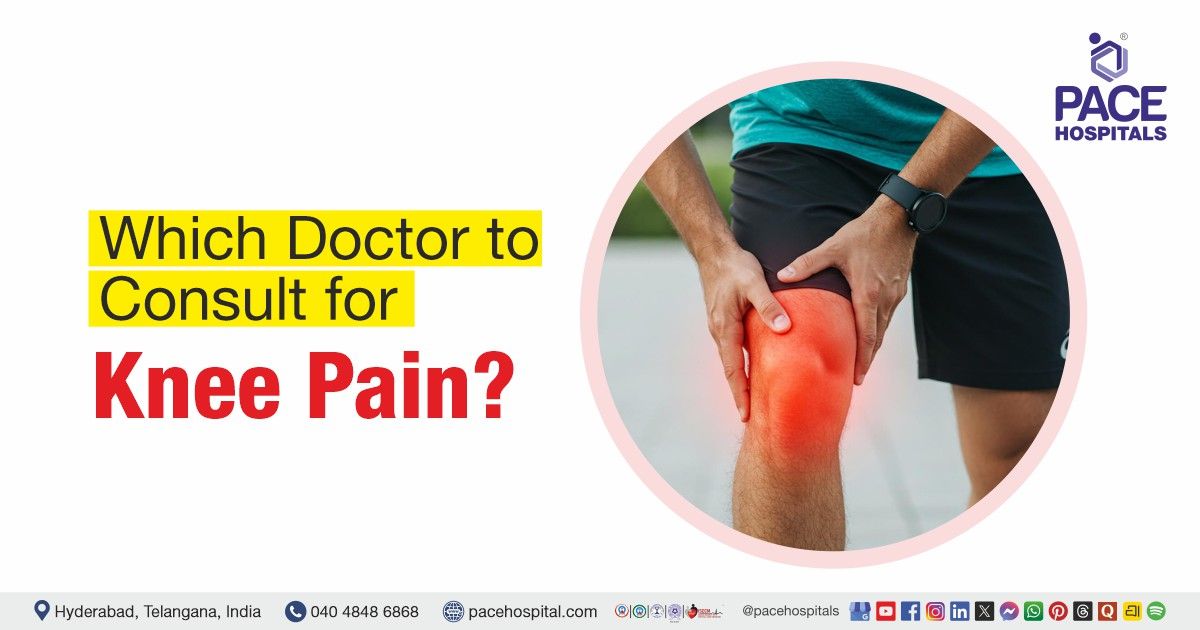
Which Doctor to Consult for Knee Pain?
PACE Hospitals
Written by: Editorial Team
Medically reviewed by: Dr. Anand Agroya - Senior Orthopedic Consultant, Trauma Surgeon & Sports Medicine Specialist
Introduction
Knee pain is one of the most common reasons people visit a doctor in India, cutting across every age group — from teenagers with sports injuries and young adults with overuse strain, to middle-aged patients developing arthritis, and elderly patients struggling with advanced joint degeneration. Despite being so common, knee pain is frequently mismanaged — either ignored until it limits daily life, or treated with painkillers without identifying the underlying cause. This guide will help you understand which doctor to consult for knee pain depending on your symptoms, age, and situation, and when you need to go directly to emergency care.
Quick Answer: Which Doctor Should You Consult for Knee Pain?
For most knee pain, consult an Orthopaedic doctor first — especially if you have knee swelling, injury, stiffness, difficulty walking, pain while climbing stairs, suspected arthritis, ligament tear, meniscus injury, or deformity. A Sports Medicine specialist may be needed for sports injuries and active individuals. A Rheumatologist is needed for inflammatory arthritis, rheumatoid arthritis, gout, autoimmune disease, or multiple joint pain. A Physiotherapist helps with rehabilitation, strengthening, and mobility recovery. Visit an Emergency Department if knee pain follows a fall, accident, severe injury, fever with swelling, visible deformity, or inability to bear weight.
Why Knee Pain Should Not Be Ignored?
The knee is the largest and one of the most mechanically complex joints in the body. Pain can arise from bones, cartilage, ligaments, tendons, the meniscus, surrounding muscles, bursae, nerves, or inflammatory disease — which is why the cause is not always obvious from symptoms alone.
- Mild knee pain may improve with rest and simple measures — but persistent or worsening pain needs proper evaluation
- Delayed treatment after a knee injury can worsen joint instability, increase swelling, cause progressive cartilage damage, and reduce the effectiveness of future treatment
- Knee pain in elderly patients is often attributed to ageing, but sudden swelling, severe pain, or a change in pain pattern always needs medical assessment
- Self-medicating with painkillers or anti-inflammatory medicines without a diagnosis can temporarily mask symptoms while allowing underlying damage to progress
- Certain causes of knee pain — such as septic arthritis (joint infection) or fractures — require urgent care and cannot be safely managed at home
If knee pain persists, worsens, or limits daily activity, consulting a knee pain specialist ensures accurate diagnosis, effective treatment, and prevention of long-term joint damage.
Doctor Selection Guide: Which Specialist Should You Choose for Knee Pain?
| Situation | First Doctor to Consult | Specialist Needed If |
|---|---|---|
| Mild knee pain without injury | General Physician / Orthopaedic doctor | Pain persists beyond a few days or affects walking |
| Knee pain after fall or accident | Emergency Physician / Orthopaedic doctor | Fracture, ligament injury, or dislocation suspected |
| Knee swelling after injury | Orthopaedic doctor / Sports Medicine specialist | Meniscus, ligament, or internal joint injury suspected |
| Knee pain while climbing stairs | Orthopaedic doctor | Arthritis, kneecap pain, cartilage damage, or tendon issue suspected |
| Knee pain with clicking or locking | Orthopaedic doctor | Meniscus tear or loose body suspected |
| Knee pain with instability or giving way | Orthopaedic doctor / Sports Medicine specialist | Ligament injury such as ACL/PCL suspected |
| Knee pain in elderly patient | Orthopaedic doctor | Osteoarthritis or joint degeneration suspected |
| Knee pain with multiple joint pain | Rheumatologist / Internal Medicine | Inflammatory arthritis or autoimmune disease suspected |
| Knee pain with morning stiffness | Rheumatologist | Rheumatoid arthritis or inflammatory arthritis suspected |
| Knee pain with redness, heat, and fever | Emergency Physician / Orthopaedic doctor | Infection or septic arthritis suspected |
| Sudden severe knee pain with swelling | Emergency Physician / Orthopaedic / Rheumatologist | Gout, infection, fracture, or ligament injury suspected |
| Knee pain in athlete | Sports Medicine specialist / Orthopaedic doctor | Sports injury, overuse, ligament, or meniscus injury suspected |
| Knee pain after surgery | Orthopaedic surgeon / Physiotherapist | Recovery issue, stiffness, infection, or implant concern suspected |
| Knee pain happening due to obesity | Orthopaedic doctor / Internal Medicine / Dietitian | Arthritis and weight-related joint stress need management |
| Knee pain during pregnancy | Obstetrician / Orthopaedic doctor | Postural, weight, swelling, or joint stress-related cause suspected |
When to See an Orthopaedic Doctor for Knee Pain?
An Orthopaedic doctor is the primary specialist for knee pain involving bones, joints, cartilage, ligaments, the meniscus, tendons, and fractures — the vast majority of knee pain causes. Consult an Orthopaedic doctor for:
- Knee pain lasting more than a few days without clear improvement
- Pain following a fall, twist, or accident
- Knee swelling — especially if sudden or worsening
- Knee stiffness — particularly in the morning or after prolonged sitting
- Difficulty walking, limping, or reduced ability to straighten or bend the knee fully
- Pain while climbing stairs, squatting, or sitting cross-legged
- Knee locking — the sensation that the knee is stuck and will not straighten
- Clicking or grinding sounds accompanied by pain
- Feeling of the knee giving way or buckling
- Suspected ligament tear or meniscus injury
- Suspected fracture or bone injury
- Visible deformity — the knee appears out of its normal shape or alignment
- Bow legs, knock knees, or progressive joint deformity
- Osteoarthritis — particularly when pain is affecting daily function
- Need for specialist evaluation for injections, arthroscopy, or knee replacement
An Orthopaedic doctor will perform a clinical examination, assess your walking and movement, and order appropriate investigations — most commonly X-ray or MRI — to identify the cause and guide the treatment plan.
When to See a Sports Medicine Specialist for Knee Pain?
Sports Medicine specialists are trained in diagnosing and managing musculoskeletal injuries and conditions related to physical activity leading to sports injury. They focus not only on injury treatment but also on safe, prevention of re-injury, structured return-to-sport plans, and performance-safe rehabilitation. Consult a Sports Medicine specialist for:
- Knee pain following a sports injury — regardless of which sport
- Suspected ACL, PCL, MCL, or LCL ligament injury
- Meniscus injury in an active individual
- Runner's knee — pain around or behind the kneecap, worsening with running or descending stairs
- Jumper's knee (patellar tendinitis) — pain below the kneecap, typically in jumping sports
- Tendon pain — inflammation or overuse injury around the knee tendons
- Overuse injury from training or repetitive activity
- Repeated knee sprains or recurring instability
- Return-to-sport decision-making after knee injury
- Knee pain in a young or adolescent athlete where growth plate involvement must be considered
Sports Medicine specialists often work closely with Orthopaedic doctors and Physiotherapists, providing a team-based approach to complex knee injury management.
When to See a Rheumatologist for Knee Pain?
A Rheumatologist specialises in inflammatory, autoimmune, and crystal-related joint diseases. Knee pain is not always structural or injury-related — in many patients, particularly those with involvement of multiple joints or systemic symptoms, an inflammatory or autoimmune cause must be considered. Consult a Rheumatologist if knee pain is associated with:
- Multiple joint pain — two or more joints affected simultaneously or in sequence
- Morning stiffness lasting more than 30 minutes — a hallmark of inflammatory joint disease
- Swelling in both knees or involvement of many joints
- Recurrent episodes of joint swelling that come and go
- Suspected or confirmed rheumatoid arthritis
- Gout or elevated uric acid — sudden severe pain in the knee or other joints
- Psoriatic arthritis — joint pain alongside psoriasis skin or nail changes
- Ankylosing spondylitis-related symptoms — back stiffness alongside joint pain
- Any autoimmune condition associated with joint involvement
- Fever, unexplained fatigue, skin rash, or weight loss alongside joint pain
- Young adults with recurrent joint swelling without a clear injury history
When to See a Physiotherapist for Knee Pain?
Physiotherapy plays a central role in knee pain management — whether the goal is recovery after injury, rehabilitation after surgery, or long-term management of arthritis-related symptoms. A Physiotherapist typically becomes involved after a diagnosis has been established by an Orthopaedic doctor, Sports Medicine specialist, or Rheumatologist.
Physiotherapy is particularly valuable for:
- Rehabilitation after ligament injury, including partial or complete ACL/PCL/MCL tears
- Recovery after meniscus tear — both after conservative management and after arthroscopy
- Arthritis management — strengthening the muscles that support the knee to reduce joint load
- Post-knee replacement rehabilitation — restoring movement, balance, and walking ability
- Post-arthroscopy recovery — regaining movement, strength, and function
- Muscle weakness — particularly quadriceps and hip muscle strengthening to reduce knee stress
- Postural and gait correction — improving how the knee moves during daily activities
- Pain reduction and mobility improvement in patients with chronic knee conditions
Important: Physiotherapy should always be diagnosis-based. Severe swelling, suspected fracture, suspected infection, fever with a swollen knee, or inability to walk should be evaluated by a doctor before starting exercises. Exercising through a major injury or infection can cause significant harm.
When to See a General Physician or Internal Medicine Doctor?
A General Physician or Internal Medicine specialist may be the right first contact when knee pain is mild, associated with a systemic condition, or presents alongside other medical concerns. An individual can consult a General Physician if the person has following signs:
- Knee pain is mild and there is no history of injury or swelling
- Knee pain is accompanied by fever, body ache, or other general illness symptoms
- The patient has diabetes, high uric acid levels, obesity, or other chronic medical conditions that may be contributing to knee pain
- Infection signs — fever, chills, or general unwellness — accompany a swollen knee
- Multiple medical conditions are present and a coordinated assessment is needed before specialist referral
The General Physician can conduct initial evaluation, order basic investigations such as blood tests and X-rays, and then refer to an Orthopaedic doctor, Rheumatologist, or Emergency care based on the findings.
When Knee Pain Is a Medical Emergency?
Certain knee pain presentations require immediate Emergency Department attention. Do not wait for a scheduled clinic appointment if knee pain is associated with:
- Major fall, road accident, or high-impact injury
- Severe pain that is disproportionate to the apparent cause
- Inability to stand or bear any weight on the leg
- Visible deformity of the knee — it appears bent, twisted, or misshapen
- Suspected fracture — after a fall or direct blow to the knee
- Knee dislocation — a medical emergency requiring immediate reduction
- Rapid, significant swelling within minutes to hours of an injury
- Fever alongside a red, hot, severely swollen knee — suggesting septic arthritis
- Open wound or bleeding in or around the knee after injury
- Severe pain in the calf alongside breathlessness — possible deep vein thrombosis or pulmonary embolism
- Numbness, cold foot, colour change, or loss of pulse in the foot after knee injury
- Sudden severe knee pain in an elderly patient after a minor fall — possible fracture
- Severe pain after knee replacement surgery
- Uncontrolled pain despite rest, elevation, and simple analgesia
Emergency: If knee pain follows an accident, causes visible deformity, severe swelling, inability to walk, fever with a red hot swollen knee, numbness, or is simply uncontrolled and severe — do not wait for an OPD appointment. Visit an Emergency Department immediately.
Types of Knee Pain and Which Specialist Treats Each
| Type of Knee Pain / Condition | Common Features | Doctor / Specialist | Why? |
|---|---|---|---|
| Knee osteoarthritis | Gradual pain, stiffness, crepitus, worse with activity; affects older adults | Orthopaedic doctor | Cartilage wear management, injections, or replacement evaluation |
| Rheumatoid arthritis | Morning stiffness >30 min, bilateral swelling, multiple joints, systemic fatigue | Rheumatologist | Autoimmune suppression, Disease-modifying antirheumatic drugs (DMARDs), systemic management |
| Gout | Sudden severe pain, red hot swollen joint, high uric acid, often affects big toe first | Rheumatologist / Internal Medicine | Crystal deposition management, uric acid control |
| Ligament tear (general) | Pop sound at injury, swelling, instability, pain | Orthopaedic doctor / Sports Medicine | Functional assessment, bracing, physio, or surgery if needed |
| ACL injury | Feeling of instability, pop sound at injury, rapid swelling, difficulty walking | Orthopaedic / Sports Medicine | Ligament reconstruction evaluation based on activity level |
| PCL injury | Pain at back of knee, instability, injury from direct blow | Orthopaedic / Sports Medicine | Rehabilitation or surgery depending on severity |
| MCL / LCL injury | Inner or outer knee pain after valgus/varus stress, swelling | Orthopaedic / Sports Medicine | Usually rehabilitation; severe cases may need surgery |
| Meniscus tear | Pain, clicking, locking, swelling, difficulty bending | Orthopaedic doctor | Conservative or arthroscopic treatment depending on tear type |
| Runner's knee (PFPS) | Pain around kneecap worsening with running, stairs, sitting | Sports Medicine / Orthopaedic | Biomechanics correction, muscle strengthening, footwear review |
| Jumper's knee (patellar tendinitis) | Pain below kneecap, worsening with jumping or landing | Sports Medicine / Orthopaedic | Load management, eccentric exercises, physiotherapy |
| Patellofemoral pain syndrome | Kneecap pain, worse with stairs, squatting, prolonged sitting | Orthopaedic / Sports Medicine | Physiotherapy, muscle balance, activity modification |
| Tendinitis | Localised pain over tendon, worsens with activity | Orthopaedic / Sports Medicine | Rest, physiotherapy, load management |
| Bursitis | Swelling, pain, warmth over a specific area of knee | Orthopaedic doctor | Aspiration or injection if needed; infection exclusion |
| Fracture | Severe pain after injury, swelling, inability to walk, bruising | Emergency Physician / Orthopaedic | X-ray, immobilisation, and surgical fixation if displaced |
| Knee dislocation | Severe deformity, extreme pain, limb malalignment | Emergency Physician | Immediate reduction and neurovascular assessment |
| Septic arthritis | Fever, red hot swollen knee, severe pain, restricted movement | Emergency Physician / Orthopaedic | Urgent joint washout, IV antibiotics |
| Baker's cyst | Swelling behind knee, tightness, may rupture | Orthopaedic / Rheumatologist | Treat underlying cause; aspiration if symptomatic |
| Knee pain after surgery | Stiffness, swelling, pain, restricted movement post-operatively | Orthopaedic surgeon / Physiotherapist | Assessment of healing, infection exclusion, and rehabilitation |
| Knee pain due to obesity | Bilateral knee pain, difficulty walking, worsens with activity | Orthopaedic + Internal Medicine + Dietitian | Weight management and joint stress reduction |
| Referred pain from hip or spine | Knee pain without local signs, may have back/hip pain, numbness | Orthopaedic / Spine specialist / Neurologist | Source identification; spine or hip evaluation needed |
Knee Pain after Injury, Fall, or Accident
Injuries are among the most common and important causes of knee pain. The nature of the injury provides important clues:
- Twisting injuries — such as a sudden change of direction in sport or a stumble — frequently damage the ligaments or meniscus
- A direct fall onto the knee may cause a fracture, bruising, skin wound, or soft tissue injury
- Rapid swelling developing within the first few hours after injury — a haemarthrosis (bleeding into the joint) — is a warning sign of a ligament tear, fracture, or significant internal damage
- Inability to bear weight on the affected leg after any injury needs urgent assessment
Orthopaedic or Emergency care is the right initial contact after a knee injury. Do not self-diagnose, and do not push through pain or instability without evaluation — what appears to be a minor sprain may be a significant ligament or structural injury.
Knee Pain While Walking or Climbing Stairs
Knee pain that consistently appears during walking or stair-climbing is one of the most common complaints brought to an Orthopaedic clinic. Common causes include:
- Arthritis — particularly osteoarthritis; cartilage wear causes pain on loading the joint
- Patellofemoral pain syndrome — pain behind or around the kneecap that is characteristic of stair-climbing, sitting for long periods, or squatting
- Meniscus injury — the damaged meniscus is compressed during loading, causing pain
- Quadriceps or patellar tendon problems — pain on the front of the knee during activity
- Cartilage damage — worn or damaged articular cartilage causes pain when the joint bears weight
Knee pain during walking or stair-climbing that persists for more than a week or two, worsens over time, or limits daily activity warrants Orthopaedic specialists'/doctors' proper evaluation. Early assessment offers simple treatment options and can prevent progression.
Knee Pain with Swelling
Knee swelling — whether the whole joint appears puffed up or a specific area is enlarged — is a clinically important symptom that should not be dismissed. Common causes include:
- Injury — ligament tear, meniscus injury, or fracture causing bleeding into the joint
- Arthritis flare — osteoarthritis or inflammatory arthritis causing a build-up of joint fluid
- Gout — sudden attack causing a rapidly swelling, intensely painful, red, hot joint
- Bursitis — swelling over a specific bursa (fluid sac) near the knee
- Baker's cyst — a fluid-filled cyst behind the knee, often secondary to joint disease
- Infection (septic arthritis) — a medical emergency causing fever, severe pain, redness, and warmth
Sudden swelling after injury needs Orthopaedic evaluation, ideally on the same day. Swelling with fever, redness, and intense warmth may indicate a joint infection and requires Emergency care. Recurrent swelling without a clear injury — particularly with multiple joints involved — warrants Rheumatology evaluation.
Knee Pain with Clicking, Locking, or Giving Way
Clicking sounds
Clicking sounds from the knee without pain are common and often not clinically significant. However, clicking or crunching sounds that are accompanied by pain, occur consistently in a specific position, or worsen over time should be evaluated by an Orthopaedic doctor.
Knee locking
True knee locking — where the knee becomes stuck in a flexed position and cannot be fully straightened — is a serious symptom that typically indicates a torn piece of meniscus or a loose body (a fragment of cartilage or bone) that has become trapped in the joint. This requires prompt Orthopaedic evaluation and often surgical treatment.
Knee giving way
A sensation that the knee is 'giving way,' buckling, or unable to support the body's weight during normal activity suggests ligament instability — most commonly involving the ACL, or occasionally other ligaments — or significant muscle weakness. An Orthopaedic doctor or Sports Medicine specialist should evaluate this without delay.
Knee Pain in Elderly People
Knee pain in older adults is very common, and the most frequent cause is osteoarthritis — progressive wearing away of the articular cartilage that lines the joint surfaces. However, not all knee pain in elderly patients is simple arthritis:
- Osteoarthritis — gradual onset pain, stiffness, crepitus, and reduced range of motion; managed by Orthopaedic doctor
- Fracture after a fall — even a seemingly minor fall in an elderly person with osteoporosis can cause a periarticular fracture; sudden severe pain after any fall should be treated as a possible fracture until proven otherwise
- Gout — can present at any age; causes sudden, severe, intensely painful episodes of swelling; managed by Rheumatologist or Internal Medicine
- Muscle weakness — age-related muscle loss (sarcopenia) reduces the support around the knee, worsening pain and instability
- Multiple joint involvement — may suggest a systemic inflammatory condition rather than simple arthritis
Elderly patients with knee pain that is worsening, affecting their independence, or following a fall or injury should be evaluated by an Orthopaedic doctor without delay. Knee replacement is an option only after proper evaluation and when appropriate conservative treatments have been tried and found insufficient.
Knee Pain in Young Adults
Young adults are not immune to knee problems. Common causes in this age group include:
- Sports injuries — ACL tears, meniscus tears, and ligament sprains are common in athletic young adults
- Overuse injuries — runner's knee, jumper's knee, and tendinitis from training load errors
- Patellofemoral pain syndrome — pain behind the kneecap during running, stairs, or prolonged sitting
- Gym-related strain — incorrect technique, sudden load increases, or inadequate warm-up
- Obesity-related knee pain — excess body weight significantly increases joint stress even in young people
- Inflammatory arthritis — rheumatoid arthritis, psoriatic arthritis, and reactive arthritis can all begin in young adulthood
- Early osteoarthritis — in patients with previous injuries, obesity, or genetic predisposition
Young adults should not assume that age protects them from serious knee conditions. Repeated swelling, locking, instability during activity, or pain that does not resolve with a week or two of rest warrants Orthopaedic or Sports Medicine evaluation.
Knee Pain in Women
Women are at higher risk of certain knee conditions in comparison to men, due to differences in anatomy, hormonal influences on ligament laxity, and muscle balance patterns:
- Patellofemoral pain syndrome — more common in women, often linked to wider pelvis anatomy, quadriceps angle, and muscle imbalances
- ACL tears — women have a higher risk of ACL injury than men in comparable sports, partly due to anatomical and neuromuscular factors
- Osteoarthritis — more common in women, particularly after menopause when hormonal protection of cartilage is reduced
- Rheumatoid arthritis — affects women approximately two to three times more commonly than men
- Pregnancy-related knee pain — weight gain, ligament laxity due to relaxin hormone, posture changes, and swelling can all contribute to knee pain during pregnancy
Women with knee swelling, instability, or walking difficulty should consult an Orthopaedic doctor. Multiple joint involvement or morning stiffness warrants Rheumatology evaluation.
Knee Pain during Pregnancy
Pregnancy places additional mechanical demand on the knee joint through several mechanisms:
- Weight gain — the additional body weight increases the force transmitted through the knee with every step
- Relaxin hormone — increases ligament laxity throughout the body, which can destabilise the knee
- Postural changes — the shift in centre of gravity alters how load is distributed through the knee
- Swelling — generalised
Pregnant women with mechanical knee pain — pain related to movement and walking, without swelling or systemic symptoms — may benefit from Physiotherapy guidance for safe exercises, postural support, and load modification. If swelling is generalised (affecting the whole leg or body), blood pressure is elevated, or symptoms are severe, an Obstetrician/Gynaecologist should be consulted first to exclude pregnancy-related systemic conditions.
Do not start any exercise programme or take any pain medication during pregnancy without consulting a doctor first. Some medicines and exercise approaches are not safe during pregnancy.
Knee Pain in Children and Teenagers
Children and teenagers with knee pain present some unique diagnostic considerations:
- Osgood-Schlatter disease — a common cause of pain and swelling just below the kneecap in active adolescents undergoing growth spurts; managed by Pediatric Orthopaedic doctor or Sports Medicine specialist
- Sports injuries — ACL injuries, meniscus tears, and ligament sprains can occur in young athletes, though growth plates must be carefully considered in management
- Growth-related pain — some knee discomfort is associated with rapid growth, but persistent, localised, or worsening pain always needs evaluation
- Juvenile idiopathic arthritis (JIA) — inflammatory arthritis that begins in childhood; a Pediatric Rheumatologist should be involved
- Infection — septic arthritis and osteomyelitis are serious conditions in children that can cause knee pain with fever
- Night pain — knee pain that wakes a child at night should always be taken seriously and evaluated promptly
A Pediatrician is the right first contact for a child with knee pain. Based on findings, they will refer to a Pediatric Orthopaedic doctor, Pediatric Rheumatologist, or Sports Medicine specialist as appropriate. Return to sport after any significant knee injury in an adolescent should only occur after proper clearance from a qualified specialist.
Knee Pain Due to Arthritis
Arthritis of the knee is a broad term encompassing several distinct conditions that each require different specialist management:
- Osteoarthritis — the most common type; due to progressive cartilage wear; managed by an Orthopaedic doctor; treatment ranges from physiotherapy and injections to knee replacement in severe cases
- Rheumatoid arthritis — an autoimmune condition causing inflammatory joint disease; managed by a Rheumatologist with disease-modifying medicines
- Gout — caused by uric acid crystal deposits in the joint; managed by a Rheumatologist or Internal Medicine specialist with medicines to control uric acid levels
- Psoriatic arthritis — inflammatory arthritis associated with psoriasis; managed by a Rheumatologist, often in coordination with a Dermatologist
- Other inflammatory arthritides — including reactive arthritis and ankylosing spondylitis-related arthritis; managed by a Rheumatologist
The distinction between these types of arthritis matters significantly for treatment — medicines effective for rheumatoid arthritis are inappropriate for osteoarthritis, and vice versa. Proper diagnosis is essential before treatment begins.
Knee Pain Due to Ligament Tear or Meniscus Tear
Ligament tears
The four main knee ligaments — ACL, PCL, MCL, and LCL — can be injured through twisting, direct blows, sudden deceleration, or falls. A ligament tear typically presents with a popping sound at the time of injury, followed by rapid swelling, pain, and instability. An Orthopaedic doctor or Sports Medicine specialist should evaluate any suspected ligament injury. MRI is the investigation of choice for confirming the diagnosis and assessing severity.
Meniscus tears
The medial and lateral menisci are C-shaped cartilage structures that act as shock absorbers within the knee joint. A meniscus tear typically causes pain, swelling, clicking, and in some cases locking of the knee. Tears can occur through acute twisting injuries or through gradual degeneration in older patients. An Orthopaedic doctor should evaluate suspected meniscus injury. MRI confirms the diagnosis, tear pattern, and extent — which guides the treatment decision between conservative management, physiotherapy, and arthroscopic surgery.
Not all ligament tears require surgery, and not all meniscus tears require arthroscopy. Treatment depends on the type, severity, location of the tear, the patient's age, activity level, and functional goals. These decisions should be made with an Orthopaedic doctor after appropriate investigation.
Knee Pain Due to Obesity or Lifestyle
Excess body weight significantly increases the mechanical load on the knee joint and body. Every kilogram of additional body weight translates to a multiple of that load passing through the knee with each step. Obesity is one of the most modifiable risk factors for knee osteoarthritis, and it accelerates the progression of existing arthritis.
A sedentary lifestyle compounds this by allowing the muscles that support the knee — particularly the quadriceps and hip muscles — to become weak, reducing the joint's dynamic stability and increasing the load on cartilage and other structures.
Management for patients with obesity-related knee pain typically involves a coordinated treatment approach:
- Orthopaedic evaluation — to assess the degree of joint damage and guide appropriate treatment
- Physiotherapy — to strengthen supporting muscles without worsening pain
- Weight management — through dietary guidance (Dietitian), medical management (Endocrinologist if needed), and gradual, medically-supervised physical activity
- Internal Medicine coordination — if there are associated conditions such as diabetes, hypertension, or metabolic syndrome
Avoid crash exercise programmes or high-impact activities without first consulting a doctor. In a patient with significant knee pain and obesity, inappropriate exercise can worsen joint damage.
Referred Knee Pain from Hip, Spine, or Nerves
Not all knee pain originates in the knee itself. A significant number of patients experience knee pain that is actually referred pain — originating from a problem elsewhere in the musculoskeletal or nervous system:
- Hip arthritis — pain from the hip joint can radiate to the inner thigh and knee; patients may describe it as knee pain even though the knee itself is normal on examination
- Lumbar spine nerve compression — a disc prolapse or nerve root compression in the lower back (L3 or L4 nerve roots) can cause pain radiating to the front of the knee
- Sciatica — pain, numbness, or tingling radiating from the back, through the buttock, and down the leg, sometimes reaching the knee
- Peripheral nerve problems — neuropathy affecting nerves around the knee can cause burning, numbness, or tingling
Referred knee pain is suggested when knee examination is normal, when back or hip pain accompanies knee pain, or when there is numbness or tingling along the leg. An Orthopaedic doctor, Spine specialist, or Neurologist may be involved depending on the suspected source.
Tests Doctors May Recommend for Knee Pain
Clinical assessment:
- Physical examination — assessing tenderness, swelling, range of motion, joint stability, and gait
- Specific clinical tests — such as the Lachman test for ACL integrity, McMurray's test for meniscus injury, and patellar grind test for patellofemoral pain
- Gait assessment — observing how the patient walks to identify compensation patterns
Imaging investigations:
- X-ray knee — first-line imaging for arthritis assessment, fracture, and joint space evaluation
- Weight-bearing X-ray — gives a more accurate picture of arthritis severity than non-weight-bearing views
- MRI knee — the investigation of choice for ligament, meniscus, cartilage, and soft tissue injury assessment
- Ultrasound — useful for detecting fluid collections, tendon abnormalities, Baker's cysts, and guiding injections in selected cases
- CT scan — helpful for evaluating detailed, cross-sectional, and 3D images of complex fractures or pre-surgical planning where bony detail is needed
Blood tests:
- ESR and CRP — markers of inflammation; elevated in inflammatory arthritis and infection
- Uric acid — to assess for gout
- Rheumatoid factor and anti-CCP antibodies — if rheumatoid arthritis is suspected
- Full blood count — to assess for infection or anaemia
- Blood sugar — in patients with diabetes, as it affects healing and infection risk
- Vitamin D and calcium — if bone health is a concern, particularly in elderly or post-menopausal patients
- Joint fluid aspiration — if infection (septic arthritis) or gout is suspected; the joint fluid is sent for culture and crystal analysis
Tests depend on age, injury history, swelling, pain pattern, walking difficulty, physical examination, and the doctor's assessment. Not all investigations are needed for every patient.
What to Expect at Your First Doctor Visit for Knee Pain?
At your first consultation for knee pain, the doctor will take a thorough history. Be prepared to answer:
- When did the knee pain start? Was it sudden or gradual?
- Was there an injury, fall, twist, or sports activity that triggered it?
- Is the pain constant, or does it come and go?
- Is there swelling, redness, or warmth around the knee?
- Do you have a fever alongside the knee pain?
- Does knee pain worsen while climbing stairs, walking, squatting, or after prolonged sitting?
- Can you walk normally and bear full weight on the leg?
- Is there any clicking, locking, or sensation of the knee giving way?
- Do you have morning stiffness in the knee or other joints?
- Have you had any previous knee injuries, procedures, or surgery?
- Do you have diabetes, obesity, high uric acid, arthritis, or any autoimmune disease?
- What medicines, home remedies, or exercises have you already tried?
Bringing any previous X-ray or MRI reports, blood test results, or discharge summaries from previous knee treatments to the appointment allows the doctor to make a more efficient and accurate assessment.
Treatment Options for Knee Pain
Knee pain treatment is highly individualised — it depends on the cause, severity, the patient's age, activity level, associated medical conditions, and the degree of functional limitation. Options range from simple conservative measures to surgery in advanced or injury-specific cases.
Conservative management:
- Rest and activity modification — avoiding activities that aggravate pain while maintaining gentle movement
- Ice (for acute injury and swelling) or heat (for chronic stiffness) — as specifically advised by the treating doctor
- Pain medicines when prescribed — under medical supervision and for defined duration
- Physiotherapy — the cornerstone of most non-surgical knee treatment; muscle strengthening, flexibility, and movement correction
- Weight management — reducing joint load through dietary and lifestyle changes
- Knee brace or support — depending on the diagnosis and activity level
- Lifestyle and posture correction — modifying activities that place excessive demand on the knee
Minimally invasive and surgical options:
- Intra-articular injections — corticosteroid or hyaluronic acid injections in selected cases of arthritis
- Arthroscopy — minimally invasive keyhole surgery for selected meniscus, cartilage, or ligament conditions
- Ligament reconstruction — when a torn ligament cannot heal with conservative management and the patient requires full knee function
- Knee replacement surgery — for advanced osteoarthritis when conservative options have failed to provide adequate relief and function
Disease-specific treatment:
- Rheumatology medicines — for rheumatoid arthritis, gout, psoriatic arthritis, and other inflammatory conditions
- Antibiotics and joint washout — for septic arthritis, which is a medical emergency
- Regular follow-up — essential for all knee conditions to monitor treatment response, adjust plans, and prevent complications
Treatment depends on the cause, age, severity, swelling, injury type, arthritis stage, activity level, and doctor evaluation. Not all knee pain needs surgery — many patients respond well to conservative management with the right guidance.
Knee Pain Specialists at PACE Hospitals, Hyderabad
PACE Hospitals, located in Hitech City, Hyderabad, is a multi-super speciality hospital equipped to evaluate and manage knee pain across all levels of complexity — from acute sports injuries and fractures to chronic arthritis and joint replacement evaluation.
Patients have access to:
- Orthopaedics — for knee arthritis, ligament and meniscus injuries, fractures, deformity correction, and joint replacement evaluation
- Sports Medicine — for sports-related knee injuries, overuse conditions, return-to-sport planning, and rehabilitation
- Joint Replacement specialists — for evaluation and surgical management of advanced knee arthritis
- Physiotherapy and Rehabilitation — for post-injury, post-surgical, and arthritis-related strength, mobility, and function recovery
- Rheumatology support — for inflammatory arthritis, rheumatoid arthritis, gout, and autoimmune joint conditions
- General Medicine/Internal Medicine — for initial evaluation, systemic conditions affecting the knee, and multi-condition co-management
- Emergency and Trauma Care — for sudden fractures, dislocations, acute knee injuries, and urgent presentations requiring immediate assessment
- Advanced diagnostics — including X-ray, MRI, ultrasound, and comprehensive blood panels available within the hospital system
Why Choose PACE Hospitals for Knee Pain Evaluation and Management?
- Multi-speciality evaluation under one system — Orthopaedic surgeons, Sports Medicine specialists, Rheumatologists, and Physiotherapists coordinate care without the patient navigating between separate providers
- Experienced Orthopaedic team — covering the full range of knee conditions from sports injuries and fractures to advanced arthritis and knee replacement
- Sports Medicine support — for active individuals, athletes, and young patients requiring injury-specific and return-to-sport management
- Joint replacement evaluation — providing patients with advanced arthritis a comprehensive, evidence-based assessment of their surgical options
- Physiotherapy and rehabilitation — integrated into the treatment pathway for all knee conditions, not just post-surgical recovery
- Emergency and Trauma Care — round-the-clock treatment availability for problems related with acute knee injuries, fractures, and urgent presentations
- Diagnostic support — X-ray, MRI, and laboratory investigations available within the hospital, reducing the burden of coordinating external testing
- Personalised treatment plans — accounting for each patient's age, activity level, occupation, associated medical conditions, and functional goals
Key Takeaway
For most knee pain, an Orthopaedic doctor is the right specialist to consult first. A Sports Medicine specialist may be needed for sports injuries and active individuals. A Rheumatologist is needed for rheumatoid arthritis, inflammatory arthritis, gout, or multiple joint involvement. A Physiotherapist is an important part of the treatment team for rehabilitation, strengthening, and recovery. If knee pain follows an accident, causes severe swelling, visible deformity, fever, or inability to walk, visit an Emergency Department immediately. Early evaluation protects knee function and provides more treatment options before conditions become advanced.
Frequently Asked Questions (FAQs)
Which doctor should I consult for knee pain?
For most knee pain, consult an Orthopaedic doctor first — particularly for having any signs of swelling, stiffness, injury, difficulty walking, pain while climbing stairs, suspected arthritis, or ligament and meniscus concerns. A Sports Medicine specialist is useful for sports injuries. A Rheumatologist is needed for inflammatory arthritis, rheumatoid arthritis, gout, or multiple joint pain. A General Physician can help with initial evaluation when the cause is unclear. Visit an Emergency Department immediately if knee pain follows a major injury, causes deformity, severe swelling, inability to walk, or fever with swelling.
When is knee pain an emergency?
Knee pain is an emergency when it follows a major injury or accident, causes inability to stand or bear any weight, involves visible deformity of the knee, is accompanied by fever with a red hot swollen joint (suggesting infection), has rapid severe swelling after an injury, involves numbness or loss of sensation in the foot, or is severe and uncontrolled despite rest. Go to the Emergency Department immediately in these situations. Do not wait for a scheduled clinic appointment.
What tests are done for knee pain?
The most common tests for knee pain include physical examination and gait assessment, X-ray of the knee (particularly weight-bearing views for arthritis), and MRI for ligament, meniscus, and cartilage assessment. Blood tests such as CRP, ESR, uric acid, rheumatoid factor, and complete blood count may be required in certain cases of individuals. Joint fluid aspiration may be performed if infection or gout is suspected. Ultrasound is useful for fluid collections and tendon problems. The specific diagonstic and lab tests that are ordered depend on the clinical presentation and the doctor's assessment.
What causes knee swelling with pain?
Knee swelling with pain can be caused by ligament tear (often with rapid swelling after injury), meniscus injury, osteoarthritis flare, rheumatoid arthritis or other inflammatory arthritis, gout (sudden severe pain and swelling), bursitis, Baker's cyst, or septic arthritis (infection — a medical emergency with fever and warmth). The correct cause determines the correct treatment, which is why medical evaluation — not self-management — is the right approach for a swollen, painful knee.
Can knee pain be treated without surgery?
Yes. Most knee pain is managed without surgery, through a combination of physiotherapy, muscle strengthening, weight management, lifestyle modification, knee braces, and injections in appropriate cases. Surgery is considered only when conservative management has been adequately tried and has not provided sufficient relief and function — particularly for significant ligament tears requiring reconstruction, or advanced osteoarthritis where pain and disability significantly affect quality of life. An Orthopaedic doctor can advise on the most appropriate approach for each individual patient.
Which is the best hospital for knee pain treatment in Hyderabad?
PACE Hospitals in Hitech City, Hyderabad, offers comprehensive knee pain evaluation and management with experienced Orthopaedic surgeons, Sports Medicine specialists, Rheumatologists, and Physiotherapists working in a coordinated multi-speciality system. Advanced diagnostics including X-ray, MRI, and laboratory investigations are available. Emergency and Trauma Care is available round-the-clock for acute knee injuries. To book a consultation, call 040-4848-6868 or visit pacehospital.com.
Should I see an orthopaedic doctor for knee pain?
Yes, an Orthopaedic doctor is the primary specialist for most knee pain — covering knee arthritis, ligament and meniscus injuries, fractures, cartilage damage, knee swelling, stiffness, deformity, and surgery evaluation including arthroscopy and knee replacement. They assess the knee clinically, order appropriate imaging (X-ray or MRI), and provide a diagnosis-based treatment plan. A Physiotherapist is typically involved alongside Orthopaedic care for rehabilitation and recovery.
Which doctor treats knee arthritis?
An Orthopaedic doctor is the primary specialist for knee osteoarthritis — the most common type of knee arthritis, caused by cartilage wear over time. A Rheumatologist treats inflammatory types of knee arthritis such as rheumatoid arthritis, gout, and psoriatic arthritis. The correct specialist depends on the type of arthritis. Both Orthopaedic and Rheumatology care may be needed in some patients, and accurate diagnosis before treatment is essential.
Which doctor treats knee pain after injury?
An Orthopaedic doctor or Emergency Physician is the right specialist after a knee injury. Emergency care is needed if there is severe pain, rapid swelling, inability to bear weight, visible deformity, or a suspected fracture. For less severe injuries such as ligament sprains, suspected meniscus injury, or sports trauma, an Orthopaedic doctor or Sports Medicine specialist should evaluate promptly — ideally the same day. MRI is often advised for internal knee injury assessment.
Which doctor treats ligament tear in the knee?
An Orthopaedic doctor or Sports Medicine specialist treats knee ligament tears — including ACL, PCL, MCL, and LCL injuries. If there is rapid swelling, inability to walk, or severe instability after an injury, Emergency evaluation is the first step. MRI is the investigation of choice for confirming ligament injury. Treatment depends on the type and severity of the tear, the patient's age and activity level, and may range from physiotherapy and bracing to ligament reconstruction surgery.
Which doctor treats meniscus tear?
An Orthopaedic doctor is the right specialist for a meniscus tear. Meniscus tears cause knee pain, swelling, clicking, and sometimes locking — where the knee becomes stuck and cannot be fully straightened. MRI confirms the diagnosis and guides treatment, which may be conservative (physiotherapy, rest) or surgical (arthroscopic meniscus repair or trim), depending on the tear type, location, patient age, and activity level. A Sports Medicine specialist may also be involved in active patients.
When should I see a rheumatologist for knee pain?
See a Rheumatologist for knee pain if you have morning stiffness lasting more than 30 minutes, swelling in multiple joints, rheumatoid arthritis, gout or high uric acid, psoriatic arthritis, an autoimmune condition, fever and fatigue alongside joint pain, or recurrent knee swelling without a clear injury. A Rheumatologist is specifically trained in inflammatory, autoimmune, and crystal-related joint diseases — which require different treatments from structural or injury-related knee pain.
Can a physiotherapist treat knee pain?
Physiotherapy is an important part of knee pain management, but it works best after a proper diagnosis has been established by a doctor. A Physiotherapist can reduce pain, improve muscle strength and flexibility, correct movement patterns, and help with rehabilitation after surgery or injury. Physiotherapy should not be started without medical evaluation if there is severe swelling, a suspected fracture, infection signs, or inability to walk — these need to be assessed and treated by a doctor first.
Is knee pain while climbing stairs serious?
Knee pain while climbing stairs is not always serious but should not be ignored if it is worsening, persistent, or interrupting daily activity. It commonly indicates patellofemoral pain syndrome (pain behind the kneecap), osteoarthritis (cartilage wear), meniscus injury, or quadriceps weakness. An Orthopaedic specialist / Orthopedic doctor evaluation is advisable if the pain continues for more than a week or two, affects daily climbing ability, or is accompanied by swelling, locking, or giving way.
Which doctor should elderly patients consult for knee pain?
Elderly patients with knee pain should consult an Orthopaedic doctor — particularly for osteoarthritis, fractures, joint deformity, or walking difficulty. Sudden severe pain after a fall should be evaluated urgently as a possible fracture, even if the fall seemed minor. Gout and inflammatory arthritis are managed by a Rheumatologist. A Physiotherapist helps with mobility and strength. Knee replacement may be considered only after comprehensive evaluation when conservative treatments have not provided adequate improvement.
Conclusion
Knee pain — whether from an acute injury, progressive arthritis, inflammatory joint disease, or a systemic condition — should not be dismissed or self-managed beyond the initial few days. The knee is a complex joint, and getting the right diagnosis from the right specialist early provides the widest range of treatment options and the best chance of protecting long-term joint function and mobility.
An Orthopaedic doctor is the primary specialist for most knee pain — covering injuries, arthritis, meniscus and ligament problems, fractures, and surgery evaluation. A Sports Medicine specialist is particularly valuable for active individuals and athletes with sports-related knee injuries. A Rheumatologist is essential when inflammatory or autoimmune causes are suspected. Physiotherapy act as a key component of rehabilitation and ongoing management for almost all knee conditions. Emergency symptoms — severe pain after injury, inability to walk, visible deformity, fever with a swollen knee, or uncontrolled pain — require immediate Emergency Department care without delay.
Early evaluation protects the knee, prevents progression, and opens up a broader range of treatment choices. If you or a family member has knee pain that is affecting daily life — consult a qualified doctor without further delay.
Share on
Request an appointment
Fill in the appointment form or call us instantly to book a confirmed appointment with our super specialist at 04048486868
Appointment request - health articles
Recent Articles