Aceclofenac Tablet: Uses, Side Effects & Dosage Guide
PACE Hospitals
Aceclofenac manufacturers in India: Intas Pharmaceuticals Ltd, Ipca Laboratories Ltd, Sun pharmaceuticals Industries Ltd, Mankind Pharma, Emcure pharmaceuticals and Cipla Ltd.
Aceclofenac Drug class: Aceclofenac tablet is a cyclooxygenase (COX-2) inhibitor and belongs to the class of non-steroidal anti-inflammatory drugs (NSAIDs).
Overview
Aceclofenac belongs to the class of non-steroidal anti-inflammatory drugs (NSAIDs). It is further classified based on the action of the enzyme cyclooxygenase into selective and non-selective COX inhibitors, which play an essential role in the functioning of Aceclofenac tablet.
- Aceclofenac mainly belongs to the preferential COX-2 inhibitors because it primarily acts by inhibiting the enzyme COX-2.
- Aceclofenac is used to treat fever, pain and inflammation associated with rheumatoid arthritis, osteoarthritis and ankylosing spondylitis.
- Aceclofenac acts by blocking the activity of prostaglandin. It is an inflammatory mediator released in response to several stimuli, such as pain, due to the activation of receptors sensitive to fever and swelling (inflammation) in response to the infection.
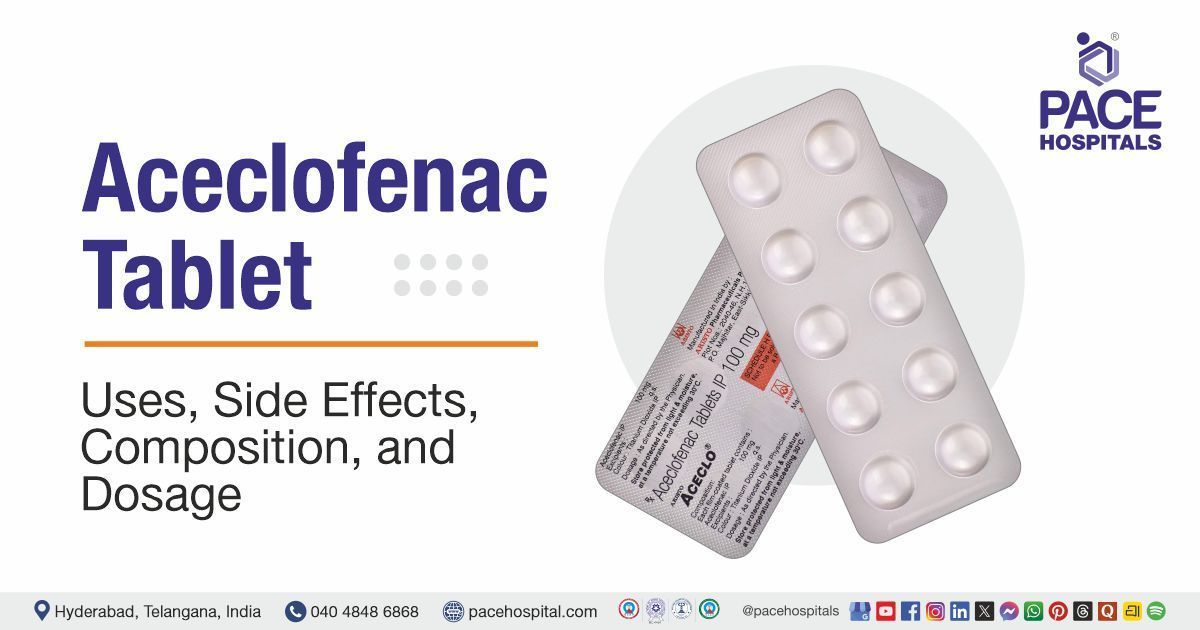
- Aceclofenac is available as 100mg film-coated tablets, white to off-white, round, biconvex, plain on both sides.
- Some of the serious side effects of Aceclofenac include abdominal pain, gastrointestinal bleeding, hypersensitivity reactions such as urticaria, angioedema (swelling of lips, tongue, throat due to fluid leakage because of severe allergy).
Aceclofenac Composition
Each film-coated tablet contains Aceclofenac 100mg as an active ingredient and other excipients such as microcrystalline cellulose, maize starch, povidone, isopropyl alcohol, purified talc, magnesium stearate, croscarmellose sodium, colour white SC-SP- 3180 and purified water.
- Each 10x10 pack of Aceclofenac contains film-coated tablets, white to off-white, round, biconvex, plain on both sides. Ten tablets are packed in an Alu-Alu blister pack. 10 blisters packed in 1 printed carton with packaging insert.
- Each 10x1 pack of Aceclofenac contains film-coated tablets, white to off-white, round, biconvex, plain on both sides. Ten tablets are packed in an Alu-Alu blister pack. 1 blister packed in a printed carton with a packaging insert.
Aceclofenac Tablet Uses
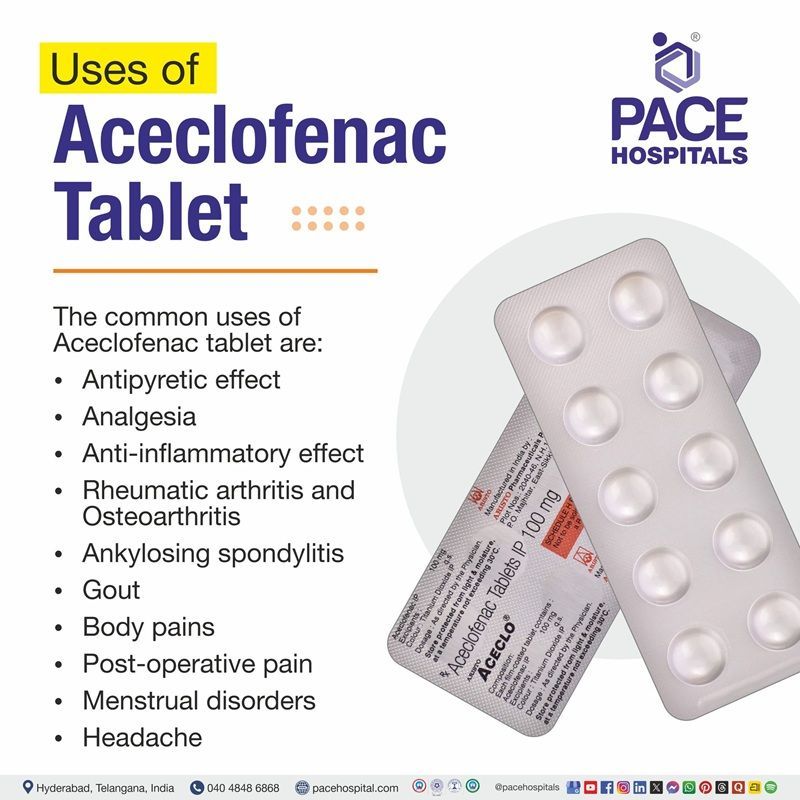
- Antipyretic effect: Aceclofenac reduces fever in patients in whom fever itself is harmful and who experience relief when it is lowered. It reduces fever in most infections, but it does not affect the body temperature, which rises in response to exercise or increased surrounding temperature.
- Analgesia: It is used as an analgesic agent to relieve pain.
- Anti-inflammatory effect: Aceclofenac is used to relieve pain and inflammation, often in joints (as seen in rheumatic conditions).
- Rheumatic arthritis and Osteoarthritis: It is used to reduce the pain and inflammation associated with rheumatoid arthritis and osteoarthritis (joint swelling and inflammation), providing temporary relief.
- Ankylosing spondylitis: It is effective in treating ankylosing spondylitis, a chronic inflammatory arthritis of the spine in the lower back, which causes pain and stiffness.
- Gout: Aceclofenac is used to treat gout, a condition in which uric acid accumulates in joints. Still, other line agents need to be added to treat chronic conditions along with Aceclofenac.
- Body pains: Generalized body pain associated with physical stress can be treated with Aceclofenac.
- Post-operative pain: Aceclofenac is used to relieve post-operative pain.
- Menstrual disorders: During the menstrual period, cramps can be reduced with the aceclofenac tablet.
- Headache: Migraine attacks can be treated with aceclofenac tablets.
Aceclofenac tablet off-label uses
- Patients with low back pain (LBP) can help relieve pain with the use of Aceclofenac 100mg twice daily.
- Aceclofenac is used to relieve pain and inflammation associated with scapulohumeral periarthritis. This condition mainly affects the shoulder joints, making them stiffer, and patients experience restricted movement; it is often termed frozen shoulder.
- It is used to relieve pain in extra-articular rheumatism, mainly affecting ligaments, soft tissues, muscles, and tendons outside the joints.
- It is also used to treat odontalgia (toothache).
Guidelines to follow while taking the Aceclofenac Tablet
Aceclofenac film-coated tablet is taken orally and should be swallowed whole with a glass of water.
- It can be taken preferably with or after food to avoid gastric irritation.
- When Aceclofenac is administered in fasting conditions, only the rate of absorption is affected, not the extent.
- side effects can be minimized or controlled by using the lowest effective dose for a shorter duration of interval during aceclofenac therapy.
- Do not administer Aceclofenac tablets to patients with a history of drug allergy.
- It is not recommended for patients suffering from or having a history of stomach ulcers or intestinal bleeding.
- It is not recommended for patients who have severe kidney disease, liver failure, heart attack and cerebrovascular disease.
- Aceclofenac is not recommended in case of pregnancy and breastfeeding unless considered necessary by the doctor concerned.
- Aceclofenac is not indicated in children under 18 years of age because of a lack of clinical evidence.
Aceclofenac Mechanism of Action
- Aceclofenac mainly acts by inhibiting the COX-2 enzyme, which is converted from arachidonic acid.
- Prostaglandins, which are produced by COX-2 enzymes, are inflammatory mediators released in response to pain, fever, and inflammation.
- Aceclofenac inhibits COX-2, thereby suppressing the release of prostaglandins, resulting in a reduction of pain and inflammation.
- It prevents oxidative stress and the release of IL-1, IL-6, and TNF-ALPHA, thereby reducing the levels of inflammatory cytokines that contribute to tissue damage. So, overall, the effect of inflammation subsides.
- The inflammatory process is also reduced by inhibiting CD62L expression, which prevents neutrophil adhesion to blood vessels entering the inflamed tissues.
- Aceclofenac stimulates the release of glycosaminoglycans, which usually help maintain cartilage, and inhibits IL-1, which damages cartilage.
- Aceclofenac helps protect joints in osteoarthritis by preventing the breakdown of proteoglycans in cartilage.
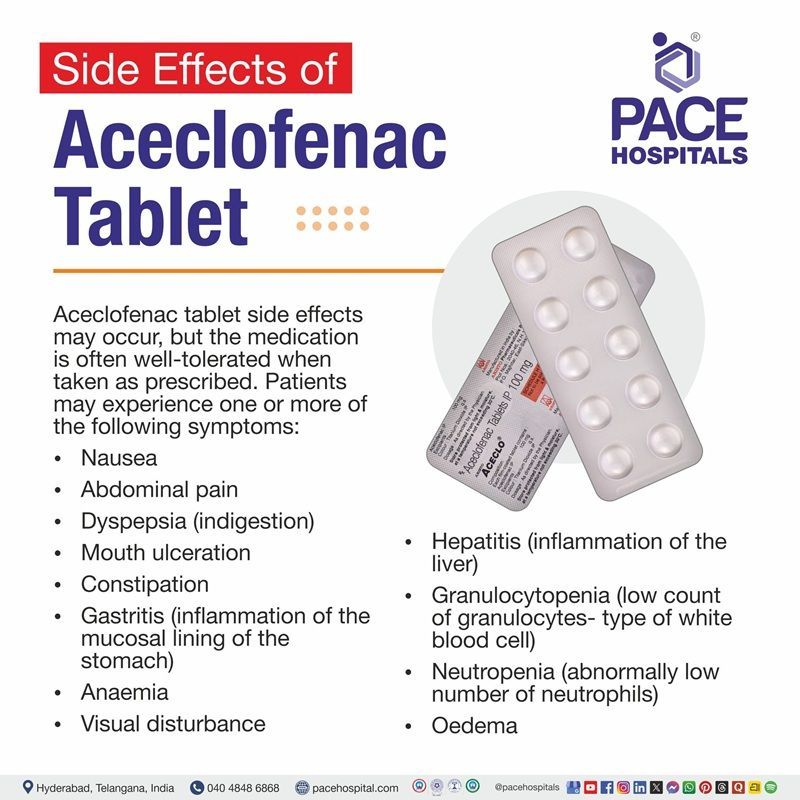
Aceclofenac Side Effects
Aceclofenac tablet side effects may occur, but the medication is often well-tolerated when taken as prescribed. Patients may experience one or more of the following symptoms:
Most common side effects
- Nausea
- Abdominal pain
- Dyspepsia (indigestion)
- Diarrhea
- Dizziness
- Raised hepatic enzymes
- Unusual side effects
- Mouth ulceration
- Vomiting
- Constipation
- Gastritis (inflammation of the mucosal lining of the stomach)
- Pruritus (skin itching)
- Dermatitis
- Flatulence (farting)
- Urticaria (rash)
Rare side effects
- Anaemia
- Visual disturbance
- Dyspnea (shortness of breath)
Very rare side effects
- Haemolytic anaemia
- Thrombocytopenia (low platelet count in the blood)
- Depression
- Vertigo
- Hepatitis (inflammation of the liver)
- Granulocytopenia (low count of granulocytes- type of white blood cell)
- Neutropenia (abnormally low number of neutrophils)
- Oedema
NOTE: If any of the above symptoms are noticed, it is recommended to contact the doctor concerned immediately.
Aceclofenac Dosage
Aceclofenac is used to treat autoimmune conditions such as rheumatoid arthritis, osteoarthritis and ankylosing spondylitis.
Aceclofenac dosage for adults
- Aceclofenac is available as film-coated tablets, white to off-white, round, biconvex, plain on both sides.
- The recommended dosage for adults is 200mg daily, taken twice daily in divided doses of 100mg in the morning and 100mg in the evening.
Aceclofenac dosage in paediatrics
There are no clinical studies available on the use of Aceclofenac, so it is not recommended in children.
Aceclofenac dosage in elderly patients
- Older patients are at greater risk of cardiovascular, hepatic, and renal dysfunction.
- The use of Aceclofenac may increase the risk of severe adverse effects. So, in this case, if Aceclofenac is considered necessary, then the lowest effective dose with the shortest duration is preferred; such patients need to be monitored closely for GI bleeding during aceclofenac treatment.
- The pharmacokinetics of Aceclofenac are not altered in elderly patients. So, it is not required to adjust the dose or dose frequency.
Aceclofenac dosage in hepatic/renal impairment
- There is no evidence that dosage needs to be adjusted in mild renal impairment, but use with caution with the other NSAIDs
- There is some evidence that the dose needs to be adjusted in patients with compromised liver function, and studies suggest that the initial 100mg dose should be used.
Aceclofenac dosage for fertility, pregnancy and lactation
The use of Aceclofenac may impair female fertility, and it is not recommended in patients who are attempting to conceive.
- There is no information on the use of Aceclofenac in pregnancy. Still, some epidemiological studies show the use of Aceclofenac may exert adverse effects and increased risk of miscarriage, cardiac malformation, or gastroschisis, which is a congenital disability where a baby is born with a small hole in the belly near the umbilical cord.
- Aceclofenac should be avoided in pregnancy unless it outweighs the risks to the fetus.
- There is no evidence of Aceclofenac secretion into breast milk during breastfeeding.
Aceclofenac Overdose
The following symptoms can be seen in patients because of the overdose of Aceclofenac.
- Headache
- Nausea
- Vomiting
- Epigastric pain
- Gastrointestinal irritation
- Gastrointestinal bleeding
- Rarely diarrhea
- Drowsiness
- Dizziness
- Hypotension
- Respiratory depression
- Fainting
- Occasionally convulsions
NOTE: In case of significant poisoning, mild renal and hepatic failure can occur.
Overdose can be treated symptomatically as required. Within 1 hour of ingestion of an aceclofenac overdose, activated charcoal can be considered. In adults, gastric lavage can be used; it is a procedure that removes ingested toxins from the stomach by using a large tube through the mouth/nose, flushing with water/saline.
Kidney and liver function need to be closely monitored to avoid impairment of either organ. Patients experiencing prolonged or frequent convulsions can be treated with intravenous (i.v.) diazepam.
Aceclofenac Contraindications
Contraindications of Aceclofenac in the following conditions are mentioned below:
- Patients who experience hypersensitive symptoms on consumption of Aceclofenac and are sensitive to any of the excipients of the Aceclofenac tablet should avoid it.
- Patients with a history of asthma, rhinitis, angioedema or urticaria in response to ibuprofen, salicylates, and other NSAIDs should avoid them.
- In patients with active gastrointestinal bleeding, in case of peptic ulcer, or those with any bleeding disorders, Aceclofenac is strictly prohibited.
- Aceclofenac is contraindicated in patients suffering from congestive heart failure.
- Aceclofenac is not preferred in cases of hepatic and renal insufficiency
- During the last trimester of pregnancy, use of Aceclofenac is not advisable due to the potential risks to the fetus.
Warnings and Precautions of the Aceclofenac Tablet
- Bronchial asthma: Patients with or previously with bronchial asthma should use Aceclofenac with caution due to the risk of bronchospasm.
- Gastrointestinal disorders: GI bleeding, ulceration of intestinal mucosa have proven to be fatal during the treatment with or without symptoms and patients having a previous history of GI disorders.
- Systemic lupus erythematosus (SLE) and mixed connective disorders: In such patients, the immune system attacks healthy tissues, affecting the organs like joints, skin, kidneys and brain, leading to severe fatigue and joint pains, with a risk of aseptic meningitis (inflammation of the brain and spinal meninges).
- Fertility: The use of Aceclofenac may impair fertility in women and is not recommended for patients who are trying to conceive.
- Hypersensitivity reactions: Patients who are sensitive to Aceclofenac and its excipients in the tablet formulation may experience allergic reactions when used; therefore, it is not advisable.
- Renal insufficiency: There is no evidence that the dose of Aceclofenac needs to be adjusted in mild renal impairment, but use with caution with the other NSAIDs
- Hepatic insufficiency: There is some evidence that the Aceclofenac dose should be reduced in hepatic impairment, and the initial dose suggested is 100mg.
Aceclofenac Interactions
When two or more pharmaceuticals react, it is termed as drug interaction, when a drug and Food interacts, it is called as food interaction. An interaction between a medication and a disease is called a disease-drug interaction.
Drug-drug interactions
- Aceclofenac may enhance the effect of anticoagulants such as warfarin.
- Cardiac glycosides, such as digoxin, used in heart failure, may exacerbate heart failure and reduce glomerular filtration rate (GFR), thereby increasing digoxin levels in the blood.
- Aceclofenac with cyclosporin may increase the risk of nephrotoxicity.
- Use of corticosteroids with Aceclofenac increases the risk of gastrointestinal ulceration or bleeding.
- Zidovudine increases the risk of haematological toxicity with Aceclofenac use.
- Concomitant use of two or more NSAIDs, such as aspirin, may increase the risk of adverse effects.[PH15.1]
Drug food interactions
- There are no known food interactions with the Aceclofenac tablet, but it is advisable to take it with or after meals to reduce the risk of gastric irritation.
Drug disease interactions
- Patients having a history of bronchial asthma with the use of Aceclofenac may experience exacerbation of bronchospasm.
- Use of Aceclofenac in mild to moderate renal impairment may cause deterioration of renal function, so in this case, the lowest effective dose is preferred, and renal function should be monitored regularly. Renal impairment can be reversed on withdrawal of Aceclofenac.
- Patients with mild to moderate liver insufficiency who use Aceclofenac may experience symptoms such as eosinophilia, rash, abnormal LFTs, and hepatic porphyria (a genetic liver disorder), which Aceclofenac use may trigger. Hepatic function should be monitored closely, and Aceclofenac should be avoided in such cases. Hepatitis may also occur without any symptoms.
- High blood pressure, cerebrovascular bleeding, oedema, heart failure- use with caution, and if significantly required, the lowest effective dose for a shorter duration is preferred.
- GI bleeding, ulceration/perforation can be fatal with the use of Aceclofenac.
- Ulcerative colitis or Crohn’s disease (it is a chronic inflammatory bowel disease mainly affecting the small and large intestines) may be exacerbated with the use of Aceclofenac.
- Patients with SLE and mixed connective tissue disease, with the use of Aceclofenac, are at risk of aseptic meningitis. In this condition, the brain and spinal cord linings are inflamed.
Aceclofenac Storage
Aceclofenac tablets should be stored below 30 °C and protected from sunlight. Keep the medicine out of the sight and reach of children, and do not use it after the expiration date, as indicated on the strip.
Frequently Asked Questions on Aceclofenac Tablet
Is Aceclofenac safe?
Yes, Aceclofenac is considered to be safe with a lower effective dose for a shorter duration, but it is contraindicated in the following conditions:
- Last trimester of pregnancy
- Severe congestive heart failure
- Asthma attack
- Urticaria- itchy red rash on the skin due to an allergic reaction
- Liver or kidney failure
- Active or having a history of GI bleeding, peptic ulcer, etc.
What is the use of Aceclofenac and paracetamol tablets?
Both Aceclofenac and paracetamol combination is used to relieve pain. Still, Aceclofenac primarily exerts anti-inflammatory effects in chronic autoimmune conditions such as rheumatoid arthritis and osteoarthritis, where patients experience severe joint pain, stiffness, and inflammation. Whereas Paracetamol is used to treat mild to moderate pain, including headache, migraine, sore throat, toothache, and rheumatic aches and pains. The most common role of paracetamol is to treat fever and feverish cold (antipyretic effect).
What is Aceclofenac used for?
Aceclofenac is used in the treatment of pain and inflammation associated with chronic autoimmune disorders such as rheumatoid arthritis, osteoarthritis and ankylosing spondylitis.
Is acelofenac a painkiller?
Yes, Aceclofenac is a painkiller used to relieve pain in most cases, such as rheumatic and osteoarthritis, where pain is associated with inflammation and joint stiffness.
Is Aceclofenac safe during pregnancy?
Aceclofenac is not recommended in the third trimester of pregnancy because it exposes the fetus to cardiopulmonary toxicity (with premature closure of the ductus arteriosus and pulmonary hypertension) and also inhibits the uterine contractions, resulting in delayed labour.
Is Aceclofenac an antibiotic?
No, Aceclofenac is not an antibiotic; it belongs to the class NSAIDs (NON-STEROIDAL ANTI-INFLAMMATORY DRUGS) and is classified as a cyclooxygenase COX-2 inhibitor because it mainly acts by inhibiting the COX-2 enzyme, suppressing the release of prostaglandins. Overall, Aceclofenac helps reduce pain and inflammation.
Is Aceclofenac safe in Hepatic disease?
Patients having a history of mild to moderate hepatic insufficiency may experience abnormal liver function tests and symptoms such as eosinophilia and rash with the use of Aceclofenac, and hepatitis may also occur without any warning symptoms. Patients with hepatic porphyria, a genetic disorder of the liver, may trigger an attack with the use of Aceclofenac. So Aceclofenac is not recommended in patients with prior hepatic impairment.
Is Aceclofenac safe for the kidneys?
The use of Aceclofenac in patients with mild to moderate renal insufficiency may worsen renal function; therefore, renal function should be closely monitored, and the lowest effective dose should be used. The renal function is usually reversible on withdrawal of Aceclofenac.
Is Aceclofenac safe for heart patients?
Patients with a history of hypertension (high blood pressure), congestive heart failure (a condition where fluid accumulation and oedema of limbs can be seen in patients), should not use Aceclofenac. So Aceclofenac should be used with caution, as its risks increase with dose and duration of exposure.
Can Aceclofenac be used for stomach pain?
No, Aceclofenac is not used to relieve stomach pain because Aceclofenac can cause gastrointestinal side effects such as bleeding, abdominal pain, hematemesis (blood in vomiting) and esophagitis (inflammation of the oesophagus).
Is Aceclofenac safe in breastfeeding?
There is no evidence that Aceclofenac is secreted into the milk during breastfeeding, so it is not recommended to use it during breastfeeding.
Is Aceclofenac an NSAID?
Yes, Aceclofenac belongs to the class of NSAIDs (non-steroidal anti-inflammatory drugs). It is classified as a COX-2 inhibitor because it primarily inhibits the COX-2 enzyme, thereby suppressing prostaglandin release. Overall, Aceclofenac helps reduce pain and inflammation.
What are the effects of Aceclofenac while driving and operating machines?
Some undesirable adverse effects such as drowsiness, dizziness, visual disturbances, vertigo and fatigue are common after taking Aceclofenac tablet. If patients experience any of these symptoms, they should not drive or use machines.
Is Aceclofenac safe in gastrointestinal disorders?
Use of Aceclofenac is fatal in patients with a history of gastrointestinal disorders suggestive of gastrointestinal ulceration, bleeding or perforations with or without warning symptoms at any time during the treatment.
Can Aceclofenac be taken with food?
Yes, Aceclofenac can be taken with or after food to reduce gastric irritation, and clinical trials have not reported any food interactions.
What are the symptoms of an overdose of Aceclofenac?
The common symptoms of overdosing on Aceclofenac are nausea, headache, vomiting, depression, gastrointestinal bleeding and irritation, coma, drowsiness, disorientation, rarely diarrhoea, excitation, fainting, tinnitus (hearing sensation in ears), hypotension (low blood pressure), and occasionally seizures. In case of significant poisoning of Aceclofenac, kidney and liver damage occur.
If, unfortunately, patients consume too many Aceclofenac tablets, contact the concerned doctor immediately or go to the nearest hospital casualty department.
Is Aceclofenac recommended in children?
Aceclofenac tablets are not recommended for use in children under 18 years of age because of a lack of clinical evidence.
What happens if the dose of Aceclofenac is missed?
If the dose of Aceclofenac is missed, do not worry; take the next dose at the usual time and do not double the dose to make up for the missed dose.
What happens if you stop taking Aceclofenac tablets?
Do not stop the medication without informing the concerned doctor. Discuss with the doctor concerned or pharmacist for further queries about the use of Aceclofenac.
Share on
Request an appointment
Fill in the appointment form or call us instantly to book a confirmed appointment with our super specialist at 04048486868
Appointment request - health articles
Recent Articles