Bronchoscopy Procedure Cost in Hyderabad, India – 2026 Guide
Get a Cost Estimate for Bronchoscopy Procedure
Procedure & Surgery Cost Pages
All You Need To Know About Bronchoscopy Procedure
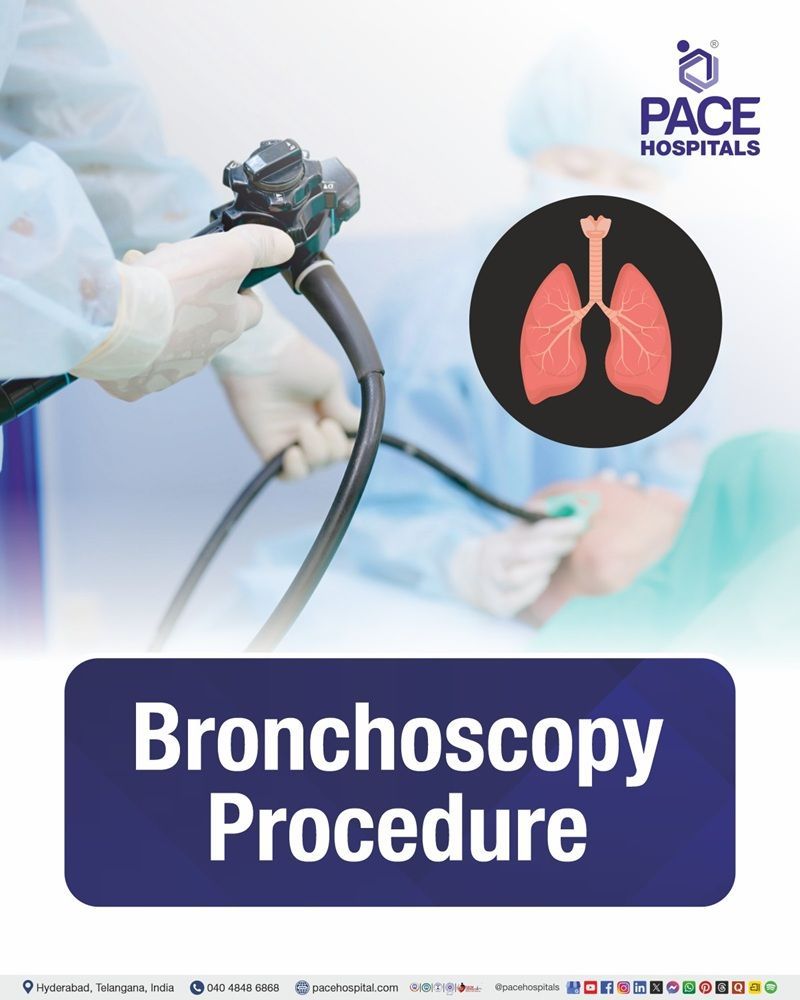
A minimally invasive diagnostic and therapeutic procedure called Bronchoscopy is performed to visualize the lungs and airways. It aids medical professionals in diagnosing, assessing, and treating a range of respiratory disorders involving the lungs, bronchi, and trachea.
To get a clear picture of the respiratory tract, a thin, flexible tube known as a bronchoscope—which has a light and camera is inserted through the mouth or nose into the airways.
The process enables the physician to obtain fluid or tissue samples (biopsy), remove foreign objects or mucus plugs, manage specific types of airway bleeding, and perform additional therapeutic measures as needed.
Lung infections, chronic coughing, unexplained blood coughing (hemoptysis), lung nodules or masses, airway narrowing, and probable lung cancer or other respiratory disorders are all diagnosed using bronchoscopy.
Bronchoscopy Cost in India
On average, the Bronchoscopy Test cost in India ranges from ₹4,500 to ₹35,000 (approximately US $55 to US $425). However, the actual cost may vary depending on several factors, including:
- Type of bronchoscopy done (Flexible bronchoscopy, Rigid bronchoscopy, or Interventional bronchoscopy)
- Whether the procedure is diagnostic or therapeutic (Biopsy, bronchoalveolar lavage, removal of a foreign body, or airway stenting)
- Age of the patient and their general well-being along with the state of their lungs
- Duration and complexities of the bronchoscopy process
- Nature of the hospital (Private, Corporate, or Trust Hospitals)
- Fees of the hospital, including fees of day-care and inpatient admission along with other facilities
- Need for anesthesia or sedation along with the experience of the pulmonologist and anesthesiologists involved
- Pre- and post-procedure investigations done before and after the procedure
- Further laboratory and imaging investigations (in case biopsies are taken)
- Insurance approval for cashless treatment or corporate approvals
Bronchoscopy Cost in Hyderabad, Telangana
On average, the cost of a Bronchoscopy Procedure in Hyderabad ranges from ₹10,000 to ₹28,000 (approximately US $104 to US $291). These rates offer a competitive and cost effective option compared to other top hospitals in the city, with advanced surgical care and personalized treatment planning readily available.
However, the cost of a bronchoscopy procedure in Hyderabad is influenced by several factors, such as:
- Type of bronchoscopy being performed (Flexible or rigid bronchoscopy)
- Objectives of the procedure, which include diagnostic workup or therapeutic measures
- Whether further procedures need to be conducted, such as bronchoalveolar lavage (BAL), endobronchial biopsy (EBB), transbronchial lung biopsy (TBLB), endobronchial ultrasound (EBUS), foreign body removal, or stent placement
- Hospital setup, bronchoscopy center, and availability of infrastructure
- Pulmonologist’s experience, anesthesiologist cooperation, and team approach
- Types of anesthesia or sedation needed while performing the procedure
- Insurance facilities and corporate clearance for cashless hospitalization
- Nature of pre-procedural and post-procedural investigations and monitoring
- Management of complications that might arise during or after the procedure
Cost Breakdown According to Type of Bronchoscopy Procedure
- Flexible Bronchoscopy (Diagnostic) – ₹ 4,500 – ₹ 15,000 (US $55 – US $180) (approx.)
- Bronchoscopy with Biopsy / BAL (Bronchoalveolar Lavage) – ₹ 14,000 – ₹ 22,000 (US $170 – US $270) (approx.)
- Rigid Bronchoscopy (Therapeutic / Foreign Body Removal) – ₹ 18,000 – ₹ 28,000 (US $220 – US $340) (approx.)
- Bronchoscopy with Endobronchial-Ultrasound (EBUS) – ₹ 20,000 – ₹ 35,000 (US $245 – US $425) (approx.)
Note: These are estimated costs that could change depending on standard practice patterns. After a thorough evaluation by the pulmonology and bronchoscopy team, which includes an assessment of the patient's medical condition, the indication for bronchoscopy, diagnostic or therapeutic requirements, anesthesia or sedation needs, and expected hospital stay, the precise cost for each patient is determined.
Additional Information: The type of bronchoscopy (diagnostic or therapeutic), whether additional procedures like bronchoalveolar lavage (BAL), biopsy, or EBUS-guided sampling are carried out, the complexity of the procedure, the type of anesthesia or sedation used, the length of the procedure, hospitalization requirements, laboratory and pathology investigations, and the expertise of the pulmonologist and multidisciplinary team are some of the factors that can affect the cost of a bronchoscopy procedure. This ensures that every patient gets a clear cost estimate based on their clinical needs and a customized treatment plan.
Breakdown of Bronchoscopy Test Costs
The type of bronchoscopy (rigid or flexible), whether additional procedures such as biopsy, bronchoalveolar lavage (BAL), endobronchial ultrasound (EBUS), or foreign body removal are performed, the patient's general health, and the hospital's facilities all affect the cost of a bronchoscopy. The costs usually related to a bronchoscopy procedure are broken down in detail below:
Pre-Procedure Costs
- Consultation Fees: Depending on the hospital and the specialist's level of experience, consultation fees with a pulmonologist (chest physician) or interventional pulmonologist are charged.
- Diagnostic Tests: This includes blood tests, a chest CT scan or X-ray, an electrocardiogram (ECG) if necessary, and other procedures to assess the lungs and decide whether a bronchoscopy is necessary.
- Routine Pre-Procedure Panel (for Sedation or Anesthesia): Pre-procedure laboratory tests, such as Complete Blood Count (CBC), Liver Function Test (LFT), Kidney Function Test (KFT), blood glucose, coagulation profile (PT/INR, aPTT), and other tests necessary to determine the patient's suitability for sedation or general anesthesia.
- Pre-Procedure Evaluation, Medical History, and Physical Examination: Comprehensive assessment of the patient's medical history, medication (especially anticoagulants), allergies, oxygen saturation, heart and lung functions, and procedural readiness. The pulmonologist obtains informed consent after explaining the procedure risks and benefits to the patient.
Bronchoscopy Procedure Costs
- Procedure Room and Hospital Charges: Costs associated with monitoring equipment, disposables, the bronchoscopy room or the operating room, daycare admission, and hospital stay if required.
- Bronchoscopy Procedure Charges: Depending on the patient's condition, the costs of performing flexible or rigid bronchoscopy include diagnostic airway examination and any therapeutic interventions, such as bronchoalveolar lavage (BAL), tissue biopsy, transbronchial biopsy, endobronchial biopsy, endobronchial ultrasound (EBUS)-guided needle aspiration, foreign body removal, mucus plug removal, airway stent placement, or bleeding control.
- Sedation/Anesthesia and Medical Team Fees: These include payments for local anesthesia combined with conscious sedation or general anesthesia (if necessary), as well as fees for anesthesiologists, pulmonologists, nurses, and the procedure's technical support team.
- Laboratory and Pathology Charges (if applicable): Additional fees for histopathological investigation, microbiological cultures, cytology, molecular testing, or other laboratory studies of tissue or fluid samples obtained during bronchoscopy are included in the laboratory and pathology charges (if applicable).
Post-Procedure Care Costs
- Recovery Room Monitoring: Cost for monitoring respiration, heart rate, blood pressure, and oxygen saturation after the procedure until the effects of sedation or anesthesia wear off.
- Hospital Stay: Daycare fees for most diagnostic bronchoscopies, or hospital costs if complications need to be managed or overnight monitoring is necessary.
- Follow-Up Visits: Routine follow-up appointments to go over the results of bronchoscopies, biopsy or lab reports, current medication regimens, and the handling of any underlying lung conditions or consequences from procedures.
This cost structure ensures clarity and will help patients plan accordingly for the Bronchoscopy procedure. The cost estimate provided by PACE Hospitals, Hyderabad is customized on an individual basis depending on the patient’s health conditions, the complexity of the procedure, and other diagnostic or therapeutic interventions that might be needed ensuring high-quality care with transparent pricing.
Who Needs a Bronchoscopy Procedure?
Not everyone who has a cough or respiratory issue needs a bronchoscopy. It is advised that a physician perform certain therapeutic procedures, collect tissue or fluid samples for diagnosis, inspect the airways, or determine the cause of chronic respiratory problems.
Common Conditions Indicating the Need for a Bronchoscopy Procedure:
- Persistent or Unexplained Cough: A cough that persists for several weeks even after receiving proper care, particularly if the cause is still unknown.
- Abnormal Chest Imaging Findings: Suspicious findings on chest X-ray or CT scan include lung nodules, masses, persistent lung infiltrates, or enlarged lymph nodes that warrant further evaluation.
- Coughing Up Blood (Hemoptysis): To locate the bleeding's origin and ascertain its underlying cause.
- Suspected Lung Infection: When sputum tests are inconclusive, samples from the lungs or airways are collected to diagnose bacterial, viral, fungal, or tuberculosis infections.
- Difficulty Breathing or Airway Obstruction: To assess airway constriction, obstruction, tumors, foreign substances, or other problems.
- Suspected Lung Cancer or Other Lung Diseases: To collect biopsy samples for diagnosing respiratory conditions such as sarcoidosis, lung cancer, and interstitial lung diseases.
- Foreign Body Aspiration: The process of finding and removing an ingested foreign object from the airways is known as "foreign body aspiration."
- Monitoring After Lung Transplantation or Airway Procedures: To evaluate recovery and identify problems, infection, or rejection after lung transplantation or airway surgery.
- Therapeutic Bronchoscopy: To reduce airway obstruction caused by tumors or strictures, remove mucus plugs, manage airway bleeding, or implant airway stents.
Who is Not Eligible for Bronchoscopy Procedure?
Despite being a routine and generally safe treatment, bronchoscopy may not be appropriate or may need to be postponed in some circumstances:
- Severe Uncontrolled Heart or Lung Conditions: Risk of complications during bronchoscopy may be more common in patients with unstable heart disease, recent heart attacks, severe cardiac arrhythmias, uncontrolled heart failure, or severe respiratory failure. Only after the condition has stabilized, procedure should be performed.
- Severe Blood Clotting Disorders: Bleeding may be more likely in people with uncontrolled bleeding disorders, markedly low platelet counts, or those taking blood thinners without proper medical supervision, especially if a biopsy is scheduled. Until the risk of bleeding is reduced, the procedure might be postponed.
- Active Severe Respiratory Distress: Patients who suffer from severe hypoxemia, acute respiratory distress, or severe asthma attacks would probably not be good candidates for bronchoscopy as long as they have not recovered to the point that they are medically stable.
- Unstable Medical Conditions or Severe Infections: Bronchoscopy may be postponed in patients with uncontrolled high fever, severe sepsis, or other unstable medical situations until appropriate therapy has been finished and the patient's condition has stabilized.
- Inability to Tolerate the Procedure or Sedation: Bronchoscopy may not be indicated for persons who cannot safely tolerate sedation due to severe allergic reactions to sedative drugs, inability to comply during the procedure, or other medical conditions that significantly increase anesthesia-related risks.
To decide whether bronchoscopy is appropriate and to ensure the procedure is performed safely with the lowest possible risk of complications, a thorough evaluation by a Pulmonologist (chest physician) or the treating specialist is crucial.
Bronchoscopy – How is the Procedure Done?
Depending on the patient's condition and the procedure's goal, bronchoscopy is typically carried out under local anesthesia with sedation or, in certain situations, under general anesthesia. Usually, the process steps consist of:
- Pre-Procedure Evaluation: Evaluation of medical history, physical examination, laboratory investigations, and diagnostic modalities such as chest X-ray or CT scan is performed to determine whether the patient needs bronchoscopy and to assess the patient's fitness for the procedure.
- Anesthesia and Preparation: To numb the airways, a local anesthesia is sprayed into the mouth, throat, and nose. To keep the patient calm and comfortable throughout the surgery, sedation is given. General anesthesia may be utilized in complex or therapeutic situations.
- Bronchoscope Insertion and Airway Examination: A thin, flexible bronchoscope is carefully inserted by the mouth or nose and advanced into the bronchi and windpipe (trachea). For abnormalities such as inflammation, tumors, hemorrhages, infections, mucus plugs, or foreign objects, the doctor closely inspects the airways.
- Diagnostic or Therapeutic Procedures: For laboratory analysis, tissue samples (biopsy), bronchial washings, bronchoalveolar lavage (BAL), or brushings are obtained as needed. Additionally, therapeutic procedures such as airway stent placement, hemorrhage control, and the removal of foreign substances or mucus plugs may be carried out.
- Monitoring and Recovery: After this process, the patient will be observed until the effects of sedation wear off. Patients are normally released on the same day; however, some patients with other illnesses or undergoing complicated therapeutic bronchoscopy may require overnight hospitalization or short-term supervision.
Experienced pulmonologists perform bronchoscopy at PACE Hospitals in Hyderabad, assisted by anesthesiologists, expert nurses, and state-of-the-art bronchoscopy facilities, ensuring safe diagnosis, efficient treatment, and thorough post-procedure care.
Types of Bronchoscopy Procedure
Depending on the patient's symptoms, the suspected lung condition, and the part of the airways to be examined or treated, various bronchoscopy techniques are performed. The type of procedure also influences the total treatment strategy and cost.
- Flexible Bronchoscopy: The procedure is frequently performed using flexible bronchoscopy under local anesthesia and sedation. The procedure is performed to diagnose lung conditions, obtain a biopsy/BAL, remove a mucus plug, and examine chronic cough, infections, or abnormalities seen on imaging.
- Rigid Bronchoscopy: This is carried out with a robust metal bronchoscope while under general anesthesia. Large foreign body removal, control of major airway hemorrhage, treatment of airway obstruction, and sophisticated therapeutic measures are usually advised.
- Diagnostic Bronchoscopy: This procedure is performed to determine the cause of abnormalities in the lungs or airways. To identify infections, inflammation, interstitial lung disease, or lung cancer, procedures such as bronchoalveolar lavage (BAL), bronchial brushing, endobronchial biopsy, or transbronchial lung biopsy may be performed.
- Therapeutic Bronchoscopy: It is used not just for diagnosis but also for treatment of airway diseases. Airway stent implantation, balloon dilatation, tumor debulking, laser therapy, electrocautery, cryotherapy, and airway bleeding control are some of the possible procedures.
Note: The type of procedure (diagnostic or therapeutic), whether a flexible or rigid bronchoscope is used, whether a biopsy or other advanced interventions are required, the type of anesthesia used, the complexity of the condition, and the length of hospital stay all affect the cost of bronchoscopy. A standard flexible diagnostic bronchoscopy is typically less expensive than therapeutic bronchoscopy and then procedures requiring general anesthesia or additional interventions.
Post-Bronchoscopy Procedure Care Tips
Proper post-procedure care is crucial to promote recovery and lower the risk of complications following a bronchoscopy procedure:
- It is advisable to attend all follow-up sessions to discuss the bronchoscopy findings, any biopsies performed, and your recovery.
- It is advisable to avoid taking any food or liquid intake until the numbness in your throat wears off, which should take 1-2 hours.
- It is advisable to begin with small amounts of fluid, such as water, and soft foods before returning to your regular diet, unless otherwise advised by your doctor.
- It is recommended not to drive, operate machines or consume alcohol for 24 hours in case of sedation or anesthesia during the procedure.
- If any medication is prescribed after the procedure, such as antibiotics or analgesics, it is advisable to use it as recommended and for the full prescribed period.
- It is advised to refrain from smoking or inhaling second-hand smoke for at least 24-48 hours because it might irritate the respiratory tract.
- The patient needs to consult the doctor without delay if there is any persistent fever, chest pain, difficulty breathing, bloody cough, or worsening symptoms after the procedure.
- It is recommended to follow the post-procedure recommendations provided by the medical staff to ensure a smooth recovery and identify any potential complications early.
Following these instructions ensures the best possible outcomes after a bronchoscopy and promotes a safe recovery.
Key Factors Influencing Bronchoscopy Procedure Cost
Various medical and hospital-related factors influence the cost of bronchoscopy. It becomes easier for patients to plan their treatment and estimate the total cost when they know these factors.
Pre-Procedure Evaluation
The total cost will cover all aspects from consultation to evaluation. These include consultations, physical examinations, blood tests, ECGs, chest imaging (CT scans/X-rays), and other pre-procedure assessments.
Insurance Coverage
The level of health insurance coverage or corporate cashless approval may significantly reduce out-of-pocket costs for a bronchoscopy.
Hospital and Location
Because of their advanced infrastructure and specialized facilities, bronchoscopy performed at multispecialty or tertiary care hospitals in large cities like Hyderabad may be more expensive than those performed at smaller hospitals or diagnostic centers.
Post-Procedure Care
The entire cost of treatment includes post-procedure observation, follow-up consultations, recommended drugs, and additional examinations, if necessary.
Complications During the Procedure
Even though bronchoscopy is usually safe, unforeseen complications such as bleeding, pneumothorax (collapsed lung), infection, or the need for emergency care could increase the total cost.
Pulmonologist Expertise
Due to their proficiency in treating complicated airway problems, highly experienced pulmonologists or interventional pulmonologists may charge higher professional fees for bronchoscopy.
Type of Bronchoscopy Procedure
The cost will depend on the type of bronchoscopy performed, such as flexible bronchoscopy, rigid bronchoscopy, bronchoscopy with biopsy, bronchoalveolar lavage (BAL), endobronchial ultrasound (EBUS)-bronchoscopy, or therapeutic bronchoscopy, as each procedure varies in complexity and equipment requirements.
Anesthesia and Sedation Requirements
Due to variations in prescription drugs, anesthesiologist fees, and monitoring needs, the type of anesthesia used—such as general anesthesia or local anesthesia with conscious sedation—affects the total cost of treatment.
Patient's Medical Condition
The complexity of the process and related expenses may be influenced by the patient's overall health, age, underlying medical conditions, lung disease, and the purpose of the bronchoscopy (diagnostic or therapeutic).
Why Choose PACE Hospitals for Bronchoscopy Procedure in Hyderabad, India?
PACE Hospitals, Hyderabad, is a trusted center for sophisticated bronchoscopy procedure that provides complete respiratory care with skilled professionals and cutting-edge diagnostic tools:
- Experienced pulmonologists, anesthesiologists, and well-trained nurses specialized in bronchoscopy procedure
- A modern bronchoscopy laboratory furnished with advanced imaging and diagnostic tools
- Thorough patient evaluation before the procedure and specialized after-procedure monitoring care
- Patient-centered approach with customized treatment programs, realistic cost information, and insurance/cashless treatment facilities where applicable
PACE Hospitals offers professional pulmonary care, affordable treatment costs, and safe, high-quality diagnostic and therapeutic bronchoscopy services for patients searching for the Best Bronchoscopy Hospital in Hyderabad, Telangana, India.
Financial Assistance and Payment Plans at PACE Hospitals
Bronchoscopy should be affordable and accessible without financial burden. To streamline the treatment process, our staff assists patients with insurance approvals and cashless hospitalization support.
- Cashless admission in hospital where bronchoscopy is available through empanelled insurers and TPAs.
- Help in pre-authorization, documentation of insurance, and admission processes to ensure minimize delays
- Financial assistance if the patients insurance does not cover cashless hospitalization.
- Detailed, clear estimates of procedure costs based on the type of bronchoscopy (therapeutic/diagnostic), anesthesia, and other procedures such as biopsy or bronchoalveolar lavage (BAL).
- Assistance for people who have corporate health insurance coverage and those eligible under government healthcare schemes to help reduce out-of-pocket expenses.
Success Rate of Bronchoscopy Procedure
Bronchoscopy is a very effective procedure for both diagnosis and treatment. The effectiveness rate of the Bronchoscopy Procedure ranges from approximately 90% to 99%. This is influenced by the reason the procedure is being performed, the individual's lung status, and the expertise of the healthcare team. The flexible bronchoscopy process is effective for diagnosing airway diseases, infections, tumours, and unexplained respiratory conditions, while therapeutic bronchoscopy is effective in relieving airway obstruction and managing selected pulmonary conditions.
Following a successful bronchoscopy procedure, patients may experience:
- Diagnosis of lung and airway disease conditions
- Improved breathing with therapeutic interventions
- Early identification of infection, cancer, bleeding, or airway abnormality so treatment is administered promptly
The complexity of the disease being assessed, the patient's medical condition, proper patient preparation, and compliance with post-procedure instructions are some of the factors that affect the overall outcome of bronchoscopy. It is advised to follow up with the treating pulmonologist regularly to review the findings and decide whether additional treatment is necessary.
Request a Personalized Treatment Cost Estimate
Every patient's medical condition and treatment plans are unique, which means the overall cost can vary. To receive an accurate estimate, our specialists evaluate your diagnosis, medical history, recommended treatment, and any necessary investigations before providing a detailed cost breakdown.
Whether you are planning a diagnostic test, treatment, or surgery, our team is here to help you understand the expected expenses and guide you through every step of the process.
Get in touch with us today to request a personalized treatment cost estimate.