Circumcision Surgery Cost in Hyderabad, India – 2026 Guide
Get a Cost Estimate for Circumcision Surgery
Procedure & Surgery Cost Pages
All You Need To Know About Circumcision Surgery
Circumcision is a minor surgical procedure most often performed in males, in which the foreskin (prepuce) covering the head (glans) of the penis is removed. The term “circumcised” may also apply to females in certain cultural or medical contexts, referring to the removal of the female prepuce (foreskin) or, in some practices, partial or complete modification of external genital structures, including the labia minora and clitoris (female genital organ).
Male Circumcision procedure is medically recommended when conservative treatments fail to relieve pain, recurrent infections, or urination problems with conditions such as phimosis (tight foreskin causing pain or urination problems), recurrent balanitis (frequent inflammation or infection of the glans or foreskin), paraphimosis (foreskin trapped behind the glans leading to swelling and restricted blood flow), lichen sclerosus / BXO (chronic scarring and tightening of the foreskin), and penile cancer or pre-cancerous lesions (requiring removal of affected foreskin tissue).
The best age for circumcision surgery is usually in neonates or newborns and young infants, typically within the first few days to weeks after birth, as performing the circumcision surgery procedure early is generally associated with easier recovery, fewer complications, and faster healing compared to later ages.
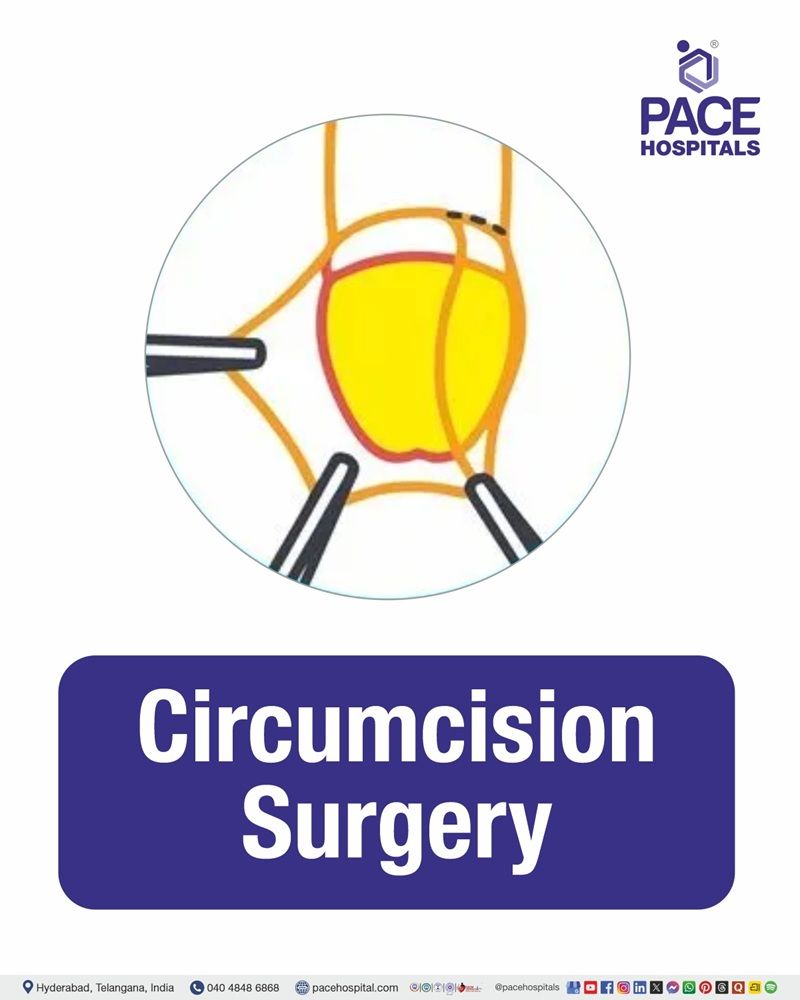
Circumcision Surgery Cost in India
On average, the cost of Circumcision Surgery in India ranges from ₹10,000 to ₹60,000 and above (approximately US $105 – US $634). The actual circumcision adult’s surgery cost in India and circumcision surgery for kids cost may vary depending on several factors, including:
- Age of the patient and overall health status
- Types of adult circumcision procedures include traditional surgical methods (freehand techniques) such as dorsal slit technique or sleeve technique, neonatal/infant circumcision surgery using devices, like Plastibell circumcision, Mogen clamp circumcision, or Gomco circumcision, and advanced surgical techniques applied for complex or specialized cases. Male circumcision styles include high and tight, high and loose, low and tight, or low and loose.
- Based on medical conditions requiring surgery, such as phimosis, recurrent balanitis, paraphimosis, lichen sclerosus / BXO, or penile pre-cancerous/cancerous lesions, these differs from cosmetic or cultural/religious procedures, which are typically self-funded
- Type of hospital, whether private, corporate, or trust-based
- Hospital facilities and room category, including specialized support services
- Anesthesia type and expertise of the surgical team
- Pre-operative evaluations and post-operative care, including laboratory tests and follow-up consultations
- Insurance coverage or corporate approvals for cashless treatment
Circumcision Surgery Cost in Hyderabad, Telangana
On average, the cost of Circumcision Surgery in Hyderabad ranges from ₹12,000 to ₹50,000 and above (approximately US $127 – US $528). However, in some hospitals, the cost may vary depending on the surgical technique, device or clamp-based methods, and whether suturing with stitches, stapler circumcision surgery (e.g., ZSR circumcision), or advanced laser circumcision techniques that are used, with choices made according to patient age, foreskin anatomy, and medical indications.
The overall circumcision surgery cost for adults in Hyderabad and circumcision surgery for kids cost is influenced by several factors, including:
- Age of the patient and overall health status
- Type of circumcision procedure, including adult surgical methods (dorsal slit technique and sleeve technique), neonatal/infant circumcision surgery with device or clamp-based procedures (Plastibell circumcision, Mogen clamp circumcision, Gomco circumcision), and male circumcision styles (high and tight, high and loose, low and tight, low and loose)
- Medical conditions necessitating circumcision, such as phimosis, recurrent balanitis, paraphimosis, lichen sclerosus / BXO, or penile pre-cancerous/cancerous lesions, which may require surgical intervention to restore function, prevent complications, or improve hygiene
- Consumables used, including surgical instruments, sutures, and catheters
- Hospital facility and infrastructure chosen with specialized day-care centres
- Surgeon expertise and multidisciplinary urology care
- Insurance or corporate approvals for cashless services
- Pre-operative evaluations and post-operative care
- Potential complications during or after the procedure
Cost Breakdown According to Types of Circumcision Procedure
- Pediatric Circumcision (Infants & Children) – ₹10,000 – ₹20,000 (US $85 – US $230)(approx.)
- Conventional / Open (Scalpel) Circumcision – ₹13,000 – ₹23,000 (US $190 – US $370) (approx.)
- Device-Assisted Infant/Neonatal Circumcision (Plastibell, Mogen Clamp, or Gomco) – ₹15,000 – ₹25,000 (US $160 – US $265) (approx.)
- Stapler Circumcision / ZSR Circumcision (Quick Recovery Method - Stitchless) – ₹20,000 – ₹30,000 (US $130 – US $320) (approx.)
- Laser Circumcision (Minimally Invasive, Less Bleeding) – ₹25,000 – ₹35,000 (US $160 – US $380) (approx.)
- Standard Adult Circumcision (Dorsal Slit or Sleeve Technique) – ₹28,000 – ₹40,000 (US $190 – US $370) (approx.)
- High/Low and Tight or Loose Male Circumcision Cosmetic Styles – ₹30,000 – ₹50,000 (US $320 – US $530) (approx.)
- Circumcision with Concurrent Correction of Foreskin Disorders (e.g., severe phimosis, BXO) – ₹40,000 – ₹55,000 (US $425 – US $580) (approx.)
- Complex or Revision Circumcision Surgery – ₹45,000 – ₹60,000+ (US $480 – US $635+) (approx.)
Note: These are estimated costs based on commonly performed Circumcision Surgery procedures. The exact cost for an individual patient is determined after a thorough clinical evaluation by the urology or reconstructive urology surgical team, taking into account patient age, foreskin anatomy, anesthesia requirements, and any additional interventions needed.
Additional Information: Circumcision Surgery is performed using standard surgical techniques, including device-based methods, especially for infants and conventional or freehand approaches such as dorsal slit, sleeve resection for adolescents and adults. In some preferred cases, cosmetic or anatomical variations may be applied, such as differences in how much inner foreskin is removed or how much outer skin is retained, based on the desired outcome. The recommended surgical method is performed by a specialized team of skilled urologists, reconstructive surgeons, and anesthesiologists who tailor the surgical approach to the patient's anatomy, overall health, and pre-existing conditions. There are no officially recognized categories, and any differences in method reflect mutualistic individual patient needs and the surgical team's clinical judgment rather than formal categorization.
Breakdown of Circumcision Surgery Costs
The cost of circumcision surgery involves several components and may vary depending on the hospital, surgical technique, patient’s age, overall health, and medical condition. Below is a breakdown of the expenses typically associated with circumcision before, during, and after the procedure.
Pre-Surgery Costs
- Consultation Fees: Charges for consultation with a urologist or reconstructive surgeon may vary depending on the doctor’s expertise and hospital.
- Diagnostic Tests: For infants and newborns, basic investigations may include blood tests and other tests when medically indicated. Adults and older children may require blood tests, urine tests, blood sugar tests, viral marker screening such as HIV and HBsAg, and additional investigations depending on their health condition.
- Pre-Operative Tests: Infants and newborns may require minimal testing, such as a Complete Blood Count (CBC) and pediatric assessment. Adults and older children may undergo CBC, Liver Function Test (LFT), Kidney Function Test (KFT), and coagulation tests such as PT/PTT to assess fitness for surgery and anaesthesia.
- Cardiac and Pulmonary Evaluation: ECG, chest X-ray, or other evaluations may be advised for patients with certain medical conditions or based on age and anaesthesia requirements.
- Medical History and Physical Examination: The surgical team assesses the patient’s overall health, medical conditions, genital area, foreskin, and indication for circumcision to ensure readiness for surgery.
Circumcision Surgery Costs
Hospital Charges: Circumcision is commonly performed as a day-care procedure. Charges may include pre-operative preparation, procedure room or operating theatre use, recovery facilities, and additional monitoring when required.
Baby circumcision cost is generally different from adult circumcision cost because the procedure, anaesthesia requirements, investigations, and recovery needs may vary with age. Adults with underlying medical conditions or those undergoing complex or revision procedures may require additional evaluation and monitoring.
Surgical Procedure: The circumcision procedure cost depends significantly on the technique used. Charges generally include the surgeon’s fee, operating theatre expenses, and instruments or devices required for the procedure.
Conventional circumcision may involve techniques such as dorsal slit or sleeve circumcision. Infant circumcision may use devices such as Plastibell, Mogen Clamp, or Gomco Clamp where appropriate.
Advanced techniques may involve specialised equipment or disposable devices. Therefore, ZSR circumcision cost, stapler circumcision cost, laser circumcision cost, and phimosis circumcision surgery cost may differ from conventional circumcision depending on the technique, equipment, and complexity of the procedure.
Anaesthesia and Surgical Team Fees: Costs may include local, regional, or general anaesthesia, depending on the patient’s age, procedure, and medical requirements, along with anaesthesiologist and surgical team charges.
Disposables and Devices: Sutures, dressings, catheters when required, disposable stapler devices, and other surgical consumables may contribute to the total circumcision surgery cost.
Post-Surgery Care Costs
- Post-Operative Monitoring: Patients are observed after the procedure to ensure safe recovery and identify any immediate complications.
- Hospital Stay: Most circumcision procedures are performed as day-care or outpatient surgeries, allowing patients to return home the same day. Patients undergoing complex procedures or revision circumcision, or those requiring additional medical monitoring, may need a longer hospital stay.
- Medications: Prescribed pain-relief medicines, antibiotics when indicated, and other medications required during recovery contribute to the overall treatment expense.
- Catheter Management: If a temporary urinary catheter is required, additional follow-up may be needed for its management and removal.
- Follow-Up Visits: Follow-up consultations help assess wound healing, hygiene, urinary function, recovery, and cosmetic outcome and allow early identification of complications.
This cost framework helps patients understand and financially prepare for circumcision surgery. At PACE Hospitals, Hyderabad, the estimated circumcision surgery cost is determined according to the patient’s age, medical indication, surgical technique, anaesthesia requirements, investigations, and any additional care required. A personalised cost estimate provides patients with a clearer understanding of the expected expenses before undergoing the procedure.
Who Needs Circumcision Surgery?
Male Circumcision is recommended when conservative measures fail to address conditions causing pain, recurrent infections, or difficulty with urination. The procedure is indicated in cases where foreskin-related problems interfere with hygiene, normal function, or quality of life.
Circumcision for males is generally performed for specific medical or anatomical conditions, including:
- Phimosis (Tight Foreskin): When the foreskin cannot be retracted over the glans, causing discomfort, pain, tearing, or difficulty in urination.
- Recurrent Infections: Chronic or repeated inflammation or infection of the glans or foreskin of the penis (balanitis) or recurring urinary tract infections (UTIs) that does not resolve with medical management.
- Paraphimosis: A condition where the retracted foreskin becomes trapped behind the glans, restricting blood flow and causing swelling.
- Lichen Sclerosus/BXO (Skin condition that causes scarring and tight skin): Chronic scarring and tightening of the foreskin; large genital warts may lead to discomfort and functional issues.
- Penile Pre-Cancerous or Cancerous Lesions: Removal of affected foreskin tissue to prevent progression or treat malignancy.
Male circumcision is a minor surgical operation that is widely performed in several communities as a cultural or religious tradition in young boys or newborns. But elective circumcision in older children or adults may be suggested for personal cleanliness, personal choice, or minor functional problems, if there is a valid medical rationale. This method helps to keep the area clean, addresses functional concerns, and reduces surgical risks.
Who is Not Eligible for Circumcision Surgery?
Circumcision may not be suitable for all male patients. Certain medical conditions or risk factors can make the procedure unsafe, less effective, or contraindicated:
- Active Infection or Inflammation: Patients with ongoing infections of the foreskin or glans are at higher risk of post-operative complications and delayed healing.
- Severe or Uncontrolled Medical Conditions: Conditions such as uncontrolled diabetes, cardiovascular or pulmonary disease, or severe kidney problems may require stabilization before surgery.
- Anesthesia Intolerance: Individuals unable to safely undergo local, regional, or general anesthesia due to systemic health issues are not suitable candidates.
- Coagulation Disorders: Patients with bleeding like hemophilia or clotting abnormalities face increased surgical risks.
- Genital Birth Defects: If an infant baby boy is born with an unusually curved penis (chordee) or a misplaced urine hole (hypospadias or epispadias), circumcision is not performed.
- Anatomical Abnormalities and Premature Babies: Significant malformations or scarring of the foreskin, glans, or penis, infant born prematurely or infants under 12–24 hours old may not be safe to undergo circumcision. Certain anatomic conditions such as penoscrotal anomalies, hydroceles, hernias, ambiguous genitalia, and more may not be suitable for circumcision in adults.
- Cancer or Pre-Cancerous Lesions: Patients with active penile malignancy or other significant lesions may require alternative or more extensive oncological procedures.
- Overall Health and Frailty: Patients with severely weakened health or multiple comorbidities may not be ideal candidates due to increased surgical risk.
- Lack of Consent: For newborns, both parents must agree and sign a consent form.
A thorough evaluation by a qualified urologist or reconstructive urology specialist, including physical examination, laboratory tests, imaging studies, and overall health assessment, is essential to determine eligibility. This ensures the procedure can be performed safely, anesthesia is appropriate, and optimal long-term outcomes are achieved.
Circumcision Surgery – How is the Procedure Done?
Circumcision surgery is a minor surgical procedure performed to remove the foreskin (prepuce) covering the glans of the penis. It may be performed for medical, therapeutic, cultural, religious, or elective reasons. The procedure is carried out under local, regional, or general anaesthesia depending on the patient’s age, health condition, and complexity of the procedure.
The exact circumcision procedure may vary for infants, older children, and adults, but generally involves the following steps:
Preoperative Evaluation: The urologist or reconstructive surgeon reviews the patient’s medical history, performs a physical examination, and recommends necessary investigations. Infants and newborns usually require minimal testing, while older children and adults may need tests such as CBC, LFT, KFT, coagulation profile (PT/PTT), blood sugar, viral markers, ECG, or chest X-ray when clinically indicated.
Preparation of the Surgical Site: The genital area is cleaned with an antiseptic solution, and sterile drapes are placed around the surgical site to reduce the risk of infection.
Anaesthesia: Infants and newborns may receive local anaesthesia, such as a dorsal penile nerve block or topical anaesthetic. Older children and adults may undergo local anaesthesia with or without sedation or general anaesthesia, depending on the procedure and individual requirements.
Surgical Planning: The surgeon selects the most appropriate circumcision technique based on age, foreskin condition, medical indication, and individual requirements. Techniques may include conventional circumcision using dorsal slit or sleeve methods, device-assisted circumcision using Plastibell, Mogen Clamp or Gomco Clamp, stapler (ZSR) circumcision, or other appropriate surgical techniques.
Foreskin Removal: The foreskin is carefully separated and removed using the selected technique. Bleeding is controlled while protecting the surrounding tissues. When conventional circumcision is performed, the remaining skin edges may be closed using absorbable sutures.
Postoperative Care and Dressing: After surgery, the area is cleaned and appropriately dressed. Postoperative care differs between infants and adults because of differences in surgical techniques, wound healing, and daily care requirements.
Infant Circumcision Aftercare: Newborns and infants generally require simple wound care. Depending on the technique used, a device such as Plastibell may remain temporarily and separate naturally within several days. Parents should not pull or forcibly remove any device. Gentle cleaning and application of petroleum jelly or another ointment recommended by the doctor may help prevent irritation and sticking to the diaper. Diapers should be fastened loosely to avoid unnecessary pressure on the healing area.
Adult and Older Child Circumcision Aftercare: The surgical site may be covered with a sterile dressing, which is usually removed according to the surgeon’s instructions. The area should be kept clean and dry. After dressing removal, clean gauze and prescribed ointment or petroleum jelly may be recommended.
Patients should follow the surgeon’s instructions regarding bathing and wound care. Swimming, soaking in tubs, heavy lifting, cycling, strenuous exercise, and other activities that may put pressure on the surgical area should be avoided until advised otherwise. Adults should also avoid sexual intercourse and masturbation until adequate healing has occurred and the surgeon confirms that it is safe.
Monitoring and Recovery: Circumcision is commonly performed as a day-care procedure, allowing most patients to return home after a short observation period.
Newborns and infants generally recover quickly, with healing commonly occurring within approximately 7–10 days. Parents are advised to monitor for bleeding, increasing redness, swelling, discharge, or other signs of complications.
Older children and adults may require a longer recovery period. Initial discomfort and swelling usually improve gradually, while complete healing may take approximately 4–6 weeks depending on the surgical technique, individual healing, and complexity of the procedure. Pain-relief medication and other medicines may be prescribed when required.
Note: Parents of newborns or infants who have undergone circumcision and adult patients should contact their urologist or surgical team if there is persistent or heavy bleeding, worsening swelling, severe pain, foul-smelling or pus-like discharge, wound separation, difficulty passing urine, or fever of 38°C (100.4°F) or higher. Early medical assessment can help identify and manage complications promptly.
Types of Circumcision Surgery
Male Circumcision methods vary depending on the patient’s age, the technique used, and the reason for the procedure:
Adult Circumcision
- Dorsal Slit Technique – Involves making a vertical incision along the upper foreskin, which is then pulled back and removed. Commonly used in cases of tight foreskin or urgent situations.
Sleeve Technique – The foreskin is excised in a circular manner, resembling a sleeve. This technique is widely used for older children and adult patients.
Infant and Neonatal Circumcision
- Plastibell Circumcision – A small plastic ring is placed over the foreskin and secured with a suture. The ring naturally detaches in a few days.
- Mogen Clamp Circumcision – A clamp is used to crush and remove the foreskin, enabling a quick procedure.
- Gomco Circumcision – Uses a bell and clamp mechanism to excise the foreskin; commonly applied in neonatal circumcision programs.
Advanced or Device-Assisted Techniques
- Stapler / ZSR Circumcision – Employs a specialized stapling device for precise tissue removal and faster recovery.
- Laser Circumcision – Utilizes laser energy for cutting with minimally invasive skin removal; simultaneously, the heat closes the small blood vessels, offering precise cutting and reduced bleeding.
Male Circumcision Styles
- High and Tight – Preserves more of the inner foreskin while removing outer skin tightly around the glans.
- High and Loose – Retains inner foreskin with a slightly looser outer layer.
- Low and Tight – Removes most inner foreskin while leaving some outer skin for a tighter appearance.
- Low and Loose – Excises most inner foreskin and leaves more outer skin, resulting in a looser shaft coverage.
Note: The choice of different circumcision-assisted techniques depends on the parent’s decision for their newborns/infants, children, adult patient’s medical needs, age, cultural or religious practices, cosmetic styles and the surgeon’s assessment, ensuring safety, proper hygiene, and optimal functional outcomes.
Post-Circumcision Surgery Care Tips
After Circumcision Surgery, careful attention is essential to ensure proper healing, hygiene, and optimal recovery:
- It is advised for adult patients to attend all scheduled follow-up appointments with the urologist or reconstructive urology specialist for monitoring the bandage, stitches dissolving, for infants or newborns, for devices or clamp placement, etc., along with healing and any post-operative complications. Parents should ensure follow-up for infants and young children as instructed.
- It is suggested to maintain proper hygiene around the surgical site. Adult patients should keep the area clean and dry, and parents should monitor infants for the same.
- A sterile dressing or wrap may be applied post-surgery. Any temporary catheter (if used) should be managed according to the urologist’s instructions by adult patients or parents in case of infants.
- It is recommended that adult patients avoid smoking or alcohol during recovery, as these may delay healing or increase infection risk.
- Strenuous activity, heavy lifting, sports, or vigorous exercise should be avoided for at least 1–2 weeks by adult patients, depending on procedure complexity. Parents should ensure infants avoid activities that may disturb the surgical site.
- It is advised to refrain from submerging in baths, hot tubs, or swimming pools until the wound is fully healed.
- It is recommended for adult patients to follow a light diet and use stool softeners or high-fiber foods to avoid straining during bowel movements. Parents should manage diapers and hygiene carefully for infants.
- If medications such as antibiotics, pain relievers, or anti-inflammatory drugs are prescribed, adult patients should complete the full course, and parents must administer medications as instructed for infants.
- Adult patients should avoid tight clothing such as tight underwear that may rub the surgical area. Parents should ensure that infant clothing or diapers do not irritate the wound.
- It is advised to report any sudden swelling, persistent bleeding, foul-smelling discharge, or fever immediately to the urologist for adults, and parents should seek prompt medical attention for infants if these signs occur.
Following all post-operative instructions carefully ensures proper healing, minimizes complications, and achieves optimal long-term outcomes.
Key Factors Influencing Circumcision Surgery Cost
Circumcision Surgery involves multiple factors that can influence the overall cost of male circumcision procedure. Understanding these elements helps patients and parents plan better for the desired type of circumcision based on interest:
Pre-Surgery Evaluation
Comprehensive assessments, including initial consultations with experienced urologists or reconstructive surgeons, physical examination, and preoperative diagnostic tests such as blood work, viral marker screening tests (HIV, HBsAg for Hepatitis B, and HCV), Blood Clotting Tests (PT, aPTT, INR), random blood sugar test, urinalysis test, and imaging tests in in special cases (Penile Ultrasound, CT scans) if needed, contribute to the total cost of circumcision surgery.
Type of Circumcision Procedure
The chosen procedure—whether standard adult circumcision (dorsal slit or sleeve technique), device-assisted infant procedures (Plastibell, Mogen Clamp, Gomco), stapler (ZSR) circumcision, laser circumcision, or advanced techniques—affects overall costs.
Medical Indications
Conditions requiring surgery, such as phimosis, recurrent balanitis, paraphimosis, lichen sclerosus / BXO, or pre-cancerous/cancerous lesions, may influence complexity and cost.
Hospital and Location
Reputed, multispecialty hospitals equipped with advanced technology like laser techniques, specialised equipment in major cities may charge higher fees than smaller or suburban facilities, depending on their infrastructure and support services.
Post-Surgery Care
Follow-up appointments, wound bandage dressing care, medications, and monitoring for complications contribute to ongoing expenses after surgery.
Complications During Surgery
Unforeseen issues such as excessive bleeding, infection, or the need for revision can increase the total cost.
Surgeon Expertise
Experienced urologists or reconstructive cosmetic surgeons may charge premium fees due to their skill, successful outcomes, and specialized training in pediatric or adult circumcision and specialised cosmetic tissue care techniques.
Anesthesia Type
Infants and newborns usually require local or topical anesthetic, however older children and adults may require local anaesthesia with sedation or general anaesthesia, which can affect overall costs depending on the circumcision procedure and anesthesiologist fees.
Disposables and Devices
Costs related to catheters, sutures, surgical instruments, stapler devices, and laser-assisted equipment used during the different types of circumcision procedure may vary.
Patient Age and Health
Age, overall health, comorbidities, and anatomical considerations can influence procedure complexity and post-operative care, affecting the total cost.
Why Choose PACE Hospitals for Circumcision Surgery in Hyderabad, India?
PACE Hospitals, Hyderabad is a trusted centre for Circumcision Surgery:
- Highly experienced urologists, reconstructive surgeons, anesthesiologists, and trained nursing staff
- State-of-the-art operating theatres with advanced surgical instruments, well-equipped diagnostic testing unit and imaging support facilities
- Dedicated post-operative monitoring units such as ICU, and Critical Care Units to detect any complications early and ensure patient safety
- Patient-centred care with personalized treatment plans and transparent cost estimates
- For families and patients seeking or looking for a nearby location for the best Circumcision Surgery Hospital in Hyderabad, Telangana, India, PACE Hospitals offers expert surgical care, competitive pricing, and safe, effective outcomes.
Financial Assistance and Payment Plans at PACE Hospitals
Circumcision Surgery should be accessible without financial stress. PACE Hospitals supports patients with insurance and cashless options:
- Cashless hospitalisation with empanelled insurers and TPAs
- Pre-authorization and documentation guidance to streamline admission
- Reimbursement assistance if cashless coverage is unavailable
- Transparent pre-admission cost estimates tailored to the type of circumcision procedure
- Support for corporate and government health schemes to reduce out-of-pocket expenses
Circumcision Surgery Success Rate
Male circumcision is currently a routine and relatively safe surgical procedure, with reported success rates ranging from 95% to 99%. However, infants and newborns often have higher success rates, whereas older children, teenagers, and adults may have slightly decreased percentages as they age, with problems. However, newer technical treatments, like as laser circumcision, minimize scarring and post-operative complications when compared to older open surgical methods. The majority of post-surgical issues are modest, such as light bleeding, mild infections, or localized skin irritation. Serious problems are exceedingly rare, occurring in fewer than 0.5 percent of instances.
Patients after undergoing Circumcision Surgery typically experience:
- Relief from discomfort associated with tight foreskin, recurrent infections (such as phimosis, balanitis or balanoposthitis), or inflammation.
- Improved hygiene and reduced risk of future urinary tract infections or foreskin-related infections.
- Long-term outcomes depend on proper post-operative care, adherence to follow-up visits, maintenance of hygiene, and monitoring for any complications. Age, overall health, and the type of circumcision procedure can influence healing and recovery time.
- Most patients who undergo circumcision surgery enjoy effective resolution of pre-existing problems, improved genital cleanliness, and optimal functional and esthetic results because to expert urologists, reconstructive surgeons, and devoted surgical teams.
Request a Personalized Treatment Cost Estimate
Every patient's medical condition and treatment plans are unique, which means the overall cost can vary. To receive an accurate estimate, our specialists evaluate your diagnosis, medical history, recommended treatment, and any necessary investigations before providing a detailed cost breakdown.
Whether you are planning a diagnostic test, treatment, or surgery, our team is here to help you understand the expected expenses and guide you through every step of the process.
Get in touch with us today to request a personalized treatment cost estimate.