Uterine Artery Embolization Cost in Hyderabad, India – 2026 Guide
Get a Cost Estimate for Uterine Artery Embolization
Procedure & Surgery Cost Pages
All You Need To Know About Uterine Artery Embolization
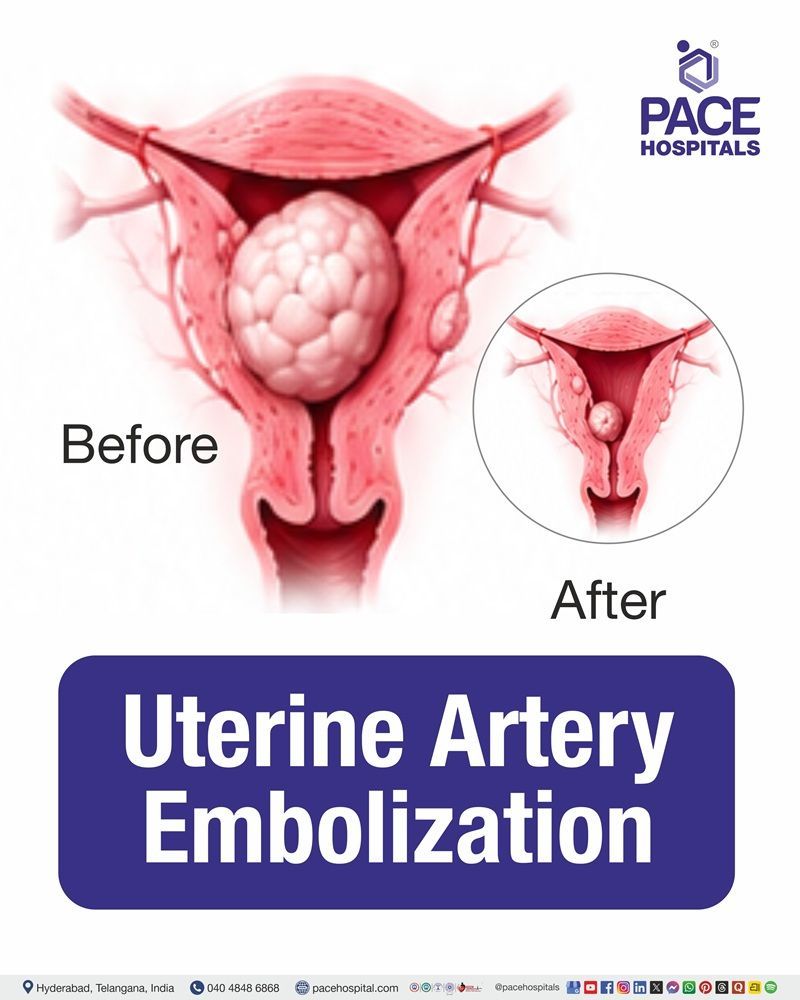
Uterine Artery Embolization (UAE), also called Uterine Fibroid Embolization (UFE), is a minimally invasive procedure used to treat symptomatic uterine fibroids by blocking their blood supply, causing them to shrink over time.
Monitoring through fluoroscopy (a form of real-time x-ray) the embolic agents (agents for blocking blood flow) are delivered to the uterus to treat the fibroids. The duration of recovery and hospitalization are minimal as this procedure is not a major surgery.
Uterine artery embolization is also a safe and reliable procedure for the postpartum haemorrhage (blood loss by the mother during birth).
Uterine artery embolization preserves the uterus. Although some women can become pregnant after the procedure, fertility outcomes vary. Women planning future pregnancy should discuss the most appropriate treatment option with their gynecologist and interventional radiologist.
Uterine Artery Embolization Cost in India
On average, the cost of Uterine Artery Embolization in India ranges between ₹80,000 and ₹3,50,000 (approximately US $838 to US $3667). However, the actual cost may vary depending on several factors, including:
- The patient's age, overall health, and severity of symptoms.
- The size, number, and location of uterine fibroids.
- The complexity of the procedure and the need for additional interventions.
- The type of hospital (private, government, or trust hospitals).
- Hospital charges, including room category and facilities.
- The expertise of the interventional radiologist and the treating team.
- Insurance coverage or corporate approvals for cashless treatment.
- Pre-procedure investigations, hospital stay, and post-procedure follow-up requirements.
- Any complications that may arise during or after the procedure.
Uterine Artery Embolization Cost in Hyderabad, Telangana
On average, the cost of Uterine Artery Embolization in Hyderabad ranges from ₹1,00,000 to ₹3,00,000 (approximately US $1047 to US $3143). The cost varies depending on the hospital, the complexity of the procedure, the patient's condition, and the facilities provided.
However, the cost of Uterine Artery Embolization in Hyderabad is influenced by several factors, such as:
- The patient's age, overall health, and severity of symptoms.
- The size, number, and location of uterine fibroids.
- The hospital facility chosen and its infrastructure.
- The expertise of the interventional radiologist and multidisciplinary care team.
- Insurance or corporate approvals for cashless services.
- Extent of pre-procedure investigations and post-procedure care.
- Duration of hospital stay and room category selected.
Potential complications during or after the procedure.
Cost Breakdown According to Type of Uterine Artery Embolization Used
- Uterine fibroid embolization - ₹80,000 – ₹2,50,000 (approximately US $ 840-US $2625)
- Adenomyosis embolization - ₹90,000-₹2,30,000 (approximately US $945-US $2415)
- Emergency uterine artery embolization - ₹90,000-₹2,00,000 (approximately US $945- US $2100)
- Repeat / revision embolization - ₹70,000-₹3,00,000 (approximately US $734- US $3149)
Note: These are estimated costs. The exact cost for an individual patient is determined after a thorough evaluation by the interventional radiology and gynecology team.
Additional Information: The cost of Uterine Artery Embolization may vary depending on several factors, including the underlying condition being treated, the complexity of the procedure, the type of embolic agents used, the duration of hospitalization, any additional diagnostic tests or procedures required, and the experience and expertise of the interventional radiology team. This ensures that each patient receives a personalized treatment plan and a transparent cost estimate tailored to their medical needs.
Breakdown of Uterine Artery Embolization Procedure Costs
The cost of Uterine Artery Embolization (UAE) includes several different parts and may change depending on the hospital, the condition being treated (such as uterine fibroids, adenomyosis, or severe uterine bleeding), how complex the procedure is, and the patient’s overall health. A detailed breakdown of the expenses commonly associated with Uterine Artery Embolization is given below.
Pre-Procedure Costs
- Consultation Fees: These cover visits with a gynecologist and an interventional radiologist. The charges may vary depending on the doctor’s experience and the hospital.
- Diagnostic Tests: Before the procedure, tests such as blood work, pelvic ultrasound, MRI (if needed), pregnancy test (when applicable), and other relevant investigations are done to assess the condition.
- Pre-Procedure Assessment: A complete health evaluation is carried out, including review of medical history and overall fitness, to confirm whether uterine artery embolization is the right treatment option.
Uterine Artery Embolization Procedure Costs
- Hospitalization Charges: These include admission, room charges, use of the angiography suite (catheterization lab), nursing care, and other hospital facilities during the procedure.
- Procedure Charges: These cover the cost of the embolization procedure itself, including imaging guidance, catheters and other medical supplies, embolic materials, and the interventional radiologist’s fees.
- Anesthesia and Procedure Team Fees: These include charges for local anesthesia or conscious sedation, anesthesiologist services (if required), radiology technicians, and the supporting medical team.
Post-Procedure Care Costs
- Recovery and Monitoring: These include observation after the procedure, pain management, medications, and routine monitoring to ensure proper recovery.
- Hospital Stay: Hospitalization costs for recovery after the procedure are included, with most patients staying for 1–2 days, depending on their recovery and overall condition.
- Follow-Up Visits and Imaging: These cover follow-up consultations, pelvic imaging (if recommended), and clinical assessments to monitor healing and treatment success.
This cost breakdown improves clarity and helps patients better understand the expenses involved in Uterine Artery Embolization. At PACE Hospitals, Hyderabad, individualized cost estimates are provided after a detailed clinical evaluation, ensuring each patient receives appropriate care with clear and transparent pricing.
Who needs Uterine Artery Embolization?
Uterine Artery Embolization (UAE) is not needed for every woman with uterine problems. It is recommended when symptoms are significant, medical treatment does not work, or when a minimally invasive, uterus-preserving alternative to surgery is preferred.
Common Conditions Indicating Need for Uterine Artery Embolization
- Uterine Fibroids: UAE is often suggested for women with uterine fibroids that cause symptoms like heavy menstrual bleeding, pelvic pain, or pressure in the lower abdomen. It may also be considered when there are fertility concerns and whether surgery is not preferred or needs to be postponed.
- Adenomyosis: In adenomyosis, where the inner lining of the uterus grows into the muscular wall, UAE may be suggested when symptoms like severe menstrual pain, heavy bleeding, and pelvic discomfort do not improve with medicines.
- Abnormal Uterine Bleeding: UAE may be considered for women with persistent or heavy uterine bleeding that does not respond to medical treatment, particularly when surgical options are not preferred.
- Postpartum Hemorrhage: In emergency cases, UAE is used to control severe bleeding after childbirth when medications and other conservative measures fail. It helps preserve the uterus and often avoids the need for hysterectomy.
- Post-Surgical or Traumatic Uterine Bleeding: UAE may be required when there is uncontrolled bleeding after gynecological procedures or pelvic trauma, as it helps quickly block the bleeding vessels and stabilize the patient.
In some cases, it is also used for uterine vascular malformations or other rare causes of uterine bleeding.
Who is Not Eligible for Uterine Artery Embolization procedure?
While Uterine Artery Embolization (UAE) is a safe and effective minimally invasive procedure for many patients, it is not suitable for everyone. Certain medical conditions and risk factors may make the procedure unsafe or less effective:
- Active pelvic or systemic infections: Patients with ongoing infections in the uterus, pelvis, or elsewhere in the body may face a higher risk of complications after the procedure.
- Pregnancy: UAE is not recommended during pregnancy, as it can affect blood supply to the uterus and may harm the developing fetus.
- Suspected or confirmed gynecological malignancy: Women with uterine, cervical, or ovarian cancers are generally not suitable for UAE, as these conditions need different treatment methods.
- Severe allergy to contrast dye: Patients who have a known severe allergic reaction to iodinated contrast agents used during imaging may not be suitable unless properly pre-medicated and assessed.
- Significantly impaired kidney function: Since contrast dye is used during the procedure, patients with advanced kidney disease may be at higher risk of complications.
Evaluation by a qualified gynecologist and interventional radiologist is important to decide eligibility. A proper pre-procedure assessment, including imaging tests, blood investigations, and clinical examination, helps ensure that Uterine Artery Embolization is safe and suitable for the patient.
How is Uterine Artery Embolization Done?
Uterine Artery Embolization (UAE) is a minimally invasive procedure done by an interventional radiologist, usually under local anesthesia with sedation. The steps include:
- Pre-procedure evaluation: A detailed assessment is done, including medical history, pelvic examination, blood tests, and imaging tests such as ultrasound or MRI to confirm the condition and plan the procedure.
- Access through blood vessel: A thin tube (catheter) is inserted into an artery, usually in the groin (femoral artery) or wrist (radial artery), under sterile conditions.
- Guiding the catheter: With the help of real-time X-ray imaging (fluoroscopy), the catheter is carefully guided through the blood vessels to reach the uterine arteries.
- Embolization process: Small particles called embolic agents are injected into the uterine arteries to block blood flow to fibroids or affected uterine tissue, which helps them shrink over time.
- Monitoring and completion: Blood flow is checked to confirm that the targeted vessels are successfully blocked, and then the catheter is gently removed.
- Recovery: Patients are observed for a few hours up to a day for pain management and monitoring, and most are discharged within 24–48 hours depending on recovery.
Types of Uterine Artery Embolization (UAE)
Uterine Artery Embolization (UAE) is performed in a few important clinical situations based on the patient’s condition:
- Fibroid Uterine Artery Embolization: The most common type, used to treat uterine fibroids by blocking their blood supply, which helps reduce heavy menstrual bleeding, pelvic pain, and pressure symptoms.
- Adenomyosis Uterine Artery Embolization: Used to treat adenomyosis and reduce symptoms such as heavy menstrual bleeding, painful periods, and pelvic discomfort.
- Emergency Uterine Artery Embolization: Done in urgent situations like postpartum hemorrhage or severe uterine bleeding to quickly stop bleeding and stabilize the patient.
Post-Uterine Artery Embolization (UAE) Care Tips
After Uterine Artery Embolization (UAE), proper care and rest are important to ensure smooth recovery and reduce the risk of complications.
- It is advised to attend all scheduled follow-up appointments with the gynecologist or interventional radiologist to monitor recovery and symptom improvement.
- It is suggested to take prescribed pain medications and other medicines regularly, as cramping and mild pelvic pain are common for a few days after the procedure.
- It is recommended to rest adequately for the first few days and avoid heavy physical activity, strenuous exercise, or lifting heavy objects for about one to two weeks.
- It is advised to keep the catheter insertion site clean and dry, and to follow instructions given for dressing care to prevent infection.
- If antibiotics or other medications are prescribed at discharge, it is important to complete the full course as directed by the doctor.
- It is recommended to avoid sexual activity, tampons, and vaginal douching for a short period, as advised by the treating doctor, to allow proper healing.
- It is advised to inform the doctor immediately if symptoms such as high fever, severe pain, foul-smelling discharge, or heavy bleeding occur after the procedure.
Key Factors Influencing Uterine Artery Embolization (UAE) Cost
Uterine Artery Embolization (UAE) is a minimally invasive procedure, and its overall cost can vary depending on several clinical, hospital-related, and patient-specific factors. Understanding these factors can help patients plan their treatment expenses better.
- Pre-Procedure Evaluation: Initial consultations with the gynecologist and interventional radiologist, along with diagnostic tests such as blood tests, ultrasound, and MRI scans, add to the overall cost.
- Hospital and Location: The cost may change depending on the hospital facilities, reputation, and location. Well-equipped tertiary care hospitals in big cities usually charge more than smaller hospitals or healthcare centers.
- Type and Complexity of Condition: The condition being treated, such as uterine fibroids, adenomyosis, or postpartum hemorrhage, and how severe it is can affect how complex and long the procedure takes, which in turn influences the total cost.
- Embolic Materials and Technology Used: The type of embolic agents used and the imaging technology needed during the procedure can also affect the overall cost.
- Hospital Stay and Post-Procedure Care: The length of hospital stay, pain management, medications, and monitoring after the procedure all contribute to the final cost. Most patients require a stay of 1–2 days.
- Doctor’s Expertise: The experience and skill of the interventional radiologist and gynecologist may also affect the procedure charges.
- Insurance Coverage: Insurance approval, cashless facilities, and policy coverage play an important role in reducing out-of-pocket expenses for the patient.
- Patient Health Condition: The patient’s overall health, existing medical conditions, and recovery response can influence procedure complexity and post-treatment care, affecting the total cost.
These factors together determine the final cost of Uterine Artery Embolization, which is usually planned based on each patient’s medical condition and clinical evaluation.
Why Choose PACE Hospitals for Uterine Artery Embolization (UAE) procedure in Hyderabad, India?
PACE Hospitals, Hyderabad, is a trusted centre for Uterine Artery Embolization (UAE) procedure.
We have highly experienced gynecologists, interventional radiologists, anesthesiologists, and specialized nursing staff who follow evidence-based protocols for safe and effective minimally invasive procedures.
Our facilities include modern catheterization laboratories (angiography suites), advanced imaging systems, and dedicated post-procedure monitoring units. Care is focused on the patient to help reduce complications, with treatment plans made for each individual and clear, transparent cost estimates based on their needs.
For patients looking for the Best Hospital for Uterine Artery Embolization (UAE) in Hyderabad, Telangana, India, PACE Hospitals offers advanced gynecological and interventional radiology care, affordable treatment options, and clear, transparent treatment planning.
Financial Assistance and Payment Plans at PACE Hospitals
Uterine Artery Embolization (UAE) is provided with support to help patients manage treatment costs comfortably. Our team guides patients through insurance and payment-related processes to reduce financial burden.
- Cashless hospitalization support with empanelled insurers and TPAs
- Assistance with pre-authorization and required documentation
- Help with reimbursement process if cashless facility is not available
- Clear and transparent cost estimates before admission
- Support for corporate and government health insurance schemes
Uterine Artery Embolization (UAE) procedure Success Rate
Uterine Artery Embolization (UAE) is generally effective, with a success rate of around 80%–90% for symptom relief in properly selected patients.
Patients experience:
- Reduction in heavy menstrual bleeding
- Relief from pelvic pain and pressure symptoms
- Better quality of life and improved day-to-day comfort
- Long-term outcomes depend on the underlying condition, proper patient selection, and regular follow-up care
Request a Personalized Treatment Cost Estimate
Every patient's medical condition and treatment plans are unique, which means the overall cost can vary. To receive an accurate estimate, our specialists evaluate your diagnosis, medical history, recommended treatment, and any necessary investigations before providing a detailed cost breakdown.
Whether you are planning a diagnostic test, treatment, or surgery, our team is here to help you understand the expected expenses and guide you through every step of the process.
Get in touch with us today to request a personalized treatment cost estimate.