
Chemical Peel Procedure - Types, Benefits & Side Effects
PACE Hospitals provides
chemical peel procedures in Hyderabad, India, to address skin concerns such as acne, acne scars, pigmentation, uneven skin tone, and fine lines. The procedure involves applying a chemical solution to the skin to exfoliate the outer layers and promote skin renewal. Dermatologists assess each patient's skin type, condition, and treatment requirements to determine the appropriate peel type and concentration. Depending on the clinical assessment, superficial, medium, or deep chemical peels may be considered, with appropriate skin preparation, post-procedure care, and follow-up.
Request an Appointment for Chemical Peel Procedure
Chemical Peel Procedure appointment
Recognized for excellence in healthcare delivery with
NABH, NABL, NBE/DNB, NABH Nursing Excellence, and ISCCM accreditations.
What Is a Chemical Peel?
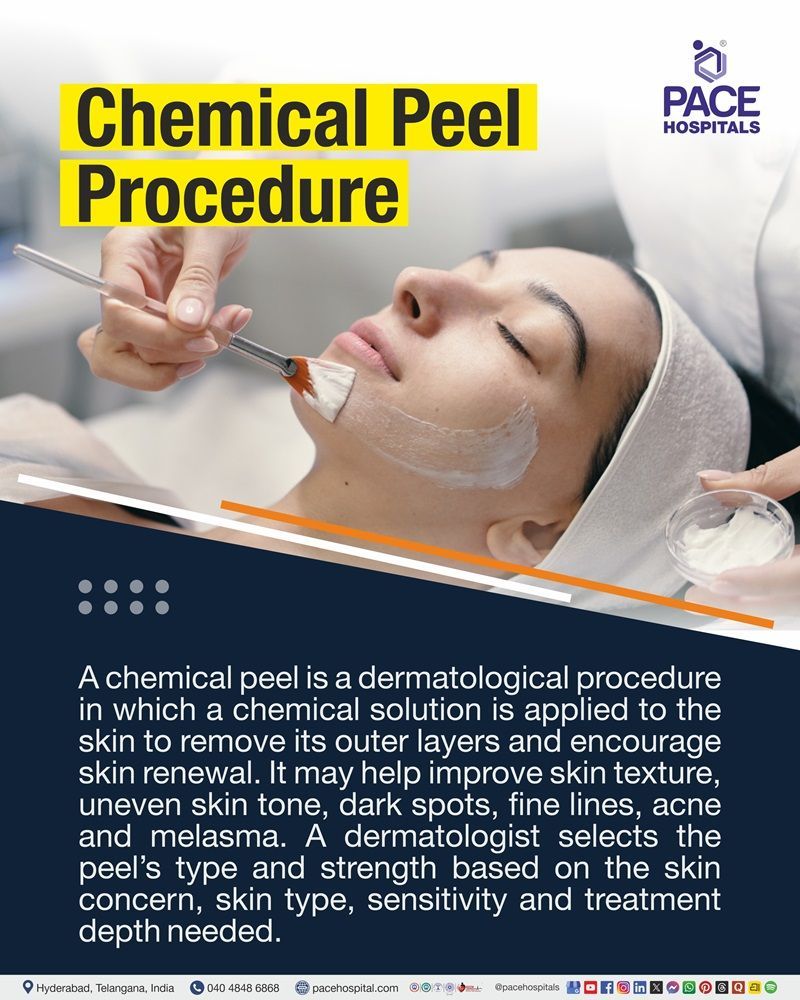
A chemical peel is a dermatological procedure in which a selected chemical solution is applied to the skin to remove its outer layers and encourage skin renewal. Depending on the type of peel, treatment may affect only the surface or reach deeper skin layers. It may help improve skin texture, uneven skin tone, dark spots and fine lines.
Dermatologists may recommend chemical peels for conditions such as acne, melasma (patches of darker skin), dark marks left after acne and sun-related skin changes. The type and strength of the peel are selected based on the skin concern, skin type, sensitivity and depth of treatment needed.
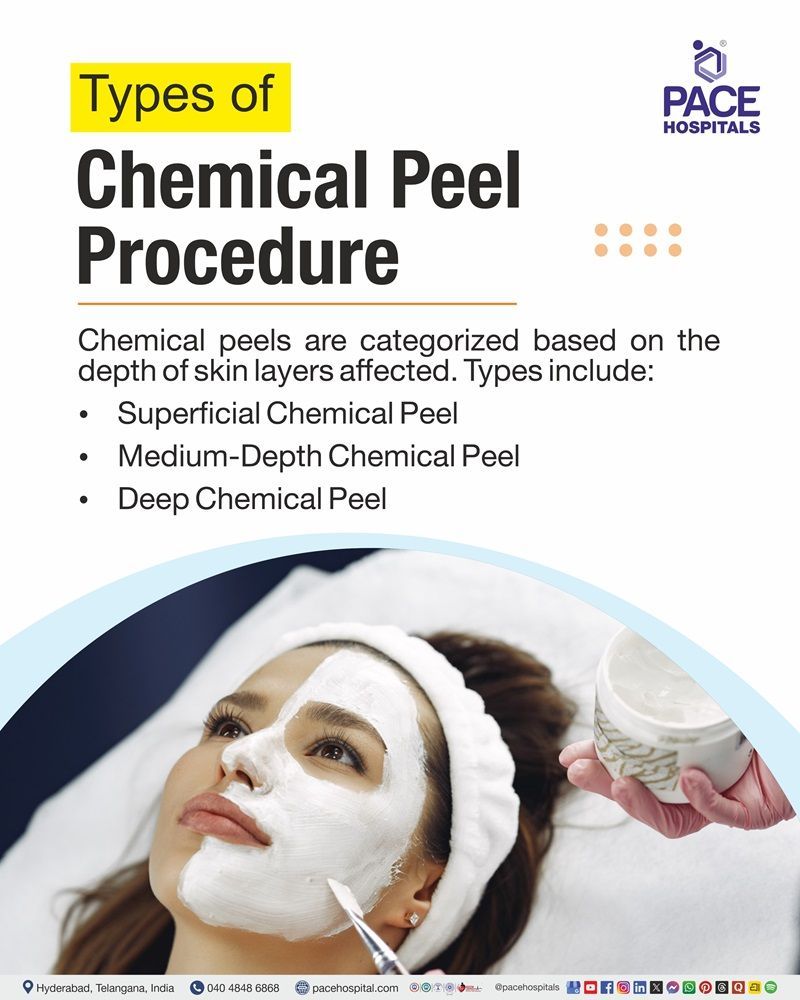
Chemical peels are divided into three types according to the depth of skin layers affected:
- Superficial Chemical Peel
- Medium-Depth Chemical Peel
- Deep Chemical Peel
Superficial Chemical Peel
A superficial peel targets the outermost layer of the skin (epidermis). Commonly used agents include glycolic acid, lactic acid and salicylic acid. It may help improve mild acne, superficial pigmentation, uneven skin tone and rough skin texture. Recovery is generally shorter compared with deeper peels.
Medium-Depth Chemical Peel
A medium-depth peel affects the entire epidermis and extends into the upper dermis. Trichloroacetic acid (TCA) and selected combination solutions may be used. It may be considered for certain pigmentation concerns, sun damage, fine wrinkles and superficial acne scars. Recovery takes longer than with superficial peels.
Deep Chemical Peel
A deep peel penetrates further into the dermis and produces more extensive skin injury. Phenol-based solutions are among the agents used for this treatment. Deep chemical peels can improve selected deep wrinkles and significant sun damage but carry greater risks and require prolonged recovery. They are not suitable for every skin type, particularly darker skin tones. Deep chemical peels are generally performed as a single treatment rather than routinely repeated. The suitability of further treatment depends on skin healing and specialist assessment.
Indications for Chemical Peel
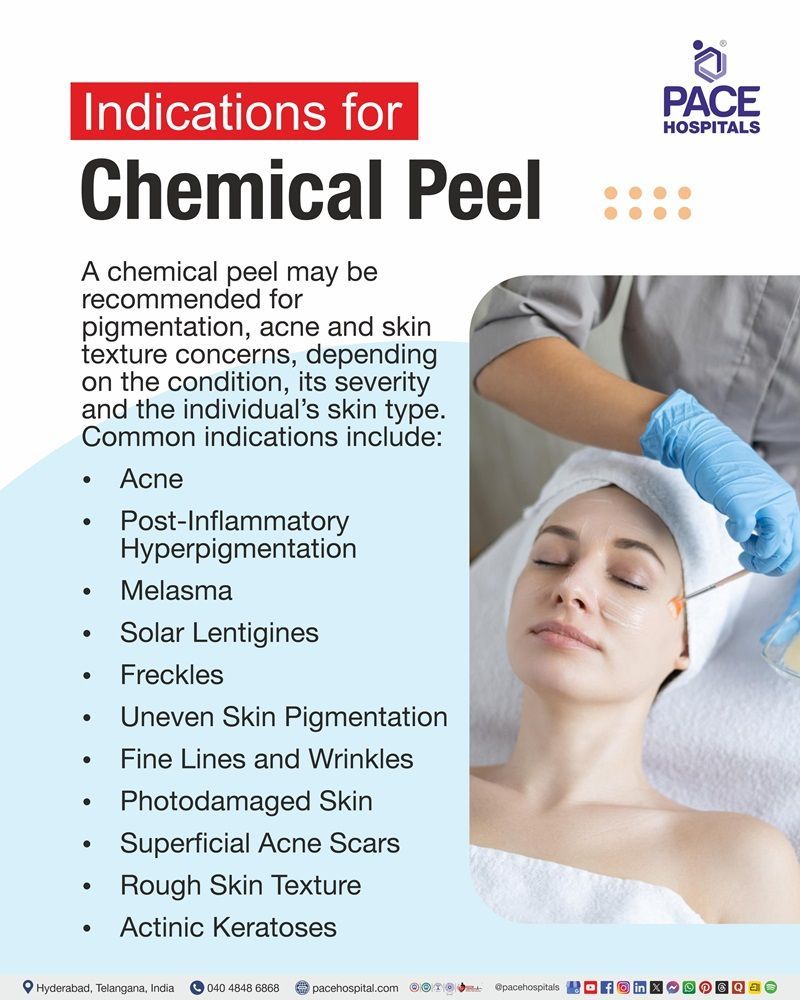
A chemical peel may be recommended by a dermatologist to address various skin concerns involving pigmentation, acne and changes in skin texture. The treatment is selected based on the underlying skin condition, its severity and the individual's skin type. Common indications for chemical peels include:
- Acne
- Post-Inflammatory Hyperpigmentation
- Melasma
- Solar Lentigines
- Freckles
- Uneven Skin Pigmentation
- Fine Lines and Wrinkles
- Photodamaged Skin
- Superficial Acne Scars
- Rough Skin Texture
- Actinic Keratoses
Acne
Chemical peels may help manage mild to moderate acne by unclogging pores, reducing excess dead skin cells and improving skin texture.
Post-Inflammatory Hyperpigmentation
People with persistent dark marks following acne, inflammation or skin injury may be considered for superficial chemical peels to improve pigmentation by promoting the removal of pigmented surface cells.
Melasma
Chemical peeling may be considered for facial pigmentation, particularly brown or greyish-brown patches on the cheeks, forehead and upper lip. It is generally used alongside other treatments rather than as a standalone approach.
Solar Lentigines
Flat, brown spots that develop due to cumulative sun exposure may respond to selected chemical peels that target excess pigmentation in the superficial skin layers.
Freckles
Superficial chemical peeling may help reduce the visibility of freckles by promoting exfoliation of pigmented cells in the outer skin layers.
Uneven Skin Pigmentation
Patchy skin tone caused by superficial pigment accumulation may improve with chemical peels that help remove pigmented cells and promote skin renewal.
Fine Lines and Wrinkles
Mild wrinkles and early signs of photoageing may be suitable for chemical peeling, as the treatment can improve superficial skin damage and texture.
Photodamaged Skin
Sun-related changes, including roughness, uneven pigmentation and fine wrinkles, may improve with selected chemical peels depending on the extent of skin damage.
Superficial Acne Scars
Certain shallow acne scars may be considered for chemical peeling to improve surface irregularities and skin texture. Deeper scars generally require other scar-specific treatments.
Rough Skin Texture
Uneven, coarse skin caused by accumulated dead cells and superficial skin irregularities may benefit from chemical exfoliation, which helps improve skin smoothness.
Actinic Keratoses
Selected cases of actinic keratoses, which appear as rough or scaly patches on sun-exposed skin, may be treated using specific chemical peeling agents under specialist supervision.
Contraindications of Chemical Peel
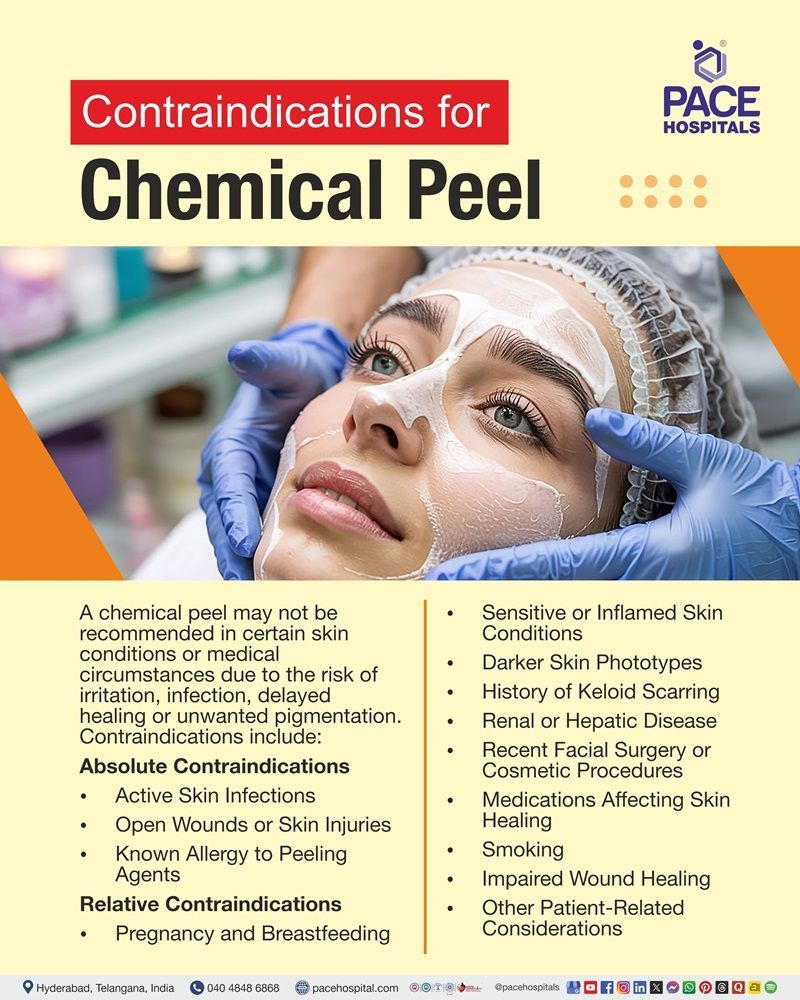
Chemical peel may not be recommended in certain skin conditions or medical circumstances, as the procedure can increase the risk of irritation, infection, delayed healing or unwanted pigmentation. The contraindications are classified as follows:
- Absolute Contraindications
- Active Skin Infections
- Open Wounds or Skin Injuries
- Known Allergy to Peeling Agents
- Relative Contraindications
- Pregnancy and Breastfeeding
- Sensitive or Inflamed Skin Conditions
- Darker Skin Phototypes
- History of Keloid Scarring
- Renal or Hepatic Disease
- Recent Facial Surgery or Cosmetic Procedures
- Medications Affecting Skin Healing
- Smoking
- Impaired Wound Healing
- Other Patient-Related Considerations
Absolute Contraindications
Active Skin Infections
Chemical peeling should be avoided when bacterial, viral or fungal infections, including active herpes simplex lesions, are present in the treatment area, as the procedure may worsen the infection.
Open Wounds or Skin Injuries
Cuts, abrasions or unhealed wounds in the treatment area may increase the risk of infection, irritation and delayed skin healing after a chemical peel.
Known Allergy to Peeling Agents
Patients with a known allergy to a particular peeling agent should avoid that substance. The dermatologist should review the allergy history before selecting an alternative treatment.
Relative Contraindications
Pregnancy and Breastfeeding
Certain chemical peeling agents may not be suitable during pregnancy or breastfeeding. The safety of the selected agent should be assessed before considering the procedure.
Sensitive or Inflamed Skin Conditions
Conditions such as eczema, rosacea and active dermatitis may increase skin sensitivity and the risk of irritation following chemical peeling.
Darker Skin Phototypes
Individuals with darker skin phototypes may have an increased risk of post-inflammatory hyperpigmentation after chemical peeling. The choice of peeling agent, concentration and treatment depth requires careful assessment by a dermatologist.
History of Keloid Scarring
A history of keloid formation may increase concerns about abnormal scarring, particularly with deeper chemical peels.
Renal or Hepatic Disease
Patients with significant kidney or liver disease require careful assessment before deep phenol-based chemical peels because systemic absorption of phenol may cause toxicity. The suitability of treatment should be determined by the treating specialist.
Recent Facial Surgery or Cosmetic Procedures
Recent facial surgery, laser treatments or other skin resurfacing procedures may require an adequate healing period before chemical peeling to reduce the risk of skin injury and complications.
Medications Affecting Skin Healing
Long-term use of corticosteroids and certain photosensitising medications may affect skin healing or increase sensitivity of an individual. Medication history should be reviewed before chemical peel procedure.
Smoking
Smoking may interfere with tissue healing and increase recovery-related concerns, particularly following medium-depth and deep chemical peels.
Impaired Wound Healing
Conditions such as uncontrolled diabetes, immunosuppression, malnutrition and protein deficiency may interfere with normal skin healing and increase the risk of complications.
Other Patient-Related Considerations
Patients with body dysmorphic disorder or unrealistic expectations about cosmetic improvement require careful psychological and dermatological assessment before elective chemical peeling.
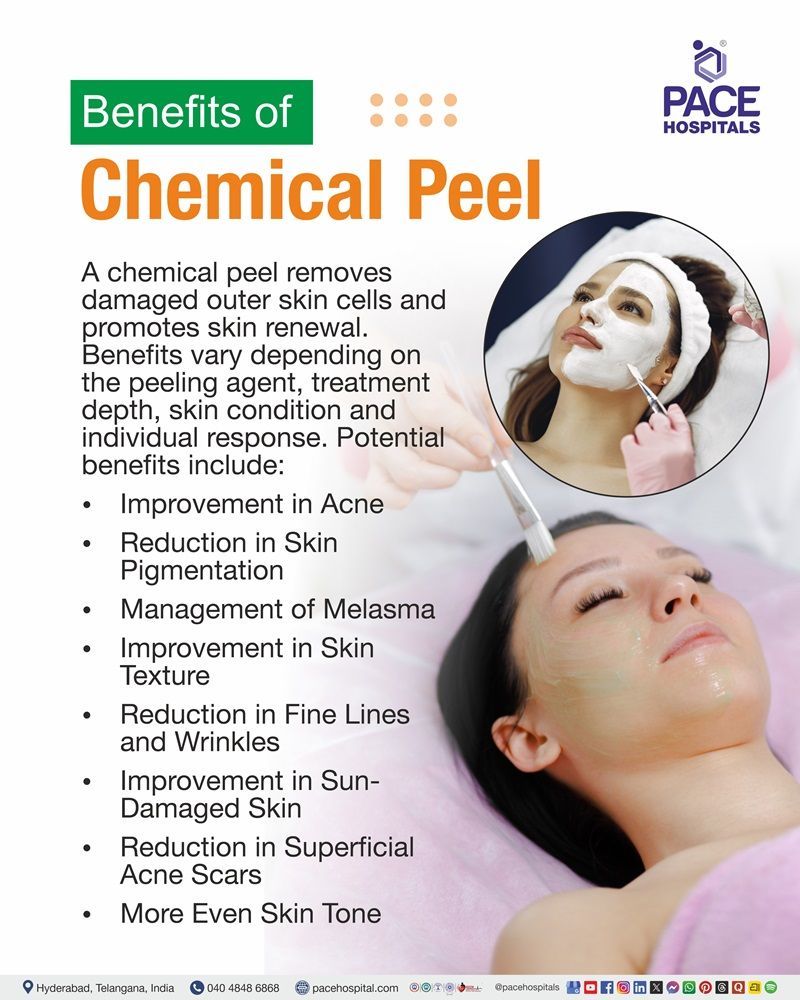
Chemical Peel Benefits
Chemical peel treatment helps improve selected skin conditions by removing damaged outer skin cells and promoting skin renewal. The benefits depend on the type of peeling agent, depth of treatment, skin condition and individual response. Potential benefits include:
- Improvement in Acne
- Reduction in Skin Pigmentation
- Management of Melasma
- Improvement in Skin Texture
- Reduction in Fine Lines and Wrinkles
- Improvement in Sun-Damaged Skin
- Reduction in Superficial Acne Scars
- More Even Skin Tone
Improvement in Acne
Selected chemical peels, particularly salicylic acid peels, may help manage mild to moderate acne by unclogging pores and reducing the buildup of dead skin cells.
Reduction in Skin Pigmentation
Chemical peels may help reduce superficial pigmentation, including dark spots, freckles and post-inflammatory hyperpigmentation, by promoting the removal of pigmented surface skin cells.
Management of Melasma
Superficial chemical peel procedures may help improve melasma-related dark patches. They are generally used alongside other pigmentation treatments and sun protection rather than as a standalone treatment.
Improvement in Skin Texture
By removing accumulated dead skin cells, chemical peels can help improve roughness and make the skin feel smoother.
Reduction in Fine Lines and Wrinkles
Selected superficial and medium-depth peels may improve fine lines, particularly those associated with sun damage and early skin ageing.
Improvement in Sun-Damaged Skin
Chemical peels may help reduce the appearance of uneven pigmentation, rough skin and other superficial changes associated with prolonged sun exposure.
Reduction in Superficial Acne Scars
Selected medium-depth peels may improve the appearance of certain shallow acne scars. Deeper or more pronounced scars may require other treatments.
More Even Skin Tone
Chemical peeling can help reduce uneven surface pigmentation and improve overall skin tone in appropriately selected patients.
Chemical Peel Treatment Procedure
Chemical peel treatment is generally performed as an outpatient procedure by a dermatologist. It involves applying a carefully selected chemical solution to the skin to remove damaged outer layers and encourage the growth of new skin cells. The procedure may be performed on the face and other selected areas, depending on the skin concern.
The treatment process varies depending on the type of chemical used, its concentration and the depth of the peel. The chemical peel procedure steps include the following:
Preparation Before the Chemical Peel
Proper skin assessment and preparation help determine the suitability of the treatment and reduce the risk of complications. The following steps explain how to prepare for a chemical peel:
- The dermatologist reviews the medical history, current medications, previous cosmetic treatments and any history of skin allergies, cold sores, abnormal scarring or pigmentation changes. Existing skin conditions and previous reactions to chemical peels are also considered.
- The treatment area is examined to assess skin type, texture, pigmentation, acne, sun damage and the presence of active inflammation or infection. The dermatologist may also assess the skin's response to sun exposure using the Fitzpatrick skin classification to help determine the appropriate peel depth and minimise pigmentation-related complications.
- The peeling chemical agent is chosen based on the specific skin condition and treatment needs. Superficial peels primarily target the outermost skin layer, whereas medium-depth and deep peels penetrate increasingly deeper layers. The concentration and application method are decided by the dermatologist based on skin conditions.
- Some patients may be advised to follow a pre-treatment skincare routine for two to four weeks. This may include prescribed creams or other topical preparations to prepare the skin and promote more even penetration of the peeling agent. The preparation plan varies according to skin type and the intended peel.
- Patients with a medical history of recurrent cold sores may require preventive antiviral medication before chemical peel treatment, particularly when undergoing medium-depth or deep chemical peels. This is decided by the dermatologist based on individual risk.
- Patients may be advised to avoid excessive sun exposure, tanning, waxing and irritating skincare products for a specified period before treatment. Any changes to retinoids, exfoliating products or other prescribed medications should be made only on the dermatologist's advice.
- On the day of treatment, the skin should be clean and free from makeup and skincare products, as instructed by the dermatologist.
- Pre-treatment photographs may be taken to document the skin condition and provide a reference for comparison during follow-up visits.
- The dermatologist explains the procedure, expected improvement, recovery period, possible side effects and potential complications, including redness, irritation, scarring and changes in skin pigmentation. Informed consent is obtained before proceeding with treatment.
During the Chemical Peel Procedure
Chemical peeling is generally performed in a dermatologist's treatment room. The procedure involves applying a selected chemical solution to the skin under controlled conditions. The steps may differ depending on the peeling agent, its concentration and the depth of treatment:
During a Light Chemical Peel
- The dermatologist applies a chemical solution, commonly containing glycolic acid, salicylic acid or lactic acid, using a brush, cotton ball, gauze or sponge.
- Depending on the peeling agent, the skin may develop mild redness or a temporary whitening appearance. Salicylic acid peels may produce a whitish coating due to crystallisation of the solution.
- Mild stinging, tingling or burning may be experienced while the chemical solution is on the skin.
- After the required application time, the chemical solution is neutralised or removed according to the type of peeling agent used. For example, glycolic acid generally requires neutralisation, whereas salicylic acid is usually removed by washing.
During a Medium-Depth Chemical Peel
- The dermatologist applies a chemical solution, commonly containing trichloroacetic acid (TCA), sometimes in combination with glycolic acid or Jessner's solution, using an appropriate applicator.
- The treated skin develops a whitening appearance known as frosting, which helps the dermatologist assess the depth of the peel.
- Cool compresses or a cooling fan may be used to relieve stinging and burning sensations during the procedure.
- The chemical solution is removed or neutralised according to the specific TCA formulation and treatment protocol. A separate neutralising agent is not routinely required for TCA peels.
- Stinging and burning sensations may occur during and shortly after the application.
During a Deep Chemical Peel
- Deep phenol-based peels require additional precautions because phenol can enter the bloodstream and affect heart function. Heart rate and other vital signs are closely monitored during the procedure. Intravenous fluids may also be administered.
- The dermatologist applies a phenol-based chemical solution, also known as carbolic acid, to the treatment area using an appropriate applicator.
- The treated skin develops a white or greyish appearance as the chemical solution penetrates the skin.
- To limit systemic absorption of phenol, the treatment may be performed on different facial sections at intervals rather than applying the solution to the entire face at once.
- A full-face deep chemical peel may take approximately 60–90 minutes, although the duration varies according to the treatment protocol and area being treated.
Care of the Treated Skin After the Chemical Peel
Appropriate skincare following a chemical peel procedure safeguards the treated region, helps in healing, and minimizes the chances of post-complications. The dermatologist may advise particular aftercare guidelines based on the type and intensity of the chemical peel applied. General aftercare measures include the following:
- Gently cleanse the treated area using a mild, non-irritating cleanser. After washing, pat the skin dry with a clean, soft towel without rubbing. It is recommended to apply the moisturiser or protective ointment to reduce dryness, tightness and skin irritation during recovery.
- The treated skin is more sensitive to sunlight during healing. It is recommended to avoid direct sun exposure as much as possible and use a broad-spectrum sunscreen as advised by the dermatologist. Protective clothing and a hat can also help limit sun exposure.
- Redness, dryness, flaking or peeling may occur as the skin heals. Avoid picking, scratching or manually removing loose skin, as this may cause irritation, infection, scarring or changes in skin pigmentation.
- Avoid using exfoliating products, retinoids, scrubs and other potentially irritating skincare preparations until the skin has healed. These products should be restarted only on the dermatologist's advice.
- After superficial peels, a suitable non-comedogenic moisturiser may be recommended. Following medium-depth and deep peels, the dermatologist may prescribe bland, fragrance-free emollients, protective ointments or specific wound-care preparations. Cool compresses or prescribed soaks may also be recommended depending on the depth of treatment.
- Recovery depends on the depth of the chemical peel applied. Superficial peels generally heal within a few days to a week, medium-depth peels may take around 7–14 days, while deep peels may require several weeks. The duration of recovery after a chemical peel procedure may vary depending on individual skin response.
- Follow-up visits help the dermatologist assess skin healing and monitor the treatment response. Any concerns about prolonged redness, pigmentation changes or delayed healing can be evaluated during these visits.
- Increasing pain, worsening redness, significant swelling, blisters, pus or delayed healing should be reported to the dermatologist. These symptoms may indicate a complication that requires medical assessment.
Chemical Peel Procedure Time
The duration of a chemical peel procedure depends on the type of peeling agent used, the treatment area and the depth of the peel. The approximate procedure time varies as follows:
- Superficial Chemical Peel: A light chemical peel generally takes around 10–30 minutes, depending on the treatment area and the chemical formulation used.
- Medium-Depth Chemical Peel: A medium chemical peel may take approximately 30–60 minutes, depending on the area treated and the application technique.
- Deep Chemical Peel: A deep phenol peel may take approximately 60–90 minutes for a full-face treatment. Additional time may be required for preparation, anesthesia and monitoring.
The actual chemical peel procedure time may vary depending on individual requirements and the dermatologist's treatment protocol.
Chemical Peel Complications
Chemical peel treatment may cause temporary skin reactions during the healing process. In some cases, complications may also develop depending on the type of peeling agent, its concentration, treatment depth and individual skin response. Possible chemical peel side effects and complications include:
- Skin Redness
- Skin Dryness and Tightness
- Peeling and Flaking
- Swelling
- Changes in Skin Pigmentation
- Prolonged Redness
- Skin Infection
- Scarring
- Acneiform Eruptions and Milia
- Allergic Reactions
- Delayed Wound Healing
- Cardiac Complications
Skin Redness
Redness is a common reaction after chemical peeling due to the controlled injury to the skin. It generally subsides as the treated area heals, although redness may persist longer after medium-depth and deep peels.
Skin Dryness and Tightness
The treated skin may feel dry, tight or sensitive as the outer layers shed and new skin develops.
Peeling and Flaking
The skin may become dry and start peeling or flaking after treatment. This is part of the normal skin renewal process, particularly following superficial and medium-depth peels.
Swelling
Mild swelling may occur after treatment. More noticeable swelling can develop following medium-depth and deep chemical peels, particularly around the eyes.
Changes in Skin Pigmentation
Chemical peels may cause darkening of the skin (hyperpigmentation) or lightening of the treated area (hypopigmentation). These changes are more likely in individuals with darker skin tones or following deeper peels.
Prolonged Redness
Redness that continues beyond the expected healing period may indicate persistent inflammation or early scarring and requires dermatological assessment.
Skin Infection
Bacterial, fungal or viral infections may develop if the skin barrier is damaged during treatment or healing. Reactivation of herpes simplex virus, which causes cold sores, is another possible complication.
Scarring
Although uncommon, scarring may occur if the chemical solution penetrates too deeply, an infection develops, or the treated skin does not heal properly.
Acneiform Eruptions and Milia
Small acne-like bumps or tiny white cysts called milia may develop during the healing process.
Allergic Reactions
Some individuals may develop an allergic or hypersensitivity reaction to the peeling agent or other products used during treatment.
Delayed Wound Healing
Deeper chemical peels may cause prolonged skin injury and require additional time for the treated area to heal completely.
Cardiac Complications
Deep phenol-based peels can cause systemic absorption of phenol, which may affect heart function and lead to abnormal heart rhythms. This is why cardiac monitoring is required during and before performing these chemical peel procedures.
Chemical Peel Recovery Time
The recovery time after a chemical peel procedure depends on the depth of treatment, the chemical peeling agent or exfoliating substance used and the individual's skin response. Superficial peels generally require a shorter recovery period, while medium-depth and deep peels need more time for the treated skin to heal.
The approximate recovery periods are:
- Superficial Chemical Peel: Recovery generally takes around 1–7 days. Mild redness, dryness and flaking may occur as the outer skin sheds and new skin develops.
- Medium-Depth Chemical Peel: Recovery usually takes around 7–14 days. The treated skin may develop redness, swelling, crusting and peeling during the healing process.
- Deep Chemical Peel: Recovery may take several weeks, often around 2–3 weeks or longer. The skin may initially appear swollen, red and crusted, requiring more intensive wound care and follow-up.
Questions that patients can ask the healthcare team about the Chemical Peel Procedure
- How should I prepare my skin before the procedure?
- How long does the chemical peel procedure take?
- Will I experience pain, stinging or burning during the treatment?
- What side effects can occur after a chemical peel procedure?
- What is the expected recovery time?
- What skincare routine should I follow after the procedure?
- How long should I avoid direct sun exposure?
- When can I resume my regular skincare products, including retinoids and exfoliants?
- How many chemical peel sessions may be required?
- What complications should I watch for after treatment?
- When should I schedule a follow-up appointment?
- Will I require any additional treatment to maintain the results?
Difference Between Enzyme Peel and Chemical Peel
Enzyme Peel vs Chemical Peel
Enzyme peels and chemical peels are two non-surgical skin exfoliation treatments used to improve skin texture and address selected skin concerns. However, they differ in the way they exfoliate the skin, the ingredients used and the depth of treatment. The following parameters help distinguish enzyme peels from chemical peels:
| Parameters | Enzyme Peel | Chemical Peel |
|---|---|---|
| Definition | An enzyme peel is a skin exfoliation treatment that uses enzymes to break down proteins in dead skin cells, helping remove surface buildup. | A chemical peel uses chemical agents to exfoliate the skin and remove damaged outer layers, promoting skin renewal. |
| Ingredients Used | Commonly uses proteolytic enzymes such as papain (papaya-derived) and bromelain (pineapple-derived). | Uses chemical agents such as glycolic acid, salicylic acid, lactic acid, trichloroacetic acid (TCA) and phenol. |
| Mechanism of Action | Enzymes break down proteins in dead skin cells, helping loosen and remove surface debris. | Chemical agents reduce the adhesion between skin cells or cause controlled skin injury, depending on the agent and treatment depth. |
| Common Indications | Mainly used for superficial exfoliation, dull-looking skin and mild roughness or uneven texture. | Used for selected skin concerns such as acne, melasma, post-inflammatory hyperpigmentation, sun damage, fine lines and superficial acne scars. |
| Depth of Treatment | Primarily targets the outermost layer of the skin. | Can be superficial, medium-depth or deep, depending on the chemical agent, concentration and application technique. |
| Invasiveness | A non-invasive topical exfoliation treatment that generally involves minimal skin disruption. | A non-surgical skin resurfacing treatment that produces controlled exfoliation or skin injury, depending on the depth of the peel. |
| Recovery Time | Usually involves minimal downtime, although temporary redness or irritation may be seen. | Recovery ranges from a few days after superficial peels to several weeks after deep peels. |
| Side Effects and Complications | May cause temporary redness, irritation, dryness or allergic reactions, based on the formulation and skin sensitivity. | May cause redness, peeling, swelling, pigmentation changes, infection and scarring. The risk varies with the depth of treatment. |
Frequently Asked Questions (FAQs) on Chemical Peel Procedure
Is a chemical peel safe?
Chemical peels are generally well tolerated when the appropriate peel is selected and performed by a qualified dermatologist. However, their safety depends on the type of peel, its strength, skin type and existing skin conditions. Temporary redness, dryness, peeling, burning or irritation may occur after treatment. In some cases, complications such as infection, scarring or changes in skin pigmentation can develop. Deeper peels carry greater risks, particularly in people prone to pigmentation changes. A dermatologist should assess the skin and medical history before recommending the procedure.
Is chemical peel treatment suitable for Indian skin?
Yes, selected superficial chemical peels can be used for Indian skin. However, individuals with darker skin tones may have a higher risk of post-inflammatory hyperpigmentation, particularly after medium-depth and deep peels. A dermatologist should select the peeling agent and concentration based on skin type and pigmentation history.
Which chemical peel is best for skin whitening?
There is no single chemical peel that is suitable for everyone seeking a brighter or more even skin tone. For pigmentation concerns such as melasma and post-inflammatory hyperpigmentation, glycolic acid peels are among the commonly studied options. Salicylic acid and other superficial peels may also be considered depending on the skin condition. These treatments aim to reduce uneven pigmentation and improve skin tone rather than permanently lighten the skin's natural colour. The choice of peel should be based on the cause of pigmentation, skin type and risk of post-treatment darkening.
How long do chemical peel results last?
The duration of improvement varies according to the type of peel, skin condition, sun exposure and ongoing skincare. Superficial peels may require maintenance treatments, while deeper peels can produce longer-lasting changes. Pigmentation conditions such as melasma may recur even after improvement.
Which chemical peel is best for acne scars?
The choice of chemical peel depends on the type and depth of acne scars. Superficial glycolic acid, salicylic acid and Jessner's peels may help improve mild surface irregularities and post-acne pigmentation. Trichloroacetic acid (TCA) is used for selected depressed scars, while the TCA CROSS technique may be considered for deeper ice-pick scars. However, deeper scars may require treatments other than chemical peels or a combination of procedures. A dermatologist can determine the appropriate option after assessing the scar type and skin condition.
Can chemical peels be performed on sensitive skin?
Chemical peels may cause increased irritation in people with sensitive or reactive skin. Conditions such as eczema, dermatitis and active skin inflammation need to be assessed before treatment. A dermatologist can determine whether peeling is appropriate or should be postponed.
Can chemical peels permanently cure melasma?
No. Melasma is a chronic pigmentation skin condition that can recur even after successful treatment. Chemical peel procedures may help improve superficial pigmentation, but they are generally used along with topical treatments and consistent sun protection rather than as a permanent cure.
Can chemical peels make existing pigmentation darker?
Yes. After a chemical peel, some people experience inflammation of the skin, which can lead to post-inflammatory hyperpigmentation. This can worsen existing dark spots or cause new dark spots to appear. The risk is mainly relevant for darker skin tones and requires careful selection of the chemical peel by an experienced dermatologist.
How many chemical peel sessions are needed to see visible results?
The number of sessions usually depends on the skin concern and depth of treatment. Superficial peels are generally performed as a series of treatments, sometimes repeated every few weeks. Medium-depth and deep peels may need fewer sessions, based on the clinical objective.
Can chemical peels be performed on the neck, chest and hands?
Yes. Chemical peels may be used on selected areas outside the face, including the neck, chest and hands, to address pigmentation, sun damage and uneven skin texture. The peeling agent and concentration need to be adjusted according to the treated area's skin characteristics.
Can chemical peels be performed during summer?
Chemical peels are not restricted to a particular season. However, increased sun exposure during summer may raise the risk of irritation and pigmentation changes. Treatment timing should be planned around sun exposure, skin condition and the ability to follow post-peel sun protection.
Can chemical peels be combined with laser treatment?
Chemical peels and laser treatments may both be used to address certain pigmentation and skin-texture concerns. However, combining these procedures requires careful planning because performing treatments too close together may increase skin irritation and the risk of complications. The dermatologist determines the appropriate treatment sequence and intervals.
Can chemical peels improve dark marks left after acne?
Yes. Chemical peels may help reduce post-inflammatory hyperpigmentation, which appears as dark marks after acne lesions heal. Superficial peels containing glycolic acid or salicylic acid may be considered depending on the skin type and pigmentation pattern.
When can makeup be applied after a chemical peel?
The timing depends on the depth of the peel and the condition of the treated skin. Makeup may be resumed relatively soon after some superficial peels, whereas medium-depth and deep peels require a longer waiting period. Makeup should only be applied when the skin has healed sufficiently, and the dermatologist has advised that it is appropriate.
What is the difference between superficial and medium-depth chemical peels?
A superficial chemical peel mainly affects the epidermis, which is the outermost layer of the skin. A medium-depth peel extends through the epidermis and reaches the upper part of the dermis. Medium-depth peels usually produce more pronounced skin changes and require a longer recovery period.
Can chemical peels be performed when active acne is present?
Selected superficial chemical peels may be used to manage mild to moderate active acne, depending on the type of acne and skin condition. However, treatment may need to be postponed if there are open lesions, significant inflammation or an active skin infection.
Can chemical peels be repeated regularly?
Superficial chemical peels may be repeated at intervals recommended by the dermatologist. Medium-depth peels may sometimes be repeated after adequate healing and reassessment. Deep chemical peels are generally performed only once and are not used as regular maintenance treatments.
Can chemical peels reduce the appearance of enlarged pores?
Chemical peels may make enlarged pores appear less noticeable by removing accumulated dead skin cells and improving skin texture. However, they do not permanently change the natural size of pores.


