Type 2 Diabetes Symptoms, Causes, Risk Factors & Prevention
PACE Hospitals
Written by: Editorial Team
Medically reviewed by: Dr. Tripti Sharma - Consultant Endocrinologist (Adult & Paediatric), Physician & Diabetologist
Overview | Causes | Symptoms | Risk Factors |Complications | Diagnosis | Treatment | Prevention | FAQs | When to Consult a Doctor
Type 2 diabetes definition
Type 2 diabetes mellitus is defined as a chronic metabolic disorder characterised by increased blood sugar levels. It is caused due to insulin resistance (unable to process insulin) to the target organs such as muscle, adipose tissue and liver. In addition, there will be a relative deficiency of insulin production (pancreatic beta cell dysfunction).
Type 2 diabetes mellitus develops when insulin resistance persists despite increasing insulin secretion to keep glucose levels steady at first; however, insulin production diminishes over time, leading to Type 2 diabetes mellitus. In 2019, it was estimated 7.7 crore people had type 2 diabetes mellitus in India, which might rise to 13.4 crores by 2045.
Type 2 Diabetes Causes
The causes of diabetes mellitus type 2 include the development of insulin resistance in the cells of muscle, adipose tissue and liver, followed by a decrease in insulin production to manage blood sugar levels.
In general, as the blood glucose levels rise after a meal, insulin will be released from the beta cells of Langerhans (pancreas) into the bloodstream. This insulin binds to insulin receptors at the cell surfaces of muscle, adipose tissue and liver; thus, it allows the glucose molecules to enter into the target organ cells for further process (energy generation).
In the case of type 2 diabetes due to a sedentary lifestyle or obesity conditions, or reduced physical activity, insulin resistance (due to fat deposition at insulin receptors) will be developed, where the insulin cannot bind with insulin receptors. Therefore, glucose molecules are unable to enter the target organ cells.
This hinders the energy generation process that is required for cell functioning. When cells have low energy levels, they trigger signals to the liver to secrete more glucose into the blood, resulting in hyperglycaemia (an increase in blood sugar levels) condition.
As there is an increase in blood sugar levels, the beta cells of Langerhans (pancreas) produce more insulin. This process continues and reaches a threshold where the pancreas stops producing any more insulin.

Type 2 Diabetes Symptoms
Diabetes mellitus type 2 symptoms generally develop gradually, that includes:
- Increase in thirst sensation, hunger, frequency of urination
- Weight reduction
- Tingling or numbness in the digits (hands or feet)
- Infections
- Sores heal at a low rate
- Blurred vision
- Darkened patches of skin, typically in the armpits and neck
Type 2 Diabetes Risk Factors
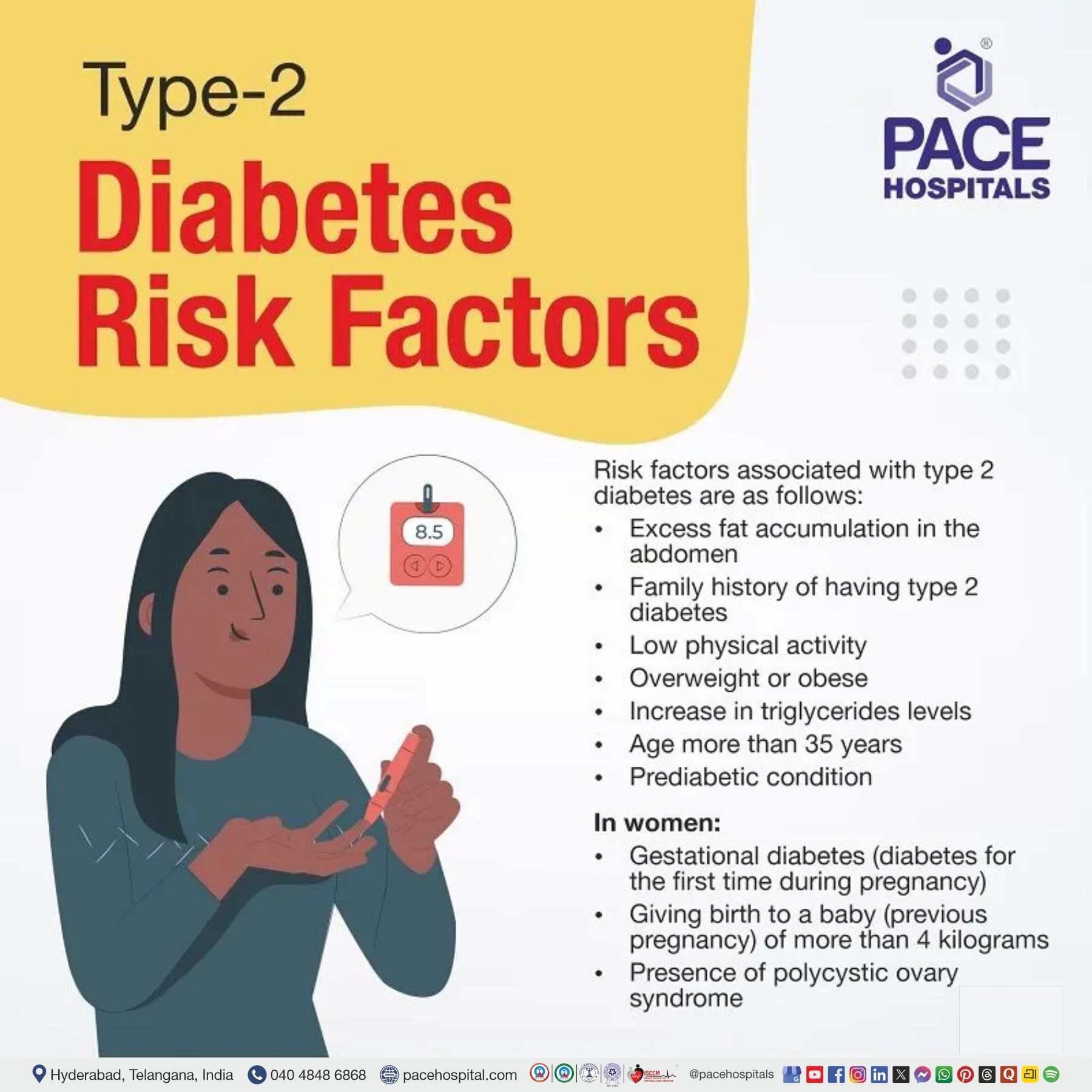
Risk factors associated with type 2 diabetes are as follows
- Excess fat accumulation in the abdomen
- Family history of having type 2 diabetes
- Low physical activity
- Overweight or obese
- Increase in triglycerides levels
- Age more than 35 years
- Prediabetic condition
In women, type 2 diabetes risk factors:
- Gestational diabetes (diabetes for the first time during pregnancy).
- Giving birth to a baby (previous pregnancy) of more than 4 kilograms
- Presence of polycystic ovary syndrome

Type 2 Diabetes Complications
Multiple acute and chronic problems might result from persistent hyperglycaemia in untreated type 2 diabetes mellitus, these are the complications of type 2 diabetes:
- Diabetic nephropathy (renal damage)
- Diabetic neuropathy (nerve damage)
- Diabetic retinopathy (eye damage)
- Cardiovascular diseases
- Skin problems
- Alzheimer's disease
- Sleep disorder
- Diabetic nephropathy (renal damage): Unabsorbed glucose accumulates in the blood and moves out of the body through the kidney. Increased blood glucose levels damage the kidney's blood vessels, leading to end-stage kidney failure.
- Diabetic neuropathy (nerve damage): A rise in blood glucose levels destroys the capillary walls (small blood vessels), reducing the flow of oxygen and nutrients to the nerves. Furthermore, high blood glucose levels might affect the nerves' chemicals, reducing their ability to send impulses which cause pain and numbness, especially in fingers and toes.
- Diabetic retinopathy (eye damage): A rise in blood glucose levels destroys the retina's blood vessels, which causes blindness. It also raises the risk of cataracts and glaucoma, which are significant eye disorders.
- Cardiovascular diseases: People with type 2 DM are at a higher risk of acquiring cardiovascular issues than the general population, that includes coronary artery disease, strokes, atherosclerosis, and high blood pressure. It was studied, an increase in consumption of a diet rich in sugar had low HDL (good cholesterol), high LDL (bad cholesterol) and high triglycerides that increase the risk of cardiovascular problems. Furthermore, high blood glucose reduces the elasticity of blood vessels, leading to constriction and thereby restricting blood flow. This can result in a decreased blood and oxygen flow, increasing the risk of hypertension and damage to large and tiny blood vessels.
- Skin problems: Diabetes may increase the susceptibility to skin issues, such as bacterial and fungal infections.
- Alzheimer's disease: Increased blood glucose can cause an increase in beta-amyloid protein, which might cause Alzheimer's disease.
- Sleep disorder: Diabetes mellitus might affect central respiratory control and might lead to obstructive sleep apnea (OSA).
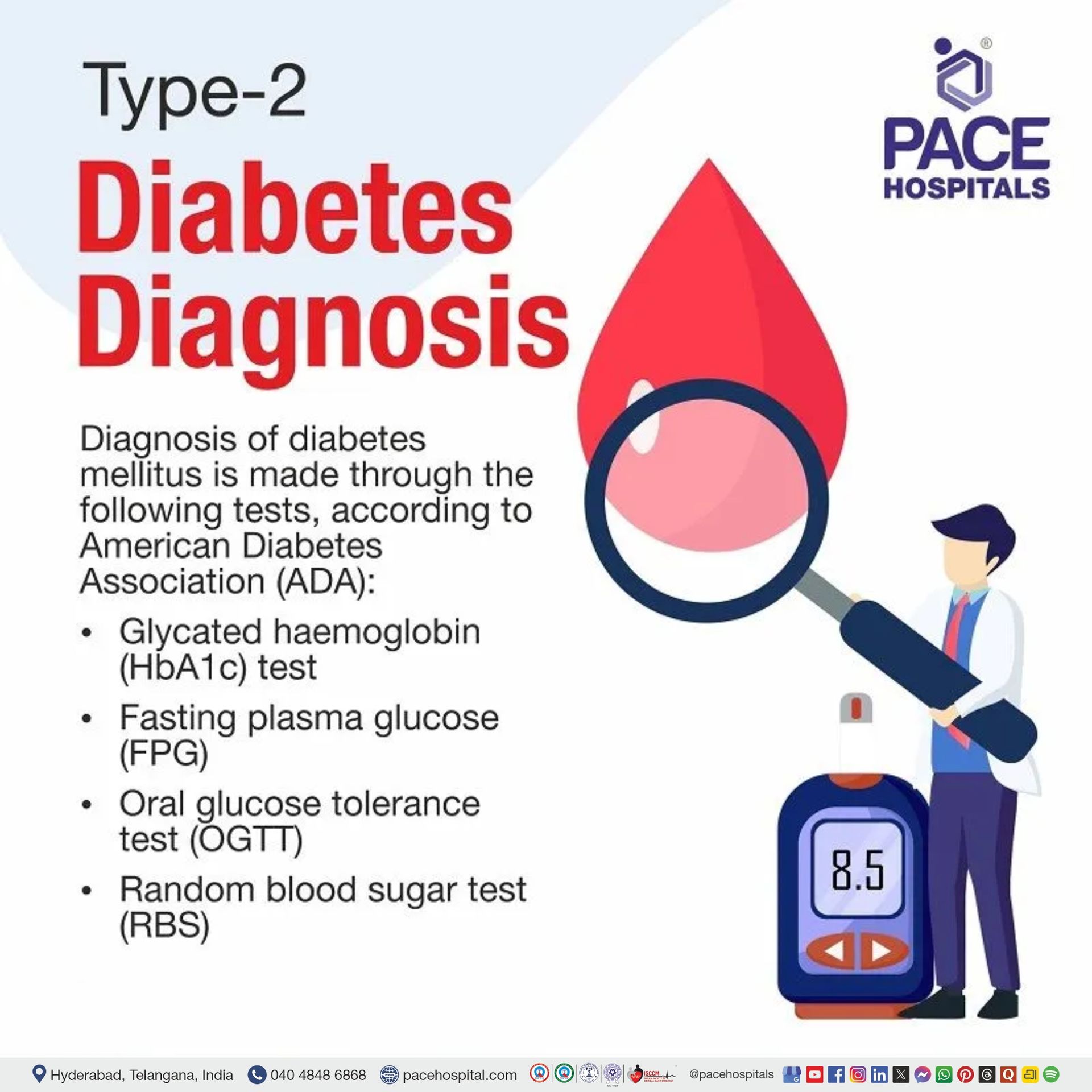
Type 2 Diabetes Diagnosis
In the initial step of diagnosis, the diabetologist would like to assess the patient’s history, family history, obesity status, past medication history, signs and symptoms. After that, the diabetologist would request diagnostic tests.
Diagnosis of diabetes mellitus is made through the following tests, according to American Diabetes Association (ADA):
- Glycated haemoglobin (HbA1c) test
- Fasting plasma glucose (FPG)
- Oral glucose tolerance test (OGTT)
- Random blood sugar test (RBS)
Type 2 Diabetes Treatment
Diabetes mellitus treatment is generally categorised into two forms.
- Pharmacological
- Non-pharmacological
Pharmacological: It includes the medical management that includes
- Oral antidiabetics
- Insulin therapy
Non-pharmacological: These include diet and regular exercise.
- Intake of a small diet at regular intervals, which is rich in fibre.
- Daily exercise includes brisk walking or running, or swimming for at least 150 minutes a week
- Reduced body weight
Why Choose PACE Hospitals?
Expert Super Specialist Doctors
Advanced Diagnostics & Treatment
Affordable & Transparent Care
24x7 Emergency & ICU Support

Type 2 Diabetes Prevention
The prevention of type 2 diabetes mellitus can be achieved by following the mentioned:
- Maintain normal body mass index
- Regular exercise
- A diet rich in fibre and protein and low in fats (saturated)
- Intake of low glycaemic index fruits and vegetables
Frequently Asked Questions (FAQs) on Type 2 diabetes
When to Consult a Doctor for Type 2 Diabetes?
Consult a doctor if your blood sugar levels continue to be higher than usual, you have risk factors for diabetes, or you experience symptoms of high blood sugar.
Signs That Require Medical Attention:
- Urinating frequently, particularly at night
- Increased thirst or constant dry mouth
- Unexplained weight loss
- Increased hunger despite eating normally
- Low energy or Persistent tiredness
- Blurred vision
- Slow-healing cuts or wounds
- Frequent skin, gum, or urinary tract infections
- Burning, tingling, or numbness in the hands or feet
- Blood sugar levels that remain consistently high
- Family history of Type 2 diabetes or being overweight/obese
If you have these symptoms, consult an endocrinologist, a diabetes specialist, or a general physician. The doctor may suggest blood sugar tests, HbA1c, urine tests, kidney function tests, lipid profile tests, or other tests based on your condition.
Share on
Request an appointment
Fill in the appointment form or call us instantly to book a confirmed appointment with our super specialist at 04048486868
Appointment request - health articles
Recent Articles