Femoral Hernia: Symptoms, Causes & Treatment
Written by: Editorial Team
Medically reviewed by: Dr. Padma Priya - Consultant Gastroenterologist and Hepatologist
Definition| Prevalence | Types | Causes | Symptoms | Risk Factors | Complications | Diagnosis | Treatment | Prevention | FAQs
Femoral Hernia Definition
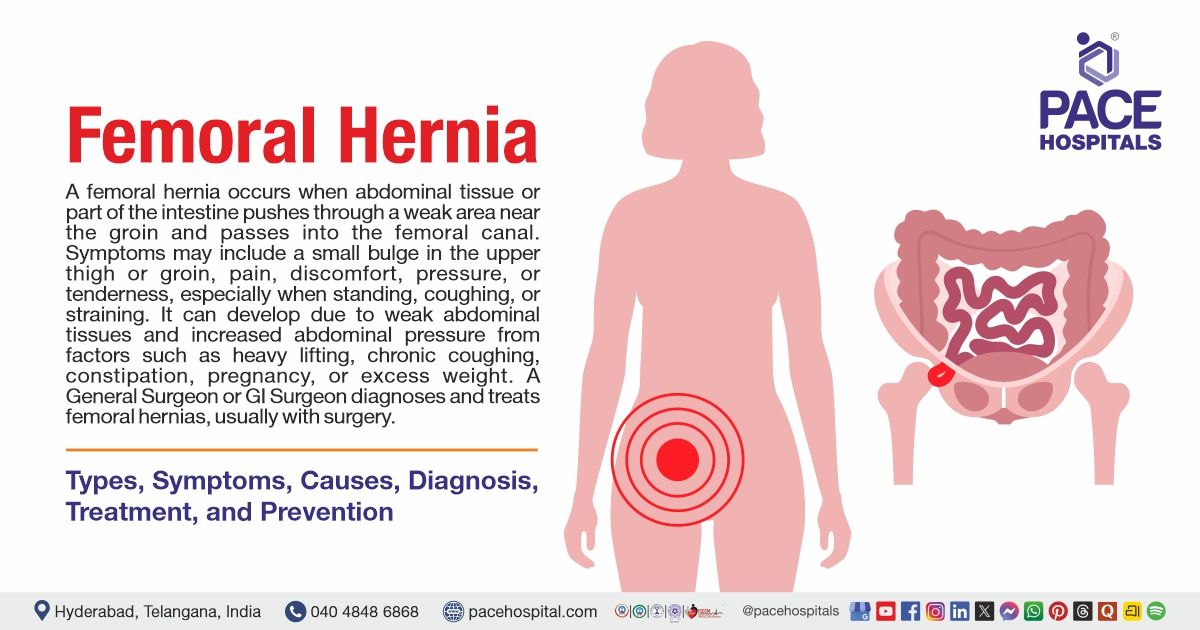
A femoral hernia occurs when a portion of the intestine or other abdominal tissue pushes through a weakened area in the lower abdominal wall and passes through the femoral ring into the femoral canal, which is located below the inguinal ligament in the upper thigh/groin region.
It is less common than an inguinal hernia and occurs more frequently in women. A small bulge or swelling may appear near the upper thigh or groin, which can become more noticeable while standing, coughing, or straining. Other symptoms may include groin or thigh discomfort, pain, a feeling of pressure or heaviness, and tenderness around the bulge.
Femoral hernias can develop due to weakness in the tissues around the femoral canal combined with increased pressure inside the abdomen. Factors such as chronic coughing, constipation and straining, heavy lifting objects, excess body weight, pregnancy, and previous inguinal hernia repair may occasionally be associated with a later femoral hernia. Because the femoral canal is narrow, femoral hernias have a relatively higher risk of incarceration and strangulation, where the herniated tissue becomes trapped and its blood supply is compromised. Complications may cause symptoms like severe pain, nausea, vomiting, abdominal swelling, and bowel obstruction and which requires urgent medical attention.
A General Surgeon or Gastrointestinal (GI) Surgeon diagnoses and treats femoral hernias. Treatment is usually surgical because femoral hernias have a significant risk of complications even when symptoms are mild.
Femoral hernia meaning
The term femoral hernia is derived from its anatomical femoral hernia location:
- “Femoral”: This refers to the femoral region, the area at the upper thigh near the groin.
- “Hernia”: comes from the Greek word hernia, meaning “a rupture or bulging.”
Thus, a femoral hernia means a hernia that occurs through the femoral canal, where abdominal tissue, such as fat or a portion of the intestine, pushes through a weakened area and creates a bulge near the upper thigh or groin.
Femoral hernia prevalence Worldwide
Femoral hernia is relatively uncommon, accounting for approximately 2–4% of all groin hernias worldwide. Femoral hernia is more common in women, particularly older women. Based on the Global Burden of Disease (GBD) 2021 data, the overall prevalence of groin, femoral, and abdominal hernias remains substantial worldwide, although age-standardized prevalence has declined over the past three decades. Femoral hernias specifically represent a smaller proportion of groin hernias but have a higher risk of incarceration and emergency presentation than inguinal hernias.
Femoral hernia prevalence in India
In India, femoral hernia is very rare, and precise population-level data is limited. A recent 2025 analysis of GBD 2021 data reported a substantial overall burden of inguinal, femoral, and abdominal hernias in India, with 137.05 cases per 100,000 population as the age-standardised incidence rate in the year 2021; however, the study did not provide a separate national prevalence estimate for femoral hernia . In a surgical study from Central India, femoral hernias were detected in 0.4% of operated abdominal wall hernias, highlighting their rarity in Indian clinical settings.
Femoral Hernia Types
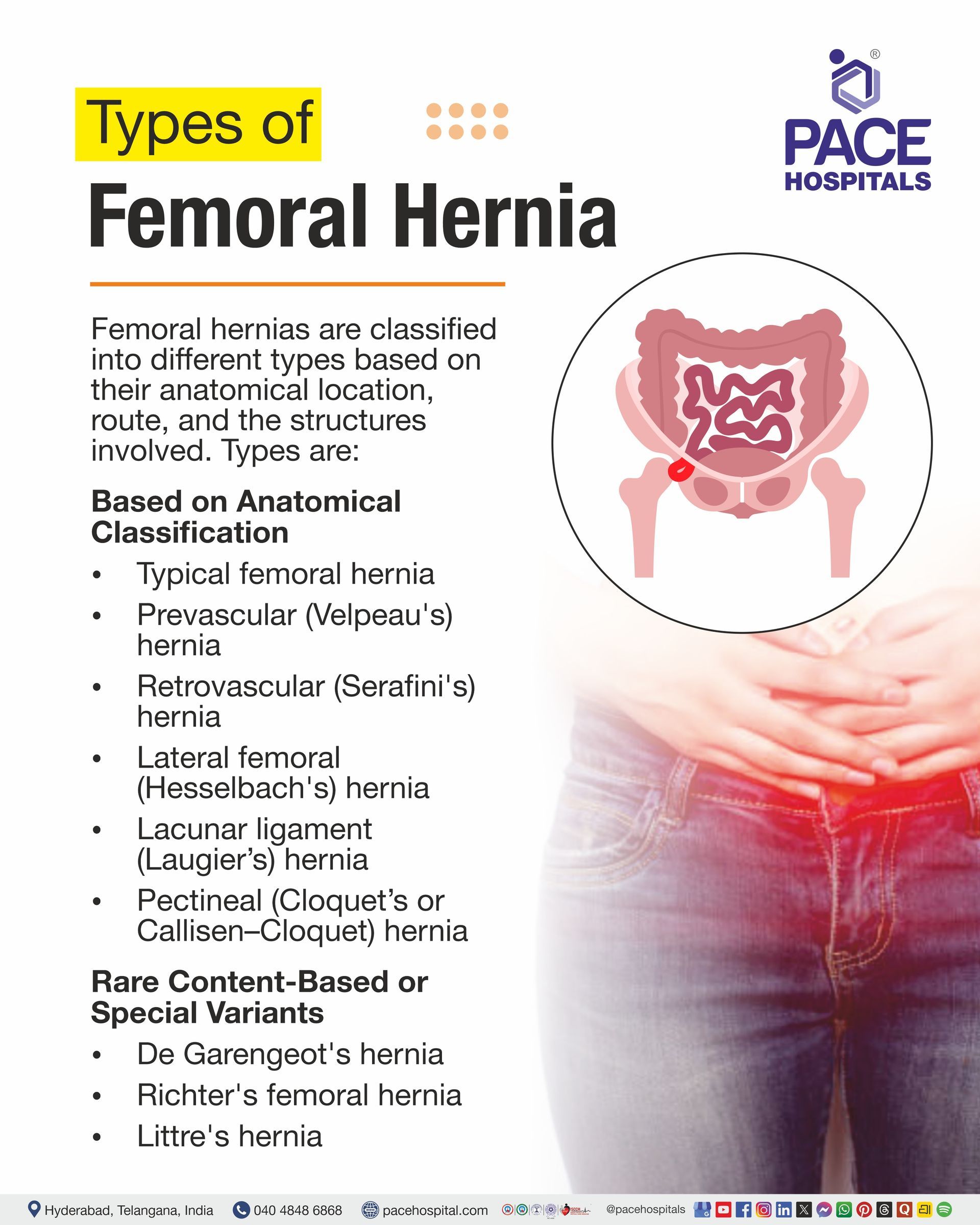
Femoral hernias can be classified according to the anatomical route taken by the hernial sac or, in rare cases, according to the specific structure contained within the hernia sac. The anatomical variants differ in their relationship to the femoral vessels and surrounding structures, while special variants are named based on their unusual contents or the portion of bowel involved. The types of femoral hernia include: -
Based on Anatomical Classification
- Typical femoral hernia
- Prevascular (Velpeau's) hernia
- Retrovascular (Serafini's) hernia
- Lateral femoral (Hesselbach's) hernia
- Lacunar ligament (Laugier’s) hernia
- Pectineal (Cloquet’s or Callisen–Cloquet) hernia
Rare Content-Based or Special Variants
- De Garengeot's hernia
- Richter's femoral hernia
- Littre's hernia
Based on Anatomical Classification
These are anatomical variants of femoral hernia. They are considered types because the hernial sac takes a different anatomical course relative to the femoral canal, femoral vessels, or pectineal structures.
- Typical femoral hernia: The hernial sac passes through the femoral ring into the femoral canal, usually lying medial to the femoral vein. This represents the usual pathway of a femoral hernia.
- Prevascular (Velpeau's) hernia: A very rare type of femoral hernia where the hernia sac sits directly in front of (anterior to) the major blood vessels of the thigh. Although its route differs from the typical femoral canal pathway, it remains a femoral hernia because it originates from the femoral region below the inguinal ligament.
- Retrovascular (Serafini's) hernia: The hernial sac passes behind the femoral vessels. This unusual relationship with the femoral vessels makes it a rare anatomical variant of femoral hernia.
- Lateral femoral (Hesselbach's) hernia: The hernial sac lies lateral to the femoral vessels, following an atypical route through the lateral part of the femoral region rather than the usual femoral canal.
- Lacunar ligament (Laugier’s) hernia: The hernial sac passes through the lacunar ligament (Gimbernat's ligament). Because the sac protrudes through this medial boundary of the femoral ring, it is classified as a rare femoral hernia variant.
- Pectineal (Cloquet's) hernia: In this, the hernial sac extends posteriorly toward the pectineal region, passing through the pectineal fascia and over the pectineus muscle. This unusual direction distinguishes it from the typical femoral hernia.
Rare Content-Based or Special Variants
These are considered special variants of femoral hernia based on what is contained in the hernia sac or how the bowel is involved.
- De Garengeot's Hernia: This is a femoral hernia that contains the vermiform appendix within the hernia sac. It is considered a special type because the appendix, rather than the bowel or fatty tissue, forms part of the hernia contents. If the appendix becomes inflamed inside the sac, it is termed acute appendicitis in a De Garengeot's hernia.
- Richter's Femoral Hernia: This is a dangerous medical emergency, occurs when only a portion of the bowel wall circumference is trapped at the femoral ring, and the entire bowel loop does not enter the hernia sac. Since the bowel lumen remains open, obstruction can be absent even if the trapped bowel wall becomes ischemic or necrotic.
- Littre's hernia: This is the case of a hernia that contains a Meckel's diverticulum; when the Meckel's diverticulum is found in the sac of a femoral hernia, then it is called a Littre's hernia involving the femoral canal.
Femoral Hernia Symptoms
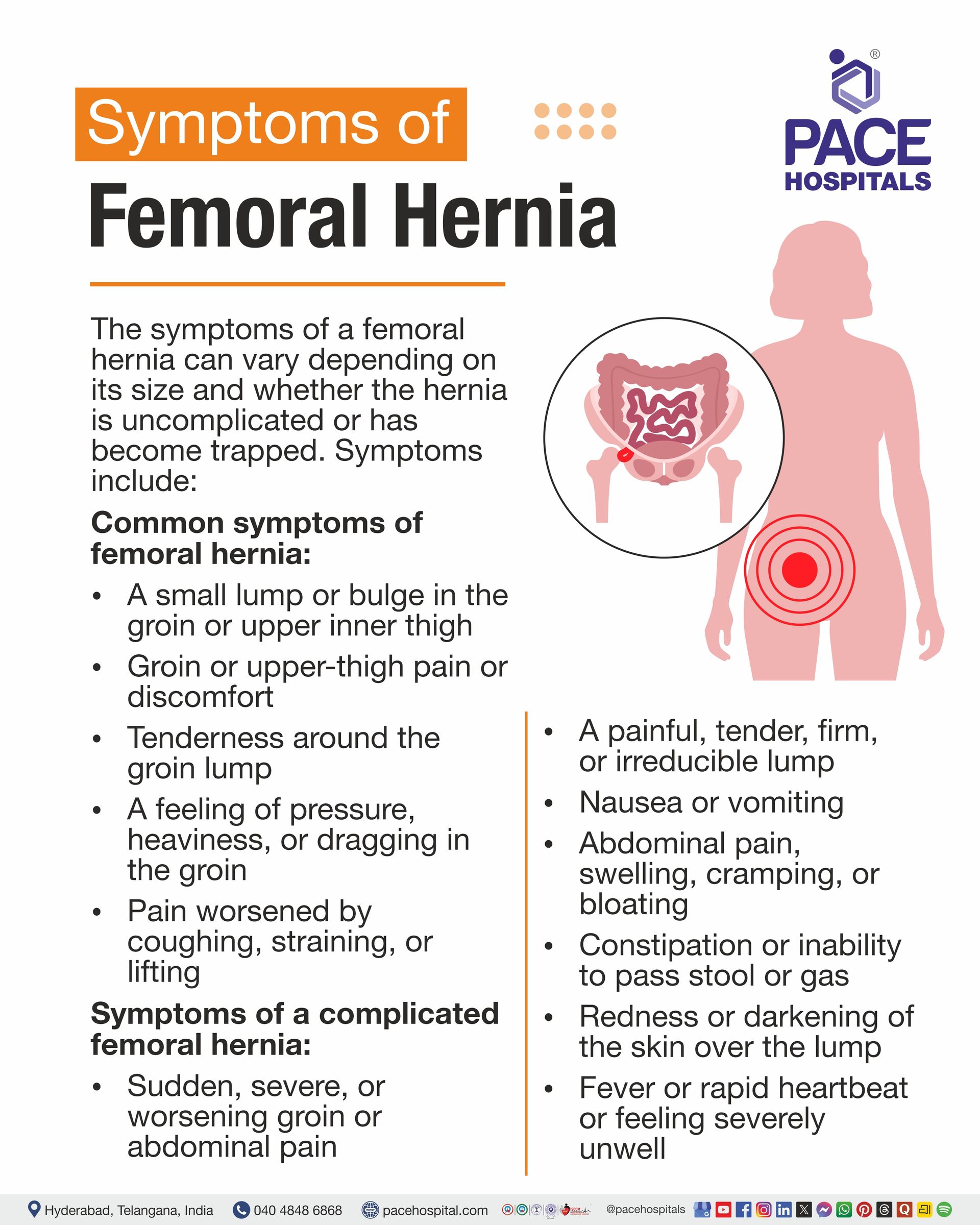
The symptoms of a femoral hernia can vary depending on its size and whether the hernia is uncomplicated or has become trapped. Some femoral hernias may cause no symptoms initially, while others may cause noticeable symptoms. When the hernia becomes complicated, more severe symptoms may occur.
The following are signs and symptoms of femoral hernia:
Common symptoms of femoral hernia:
- A small lump or bulge in the groin or upper inner thigh
- Groin or upper-thigh pain or discomfort
- Tenderness around the groin lump
- A feeling of pressure, heaviness, or dragging in the groin
- Pain worsened by coughing, straining, or lifting
Symptoms of a complicated femoral hernia:
- Sudden, severe, or worsening groin or abdominal pain
- A painful, tender, firm, or irreducible lump
- Nausea or vomiting
- Abdominal pain, swelling, cramping, or bloating
- Constipation or inability to pass stool or gas
- Redness or darkening of the skin over the lump
- Fever or rapid heartbeat or feeling severely unwell
Common Symtoms of Femoral Hernia
A small lump or bulge in the groin or upper inner thigh
A femoral hernia may cause a small lump or swelling in the groin or upper thigh, usually below the groin crease. The lump may become more noticeable when standing, coughing, or straining and may become less noticeable when lying down.
Groin or upper-thigh pain or discomfort
The hernia may cause aching, discomfort, or pain in the groin, upper thigh or abdomen because tissue pushes through a small opening and can put pressure on nearby tissues.
Tenderness around the groin lump
The area around the lump may feel sore or tender when touched or pressed. This tenderness can become more noticeable if the hernia becomes trapped or irritated.
A feeling of pressure, heaviness, or dragging in the groin
A femoral hernia can create a sensation of pressure, heaviness, or dragging in the groin as tissue protrudes through the femoral canal. It may worsen with standing, coughing, lifting, or straining.
Pain worsened by coughing, straining, or lifting
If a person coughs, lifts heavy objects, or strains during bowel movements can experience increased pressure inside the abdomen. This may push the hernia outward and make the groin pain or discomfort worse.
Symptoms of a Complicated Femoral Hernia
Sudden, severe, or worsening groin or abdominal pain
If the femoral hernia becomes trapped or strangulated, it can cause sudden and intense pain in the groin or upper thigh. The pain may also spread to the abdomen and become progressively worse as the trapped tissue loses its blood supply.
A painful, tender, firm, or irreducible lump
A painful, firm lump that cannot be pushed back may mean the hernia is trapped or strangulated. It requires urgent medical attention.
Nausea or vomiting
When a portion of the intestine becomes trapped and obstructed, it can interfere with the normal movement of food and fluids through the bowel, causing nausea and vomiting.
Abdominal pain, swelling, cramping, or bloating
A trapped bowel may cause abdominal pain, cramps, swelling, or bloating because the intestinal contents cannot pass through the affected area normally.
Constipation or inability to pass stool or gas
If the hernia causes intestinal obstruction, the person may have difficulty passing stool or gas. This can be accompanied by increasing abdominal pain and bloating.
Redness or darkening of the skin over the lump
The skin over the hernia may become red, purple, or dark if the hernia is trapped and its blood supply is affected. This can be a sign of strangulation and needs urgent medical attention.
Fever or rapid heartbeat or feeling severely unwell
A strangulated hernia can damage the trapped tissue and make a person very unwell. Fever, a fast heartbeat, and worsening pain are emergency warning signs.
Femoral Hernia Causes
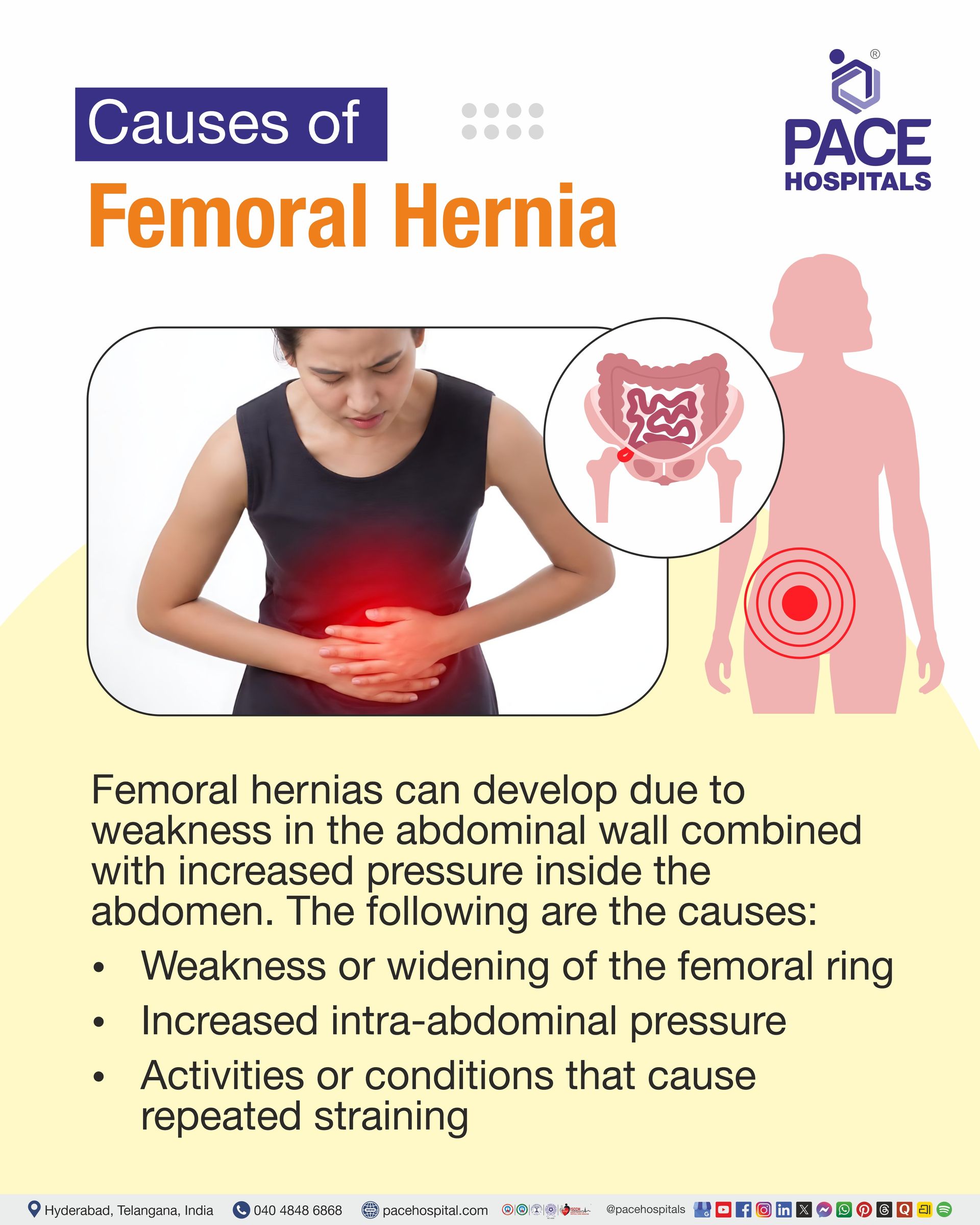
A femoral hernia develops when abdominal tissue or part of the intestine pushes through the femoral ring and into the femoral canal. It usually occurs because of a natural weakness in this area combined with increased pressure inside the abdomen.
Below are several factors that can increase the likelihood of developing a femoral hernia:
- Weakness or widening of the femoral ring
- Increased intra-abdominal pressure
- Activities or conditions that cause repeated straining
Weakness of the femoral ring
The femoral ring is the natural opening at the upper end of the femoral canal. If the tissues supporting this area become weak or stretched, abdominal tissue can push through the opening and form a femoral hernia. This weakness is more likely with increasing age and changes in the supporting tissues.
Increased intra-abdominal pressure
When pressure inside the abdomen remains high, it can push abdominal tissue against a weak point in the abdominal wall, such as the femoral ring. Over time, this pressure can cause tissue to protrude through the femoral canal and form a hernia.
Activities or conditions that cause repeated straining
Activities or situations that suddenly increase abdominal pressure—such as heavy lifting, repeated coughing, or straining during bowel movements—can force tissue toward the femoral ring. In a person with a vulnerable femoral canal, repeated or significant strain may contribute to the development of a femoral hernia.
Femoral Hernia Risk Factors
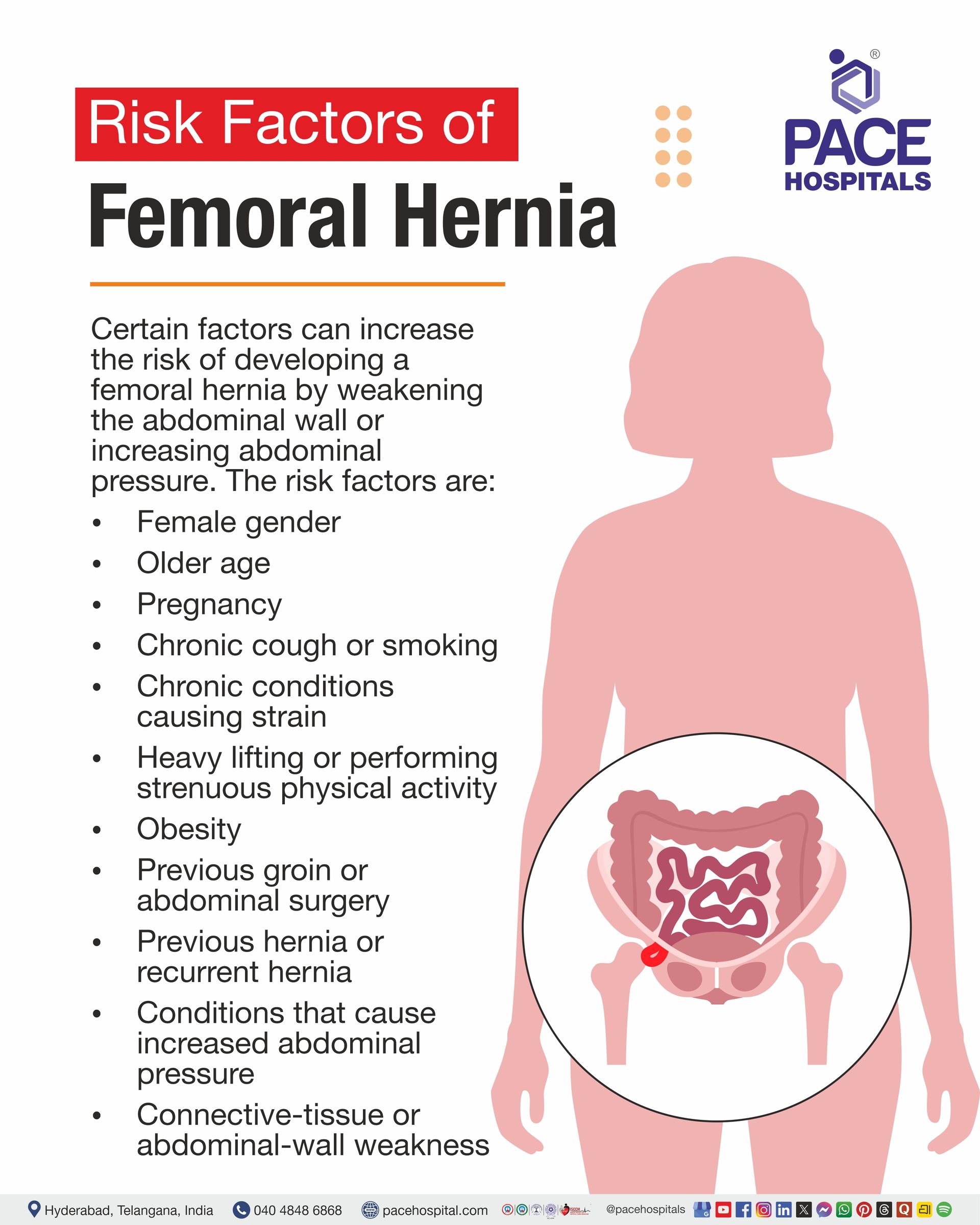
Certain factors can increase the likelihood of developing a femoral hernia by weakening the tissues around the femoral canal or repeatedly increasing pressure inside the abdomen. The following are some common risk factors for femoral hernia:
- Female gender
- Older age
- Pregnancy
- Chronic cough or smoking
- Chronic conditions causing strain
- Heavy lifting or performing strenuous physical activity
- Obesity
- Previous groin or abdominal surgery
- Previous hernia or recurrent hernia
- Conditions that cause increased abdominal pressure
- Connective-tissue or abdominal-wall weakness
Female gender
Femoral hernias are more common in women, particularly older women. The wider female pelvis and differences in groin anatomy may make the femoral canal more susceptible to herniation.
Older age
As people get older, the muscles and connective tissues of the abdominal wall gradually become weaker and less elastic. This weakening can make it easier for abdominal tissue to push through a naturally weak area such as the femoral canal.
Pregnancy
During the time of pregnancy, the growing uterus increases pressure inside the abdomen. Pregnancy-related hormonal changes also relax connective tissues, potentially making weak areas in the abdominal wall and groin more prone to developing a hernia.
Chronic cough or smoking
Persistent coughing repeatedly increases abdominal pressure and can strain tissues around the femoral canal. Smoking may contribute by causing chronic cough and affecting connective-tissue strength.
Chronic conditions causing strain
Conditions that repeatedly increase abdominal pressure, such as long-term constipation or difficulty passing urine. The conditions can cause constant stress on the abdominal wall and thus may play a role in the development of a hernia in the case of an existing weakness.
Heavy lifting or strenuous physical activity
Heavy lifting and strenuous activities can cause repeated increases in abdominal pressure. This may put additional stress on the tissues supporting the femoral canal, particularly when they are already weak.
Obesity
Excess body weight can increase pressure within the abdomen and place greater strain on the abdominal wall. This may increase the chance of abdominal tissue pushing through a weak area.
Previous groin or abdominal surgery
Previous surgery may alter the normal structure or strength of tissues in the groin or abdominal wall. In some patients, this can increase susceptibility to developing a hernia.
Previous hernia or recurrent hernia
A previous hernia may indicate an underlying weakness in the tissues supporting the abdominal wall. Patients who have undergone hernia repair may also develop a recurrent hernia.
Conditions that increase abdominal pressure
Conditions such as persistent abdominal distension or ascites can raise intra-abdominal pressure for a longer duration. This can contribute to hernia formation.
Connective-tissue or abdominal-wall weakness
The abdominal wall normally helps keep the internal organs and tissues in place. Weakening of connective tissue or reduced strength of the abdominal wall provides less support to the femoral canal. This can allow abdominal tissue to protrude through the weakened area.
Femoral Hernia Complications
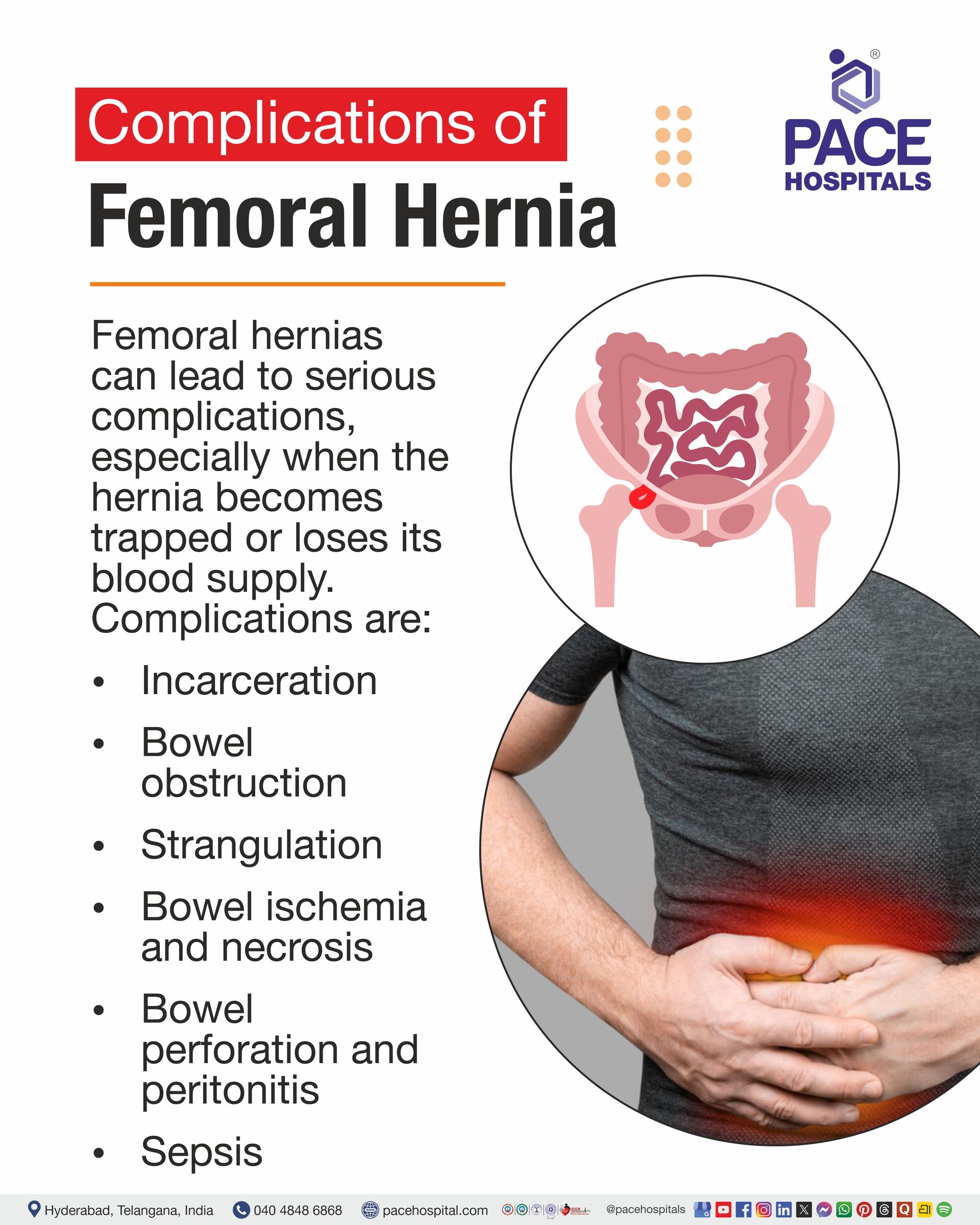
Although some femoral hernias may remain uncomplicated, the narrow femoral canal makes them more prone to becoming trapped and losing their blood supply. If a trapped hernia is not treated promptly, it can lead to serious complications such as:
- Incarceration
- Bowel obstruction
- Strangulation
- Bowel ischemia and necrosis
- Bowel perforation and peritonitis
- Sepsis
Incarceration
Incarcerated femoral hernia occurs when the hernia contents become trapped in the femoral canal and cannot be pushed back into the abdomen. The narrow opening of the femoral canal causes this complication.
Bowel obstruction
If a portion of the intestine becomes trapped inside the femoral hernia, it can block the normal movement of food, fluid, stool, and gas through the bowel. This cause abdominal pain, swelling, nausea, vomiting, and difficulty passing stool or gas.
Strangulation
A femoral hernia can be strangulated if the pressure at the narrow opening into the hernia cuts off or stops the blood supply to the trapped tissue, since a surgical emergency results from prolonged strangulation, possibly causing irreversible damage to the bowel.
Bowel ischemia and necrosis
When strangulation of the hernia continues, the bowel does not receive sufficient oxygen and nutrients, which can lead to ischemia. If the blood supply is not restored quickly, the bowel tissue may die, resulting in necrosis and may require removal of the damaged bowel.
Bowel perforation and peritonitis
Severe ischemia and necrosis can weaken the bowel wall and cause it to develop a hole or perforation. Leakage of intestinal contents into the abdominal cavity can then cause peritonitis, which is a serious inflammation and infection of the abdominal lining.
If bowel tissue dies or perforates, bacteria and inflammatory substances can enter the bloodstream or spread from the abdomen. This can lead to sepsis, a potentially life-threatening reaction to infection, particularly when treatment is delayed.
Femoral Hernia Diagnosis
Femoral hernia is diagnosed through a medical history, physical examination, and imaging tests when needed. The assessment helps confirm the hernia, identify its contents, and check for complications such as bowel obstruction or strangulation.
The following are the diagnostic evaluations of femoral hernia:
- Medical history
- Physical examination
- Imaging studies
- Ultrasound
- Computed tomography (CT) scan
- Magnetic resonance imaging (MRI) scan
- Laboratory Work-up (if strangulation suspected)
- Complete blood count (CBC)
- Serum lactate
- C-reactive protein (CRP)
- Electrolyte and renal function
Medical History
During the medical history evaluation, the doctor asks about symptoms that the patient is experiencing. This may include a lump or swelling in the groin or upper thigh area, pain or discomfort that increases with standing, coughing, lifting, or straining. The doctor also collects Information about previous hernias, abdominal or groin surgeries, pregnancy, chronic cough, constipation, or other conditions that increase abdominal pressure, which can help identify risk factors and raise suspicion of a femoral hernia.
Physical Examination
During physical examination, the doctor carefully examines the groin area for a bulge, swelling, tenderness, or a mass near the femoral canal. The patient may be asked to stand, cough, or strain, as these actions can increase abdominal pressure and make the hernia more noticeable. The location and characteristics of the swelling assist the doctor in distinguishing a femoral hernia from other forms of groin hernias, such as an inguinal hernia.
Imaging Studies
Ultrasound
Ultrasound is the first imaging test used to evaluate a suspected femoral hernia. It uses sound waves to create images of the groin tissues and can show a hernia sac, the tissue or bowel segment inside the hernia, and movement of the hernia during coughing or straining. It is a safe, painless test and does not involve radiation.
Computed tomography (CT) scan
A CT scan provides detailed cross-sectional images of the abdomen and pelvis and identifies the location and size of a femoral hernia. The scan is useful for determining whether fatty tissue or bowel has entered the femoral canal and can reveal issues like bowel obstruction, trapped hernia contents, or symptoms of strangulation.
Magnetic Resonance Imaging (MRI) scan
MRI uses magnetic fields to create highly detailed images of soft tissues and is useful when the diagnosis remains uncertain after physical examination or ultrasound. It can clearly visualise the femoral canal and surrounding structures, helping detect small or hidden femoral hernias and distinguish them from other groin conditions.
Laboratory Workup (When Strangulation Is Suspected)
Laboratory tests do not directly diagnose a femoral hernia. Instead, they help doctors identify whether a femoral hernia has caused complications. This generally includes:
A CBC may show elevated white blood cell counts, which can indicate inflammation or infection. In a patient with a suspected strangulated femoral hernia, an elevated white blood cell count may indicate an inflammatory response induced by trapped or injured bowel.
Serum Lactate
Serum lactate can help assess whether tissues are receiving adequate blood supply. If bowel trapped inside a femoral hernia becomes strangulated, reduced blood flow can cause tissue injury and may result in an elevated lactate level. A high lactate level can therefore raise concern for bowel ischemia or tissue damage, particularly when combined with severe symptoms and examination findings.
C-reactive Protein (CRP)
CRP is an inflammatory marker that increases when there is inflammation present in the body. In a complicated femoral hernia, an elevated CRP may indicate inflammation associated with bowel obstruction, ischemia, or tissue injury. CRP is not used to diagnose hernia and also cannot confirm strangulation.
Electrolyte and Renal Function Tests
These are blood tests that assess electrolyte levels and kidney function. They are particularly useful if the hernia has caused bowel obstruction, vomiting, dehydration, or prolonged illness. Abnormal sodium, potassium, or kidney function results may indicate dehydration or the effects of obstruction and help doctors assess the patient's condition before treatment or emergency surgery.
Femoral Hernia Treatment
Femoral hernia is primarily managed with timely surgical repair because conservative and pharmacological treatments do not correct the hernial defect. Treatment aims to relieve symptoms and prevent complications. The choice of treatment depends on the clinical condition of the patient and the type and severity of the hernia.
The management of femoral hernia includes:
Surgical management
- Open femoral hernia repair
- Minimally invasive repair
- Totally extraperitoneal (TEP) repair
- Transabdominal preperitoneal (TAPP) repair
- Mesh reinforcement
- Emergency surgical repair for complicated femoral hernia
Pharmacological management
- Analgesics
- Antiemetics
- Correction of electrolyte abnormalities
- Broad-spectrum intravenous antibiotics
Non-pharmacological management
- Patient education and surgical referral
- Appropriate activity modification for symptoms
- Management of contributing factors
- Encourage planned elective surgery
- Avoid relying on a truss or hernia belt
Surgical Management
Surgery is the first-line and definitive treatment for a diagnosed femoral hernia. Below are some femoral hernia surgery options:
Open femoral hernia repair: In open repair, the surgeon makes an incision near the groin to access the femoral hernia. The protruding tissue or bowel is carefully returned to the abdomen, and the opening in the femoral canal is closed and reinforced to prevent the hernia from recurring.
Minimally invasive repair: The procedure uses small incisions, a camera, and specialised instruments to repair the hernia from inside the abdominal wall. The herniated tissue is returned to its normal position, and the weakened area is reinforced. This mainly includes:
- Totally extraperitoneal (TEP) repair: In this, the surgeon accesses the space behind the abdominal wall without entering the main abdominal cavity. The femoral defect is repaired and covered with mesh to strengthen the weakened area.
- Transabdominal preperitoneal (TAPP) repair: The surgeon enters the abdominal cavity using a camera and then places the mesh in the preperitoneal space over the femoral defect. The mesh reinforces the area and helps prevent the hernia from recurring.
- Mesh reinforcement: Mesh is a strong surgical material placed over or around the hernia defect to provide additional support to the weakened tissue. It helps strengthen the femoral canal and reduce the likelihood of recurrence.
Emergency surgical repair for complicated femoral hernia: If the hernia becomes incarcerated, obstructed, or strangulated, emergency
femoral hernia surgery is performed. The surgeon releases the trapped contents and examines the blood supply and intestinal function. The bowel is put back into the abdomen, but in some cases where the bowel is seriously damaged, it may need to be removed. The femoral defect is then repaired using the most appropriate technique, which is selected based on the patient's condition and the extent of contamination or tissue damage.
Pharmacological Management
Medicines do not repair or close a femoral hernia. They are mainly used to relieve symptoms, manage associated problems, and stabilise the patient before or during surgery, particularly when complications occur.
Analgesics
Pain-relieving medicines are used to reduce pain and discomfort caused by the hernia. They provide symptomatic relief but do not correct the underlying hernia.
Antiemetics
If the hernia causes bowel obstruction, patients may experience nausea and vomiting. Antiemetic medicines can help control nausea and vomiting while the patient is being evaluated and prepared for definitive treatment.
Correction of electrolyte abnormalities
Repeated vomiting or bowel obstruction can cause dehydration and disturbances in the levels of sodium, potassium, and other electrolytes in the body. IV fluids and electrolyte replacement helps to restore fluid and electrolyte balance and prepare the patient safely for surgery when required.
Broad-spectrum intravenous antibiotics
Antibiotics may be given when strangulation, bowel ischemia, perforation, infection, or emergency surgery raises concern for bacterial contamination or infection. They help reduce the risk or severity of infection but do not treat the hernia itself.
Non-Pharmacological Management
These measures do not directly close or repair a femoral hernia, but they help reduce symptoms, prevent additional strain, and support timely definitive treatment, including :
Patient education and surgical referral
The patient should be informed that a femoral hernia does not usually heal on its own and that surgical repair is the definitive treatment. Early referral to a general surgeon allows accurate assessment and planning of elective repair, helping to reduce the risk of complications.
Appropriate activity modification for symptoms
People who have a hernia are told to avoid lifting heavy weights, putting excessive strain on their bodies, or carrying out any activities which make their groin pain or swelling worse. This will reduce the pressure on the abdominal wall and might help control the symptoms until surgery can take place.
Management of factors that increase intra-abdominal pressure
Conditions that increases the intra-abdominal pressure are chronic cough, constipation, difficulty in passing urine, and obesity. Treating these problems first can reduce stress on the femoral canal and may help prevent worsening of symptoms.
Encourage planned elective surgery
Once a femoral hernia is diagnosed, planned elective repair is generally encouraged because femoral hernias have a risk of becoming incarcerated or strangulated. Elective surgery allows the hernia to be repaired before an emergency complication develops.
Avoid relying on a truss or hernia belt
A truss or hernia belt only provides temporary support in selected situations, but it does not close the femoral defect or cure the hernia.
Femoral Hernia Prevention
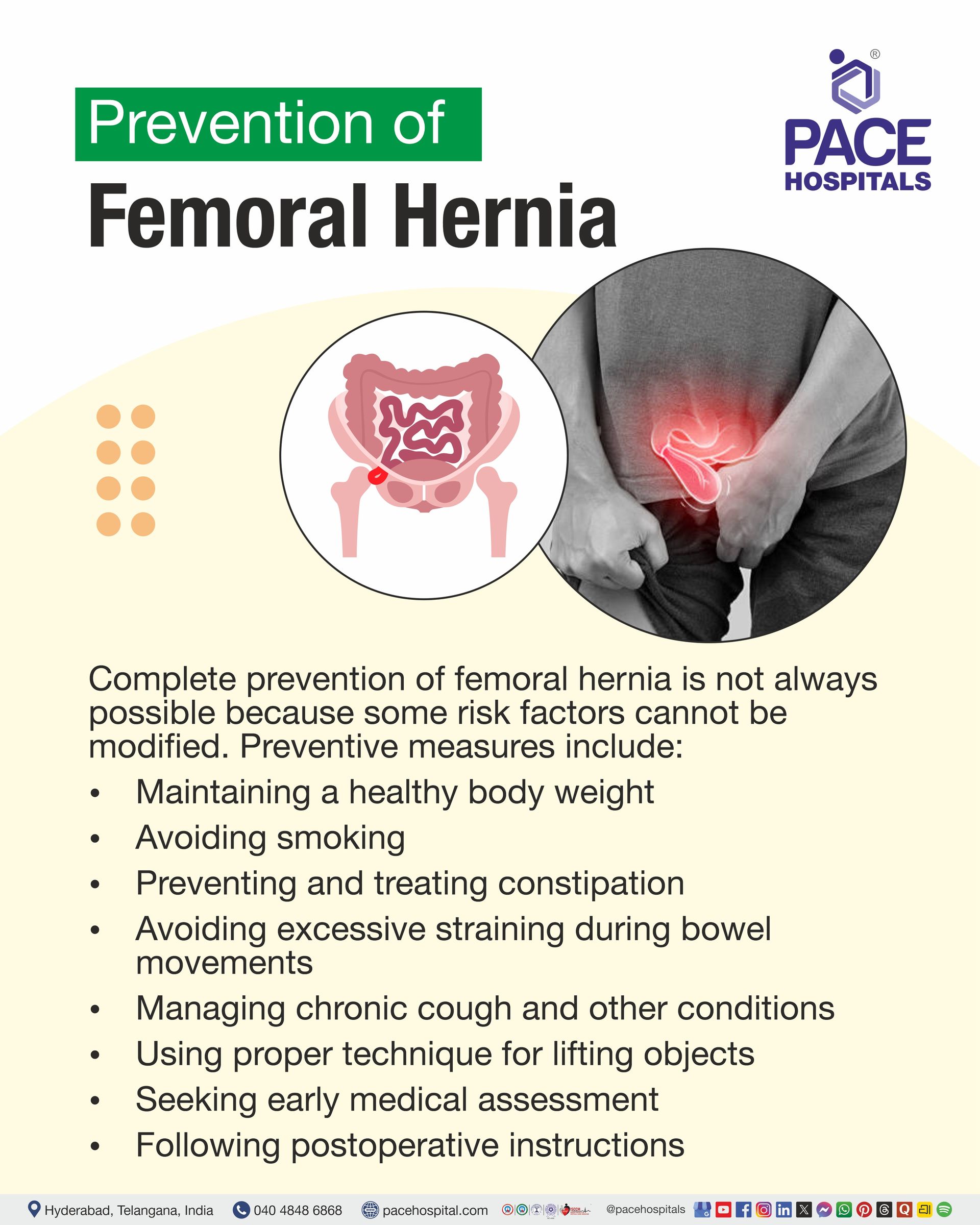
Complete prevention of femoral hernia is not always possible because some risk factors cannot be modified. The following are some key preventive measures:
- Maintaining a healthy body weight
- Avoiding smoking
- Preventing and treating constipation
- Avoiding excessive straining during bowel movements
- Managing chronic cough and other conditions
- Using proper technique for lifting objects
- Seeking early medical assessment
- Following postoperative instructions
Maintaining a healthy body weight
Maintaining a healthy body mass index (BMI) can reduce excess pressure on the abdominal wall. This may reduce stress on naturally weak areas, such as the femoral canal, and can also make recovery after hernia surgery easier.
Avoiding smoking
Smoking can cause chronic coughing and may impair tissue strength and wound healing. Avoiding smoking helps to reduce factors that can contribute to hernia formation and recurrence.
Preventing and treating constipation
Constipation can lead to repeated straining during bowel movements, which increases intra-abdominal pressure and adds extra stress on the groin region.
Avoiding excessive straining during bowel movements
Repeated straining causes sudden increases in intra-abdominal pressure, which may push abdominal tissues through a weak area in the femoral canal.
Managing chronic cough and other conditions
Persistent coughing repeatedly increases intra-abdominal pressure. Treating chronic cough and other conditions that cause frequent straining can reduce this repeated stress.
Using proper technique for lifting objects
Correct lifting technique and avoiding unnecessarily heavy loads can reduce sudden increases in intra-abdominal pressure and excessive strain on the abdominal wall.
Seeking early medical assessment
Early evaluation of a groin lump or pain can help identify a femoral hernia before complications such as incarceration or strangulation occur.
Following postoperative instructions
After hernia repair, patients need to follow the surgeon's advice regarding activity, wound care, and gradual return to normal activities, which helps proper recovery and may also reduce the risk of recurrence and postoperative complications.
Difference Between Femoral And Inguinal Hernia
Femoral vs inguinal hernia
Femoral and inguinal hernias are common types of groin hernias that differ in their anatomical location, clinical presentation, risk of complications, and management. Although both involve protrusion of abdominal contents through a weakness in the groin region, understanding their differences is essential for accurate diagnosis and appropriate treatment. The table below discusses about the differences between femoral hernia and inguinal hernia:
| Parameters | Femoral Hernia | Inguinal Hernia |
|---|---|---|
| Location | Develops through the femoral canal, below the inguinal ligament and usually appears in the upper thigh or lower groin. | Develops through the inguinal canal, above the inguinal ligament and usually appears in the groin. |
| Common in | More common in women, particularly older women. | More common in men, although it can occur in both men and women. |
| Route of Herniation | Passes through the femoral ring and femoral canal. | Passes through the inguinal canal. |
| Risk of Complications | Has a higher risk of incarceration and strangulation because the femoral canal is narrow. | Can also become incarcerated or strangulated, but the risk is generally lower than with femoral hernias. |
| Typical Swelling | Often appears as a small lump in the upper inner thigh or lower groin. | Usually appears as a bulge in the groin, and in some cases may extend into the scrotum in men. |
| Treatment | Surgical repair is generally recommended because of the higher risk of complications. | Treatment mainly based on symptoms, type, and patient factors; symptomatic or complicated hernias generally require surgical repair. |
Why Choose PACE Hospitals?
Expert Super Specialist Doctors
Advanced Diagnostics & Treatment
Affordable & Transparent Care
24x7 Emergency & ICU Support
Frequently Asked Questions (FAQs) on Femoral Hernia
What is a femoral hernia?
A femoral hernia is a type of groin hernia in which abdominal tissue pushes through a weak area into the femoral canal, usually causing a lump in the upper inner thigh or groin. It is more commonly seen in women and has a higher risk of incarceration and strangulation than many other groin hernias.
Can a femoral hernia heal itself?
No. A femoral hernia does not usually heal on its own because the underlying weakness or defect in the abdominal wall does not close spontaneously. Symptoms may temporarily improve, but the hernia can persist and may become incarcerated or strangulated. Therefore, medical evaluation and timely surgical repair are recommended for a femoral hernia.
Are femoral and inguinal hernias the same?
No. Both are types of groin hernias, but they occur in different locations. A femoral hernia develops below the inguinal ligament through the femoral canal, while an inguinal hernia develops above the inguinal ligament through the inguinal canal. Femoral hernias are more common in women and have a greater risk of incarceration and strangulation.
Can a femoral hernia occur in males?
Yes, femoral hernias can occur in males, although femoral hernias are much more common in females. Men can develop a femoral hernia when there is a weakness in the tissues around the femoral canal, particularly when factors such as increased abdominal pressure or previous surgery contribute to the weakness.
How serious is a femoral hernia?
A femoral hernia can become serious if the herniated tissue becomes trapped (incarcerated) or its blood supply is cut off (strangulated). This can cause severe pain, vomiting, abdominal swelling, or a firm lump that cannot be pushed back. Strangulation can damage the intestine and may require emergency surgery. Therefore, even a small femoral hernia should be evaluated by a doctor, particularly if there is increasing pain or a change in the swelling.
What is the main cause of a femoral hernia?
A femoral hernia occurs when fatty tissue or part of the intestine pushes through a weak area in the lower abdominal wall and enters the femoral canal near the groin. Increased pressure inside the abdomen can contribute to this, such as from heavy lifting, chronic coughing, constipation and straining.
How painful is femoral hernia surgery?
Femoral hernia repair surgery is usually performed under anaesthesia, so you should not feel pain during the operation. Some soreness, tightness or discomfort around the groin area is normal after surgery and is usually managed with pain-relieving medicines. The discomfort generally improves as healing progresses, and most people can gradually return to normal activities over the following weeks.
What is an incarcerated femoral hernia?
An incarcerated femoral hernia occurs when the tissue or bowel that has pushed through the femoral canal becomes trapped and cannot be pushed back into the abdomen. It may cause a firm, painful or tender swelling in the groin or upper thigh. An incarcerated hernia can progress to strangulation, so it requires prompt medical assessment and may need urgent surgery.
What are the warning signs of a strangulated femoral hernia?
Warning signs include sudden or severe groin or upper-thigh pain, a painful or tender lump that cannot be pushed back, increasing swelling, nausea, vomiting and abdominal pain or distension. The skin over the hernia may also become red, dark or discoloured. Strangulation means that the blood supply to the trapped tissue has been reduced or cut off, making it a medical emergency requiring immediate treatment.
Can medication cure a femoral hernia?
No, medication cannot cure a femoral hernia. A doctor prescribes medications for pain control and to address problems such as constipation or chronic cough that increase abdominal pressure. However, these treatments do not repair the weakened area. Surgical repair is the definitive treatment for a femoral hernia and is generally recommended because of the risk of incarceration and strangulation.
What is the treatment for a femoral hernia?
Surgery is the definitive treatment for a femoral hernia. The surgeon returns the protruding tissue or bowel to its normal position and repairs the opening in the femoral canal by using mesh to strengthen the area. Because femoral hernias have a higher risk of becoming trapped or strangulated, timely surgical repair is generally recommended. If the hernia causes severe pain, becomes irreducible, or affects the blood supply to the bowel, emergency surgery may be required.
How can femoral hernia recurrence be reduced?
After successful repair, the risk of recurrence is present. Recurrence can be reduced by choosing an appropriate surgical repair, following the surgeon’s postoperative instructions, maintaining a healthy body weight, avoiding excessive straining, and managing problems such as chronic cough and constipation. Patients should gradually return to strenuous activities as advised by their surgeon and attend recommended follow-up appointments. Surgical technique and proper repair of the femoral defect are also important factors in reducing recurrence.
Can pregnancy cause a femoral hernia?
Pregnancy can increase pressure inside the abdomen as the uterus grows and may make a previously weak area more likely to develop or become noticeable as a hernia. However, pregnancy does not mean that every woman will develop a femoral hernia. Groin swelling during pregnancy can also have other causes, so any new or persistent lump should be assessed by a doctor. Management during pregnancy depends on the symptoms and any signs of complications.
Can heavy lifting cause a femoral hernia?
Heavy lifting can increase intra-abdominal pressure and may contribute to the development or worsening of a femoral hernia, particularly when there is already a weakness in the groin or femoral canal. However, heavy lifting alone is not considered the only cause of a femoral hernia. It may also make an existing hernia more noticeable or painful.
When to consult a doctor for a femoral hernia?
Consult a doctor for a femoral hernia if you notice a new lump, swelling, or pain in the groin or upper thigh, especially if the swelling becomes more noticeable when standing, coughing, lifting, or straining. A femoral hernia can sometimes become trapped or strangulated, so early medical assessment is important. Signs that indicate the need for immediate medical attention include:
- Sudden or severe groin or upper-thigh pain
- A painful, firm, or tender lump that cannot be pushed back
- Sudden increase in the size of the swelling
- Nausea or repeated vomiting
- Abdominal pain, bloating, or swelling
- Difficulty passing stool or gas
- Redness or discoloration over the hernia
- Fever or feeling unusually unwell
If these symptoms appear, it is best to seek urgent medical care from a femoral hernia doctor, as they may indicate an incarcerated or strangulated femoral hernia requiring emergency treatment. Even without severe symptoms, anyone with a suspected femoral hernia should consult a doctor for evaluation and appropriate femoral hernia treatment planning.
Share on
Request an appointment
Fill in the appointment form or call us instantly to book a confirmed appointment with our super specialist at 04048486868
Appointment request - health articles
Recent Articles