ACL Surgery Cost in Hyderabad, India – 2026 Guide
Get a Cost Estimate for ACL Surgery
Procedure & Surgery Cost Pages
All You Need To Know About ACL Reconstruction Surgery
ACL reconstruction is a surgical procedure that replaces the torn ligament with a graft. The anterior cruciate ligament connects the tibia (shin-bone) to the femur (thigh bone). A tear in this ligament may lead the knee to give way during physical activity, most commonly during side-step or crossover movements.
ACL injuries are commonly seen in athletes, active individuals, and people who experience twisting injuries, sudden stops, falls, or direct trauma to the knee. A complete ACL tear may cause knee instability, swelling, pain, difficulty walking, and repeated episodes of the knee “giving way.”
An orthopaedic surgeon will make one or more incisions around the knee. Most surgeons perform the procedure using arthroscopy (keyhole surgery), which involves using a camera to examine the inside of the knee. The surgeon will then replace the ACL with appropriate tissue (a graft) from another part of the body or donor tissue.
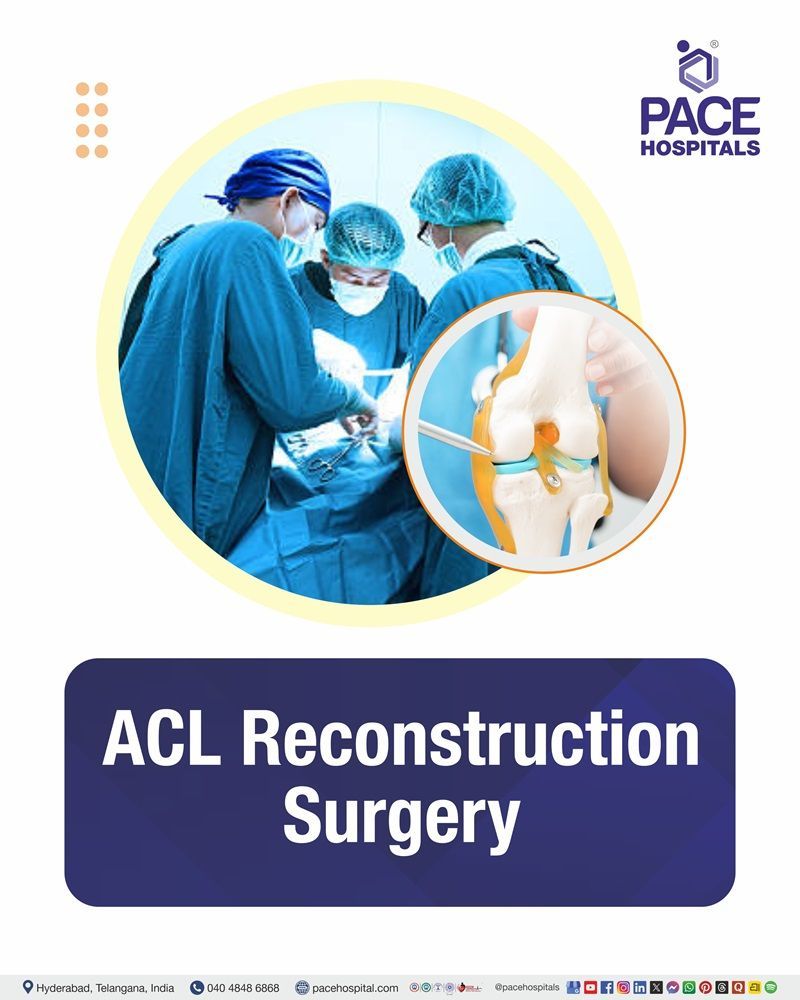
ACL Surgery Cost in India
On average, ACL Reconstruction Surgery cost in India ranges between ₹80,000 and ₹4,00,000 (approximately US $836 to US $4,182). However, the actual cost may vary depending on several factors, including:
- The patient’s age, activity level, body weight, and overall health.
- Severity of ACL tear and associated knee injuries.
- Type of ACL reconstruction technique used.
- Type of graft used: hamstring, patellar tendon, quadriceps tendon, or allograft.
- Whether meniscus repair, cartilage treatment, or other ligament repair is required.
- Hospital charges, including room category and facilities.
- Surgeon’s expertise and surgical team charges.
- Pre-operative investigations and post-operative physiotherapy requirements.
- Insurance coverage or corporate approvals for cashless treatment.
- Any complications that may arise during or after the procedure.
ACL Surgery Cost in Hyderabad, Telangana
On average, ACL Reconstruction Surgery cost in Hyderabad ranges between ₹1,00,000 and ₹2,50,000 (approximately US $1,045 to US $2,614) for standard ACL reconstruction procedures.
These rates offer a competitive and cost-effective option compared to other hospitals in the city, with advanced orthopaedic care readily available.
However, the cost of ACL Reconstruction Surgery in Hyderabad is influenced by several factors, such as:
- The patient’s age, sports activity level, and medical history.
- Type and severity of ACL tear.
- Associated meniscus, cartilage, or multi-ligament injury.
- Type of graft used for reconstruction.
- The hospital facility chosen and its infrastructure.
- Duration of hospital stay and room category selected.
- Insurance or corporate approvals for cashless services.
- Extent of pre-operative evaluation and post-operative physiotherapy.
- Potential complications during or after the procedure.
Cost Breakdown According to the Type of ACL Reconstruction Surgery
- Arthroscopic ACL Reconstruction – ₹1,20,000 – ₹2,80,000 (US $1,260 – US $2,939) approx.
- ACL Repair Surgery – ₹1,00,000 – ₹2,50,000 (US $1,050 – US $2,624) approx.
- ACL Reconstruction with Hamstring Autograft – ₹1,20,000 – ₹2,50,000 (US $1,260 – US $2,624) approx.
- ACL Reconstruction with Patellar Tendon Autograft (BTB) – ₹1,40,000 – ₹2,80,000 (US $1,470 – US $2,939) approx.
- ACL Reconstruction with Quadriceps Tendon Autograft – ₹1,50,000 – ₹3,00,000 (US $1,575 – US $3,149) approx.
- ACL Reconstruction with Allograft – ₹2,00,000 – ₹3,50,000 (US $2,099 – US $3,674) approx.
- ACL Reconstruction with Meniscal Repair (Combined Procedure) – ₹1,80,000 – ₹3,50,000 (US $1,889 – US $3,674) approx.
- Revision ACL Reconstruction Surgery – ₹2,50,000 – ₹4,00,000 or more (US $2,624 – US $4,199+) approx.
Note: These are estimated costs. The exact cost for an individual patient is determined after a detailed orthopaedic evaluation, MRI review, graft selection, and assessment of associated knee injuries. ACL Repair Surgery is different from ACL Reconstruction Surgery and is performed only in selected fresh ACL tear cases where the torn ligament is suitable for repair.
Additional Information: ACL Reconstruction Surgery cost may change depending on graft type, fixation implants, hospital stay, associated meniscus or cartilage repair, physiotherapy requirements, and surgical complexity. Revision ACL reconstruction and allograft-based surgery usually cost more because they may require advanced planning, special implants, and additional surgical expertise.
Breakdown of ACL Reconstruction Surgery Costs
The hospital, the type of surgical procedure, the graft used, any related knee problems, and the patient's general health all affect the cost of ACL reconstruction surgery. The following is a thorough analysis of the costs usually related to ACL reconstruction surgery:
Pre-Surgery Costs
- Consultation Fees: Charges for consulting an orthopaedic surgeon or sports medicine specialist, which may change based on the doctor’s experience and hospital.
- Diagnostic Tests: These include X-rays, MRIs, blood tests, ECGs, and other testing needed to assess cartilage damage, meniscus injuries, ACL tears, and surgical fitness.
- Pre-Surgical Screening: Comprehensive health evaluation to determine a patient's fitness for anaesthesia and surgery, particularly in those with diabetes, high blood pressure (HTN), heart disease, obesity, or other illnesses.
ACL Reconstruction Surgery Costs
- Hospitalization Charges: Room costs for both admission and recovery following surgery. In some cases, daycare or short-term admission may be possible.
- Surgical Procedure: Costs related to arthroscopic ACL reconstruction, such as those for the surgeon, the operating room, arthroscopy tools, graft preparation, and fixation devices.
- Graft and Implant Charges: Depending on the type of graft and the fixation implants—such as buttons, anchors, interference screws, or other fixation systems—charges may change.
- Anesthesia and Surgical Team Fees: Costs for the orthopaedic surgery team, anaesthesiologist, surgical assistants, and anaesthesia used during the treatment.
Post-Surgery Care Costs
- Hospital Stay: General hospital costs for monitoring and recovery. Depending on their medical condition, mobility, and pain management, many individuals might need a short hospital stay.
- Follow-Up Visits: To monitor wound healing, knee mobility, graft recovery, and rehabilitation progress, routine follow-up visits are necessary.
- Physiotherapy and Rehabilitation: ACL recovery largely depends on physiotherapy. It helps the safe return to activity or sports as well as the restoration of knee movement, muscle strength, balance, and stability.
For patients undergoing ACL reconstruction surgery, this cost structure ensures transparency and facilitates efficient financial planning. At PACE Hospitals, Hyderabad, we offer detailed, personalised estimates based on the specific injuries, required grafts, and rehabilitation needs of each patient.
Who Needs ACL Reconstruction Surgery?
Not all ACL injuries require ACL reconstruction surgery. It is advised when non-surgical treatment is unlikely to offer enough stability and when knee instability interferes with everyday activities, work, or sports performance.
Common Conditions Indicating Need for ACL Reconstruction Surgery
- Complete ACL Tear: Anterior cruciate ligament tears can result in knee instability, recurrent episodes of giving way, and trouble resuming high-demand activities like sports.
- Knee Instability After Injury: ACL reconstruction may be necessary for patients who experience knee buckling, shifting, or giving way when walking, running, climbing stairs, or turning.
- Sports-Related ACL Injury: ACL reconstruction may be necessary for athletes and active people who play pivoting sports like football, cricket, basketball, badminton, running, or others in order to restore knee stability.
- ACL Tear with Meniscus Injury: Surgery may be recommended to correct both problems and protect long-term knee function when meniscus damage is associated with an ACL tear.
- ACL Tear with Cartilage Injury: Arthroscopic treatment may be necessary for cartilage injury and ACL tears in order to lessen pain, enhance function, and protect the knee joint.
- Young and Active Patients: Surgery is frequently indicated for young patients with functional instability and a complete ACL tear in order to prevent recurrent knee injuries.
- Failure of Non-Surgical Treatment: Surgery may be recommended if knee stability cannot be improved with physiotherapy, bracing, activity adjustment, and strengthening exercises.
- Multi-Ligament Knee Injury: To restore knee alignment and stability, surgical reconstruction may be necessary in cases of ACL and other ligament injuries.
Who is Not Eligible for ACL Reconstruction Surgery?
For many patients, ACL Reconstruction Surgery is safe and effective. However, it may not be the right choice for everyone. Surgery may be unsafe or less helpful if you have certain conditions or health risks:
- Mild Partial ACL Tear Without Instability: Partial tears and stable knees may get better with physiotherapy and strengthening exercises.
- Active Infection: Patients with active infection in the knee, skin or elsewhere in the body may require treatment before surgery.
- Low Activity Demand: Patients without instability during routine activities of daily living may not require immediate ACL reconstruction.
- Poorly Controlled Diabetes: High blood sugar can lead to increased risk of infection and delayed wound healing.
- Severe Knee Arthritis: ACL reconstruction may not be as beneficial for advanced knee arthritis, and an alternative course of treatment may be necessary.
- Poor Physiotherapy Compliance: Rehabilitation plays an important part in ACL recovery. Patients may experience poor results or a delayed recovery if they are unable to adhere to physiotherapy.
- Severe Medical Illness: Before surgery, patients with uncontrolled heart, lung, renal, or other serious medical conditions may need to be stabilised.
- Unrealistic Expectations: ACL reconstruction increases stability, but recovery, strength, balance, rehabilitation, and surgeon approval are necessary before returning to sports.
A qualified orthopaedic surgeon's evaluation is necessary to determine eligibility. A comprehensive pre-operative assessment, which includes a clinical examination, MRI, and general health assessment, ensures that surgery offers the greatest possible benefit at the lowest possible risk.
ACL Reconstruction - How is ACL Reconstruction Surgery Done?
Usually, arthroscopic ACL reconstruction surgery is carried out with small incisions, a camera, and specialised surgical tools. The following are the steps:
- Pre-procedure evaluation: Clinical assessment, MRI review, X-ray if necessary, and evaluation of knee stability, cartilage damage, meniscus injury, and overall fitness.
- Anesthesia: Depending on the patient's condition and anaesthesia assessment, the procedure is carried out under spinal, regional, or general anaesthesia.
- Arthroscopic examination: To assess the ACL tear and detect related injuries, a tiny camera is placed into the knee joint.
- Graft selection and preparation: The hamstring tendon, patellar tendon, quadriceps tendon, or allograft, in certain cases, is frequently used by the surgeon to prepare the graft.
- Tunnel creation: To position the graft in the proper anatomical location, tiny tunnels are created in the tibia and femur.
- Graft fixation: Implants like screws, buttons, or other fixation devices are used to secure the graft.
- Associated repair: If necessary, ligament procedures such as meniscus repair or cartilage treatment may be carried out.
- Closure and dressing: The patient is shifted for recovery monitoring after minor wounds are closed and a dressing is applied.
- Rehabilitation: As recommended by the surgical team, physiotherapy is started to restore knee stability, strength, and range of motion.
Types of ACL Reconstruction Surgery
Depending on the patient's age, level of activity, need for sports, availability of grafts, knee stability, and related cartilage or meniscus problems, different types of ACL reconstruction surgery are used. They include:
- Hamstring Tendon Autograft ACL Reconstruction: This is one of the most commonly performed ACL reconstruction methods. The graft is taken from the patient’s own hamstring tendon and used to replace the torn ACL.
- Patellar Tendon Autograft ACL Reconstruction: Also known as bone-patellar tendon-bone (BTB) graft reconstruction, this technique uses the central portion of the patellar tendon along with small bone blocks. It may be preferred in selected athletes and high-demand patients.
- Quadriceps Tendon Autograft ACL Reconstruction: This technique uses a portion of the quadriceps tendon as the graft. It may be considered in some patients on the basis of graft requirement, knee anatomy, previous injury history, and surgeon preference.
- Allograft ACL Reconstruction: In this method, donor tissue is used instead of the patient’s own tendon. It may be considered in selected cases, especially revision ACL reconstruction, multi-ligament knee injuries, or when autograft tissue is not suitable.
- ACL Reconstruction with Meniscus Repair: This combined procedure is performed when an ACL tear is associated with a repairable meniscus tear. Both ACL reconstruction and meniscus repair are usually performed during the same arthroscopic surgery.
- Revision ACL Reconstruction: Revision ACL reconstruction is performed when a previous ACL surgery fails because of graft rupture, improper tunnel position, poor graft healing, infection, or recurrent knee instability. It is usually more complex than primary ACL reconstruction.
Note: The cost of arthroscopic ACL reconstruction may vary depending on graft type, fixation implants, associated meniscus or cartilage repair, hospital stay, and the complexity of the knee injury.
Post ACL Reconstruction Surgery Care Tips
After ACL Reconstruction Surgery, careful attention to recovery and physiotherapy is needed to ensure proper graft healing, knee strength, and long-term stability.
- It is advised to follow the physiotherapy plan given by the orthopaedic and rehabilitation team.
- It is recommended to use a knee brace, walker, or crutches as advised during the early recovery period.
- It is suggested to keep the wound clean and dry until the doctor confirms proper healing.
- It is advised to take prescribed medicines for pain relief, infection prevention, and swelling control as instructed.
- It is recommended to avoid running, jumping, twisting, squatting, and sports activities until cleared by the surgeon.
- It is advised to perform knee bending, straightening, and strengthening exercises under a physiotherapist's guidance.
- To monitor knee stability and graft healing, it is advised to attend scheduled follow-up appointments.
- It is advised to report any fever, increasing swelling, wound discharge, severe calf pain, or sudden knee instability immediately.
Following these recommendations ensures safe recovery and optimal long-term knee function after ACL Reconstruction Surgery.
Key Factors Influencing ACL Reconstruction Surgery Cost
ACL reconstruction surgery is a specialised orthopaedic and sports medicine operation, and the total cost is influenced by a number of factors. Patients can better plan for the financial aspects of the procedure if they are aware of these factors.
Pre-Surgery Evaluation
The total cost involves a clinical assessment, MRI, X-ray, blood tests, ECG, anaesthesia fitness, and consultations with specialists.
Insurance Coverage
Out-of-pocket expenses can be significantly affected by the level of insurance coverage, cashless approval, waiting periods, policy limitations, and corporate approvals.
Hospital and Location
Reputable hospitals in big cities like Hyderabad may charge different rates depending on factors such as rehabilitation support, arthroscopy equipment, operating theatre standards, and infrastructure.
Post-Surgery Care
Ongoing costs following ACL reconstruction surgery include physiotherapy, follow-up consultations, medications, braces, crutches, and rehabilitation sessions.
Complications During Surgery
Unexpected complications, such as bleeding, infection, stiffness, graft-related problems, or related injuries, could necessitate further care and increase overall costs.
Surgeon Expertise
For their expertise in arthroscopic ligament reconstruction, experienced orthopaedic surgeons and sports medicine specialists may charge more fees.
Graft Type and Fixation Implants
Costs may change for allografts, revision grafts, hamstring, patellar tendon, and quadriceps tendon. Anchors, buttons, and screws are examples of fixation devices that affect the overall cost.
Associated Knee Injuries
Meniscus tears, cartilage injuries, PCL injuries, MCL injuries, and multi-ligament injuries can all raise surgical complexity and expense.
Patient Health
Surgical planning and recovery costs can be influenced by the patient's age, body weight, muscle strength, activity level, diabetes, smoking status, and overall health.
Why Choose PACE Hospitals for ACL Reconstruction Surgery in Hyderabad, India?
PACE Hospitals, Hyderabad, is a trusted centre for ACL Reconstruction Surgery and advanced orthopaedic care.
- We have experienced orthopaedic surgeons, sports medicine specialists, anaesthesiologists, physiotherapists, and specialized nursing staff who follow evidence-based protocols for safe and effective procedures.
- Modern operating theatres, cutting-edge arthroscopic tools, high-quality fixation systems, and committed post-operative rehabilitation assistance are all part of our facilities. With individualised treatment plans and clear cost estimates made for each patient, patient-centered care ensures minimal complications.
For patients looking for the Best Hospital for ACL Reconstruction Surgery in Hyderabad, Telangana, India, PACE Hospitals offers affordable costs, transparent treatment planning and cutting-edge orthopaedic care.
Financial Assistance and Payment Plans at PACE Hospitals
Care for sports injuries and orthopaedic conditions should be affordable. Our team helps patients with cashless support and insurance.
- Cashless hospitalisation with empanelled insurers and TPAs
- Transparent pre-admission cost estimates
- Pre-authorisation and documentation guidance
- Help with reimbursement in cases when a cashless facility is unavailable
- Support for government and corporate health schemes
ACL Reconstruction Surgery Success Rate
After proper rehabilitation, ACL reconstruction surgery is usually successful in restoring knee stability and assisting patients in resuming daily activities, employment, and sports.
Patients experience:
- Improved knee stability
- Better confidence while climbing stairs and walking
- Decreased giving-way episodes
- Improved ability to return to work, exercise, or sports
- Decreased risk of repeated instability related knee injury
Long-term success is based on correct surgical technique, graft healing, structured physiotherapy, patient compliance, muscle strengthening, and gradual return to sports under medical guidance.
Request a Personalized Treatment Cost Estimate
Every patient's medical condition and treatment plans are unique, which means the overall cost can vary. To receive an accurate estimate, our specialists evaluate your diagnosis, medical history, recommended treatment, and any necessary investigations before providing a detailed cost breakdown.
Whether you are planning a diagnostic test, treatment, or surgery, our team is here to help you understand the expected expenses and guide you through every step of the process.
Get in touch with us today to request a personalized treatment cost estimate.