Knee Replacement Surgery Cost in Hyderabad, India – 2026 Guide
Get a Cost Estimate for Knee Replacement Surgery
Procedure & Surgery Cost Pages
All You Need To Know About Knee Joint Replacement Surgery
Knee replacement surgery, commonly termed knee arthroplasty, is a surgical procedure used to resurface a damaged or injured knee due to arthritis. It is frequently performed to decrease pain and restore function in people with significant knee joint degeneration. During the surgery, the damaged part of the knee is replaced with artificial parts, known as implants or prostheses.
It is usually recommended for people with severe knee arthritis, advanced cartilage damage, long-term knee pain, stiffness, deformity, or difficulty walking when medicines, physiotherapy, injections, and lifestyle changes no longer provide adequate relief.
The orthopaedic surgeons may advise total knee replacement (TKR), partial knee replacement, bilateral knee replacement, revision knee replacement, or robotic-assisted knee replacement based on the severity of joint damage.
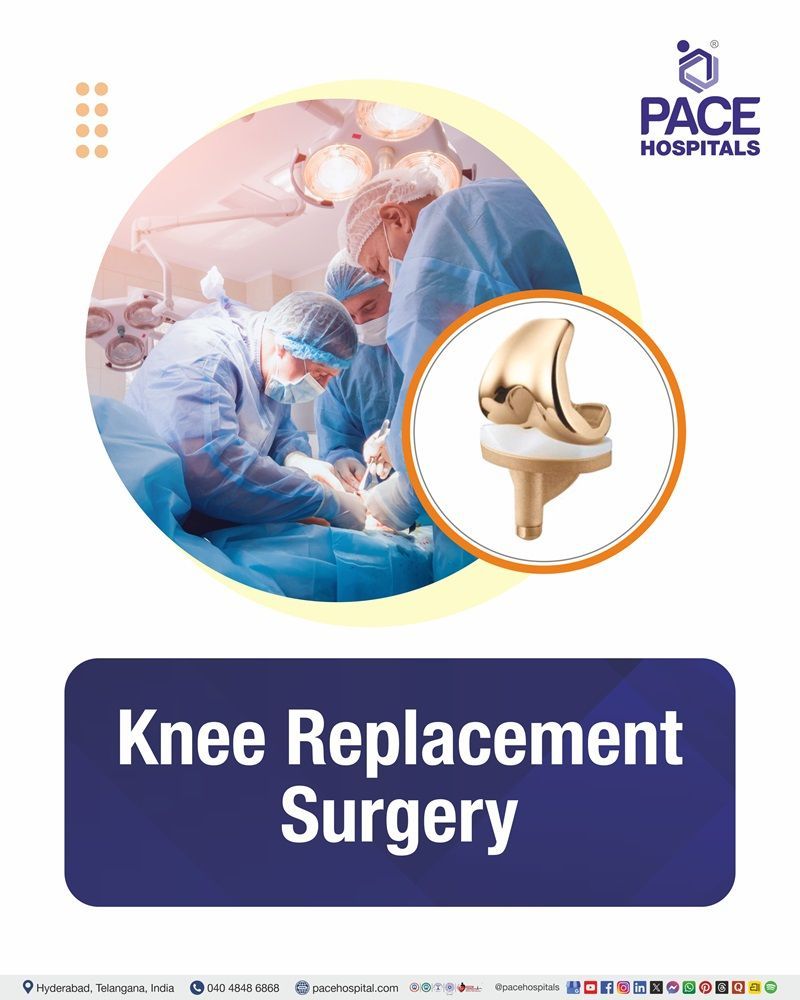
Knee replacement surgery cost in India
On average, Knee Replacement Surgery cost in India ranges between ₹1,50,000 and ₹8,00,000 (approximately US $ 1,578 to US $ 8,415). However, the actual cost may vary depending on several factors, including:
- The patient’s age, body weight, bone quality, and overall health.
- Type of knee replacement surgery: partial, total, bilateral, robotic-assisted, or revision surgery.
- Type and quality of knee implant used.
- Whether one knee or both knees are replaced.
- Hospital charges, room category, operation theatre charges, and duration of hospital stay.
- Pre-operative investigations such as blood tests, X-ray, ECG, 2D Echo, and other fitness evaluations.
- Post-operative physiotherapy and rehabilitation requirements.
- Insurance coverage, cashless approval, or corporate health benefits.
- Any complications or additional medical care required before or after surgery.
Knee replacement surgery cost in Hyderabad, Telangana
On average, Knee Replacement Surgery cost in Hyderabad ranges between ₹1,60,000 to ₹3,50,000 (approximately US $ 1,683 to US $ 3,682) or more.
Hyderabad offers cost-effective knee replacement treatment compared to many metro cities and international healthcare destinations, while providing access to experienced orthopaedic surgeons, modern operating theatres, advanced implants, and structured rehabilitation support. However, the cost of Knee Replacement Surgery in Hyderabad is influenced by several factors, such as:
- The severity of knee arthritis or joint damage.
- Whether the surgery is unilateral or bilateral.
- Choice of implant, including standard, high-flexion, imported, gender-specific, or revision implants.
- Use of conventional, minimally invasive, computer-assisted, or robotic-assisted technique.
- The hospital facility, room category, and length of stay.
- Pre-existing medical conditions such as diabetes, hypertension (HTN), obesity, heart disease, kidney disease, or osteoporosis.
- Physiotherapy, rehabilitation, and post-surgery follow-up care.
- Insurance or cashless approval status.
- Any additional procedures or complications.
Cost Breakdown According to Type of Knee Replacement Surgery
- Partial Knee Replacement (PKR) – ₹1,50,000 – ₹3,00,000 (US $1,567 – US $3,134) approx.
- Total Knee Replacement (TKR - Unilateral) – ₹2,50,000 – ₹5,00,000 (US $2,611 – US $5,223) approx.
- Bilateral (Both Knees) Knee Replacement – ₹4,00,000 – ₹9,00,000 (US $4,178 – US $9,401) approx.
- Robotic Knee Replacement – ₹3,50,000 – ₹6,50,000 (US $3,656 – US $6,790) approx.
- Revision Knee Replacement – ₹3,00,000 – ₹8,00,000 or more (US $3,134 – US $8,357+) approx.
Note: These are estimated costs. The robotic knee replacement cost applies only if robotic technology is available and suitable for the patient. The exact cost for an individual patient is determined after a detailed clinical evaluation by the orthopaedic surgeon.
Additional Information: Knee replacement surgery cost may vary depending on the implant brand, implant material, surgical technique, bone condition, deformity correction required, use of robotic or navigation technology, duration of hospital stay, post-operative rehabilitation, and the expertise of the orthopaedic surgical team. A personalized cost estimate is provided after examining the patient’s knee X-ray, medical history, mobility status, and fitness for surgery.
Breakdown of Knee Replacement Surgery Costs
The cost of Knee Replacement Surgery depends on several factors and may change depending on the hospital, type of implant, surgical technique and the health condition of the patient. Here is a detailed list of costs that are usually associated with Knee Replacement Surgery:
Pre-Surgery Costs
- Consultation Fees: Consultation fee with an orthopaedic surgeon and other specialists, if required, for fitness assessment prior to surgery.
- Diagnostic Tests: Includes X-ray, blood tests, urine tests, ECG, 2D Echo, chest X-ray, and other investigations required before surgery.
- Pre-Surgical Screening: Pre-surgical medical assessment to assess heart, kidney, lung, blood sugar, blood pressure, risk of infection and fitness for anaesthesia.
Knee Replacement Surgery Costs
- Implant Cost: The implant is a major component of cost. The cost depends on the quality of the implant, the material, brand, type of fixation and whether it is a standard, high flexion, imported or revision implant.
- Hospitalisation Charges: Includes room charges, nursing care, operation theatre charges, medicines, consumables and hospital stay expenses.
- Surgical Procedure: It includes the fee of an orthopaedic surgeon, the use of an operating room, surgical tools, sterile supplies, and technical assistance.
- Anesthesia and Surgical Team Fees: It includes the Charges for anaesthesia, anaesthesiologist, surgical assistants, and also intraoperative monitoring.
- Robotic or Navigation Charges: There may be additional costs associated with technology if a computer-navigated or robotically assisted knee replacement is utilised.
Post-Surgery Care Costs
- Hospital Stay Post-Surgery: Following a standard knee replacement, the majority of patients stay in the hospital for three to five days, based on their condition, capacity to walk, pain management, and recovery.
- Medicines and Consumables: It includes blood thinners, painkillers, antibiotics, bandages, and additional medications used after surgery.
- Physiotherapy and Rehabilitation: To enhance knee mobility, muscle strength, walking capacity, and long-term results following knee replacement, physiotherapy is crucial.
- Follow-Up Visits: In order to monitor wound healing, knee movement, implant position, and recovery progress, follow-up appointments are necessary.
This cost breakdown makes it easier for patients to comprehend the main financial aspects of knee replacement surgery. Based on the patient's knee health, implant types used, and treatment strategy, PACE Hospitals, Hyderabad, offers comprehensive and customised estimates.
Who Needs Knee Replacement Surgery?
Not every patient with knee pain needs to have knee replacement surgery. It is taken into consideration when non-surgical treatment is no longer effective, knee damage is significant, and symptoms interfere with day-to-day functioning.
Common Conditions Indicating Need for Knee Replacement
- Severe Osteoarthritis: Walking difficulties, stiffness, swelling, and chronic pain can all be signs of advanced knee cartilage wear and tear. When daily activities are impacted by serious joint degeneration, knee replacement may be recommended.
- Rheumatoid Arthritis: The knee joint can be damaged by long-term, inflammatory arthritis, which can result in pain, deformity, and limited movement. When medications are unable to control joint degradation, surgery may be an option.
- Post-Traumatic Arthritis: Over time, arthritis may result from prior knee fractures, ligament damage, or joint trauma. When pain and stiffness become severe, a knee replacement may be required.
- Severe Knee Deformity: To restore alignment, balance, and walking ability, knee replacement may be necessary for bowlegs, knock knees, or other deformities caused by arthritis.
- Persistent Knee Pain at Rest or Night: Pain that persists even while resting or sleeping could be a sign of advanced joint damage and may need surgical evaluation.
- Difficulty Walking or Climbing Stairs: After a thorough evaluation, patients with knee pain who are unable to sit, stand, walk comfortably, climb stairs, or carry out daily tasks may benefit from knee replacement.
- Failure of Non-Surgical Treatment: When medications, physiotherapy, weight control, knee braces, injections, and lifestyle changes are ineffective, surgery may be taken into consideration.
Who is Not Eligible for Knee Replacement Surgery?
Although many people find knee replacement surgery to be safe and beneficial, it might not be the best option for everyone. Certain problems may make surgery more risky or less beneficial than expected.
- Active Infection: Patients may require treatment prior to surgery if they have an active skin infection, urinary infection, oral infection, or infection elsewhere in their body.
- Severe Heart, Lung, Kidney, or Liver Disease: Prior to surgery, patients with unstable or severe medical problems may need optimisation and specialist clearance.
- P oorly Controlled Diabetes: Uncontrolled blood sugars can raise the risk of infection, delayed wound healing, and problems following surgery.
- Severe Osteoporosis or Poor Bone Quality: Surgical planning and implant fixation may be affected by bone weakness.
- Severe Obesity: Being overweight increases the risk of anaesthesia, wound problems, implant stress and recovery difficulties.
- Poor Skin Condition Around the Knee: Infection risk might be increased by wounds, ulcers, or inadequate soft tissue coverage surrounding the knee.
- Patients Medically Unfit for Anaesthesia: If the risk of anaesthesia is high, surgery may be avoided or delayed.
- Unrealistic Expectations: A knee replacement may not return the knee to the same level as a naturally occurring, healthy joint, but it improves pain and function. It's important to have reasonable expectations.
To determine eligibility, an evaluation by a qualified orthopaedic surgeon is necessary. A comprehensive pre-operative assessment promotes safe surgical outcomes and lessens complications.
Knee Replacement Surgery - How is Knee Replacement Surgery Done?
Depending on the patient's condition and anaesthesia assessment, spinal, epidural, or general anaesthesia may be used for knee replacement surgery. Usually, the procedure includes the following steps:
- Pre-procedure evaluation: The orthopaedic surgeon evaluates walking ability, range of motion, knee X-rays, deformity, pain intensity, and overall medical fitness.
- Anaesthesia and preparation: After administering anaesthesia to the patient, the knee region is sterilely cleaned and prepared.
- Incision and joint exposure: The damaged joint surfaces are accessed by making a surgical incision over the knee.
- Removal of damaged bone and cartilage: The worn out cartilage and damaged bone ends are carefully removed from the thigh bone, shin bone, and, if needed, the kneecap.
- Implant placement: A smooth joint surface has been recreated by fixing components made of medical-grade plastic and artificial metal.
- Alignment and balancing: The surgeon examines the stability, mobility, ligament balance, and alignment of the knee.
- Closure and dressing: The patient is shifted for post-operative monitoring once the incision is closed and a dressing has been applied.
- Recovery and mobilization: In order to help the patient safely stand, walk, and restore knee movement, physiotherapy usually begins soon after surgery.
Types of Knee Replacement Surgery
Depending on the severity, location, and pattern of knee injury, various types of knee replacement surgery are performed.
- Partial Knee Replacement: Healthy bone, cartilage, and ligaments are preserved while only the damaged knee compartment is replaced. Certain patients with arthritis that just affects a part of the knee can benefit from it.
- Total Knee Replacement: Artificial implants are used to replace the entire damaged surface of the knee joint. It is the most common treatment for advanced arthritis that affects several knee compartments.
- Bilateral Knee Replacement: Both knees are replaced, either all at once or in stages. When the patient is medically fit, and both knees have significant damage, it might be taken into consideration.
- Robotic-Assisted Knee Replacement: The surgeon can more precisely plan bone cuts, implant placement, alignment, and soft tissue balancing with the use of robotic technology. Throughout the process, the surgeon has complete control.
- Revision Knee Replacement: When a prior knee implant becomes loose, worn out, diseased, unstable, or painful, this procedure is carried out. Compared with primary knee replacement, revision surgery is more complex and may require specific implants.
Note: Costs may vary based on implant type, surgical method, hospital stay, patient health, and whether robotic assistance is used.
Post Knee Replacement Surgery Care Tips
Following knee replacement surgery, pain management, wound healing, knee mobility, and long-term implant function all depend on receiving the proper recovery care.
- It is advised to take prescription medications as directed, including blood thinners, antibiotics, and painkillers.
- As suggested by the orthopaedic specialists, physiotherapy and supported walking should be initiated.
- During the early stages of recovery, it is recommended to avoid squatting, sitting cross-legged, or using Indian-style restrooms unless the surgeon gives clearance.
- Until the doctor gives the instructions, it is essential to keep the surgical wound dry and clean.
- Until muscular strength and balance improve, it is advised to use a walker or other support equipment.
- It is advised to keep an eye out for warning indicators, including fever, wound discharge, rising redness, calf pain, abrupt swelling, or trouble breathing.
- Regular knee bending and strengthening exercises under a physiotherapist's supervision are recommended.
- To lessen the long-term stress on the knee implant, it is advised to keep a healthy body weight.
- In order to monitor range of motion, wound healing, and implant position, follow-up visits are recommended.
Adhering to these guidelines promotes safe recovery and improved knee function over time.
Key Factors Influencing Knee Replacement Surgery Cost
Various medical, surgical, implant-related, and hospital-related factors affect the cost of knee replacement surgery. Patients can more clearly arrange their treatment when they are aware of these factors.
Pre-Surgery Evaluation
The entire cost includes X-rays, blood tests, cardiac examination, diabetic control assessment, anaesthesia fitness, and other studies.
Insurance Coverage
Individual expenses can be greatly affected by insurance approval, cashless coverage, hotel eligibility, implant coverage, and insurance policy conditions.
Hospital and Location
Depending on the infrastructure, post-operative care facilities, operating room standards, and infection control procedures, hospitals in major cities like Hyderabad may charge varying prices.
Post-Surgery Care
The entire cost of treatment includes physiotherapy, follow-up appointments, medications, wound care, walking assistance devices, and rehabilitation support.
Complications During Surgery
Unexpected complications, including bleeding, infection, blood clots, medical instability, or delayed recovery, may increase the total cost since they require longer hospital stays or more care.
Surgeon Expertise
Due to their advanced surgical skills and extensive experience managing complex cases, highly skilled orthopaedic and joint replacement surgeons may charge higher professional fees.
Implant Type/Technique used
In general, standard implants are less expensive than imported, technique-used, high-flexion, gender-specific, ceramic-coated, rotating-platform, or revision implants.
Travel and Accommodation
Travel, accommodation, attendant stays, and local transportation expenses may need to be covered by patients coming from different cities, states, or countries.
Patient Health
The complexity of surgery and post-operative care might be affected by age, obesity, diabetes, hypertension, heart disease, kidney disease, anaemia, osteoporosis, or previous knee surgery.
Why Choose PACE Hospitals for Knee Replacement Surgery in Hyderabad, India?
PACE Hospitals, Hyderabad, is a trusted centre for Knee Replacement Surgery and advanced orthopaedic care.
- We have experienced orthopaedic surgeons, anaesthesiologists, physiotherapists, rehabilitation specialists, and trained nursing staff who follow evidence-based protocols for safe and effective surgical care.
- Our facilities comprise state-of-the-art operating rooms, cutting-edge surgical tools, premium implants, post-operative monitoring, infection control protocols, and organised physiotherapy assistance. Focused recovery assistance, clear cost estimates, and individualised treatment planning are all guaranteed by patient-centered care.
For patients looking for the Best Hospital for Knee Replacement Surgery in Hyderabad, Telangana, India, PACE Hospitals provides state-of-the-art orthopaedic care, affordable costs, and transparent treatment planning.
Financial Assistance and Payment Plans at PACE Hospitals
Orthopaedic care should be accessible with clear financial planning. Our team assists patients with insurance and cashless support.
- Cashless hospitalisation with empanelled insurers and TPAs
- Pre-authorization and documentation guidance
- Reimbursement assistance if a cashless facility is unavailable
- Transparent pre-admission cost estimates
- Support for corporate and government health schemes
Knee Replacement Surgery Success Rate
Knee replacement surgery is a highly successful orthopaedic procedure when performed in properly selected patients. Most patients experience significant pain relief, improved walking ability, better joint movement, and improved quality of life after recovery.
Knee replacement surgery has a success rate exceeding 90% to 95% for most patients, providing dramatic pain relief and restoring physical function.
Modern knee implants can function well for many years when the patient follows rehabilitation advice, maintains a healthy body weight, avoids high-impact activities, and attends regular follow-ups.
Patient's experience:
- Decreased knee pain
- Improved walking and stair climbing ability
- Better knee alignment
- Improved daily activity level
- Enhanced quality of life
- Long-term success depends on proper patient selection, implant quality, surgical technique, physiotherapy, infection prevention, weight control, and regular follow-up.
Request a Personalized Treatment Cost Estimate
Every patient's medical condition and treatment plans are unique, which means the overall cost can vary. To receive an accurate estimate, our specialists evaluate your diagnosis, medical history, recommended treatment, and any necessary investigations before providing a detailed cost breakdown.
Whether you are planning a diagnostic test, treatment, or surgery, our team is here to help you understand the expected expenses and guide you through every step of the process.
Get in touch with us today to request a personalized treatment cost estimate.