Paracentesis Procedure Cost in Hyderabad, India – 2026 Guide
Get a Cost Estimate for Paracentesis Procedure
Procedure & Surgery Cost Pages
All You Need To Know About Paracentesis Procedure (Ascitic Tap)
Paracentesis, also called an ascitic tap, is a procedure used to remove excess fluid (ascites) that has collected inside the abdomen. It may be performed to relieve abdominal swelling and discomfort or to find the cause of fluid buildup.
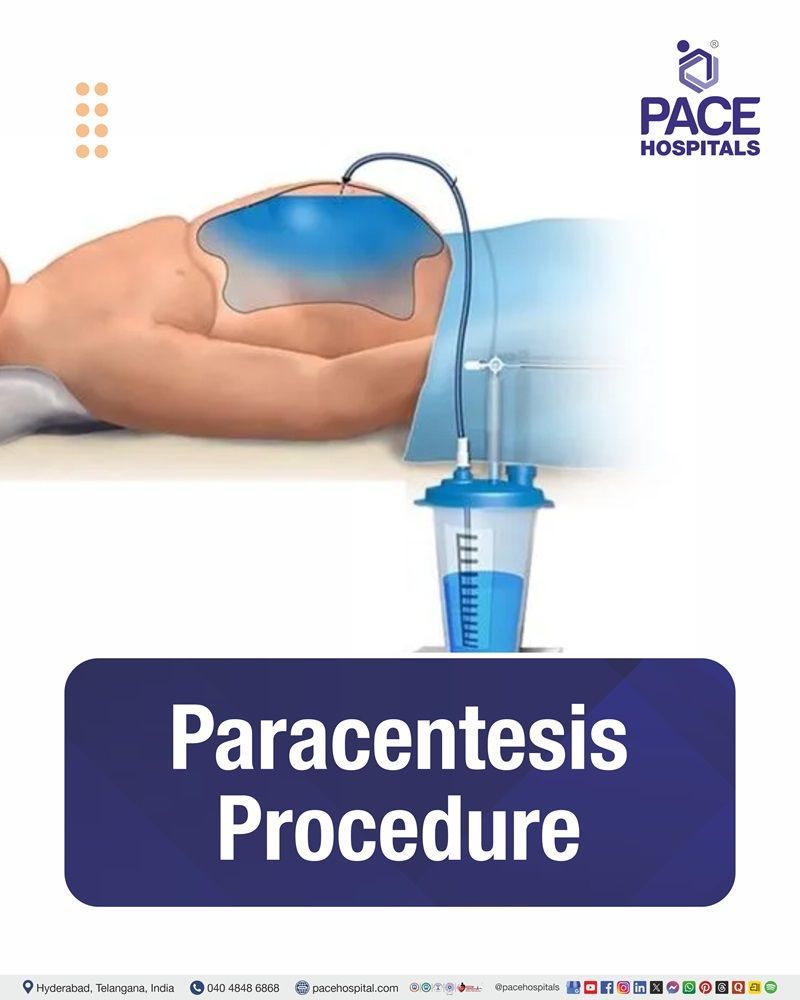
During Paracentesis, a thin needle or catheter is passed through the abdominal wall to reach the fluid. A sample of the fluid can be sent to the laboratory to look for infection, cancer cells, or other findings that may help identify the cause of ascites.
Paracentesis is usually performed under local anaesthesia, and ultrasound guidance may be used to help place the needle safely. Depending on the amount of fluid and the reason for the procedure, a small or larger volume may be removed. The procedure can help ease abdominal pressure and breathing discomfort caused by significant fluid accumulation.
Paracentesis Procedure Cost in India
On average, Paracentesis Procedure (Ascitic Tap) cost in India ranges between ₹3,000 and ₹20,000 (approximately US $31 to US $208). However, the actual cost may vary depending on several factors, including:
- The patient’s overall health and the amount of ascitic fluid that needs to be removed.
- Whether paracentesis is performed for diagnosis or therapeutic fluid removal.
- Use of ultrasound guidance during the procedure.
- Hospital charges, including the procedure room and nursing facilities.
- Laboratory charges for testing the collected ascitic fluid.
- Doctor’s consultation and procedural charges.
- Any medicines, albumin replacement, or additional monitoring required after the procedure.
- The type of hospital and location where the procedure is performed.
- Insurance coverage or other hospital payment arrangements.
- Any complications or additional treatment required during or after the procedure.
Paracentesis Procedure Cost in Hyderabad, Telangana
On average, Paracentesis Procedure cost(Ascitic Tap) in Hyderabad ranges between ₹4,000 and ₹18,000 (approximately US $41 to US $187). The actual charges may vary between hospitals depending on the procedure type, facilities available, and the patient’s individual requirements.
However, the cost of Paracentesis Procedure in Hyderabad is influenced by several factors, such as:
- The patient’s overall health, medical condition, and amount of ascitic fluid.
- Whether the procedure is performed for diagnosis or therapeutic fluid removal.
- Use of ultrasound guidance during the procedure.
- Hospital facility, procedure-room charges, and nursing care.
- Ascitic fluid laboratory testing and other investigations.
- Medicines, albumin replacement, or additional monitoring required after the procedure.
- Insurance or corporate approvals for cashless services.
- Any additional treatment or complications during or after the procedure.
Cost Breakdown According to Type of Paracentesis
- Diagnostic Paracentesis – Procedure Cost: ₹3,000 – ₹7,000; Total Cost with Fluid Analysis: ₹4,000 – ₹10,000 (US $41 – US $104.) (approx.)
- Therapeutic Paracentesis – Procedure Cost: ₹5,000 – ₹12,000; Total Cost with Monitoring and Related Care: ₹6,000 – ₹15,000 (US $62 – US $156) (approx.)
- Ultrasound-Guided Paracentesis – Procedure Cost: ₹6,000 – ₹15,000; Total Cost with Ultrasound Guidance: ₹7,000 – ₹18,000 (US $72 – US $187) (approx.)
- Large-Volume Paracentesis – Procedure Cost: ₹7,000 – ₹18,000; Total Cost with Additional Monitoring and Albumin, if required: ₹9,000 – ₹18,000 (US $93 – US $187.) (approx.)
Note: These are estimated costs. The exact cost for an individual patient is determined after a thorough evaluation by the treating medical team.
Additional Information: The cost of Paracentesis is not the same for every patient. It may depend on how much fluid needs to be removed, whether ultrasound is used, the tests required, albumin replacement, monitoring after the procedure, hospital charges, and any other treatment needed. The final cost can be discussed with the medical team after checking the patient's condition.
Breakdown of Paracentesis Procedure Costs
The total cost of Paracentesis may differ from one patient to another. It can depend on the hospital, type of procedure, amount of fluid removed, and the patient's overall health. The main expenses involved in the procedure are given below:
Pre-Procedure Costs
- Consultation Fees: Charges for a consultation with a gastroenterologist, hepatologist, or other specialist treating the patient.
- Diagnostic Tests: Blood tests, liver and kidney function tests, clotting tests, or abdominal scans may be needed before the procedure.
- Pre-Procedure Assessment: The medical team may check the patient's general health, blood pressure, bleeding risk, and possible cause of ascites.
Paracentesis Procedure Costs
- Procedure Charges: Costs associated with performing the paracentesis and removing the ascitic fluid.
- Ultrasound Guidance: Additional charges may apply when ultrasound is used to guide needle or catheter placement.
- Doctor and Nursing Charges: Fees for the treating specialist, nursing staff, and monitoring during the procedure.
Post-Procedure Care Costs
- Monitoring: Blood pressure and general condition may be monitored after fluid removal.
- Laboratory Testing: Ascitic fluid may be tested for infection, protein levels, cell counts, or other findings depending on the clinical requirement.
- Medicines and Albumin: Some patients undergoing large-volume fluid removal may require albumin or other medicines as advised by the treating doctor.
- Follow-Up: Further consultation and monitoring may be required depending on the underlying cause of ascites.
This breakdown gives an idea of the different charges that may come with Paracentesis. At PACE Hospitals, Hyderabad, the treatment plan and expected cost can be discussed after reviewing the patient's condition and the procedure required.
Who Needs Paracentesis?
Paracentesis may be recommended for patients who have significant fluid accumulation in the abdomen or when the cause of ascites needs to be investigated.
Common Conditions Indicating Need for Paracentesis
- Ascites due to Liver Disease: Advanced liver disease and cirrhosis can cause fluid to build up inside the abdomen.
- Suspected Abdominal Infection: Paracentesis may help detect infection in ascitic fluid, including spontaneous bacterial peritonitis.
- Cancer-Related Ascites: The procedure may be used to test the fluid for cancer cells or relieve discomfort caused by fluid accumulation.
- Heart Failure: Fluid buildup related to heart failure may sometimes lead to ascites and require drainage.
- Kidney-Related Conditions: Certain kidney disorders can contribute to fluid accumulation and may require evaluation.
- Unexplained Ascites: When the cause of abdominal fluid buildup is unclear, testing the fluid can help guide further diagnosis and treatment.
- Severe Abdominal Distension: Therapeutic paracentesis may be performed when a large amount of fluid causes abdominal pressure, discomfort, or breathing difficulty.
Who is Not Eligible for Paracentesis?
Paracentesis can be performed safely in many patients, but the treating doctor may postpone or modify the procedure in certain situations.
- Severe Uncontrolled Bleeding Risk: Significant clotting problems may require assessment and correction before the procedure.
- Skin Infection at the Insertion Site: Infection near the planned needle insertion area may increase the risk of complications.
- Severe Hemodynamic Instability: Patients with unstable blood pressure or circulation may require stabilization before fluid removal.
- Certain Abdominal Conditions: Previous abdominal surgery, adhesions, or other anatomical factors may affect the safest approach.
- Very Low Platelet Count – A very low platelet count may increase bleeding risk and requires assessment before the procedure.
Whether Paracentesis is needed depends on the patient's health, medical history, examination, and test results. The treating specialist will decide if the procedure is suitable and whether any special precautions are needed.
Paracentesis Procedure - How is it Done?
Paracentesis is generally performed as a minimally invasive procedure. The steps may include:
Pre-procedure evaluation: Medical history, physical examination, blood tests, and imaging may be performed.
- Patient positioning: The patient is positioned appropriately to allow safe access to the abdominal fluid.
- Site preparation: The skin is cleaned and local anaesthesia is given to reduce discomfort.
- Needle or catheter insertion: A thin needle or catheter is carefully inserted through the abdominal wall into the ascitic fluid.
- Fluid collection or drainage: A sample may be collected for testing, or a larger amount of fluid may be drained for symptom relief.
- Monitoring and completion: The insertion site is covered and the patient is monitored after the procedure.
Types of Paracentesis
Different approaches may be used depending on the reason for the procedure and the amount of fluid present:
- Diagnostic Paracentesis: A small amount of ascitic fluid is collected for laboratory analysis.
- Therapeutic Paracentesis: Fluid is removed to relieve symptoms caused by significant ascites.
- Ultrasound-Guided Paracentesis: Ultrasound is used to guide the procedure and help identify a suitable fluid pocket.
- Large-Volume Paracentesis: A larger amount of fluid is drained when extensive ascites causes significant symptoms.
Common Techniques Used
- Landmark-Guided Paracentesis: The insertion site is selected using physical examination and anatomical landmarks.
- Ultrasound-Guided Paracentesis: Ultrasound is used to identify the fluid collection and guide needle placement.
- Catheter-Based Drainage: A catheter may be used when a larger amount of fluid needs to be drained.
Post Paracentesis Care Tips
After Paracentesis, appropriate monitoring and care can help reduce the risk of complications.
- It is advised to keep the procedure site clean and dry as instructed.
- It is recommended to monitor for bleeding, increasing abdominal pain, fever, or redness around the insertion site.
- Adequate fluids and diet should be maintained according to the treating doctor’s advice.
- Medicines prescribed for the underlying condition should be taken as directed.
- Follow-up appointments should be attended to monitor the underlying cause of ascites.
- Patients undergoing large-volume paracentesis should follow the doctor’s advice regarding albumin replacement and other medicines.
- Any unusual symptoms after the procedure should be reported to the treating medical team.
Following these recommendations can support recovery and help manage the underlying condition responsible for ascites.
Key Factors Influencing Paracentesis Procedure Cost
Paracentesis is a relatively simple procedure, but several factors can influence the overall cost.
Pre-Procedure Evaluation
Blood tests, imaging scans, specialist consultations, and other required assessments may also be included in the overall cost.
Insurance Coverage
The extent of insurance coverage or corporate approvals for cashless treatment can affect the patient’s out-of-pocket expenses.
Hospital and Location
The hospital chosen, available facilities, and location can influence the procedure charges.
Post-Procedure Care
The total cost may also include laboratory tests, monitoring, medicines, albumin replacement, and follow-up visits.
Amount of Fluid Removed
Large-volume paracentesis may require additional monitoring, drainage time, medicines, or albumin replacement, which can increase the cost.
Ultrasound Guidance
The use of ultrasound guidance may involve additional charges but can help identify a suitable fluid pocket and guide needle placement.
Underlying Medical Condition
The cause and severity of ascites, along with other medical conditions, can affect the complexity of treatment and the level of monitoring required.
Additional Tests
Laboratory analysis of ascitic fluid and other diagnostic tests may add to the total cost.
Patient Health
The patient's general health, age, medical history, and the amount of fluid buildup can affect the procedure and the care needed afterward.
Why Choose PACE Hospitals for Paracentesis in Hyderabad, India?
PACE Hospitals, Hyderabad, provides evaluation and treatment for patients with ascites and related liver, gastrointestinal, and medical conditions.
- Experienced gastroenterologists, hepatologists, physicians, nursing staff, and supporting specialists are involved in patient care.
- The hospital has diagnostic facilities and monitoring services to support evaluation before and after the procedure.
- Treatment planning is based on the underlying cause of ascites, the patient’s symptoms, and overall medical condition.
- Patients can receive guidance regarding the procedure, investigations, recovery, and estimated treatment costs.
For patients looking for Paracentesis (Ascitic Tap Procedure) in Hyderabad, Telangana, India, PACE Hospitals offers evaluation, procedure planning, and supportive care based on each patient's medical needs.
Financial Assistance and Payment Plans at PACE Hospitals
The hospital team can help patients with insurance-related queries and cashless treatment requirements. Assistance may also be provided with the necessary documents and other formalities related to payment and insurance.
- Cashless hospitalisation with empanelled insurers and TPAs
- Pre-authorisation and documentation guidance
- Reimbursement assistance if cashless facility is unavailable
- Transparent pre-admission cost estimates
- Support for corporate and government health schemes
Paracentesis Procedure Success Rate
Paracentesis is generally an effective procedure for removing excess fluid from the abdomen. It can provide relief from symptoms caused by ascites, although the duration of relief depends on the underlying cause and whether the fluid builds up again.
Patients may experience:
- Reduction in abdominal swelling and pressure
- Relief from abdominal discomfort
- Easier breathing when excess fluid puts pressure on the diaphragm
- Improved comfort and ease of movement
If ascites returns, repeat Paracentesis or additional treatment may be needed to manage the underlying condition.
Request a Personalized Treatment Cost Estimate
Every patient's medical condition and treatment plans are unique, which means the overall cost can vary. To receive an accurate estimate, our specialists evaluate your diagnosis, medical history, recommended treatment, and any necessary investigations before providing a detailed cost breakdown.
Whether you are planning a diagnostic test, treatment, or surgery, our team is here to help you understand the expected expenses and guide you through every step of the process.
Get in touch with us today to request a personalized treatment cost estimate.